Short Story
Jason Hawke 🇨🇦
For Unsplash+
The students drift in, some in groups looking excited, some alone looking afraid. I smile at them all as they find one of the chair desks. Gone are the days of desks with tops that open and grooves for pencils. I’ve arranged these sort-of desks in a horseshoe so they face me. I want no students sitting quietly in the back rows.
When the clock reads nine, I close the door and say, “Good morning. Welcome to Writing and the Environment. Let’s start with introductions. I’m Professor Sandra Hastings. You can call me Professor or Doctor or Sandra. Whatever makes you feel comfortable. Please tell us all your name, where you’re from, and why you chose Writing and the Environment.” A few will say they like the topic, but most will say they chose this class because it fit their schedule. Thematic writing classes haven’t changed attitudes since all freshmen took Writing 101. Writing is still writing and a dreaded requirement.
They look healthy and alert as they introduce themselves. In about two weeks, the late nights and whatever illness gallops through the dorms will catch up to some of them. By the end of the semester, carbs, sugar, beer, lack of sleep and exercise will show up as what we call the Freshman Fifteen, the average weight gain for college students.
Right now, all I want is to remember their names. It will take make me a couple of weeks, but I make preliminary judgements. I know it’s unfair and I know that most will be ill-considered. Zoe with frizzy hair and oversized glasses will be studious, but unimaginative. Raoul wears a conspicuous cross over his slightly stained T-shirt. I wonder if he wears his religion on his sleeve when he covers the tattoo image of God’s finger reaching out for Adam’s on his exposed arm. He might know about Michelangelo’s painting on the Sistine Chapel, but this is Writing and the Environment, not God’s Creation. Jeannine announces that she was home-schooled. I hope she doesn’t tell me that her mother liked the paper she gets a C on. Brendan will miss classes. Even today he looks hungover. Twenty years ago, students like Nancy with the close-cropped hair would claim that the dog ate her paper. Today it will be a computer problem. Only Sky with a cloud tattoo on her arm, Sunny with a predictable sun tattoo, and Kale who badly needs a haircut say they chose the class for the topic. I should remember their names that signal tree hugger.
I reach for the book they will need to buy. Writing and the Environment, edited by James O’Neill and Paula Yates. I hold it toward them. “This is our book for the semester. You can purchase copies at the bookstore. Don’t order online or you’ll have to wait until the semester is half over before it arrives. Don’t rely on an electronic copy. The bookstore’s prices are competitive. Think of this as an investment in your education.” I try not to sound preachy, but I hate when students don’t buy the book in time for the semester.
I lay the book down and pick up a handful of syllabi. Once I’ve handed out copies, I explain how to read a syllabus. The readings are listed on the day due and they need to be prepared to discuss them. They’ll receive details about writing assignments on the days listed. The due dates will be firm. I wonder how many dead grandmothers I’ll have to count this semester. Unlike Josh Pickens who asks to see a death certificate, I choose to believe the excuse.
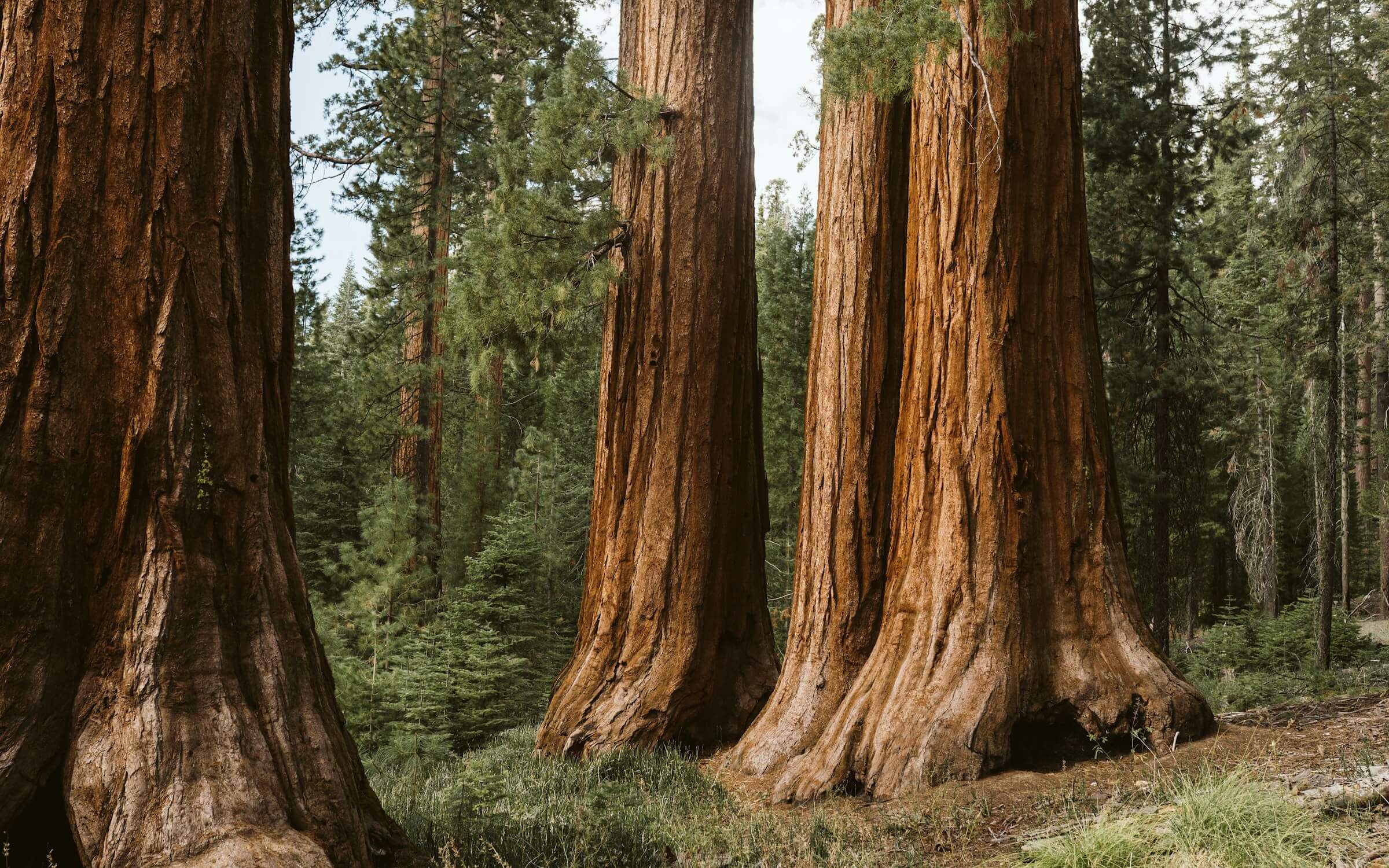
“You’ll receive your first assignment on Friday when we’ll also discuss the essay ‘A Wind-Storm in the Forests’ by John Muir.”
“He was a racist,” the student who needs a haircut blurts.
“Yes, Kale, he was.” I emphasize that I know his name. “But we’ll be concentrating on what climbing a tree during a storm in Yosemite says about ways to encounter nature. It’s complicated. He was racist, but he also saved Yosemite by helping to declare it a national park.”
“Destroy the indigenous populations to create a park for tourists to destroy.” Kale slumps in his seat, and I turn the class’s attention to an assignment. “For the rest of today’s class, I’d like you to write a short essay about a problem you faced and overcame since you arrived on campus. Don’t worry. You won’t be graded. This will just give me a chance to get to know you. You can leave whenever you’re finished.”
Only Kale needs a pen and some paper. While they write, I sit at the desk in front of the class and study the roster. I put a question mark and exclamation point next to Kale Marsh’s name. He’s going to be a problem. I write notes next to other names. Zoe Rankin––frizzy hair. Raoul Pimental––cross and touching fingers tattoo. Jeannine Dunbar––blond ponytail, homeschooled. Brendan Montgomery––hungover? I look at the tattoos on Sky and Sunny and draw a sketch of a cloud and a sun so I’ll remember who is who when it gets cold and their tattoos are covered.
Kale finishes writing in less than ten minutes and drops the pencil and paper on my desk. When he leaves the classroom, I read what he’s written, expecting something flippant or halted or painfully ungrammatical. I’m surprised. It’s good. He has an easy style, cadenced sentences, and sharp descriptions. His problem is his name. Everyone he’s met has quipped that they never eat Kale or that Kale doesn’t grow in Marshes. He even used the word “quipped” and wrote that he overcame the problem of his name as he always does. Kale is the best vegetable in the cabbage family, preferable to broccoli or cauliflower or Brussels sprouts, which he knows to capitalize. It doesn’t gobble it up the environment, but it still impacts it. I like his writing and his humor. Maybe he won’t be a problem and I’ll end up liking his attitude.
By the third Friday of classes, I remember everyone’s name. There have been no dead grandmothers, no computer crashes, no papers chewed by a dog. It’s too soon for the Freshman Fifteen, but there’s a lot of coughing going on and instead of gaining weight, Kale appears shaggier and thinner than when we began. Sky looks like her cloud tattoo has migrated to her head and turned black. There’s a darkness engulfing her.
Jeannine asks if they can have their papers back. “At the end of class,” I say, anticipating that she’ll object to her B-. She’s not a bad writer, but she’s so locked into the five-paragraph essay model that she misses opportunities to expand. Thesis, three body paragraphs, conclusion. That model went out with handwritten essays.
“Forget about your papers for now and let’s talk about today’s reading.” I open to the page I marked in Writing and the Environment. Excerpts from Thoreau’s “Walking.”
“What does Thoreau mean by ‘sauntering?’” I ask. Our discussion meanders like Thoreau’s thoughts. We talk about slowing down versus running, blocking out social media, and finding time and a place for a walk. We contrast Thoreau’s meditative quiet walks to John Muir’s adrenalin adventure high in a Douglas Spruce. Kale complains that development and tourism have intruded on the spaces Thoreau and Muir loved.
When Zoe protests that she wouldn’t walk in the woods because there are mosquitoes and ticks, Sky rises from her dark cloud and says, “Men are more dangerous.” Kale argues that woods are more healing than dangerous. There are no wolves anymore. Sky mumbles “Just crazies,” and hunches back in her seat.
I end the discussion by handing out their next assignment. They need to find an hour between today’s class and Monday’s. They should saunter, whether in the college woods or through the main campus or even in the downtown area. “Saunter, don’t hurry,” I instruct them. “Take a journal to write down things you notice. I’ll collect them on Monday, so be sure it’s not a journal you need for another class.”
“Can we do something dangerous, instead? Like John Muir,” says Brendan. “Maybe climb that giant spruce tree on campus?”
“Trees are sacred,” says Kale.
“Doesn’t mean they can’t be climbed.” Brendan is ready to challenge him. Jeannine saves us from an argument by asking what she should do. She’s going home for the weekend.
“That’s okay,” I say, thinking that she’ll probably be telling her mother that her grade is unfair and her mother will agree. “Wherever any of you are, the point is to slow down and observe. Brendan or anyone else, if you choose something more adrenalin producing, notice how it makes you feel. We can contrast your experiences on Monday.” I know that if I require an adrenalin experience and someone gets hurt, I’d be in for a lawsuit.
I pick up the stack of papers on my desk. “Here are your first essays. My door is open if you need to talk about yours.” They’ve written a first paper about how the college fulfills or fails to fulfill its commitment to sustainability. One by one I read a name and hand the essay to its owner. Raoul looks at his C+, touches his cross, and mutters “Thank you, God.” Zoe takes time to read my comments. As she leaves the room, she says, “I know what you mean.” Jeannine scowls at her B- and at me. She invokes her mother as she shoves her paper into her copy of Writing and the Environment. Kale smiles at his A-, reaches his middle finger to his lips, and passes me a fake kiss.
Sky takes her paper and waits for everyone to leave. When the room is empty, she says, “Can I come to your office?”
“Of course.” I wonder what’s bothering her. She hasn’t looked at her grade and she should be happy with her B+.
I pick up my book and she follows me across the hall into the area that holds five offices, a kitchenette, and a copy machine that’s tucked into an alcove that feels claustrophobic. Mike Carson is coming out of his office. He smiles and says, “Good morning.” If Sky hadn’t been with me, he would have said something about sharing the wisdom of the agéd. At seventy-four, he’s the oldest faculty member and has managed to resist the pressure to retire and stop impacting the actuarial charts for the college’s insurance policies. He leaves his door open as he always does when he knows I’ll be in my office.
Sky closes my door. I open it and gesture to the chair in front of my desk. Before she sits down, she closes the door again. She doesn’t need to. No one else is in their office.
I open my window. The chimes are sounding ten o-clock. The sound is comforting, a reminder of the peace that pervades our campus amid the turmoil of larger, well-known universities and of the world around us. Here we’re as cloistered as in a nunnery.
“Your paper was good, Sky. Do you have a question about it?” I know she hasn’t looked at it, but I want to give her an opening. Something else is bothering her.
“It’s Kale.” She jumps at the sound of a riding lawn mower starting. No matter how much we complain about the noise disturbing our classes, the campus maintenance must go on.
“Kale?”
“He followed me out of the library into the college woods last night and started raging about lawn mowers and fertilizer on the football field and lights on the pathways. I’m afraid of him.”
“He’s right about lawn mowers and fertilizer, but we need those lights. They make the campus safe even at night. Why are you afraid of him?”
“Not of him. I’m afraid for him.” She pauses until the mower moves further from the building. “And for you. He doesn’t like you.”
That surprises me. He’s been participating in class and even continuing a conversation when class is over. Then I remember the middle-finger kiss. “He won’t be the first student who doesn’t like me.”
“Actually,” Sky says, “he doesn’t like anyone. He says we’re destroying the planet.”
“He’s right about that,” I say as the mower comes closer to the window again.
“But he’s extreme. When I killed a mosquito that was buzzing around my ear, he lectured me on the sanctity of all creatures. I told him humans were creatures, too, and I didn’t want to get some mosquito borne disease. I killed another one, and he stormed off mumbling something about our fake professor who knows nothing about environmentalism.”
I think about Kale’s paper again. It bordered on the extreme. He’d looked at the labels on five clothing products sold at the college bookstore. Sweatshirts, sweatpants, T-shirts, hats, jackets. All manufactured in places like China or Indonesia or Myanmar. Some contained an oil-based synthetic in the fabric and all were relying on transportation from thousands of miles away. He had good information on how clothing impacts the environment, but he didn’t propose any alternatives. I remember what I wrote on his paper. “You’ve done a fine job uncovering the problem. Can you propose ways for the college to do better?” Now I wish I’d written something about all becoming nudists in a northern winter.
The mower stops. I welcome the silence. “Do you think Kale’s violent?”
“I don’t know. He’s so angry about how we’re destroying the planet.”
“That’s why I’m teaching this class,” I say. “If we understand our relationship to the environment, we can do our part to respect the planet.”
“Last night he kept saying ‘Leave no footprint.’ Over and over like some kind of chant.”
“Maybe you could correct him. Say leave a smaller footprint.”
“I don’t want anything to do with him. Please don’t put me into a group with him.”
“I won’t,” I say as I stand up. “I have a meeting, but if he causes you any more trouble, let me know. Or better yet, go to the Dean.”
“He’s crazy extreme. You need to be careful,” she says as she leaves my office. The mower starts again. It sounds like more than a background annoyance. Sky has made me feel that it screams an alarm. I don’t want to be a person who didn’t see warning signs before some violent act. I’ll alert the counselling office. Sky’s right. Kale is extreme, but I think he’s just suffering from impractical idealism.
In Monday’s class, we talk about their experiences sauntering. Zoe wrote down the names of all the trees on the main campus. Raoul walked to the cemetery outside of town. He prayed for the souls of the people buried there. Brendan murmurs “Jesus” under his breath then describes how he jumped from his room window onto the spruce tree beside his dormitory. He dangled his legs over a branch listening for nature. All he heard were the sounds of students and cars. Nothing like John Muir’s windstorm, but it was a good adrenalin rush. “When I was ready to go inside,” he says, “I realized that I couldn’t get back through the window. I shimmied part way way down and jumped.” He points to the cast on an arm and says, “I should have sauntered.”
Everyone laughs except Kale who says, “We shouldn’t climb trees.”
The rest of the students share their experiences. Except for Kale. When the clock indicates the end of class, I say, “Please leave your journals on my desk. I’ll read them with interest and suggest to each of you a way to develop your idea into a more formal paper.
Kale waits until everyone is gone. He stands too close to me and says, “I don’t have a journal. Paper. Pencil. We shouldn’t be destroying trees.”
I resist lecturing him on the impact of computers and Bitcoin and AI and simply say, “Trees are a renewable resource.”
He follows me into the complex of offices. Mike Carson is just leaving for class. He notices what I haven’t and says, “Young man, where are your shoes?”
“Leave no footprint,” says Kale. He takes off his shirt and throws it on the floor. It looks like it’s made of hemp.
He turns his head as if he’s talking with someone. “You’re right. She’s a fake.” He seems to listen. “Look at her clothes.” He names what I’m wearing. “Leather shoes. Denim skirt. A cotton sweater.” He pulls on it. “Is it at least organic?”
Mike stops him. “Son, what are you doing?”
“I am no son. She has a child, you know. More people polluting the planet. He listens again and sobs. “No footprint, no footprint.” Outside the gas-powered lawn mower sounds it discordant notes.
Read more Stories, Poetry, and Creative Nonfiction in this issue
Read more great stories and poetry in The Write Launch archive of past issues.
Poetry
“Remnants of Treasure in Bucha,” “The Sense of a Poet,” and “28 January”
At thirteen, she wanders fields near razed homes in Bucha, hears echoes of cries eerie in shattered walls. She shelters…
Sandra Fox Murphy
Creative Nonfiction
Bobby’s Irish Goodbye
It’s always been remarked upon in my family — by family I include all my cousins — that whenever there’s…
Joyce McKenna
Short Story

Crimson Moon
High above the farmlands of northeastern Oklahoma, above the red dirt roads and the swaying cottonwoods, atop the flat-peaked mesas…
Bre Hall
Creative Nonfiction

Charlie Hustle
At a get acquainted lunch, which took place before I agreed to direct a baseball instructional video, I did a…