Short Story
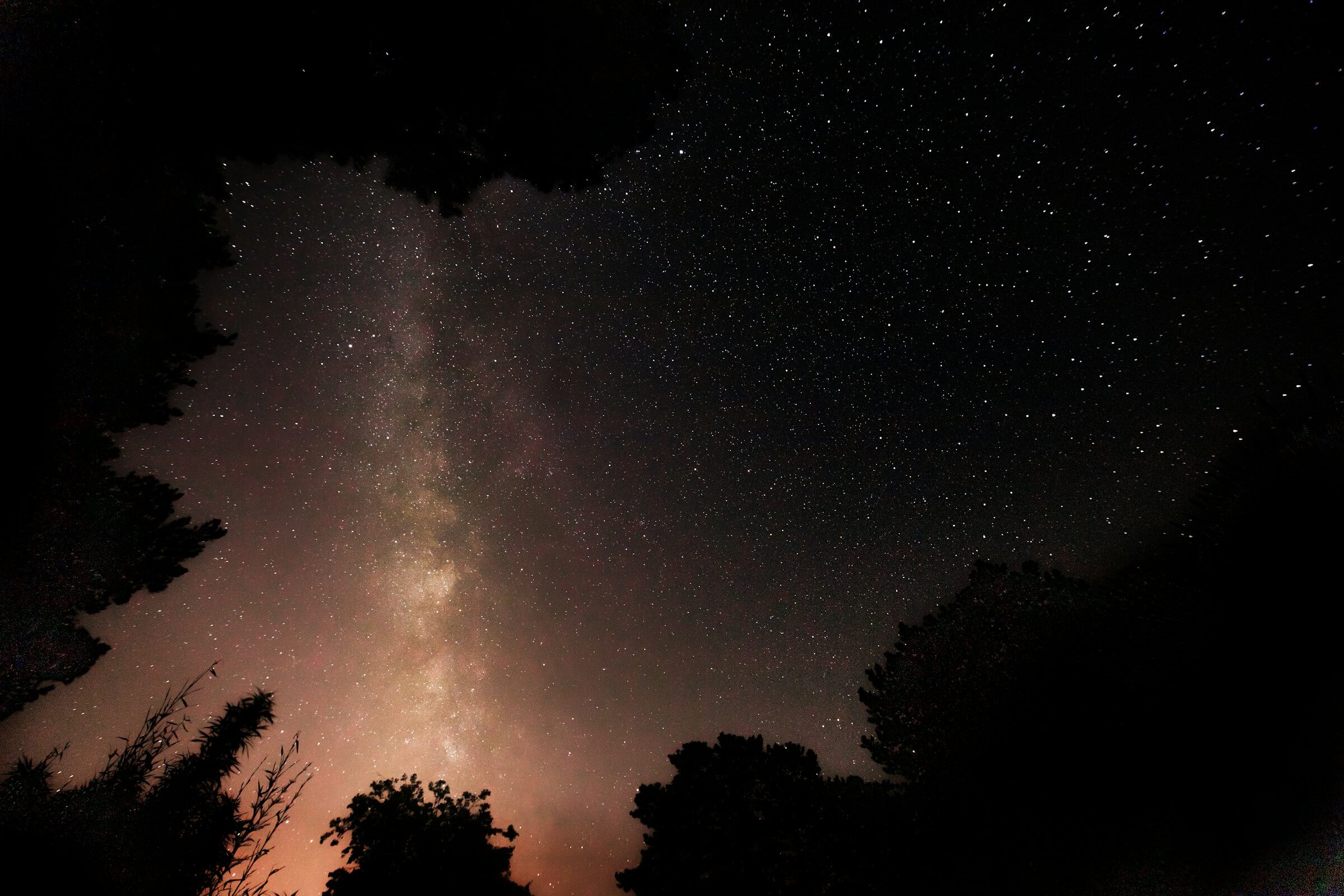
Photo by Anthony Cantin on Unsplash
The moment Ruthie Banks heard the governor issue his shelter-in-place order, she made up her mind to take up smoking again. Ruthie hadn’t smoked for 27 years, but this was no ordinary time in history and, therefore, she reasoned, it deserved a good smoke.
She walked into her bedroom to change and leave her house against the governor’s orders. He wasn’t her candidate in the last election, or the one before that. He was transparently idiotic, as was the 52% of her state that voted him into office, not once but twice. She opened her dresser drawer to pull out a clean pair of leggings, then stopped. Did she need to change her clothes? Or even brush her hair? Everyone had locked themselves in their houses. How she looked today, or tomorrow, or anytime in the foreseeable future, was finally irrelevant. She was free to roam her world in sweats and her hair pinned lackluster to the top of her head.
So, dressed in her Badgers sweatshirt and grey leggings with holes in both knees, Ruthie grabbed her purse and drove with unchecked determination to the minimart. Aged, bending oak trees lined the wide street that led from her house. Everyone could die tomorrow and the trees on her street would continue to grow new leaves in the spring, wave them about with exuberance all summer, and reduce them to shriveled crayon-colored ground cover in the fall, again and again. There was no order the governor could issue for the trees; they stood defiant to human ignorance.
Ruthie looked for the familiar people she saw on her way out of the neighborhood—joggers in their polyurethane skins, mothers absently aiming strollers while texting the people they’d rather be with, the intimate huddle of men sharing cigarettes and stories on their usual street corner—but no one was there. Everyone had shut themselves in their houses. The air outside had to be better for them all. If she’d been in charge, she’s have mandated a “stay outdoors” order. And if people could think without being told what to think, they’d all be outside sitting on their porches reading from the stacks of magazines piled up in their living rooms, the ones they’d get to when there was time to read that article on organic gardening or Tom Hanks’s lack of a depression gene.
The parking lot in front of the minimart was empty, so she had her choice of spaces. The car door groaned as she pushed it open and groaned again as she threw it shut. The aged neon sign above the store was blinking—stuttering, her son would have said—and a blue line flashed again and again onto the hood of her car.
She strode into the empty market, up to the white Formica counter, and slapped a fifty-dollar bill on the sticky surface.
“I’d like as many packs of Larks as this will buy, and a large cherry Icee,” she said to the kid behind the counter. He looked to be about ten years old, but she might have known his father, so he was at least twenty.
“What the hell is a Lark?”
He didn’t look up from his phone. Long blondish curls surrounded his face and cascaded down to touch his narrow shoulders. Ruthie wanted to gather that hair up and pull it back with a scrunchie so she could see if he had his father’s deep grey eyes.
“Never mind, then. Camels. Unfiltered,” she said, proud of her choice. Unfiltered cigarettes were the ultimate in commitment. The first few would be hell, but her confidence assumed her lungs could adjust. She’d read about muscle memory and was certain her lung muscles would remember how to do it.
The boy placed his phone on the counter, turned around to the cigarette display behind him, and pulled out three tiny packages. He dropped them on the counter and walked four steps to his right to draw the red sugary sludge from the Icee machine. The packages looked a lot smaller than she remembered and cost five times as much. The Icee looked lethally red.
Ruthie stared at the kid as he turned around and faced her, narrow shoulders and long legs. He did indeed have his father’s intense, seductive eyes. His father had been taller, and his strong, broad shoulders had held her up in a game of battle in the lake a few days after she turned sixteen. She remembered the feel of his kisses and shook her head. He was dumber than sawdust. Who had he talked into having a child with him?
“I look more like my mother,” he whispered.
“I’m sorry, what?”
“You said I look like my dad, but I take after my mother.”
He slid the enormous cup onto the counter, Icee gurgling over the top and down the sides like a successful science experiment. Up close, she could see his dark eyes had the same ominous shadows beneath them that his father had when he was twenty. She suddenly wished she’d at least put on mascara and brushed her hair, looked less bedraggled in case the kid said something about her to his dad. Maybe she should look better when she went out into the world now, just in case she kept bumping into the children of her old boyfriends. But then she realized she couldn’t even remember the guy’s name.
“You know my dad?”
What positive thing could she tell this boy about his loser of a father without lying? She was a terrible liar. Everyone said so. And what the hell was his name?
“Yeah, we went to high school together, went out a couple of times. He,” and here she hesitated so she could make sure it came out right, “was always good at whatever he put his mind to.”
The boy dropped her change next to the Icee without looking her in the eyes.
“Yeah, well, he recently put his mind to killing our neighbor. Over a saw.”
After a moment, Ruthie said, “I’m—wow, I’m sorry to hear that.”
She picked up the three small red packages and stuffed them into her purse, hoping they hadn’t gotten too sticky sitting on the counter. The Icee didn’t seem like such a good idea anymore, but she picked it up and took a sip. The cold, sugary mix slid down her throat, coating her tastebuds with memories, but did nothing to dampen her intense desire to know how the murder took place.
“A saw?”
Ruthie’s breath caught in her throat; she leaned on the counter just a little and looked the kid in the eye, suddenly aware of the odor of sanitizer.
“Did he do it with one of those big chainsaw things?”
The nerve, her mother’s voice echoed in her head. She had some gall to ask that poor boy how his father murdered a man! What kind of person does that? If she was interested, she should ask other people, not the family. You should know better, her mother would have added just to slip in both guilt and maternal disappointment.
But Ruthie really needed to know. It was like this bottom-dwelling creature had risen from her stomach, unaffected by the sip of cherry Icee, and now rested on her chest. What would it be like to be cut in half by a chainsaw? Or have your head sliced off your body?
“Nah. The guy wouldn’t loan him a saw, so Dad blew the guy’s head off with a sawed-off shotgun. Crazy fucks, both of them. Now he’s gonna fry for wanting that saw.”
Sawed-off shotgun. Messy, but not nearly as dramatic as beheading by chainsaw. Disappointing, but then again, the electric chair. That’s something.
What was his father’s name? Dwayne? Donald?
“I can think of a lot worse ways to die, though,” Ruthie said, then wanted to grab it right back. “I didn’t mean—-Well, you stay careful with all this virus stuff,” Ruthie said. “Can’t you at least wear gloves, or a mask or something? What’s your name?”
“Bruce, like my dad. Management won’t let us wear anything. Says it makes us look like idiot criminals,” the boy said and swiped his left eye with his palm.
“Wash your hands. A lot.”
“Yeah, sure.”
She didn’t know what else to say, so she turned and walked toward the door.
“You forgot your change,” he said.
Ruthie pushed open the door and said over her shoulder, “You keep it.”
She dropped the sticky cup into the trash on her way out.
***
Matches.
The kid had forgotten to give her matches. They used to always smack matches down on top of the cigarettes without being asked. She opened every drawer in the kitchen and rummaged through her desk like a ferret searching for kibble. No matches. What the hell had happened to the world since the last time she lit a cigarette? Ruthie pulled out a cold beer from the refrigerator and placed it on the counter.
Finally, she found a hideous purple-and-lime-green candle her ex-sister-in-law had given her one year. The woman was always selling something—make-up, baskets, plastic storage containers, candles—and whatever the new enterprise, Ruthie got one for Christmas. She lit the dollar sign shaped candle on her stove, then walked it, her cold beer, and her cigarettes out to the glass-top table on her patio. A layer of yellow pollen coated the glass. Even though she knew she should take a moment and wipe the table off, she instead set everything down on the yellow dust. As she dropped onto the cushioned chair, also liberally dusted with pollen, she realized her ugly grey leggings would now have a butt-dusting of yellow.
With the small cigarette pack clutched in her hands, Ruthie closed her eyes. It all came back to her in a rush that flooded her entire body: the tamping of the package, both ends, the tiny red ripcord that peeled off the top of the plastic wrap and left the rest to hold the damned pack of matches, the sound of tearing back the corner of the silver foil. The first whiff of tobacco would rise from the package and come for her like a classmate at a high school reunion: How have you been? I’d recognize you anywhere! You haven’t changed a bit! There was a movie she’d seen once about a cigarette manufacturing plant, and she wondered how it smelled in that place. When she tore back the foil of her first pack, she knew exactly how it smelled.
At fourteen, she’d hung out of her bedroom window as she lit a Newport stolen from her neighbor’s purse. The first inhale felt like she’d sucked in fire, and the cough punched her chest repeatedly. Her body had to adjust because she was determined to smoke. All the cool girls did, and she wanted to be one of them. The second inhale was just as bad as the first, and the third wasn’t much better. But once she’d gotten past those first few drags without puking or falling out of the window, she’d found there was something very satisfying on the other end: she sort of felt cool. Dizzy, but cool. She stood up and faced the bathroom mirror. Her reflection had not changed, her hair still a mess and an ill-fitting shirt. But she held that cigarette between her long fingers like she had seen her favorite actresses do and, for the first time in her life, she felt cool.
This time there was no window to fall out of, no parent to come in and quickly pass from shock to disappointment, and no remaining wish to be a cool girl. This time, Ruthie only had to trust her body to welcome home an old friend.
She shook off the memory and reached back to tie her hair in a knot. Tendrils of dark, slowly graying hair fell onto her face and neck and she tucked them back into the loosely formed ball on her head. She didn’t want to catch a strand of hair on fire: that was one horrible smell. The first inhale would be bad enough without that.
She took a sip of cold beer, pulled the hideous candle closer—it smelled like her ex-sister-in-law’s house used to smell, that failed attempt at pine trees—and slid the first cigarette out of the pack. She placed it between her lips and leaned into the flame. The paper sizzled as it caught fire. Muscle memory willed her to breathe in through the tiny shreds of packed tobacco. She filled her cheeks with the smoke and leaned back in her chair. But when she couldn’t make herself inhale, she pushed the smoke out of her mouth in a puff.
This was it: her first cigarette in twenty-seven years. She wanted to warn her lungs that the next breath would not be of the evening air mixed with sweet pollen. With that first real inhale, they would instead meet with a noxious combination of burnt paper, chemically treated tobacco, and melted tar. It wasn’t only her lungs that pushed the deathly fumes back out, but her entire body. Leaning forward, she coughed, sputtered “fuck” as her entire body rebelled. A wave of nausea swept her up and let her down again.
Determined, Ruthie took another long drag of the cigarette. It burned like hell, but she refused to cough. Instead, she coaxed the smoke out through her mouth and nose. Again and again, a muted cough here and there, until it took.
She was smoking.
“Hello? You okay over there, Ruth?”
Bob Kessler, her next-door neighbor.
Any other woman would be delighted to have him as a neighbor. Bob was easy on the eyes, tall and aging well, a playful cowlick at the center of his forehead. He was a man who always seemed to know how something worked, and if he didn’t, he actually wanted to learn. He was always offering to fix this or that: a gutter that had separated from her roofline, a hole in the screen of her kitchen door; a leak in her outdoor faucet.
Everything except that damned privacy fence that separated their patios. He’d never once offered to put that thing back up again, even though she’d told him about it more than a few times.
In its glory, the fence had stood over five feet tall, metal slats in the most astonishing shades of blue, held together with nothing Ruthie could identify. Long before Bob moved into the long-vacant house next door, the fence collapsed one day, the blue slats fanning across her yard like proud peacock feathers. She meant to hire someone to put the thing back up again, but then life got away from her and there it sat, now nearly invisible, buried under years of ecological occurrences. Only a few scraggly bushes stood between their houses. If she wanted to, she could peek through her kitchen window while she drank her second cup of coffee and watch Bob do his morning yoga practice on his patio. Easy on the eyes he was.
“Doing fine, Bob. How about you?”
She had to get that fence back up. Replacing it would cost money, money she didn’t have. Her second husband died and left her with nothing: she tried not to think about him when she needed something costly, but she couldn’t help it. She was still angry at him for dying.
Things were going okay between them, no enormous problems. He worked his job as a telephone lineman, and she worked hers as a hospital billing clerk. They both enjoyed boxing, beer, and sex. He didn’t make her go hunting with him; she didn’t ask him to go to roller skating with her. Neither of them wanted more children after the pain their children had already caused them, and they drank to that sad fact, at times to excess, on more than one occasion.
They balanced things between them, not the world’s greatest love affair but one of her life’s few certainties. Ruthie could count on that man to take out the trash without her having to ask him; to say he loved her every night before he fell asleep, drunk or sober; to go to work every morning and come home every night. Until he didn’t. From then on, she lived alone, next to a vacant house, a collapsed fence, and the memory of a husband.
The house next to hers had stood empty for a few years. The resulting quiet was nice, and Ruthie grew used to being by herself with the fence fanned out in her backyard. Sometimes a guy came by the empty house to mow the lawn, and that delicious smell of just-cut grass wafted into Ruthie’s yard. One Sunday afternoon there was an open house, and Ruthie walked around, relieved her house was a lot nicer, and took a chocolate from a ceramic bowl near the front door on her way out.
It surprised her the house took so long to sell and the agent never approached her about sharing the cost of replacing the fallen fence. Maybe since it hadn’t fallen on her property, the agent didn’t care. The house sat empty, quiet and undemanding, the way a good neighbor should be.
When Bob bought the house, he came over to introduce himself. From that meeting on, he had insidiously inched his way into her life. In the beginning, he talked too much, laughed a little too hard at his own jokes, and dressed the same every day in khakis and a polo shirt. She assumed they were his work clothes, but she did not ask. The man didn’t have an ounce of fat on him, something Ruthie found peculiar for an almost-finished-with-middle-age man. But she didn’t ask anything about him, only gave vague answers to his questions, and loaned him her broom, or her Dust Buster, or whatever he wanted to borrow when he came to her door. He could talk for a good five minutes, then ask her questions about where to buy this or that in town, what were the good places to eat and who had the best pizza.
She didn’t want to know anything about him, why he was thin or what he liked on his pizza, or whether he was a hunter. His khakis and polos could remain a mystery. She could sense he liked her, maybe had a little crush on her. Within months, they were sharing a beer on the patio instead of a Q and A at the front door. Then, forgetting she didn’t want to, she found herself answering some of his questions. At some point, she learned that yes, the khakis and polos were for work. Bob watched her when she tied her hair on top of her head, or when she propped her bare feet up on the chair next to her, or when she went to get them cold beers.
This was how it started, and she was old enough and experienced enough to know that. There was nothing that would start in her life again, ever. Not Bob, not any man.
So Ruthie just got used to Bob being there, next door to her. She had dropped her guard without meaning to until they shared every Friday evening together, on his patio or hers. Sometimes they’d drink beer and talk about where they’d grown up, who they’d married and divorced—or, in Ruthie’s case, outlived—how they wished they’d had more children with better spouses. He was as easy to talk to as he was to look at. But there was no flirting on her part, not anything Bob could consider a signal to make a pass at her.
“Hey, are you smoking? Smells like tobacco!”
“Yup,” Ruthie said and took another drag from her cigarette. It hurt. She should have gotten filtered ones.
“Mind if I come over? I really need to talk about Emmett,” Bob said.
“Emmett? Why?”
He was just fine the last time Ruthie had seen him at the Piggly Wiggly, a few weeks ago. Emmett told her about a huge outdoor project he was starting, and she half-listened as she looked over the bananas and pulled two ripe ones from a bunch. He kept scratching at his left hand and by the time they’d finished talking, it was red enough to make her hand hurt. Other than that horrid scratching, he seemed his usual, annoying self.
“Sure, grab something to drink and come on over.”
Bob always walked like he was easy with himself, not pushy or too stiff, not hurried or holding back. Years of confidence showed in the way he held his back straight and tucked in his shirt just so, or how his belt was never too tight or too loose. His shoes were always in that place between comfortable and new, not stiff but polished. That was Bob, she realized one day: a man in that place between uptight and sloppy that made him easy. She liked that about him.
Ruthie stared down at his feet. Bob was wearing sandals. She didn’t know he owned sandals. Even his toes were perfect, not long or stubby or hairy. The man really drove her crazy, coming over all the time.
Bob plopped into the faded green chair next to hers, pushing a little poof of pollen into the air, and sighed. The candle flickered when his breath reached the flame.
“Emmett’s dead.”
”Dead? How?” She sat up and leaned in a little.
“Listen to this, Ruthie. He was on that dozer of his, you know, that enormous Komatsu monster he was so proud of? Idiot was tearing along the side of a hill. Then he started going up and down the hill, his wife says. Laughing and waving at her. Who the hell does that in a dozer? He got so high—”
Bob lifted his arm to show her how high Emmet had been. She figured that meant Emmett was near the top of the hill, mowing until he wasn’t. But she wasn’t really listening. She was staring at Bob’s arm. It was perfect, not too hairy, no big scars with stories to match, tanned just enough to prove he was often in the sun. Flawless skin taut over firm muscle.
“The thing just rolled over him,” Bob said.
“Huh.”
He spoke faster. “The two of them tumbled down the hill, his wife watching the whole damned thing. Must have been horrible. A blur of that yellow dozer and those blue overalls tumbling over and over down that hillside.”
Bob stopped and caught his breath. Ruthie put out her cigarette on the brick beneath her chair and flicked it into the bushes.
She watched as he downed his beer, his Adam’s apple moving like a synchronized swimmer. Men had big Adam’s apples, or tiny ones; ones that moved, or didn’t; ones that women thought were sexy, ones they found disgusting. Bob could be the most annoying person on earth, his put-togetherness and all, but she’d never thought of his Adam’s apple before.
***
The other night, he leaned over to kiss her.
They’d been sitting in front of his fire pit. She’d wrapped herself in a blanket. He had told her about why his wife left him: she’d found a guy in his 20s who worshipped her body. He had added air quotes when he said “worshipped.” She liked that. She’d told him about the afternoon the police came to her door and explained that her second husband had been shot out in the woods by a hunter who mistook him for a deer.
“I said to the cop, What are you telling me? Was he running around with antlers on his head?”
Ruthie took a long sip of her beer.
“So then he said to me, ‘Well, um, no.’ Like he’d never thought about it, never even wondered how someone could think a man was a deer. Then the cop says to me, ‘It happens, Ruth.’”
She hated that her beer was already warm, hated how her husband left her.
Bob told her about losing his advertising job, how they told him he’d lost his touch with a younger generation, how he was too old.
She told him about her daughter, Lucy, who died holding her hand.
He told her she was beautiful, took her chin in his hand, ran his thumb over her bottom lip, and leaned in to kiss her. She closed her eyes, her head pulsing like the pounding wind as a tornado touches down. The moment his lips flickered over hers, she pulled away.
“We can’t do this. We’re neighbors,” she said.
“What the hell does that have to do with anything, Ruthie?”
“Just a mistake, that’s all. We can be good friends, good neighbors, but that’s it.”
Later that night, she kind of wished she hadn’t told him it was a mistake.
Having a man to depend on, or at least a man to fall asleep with, was a luxury she knew she couldn’t afford. But sometimes, like when he was talking about a recipe or a book he had read, she could look over at Bob and wonder what his skin would feel like next to hers, what his almost-passed-middle-aged body had to offer hers. It would stir then, a yearning so intense her insides pushed against her skin and stretched almost beyond her ability to control it.
Then she’d see them all, every goddam person she ever loved, dead and lined up on a shelf, staring down at her in disbelief, saying in unison, “What? Again? Are you nuts?” as she wrapped her arms around her chest and closed her eyes.
In moments, the crushing sensation passed. Her breathing returned to normal. She settled back into her choice not to draw Bob one inch closer to her than he already was and thought instead about what kind of patio fence she could afford to buy.
***
Bob was talking about Emmett’s wife. Ruthie’d missed it, thinking about all the reasons not to want him.
“I mean, that’s harsh, Ruthie, to watch your husband die and not be able to do a thing about it. What a horrible way to go. Smashed to a pancake by a dozer. Hell.”
“I can think of a lot worse ways to die.”
Ruthie stood and walked into her kitchen for a cold beer for herself and another for Bob. More and more now, she was drinking half-beers; once they got warm, she hated the taste of them. Should be an ice cube you could drop into a beer to keep it cold but not ruin it.
A blue and purple paisley scarf hung on the rack near the door caught her eye, a thick layer of dust visible on the swirls. She ought to wash it and use it this winter. Lucy would like that, if Ruthie wore her scarf to stay warm.
She walked back out on to the patio. A cat strolled along the edge of her yard, winding his way between the peony bushes. The sun had gone down. A slight breeze worked its way across the table and disturbed a bit of the yellow dust. Ruthie sneezed. The candle’s flame flickered.
She handed Bob a beer.
“Thanks, Ruthie. But I mean, being killed by your two-ton dozer is a hell of a way to go.”
“But not so bad,” she said. “Today I met a kid whose father is on death row for killing a guy with a sawed-off shotgun at close range. Over a saw.”
Bob sighed. “Ruthie—”
“Then there was the Air India guy who got sucked into a jet engine. That’s gotta be worse than being flattened by a piece of earth-moving equipment. Or that idiot who tried to prove his office windows couldn’t shatter and threw himself against one on the 25th floor or something. Damned thing didn’t shatter. Instead, it popped out of its frame. He fell 25 stories and died. Splat.”
“But Emmett—”
“Some idiot had a beard that was almost five feet long—”
Her mind was racing with stories she had collected, like engines revving, ready to go. There was no way to stop it, even though it didn’t make her feel better anymore. Not the stories, not being alone, not smoking.
“He tripped over the thing and died. Something like twenty people died in a molasses flood, Bob. I mean, at least Emmett died right away. And his wife was there. People will miss him and remember him for being a much better person than he actually was.”
Bob stared at her, then took a swig of his beer.
“At least the dozer was paid for,” he said.
“See? There’re a lot worse ways to die.”
Ruthie wondered why Bob cared about her at all.
***
In the silence between them, Ruthie thought of the random deaths she collected like stray cats: people sucked out of airplane windows, or attacked by wild dogs, or having brain-eating amoebas.
“Why do you know so much about death, Ruthie? Every time we talk about somebody dying, you got a bunch of stories, one worse than the next.”
“I think about it, that’s all. I think about death a lot.”
“Doesn’t look like you’re gonna die anytime soon. I mean, you look—”
“This virus thing, Bob,” Ruthie said, and lit another cigarette. She swallowed a cough as she inhaled. “I think about death all the time. And now we’re all shut in our houses? I could drop dead in there and no one would know for a week.”
She wanted ten minutes of complete quiet to let that new thought find a place in her brain.
“I’d know.” His voice was so soft she barely heard him.
That was the problem. He would know. He would miss her after 18 hours. At the patio door, he’d peer in and see her sprawled across the couch in her baggy tee and leggings with holes in the knees, toenails unpainted, her hair twisted around her like a boa. He’d slide the door open and move closer. Her eyes would stare up at him, no eyeliner or mascara. He wouldn’t judge her for looking so shitty when she dropped dead. That would be okay, to be dead and found by the least judgmental man she’d ever known. Someone who would mourn her when she died. Right now, she had no one who would even care, much less mourn.
“And I don’t know why the hell you’re smoking those things. It’s a virus. Smoke won’t chase it away,” Bob said. “Want another beer?”
“Sure.” She punched the cigarette out on the glass table and tossed it in the bushes. He strode the distance to his kitchen, and she stared at the empty chair.
Still thinking about dying alone in her house, she hadn’t heard him come back.
“I’d look for you if I didn’t see you, Ruthie.” He handed her a beer from his refrigerator. It was a lot colder than hers. It cost more, too, a beer made in England somewhere.
“Yeah, well, I’d look for you after a while, too, I guess.”
“I mean, we have to look out for each other with this thing, right? We’re kind of all we’ve got.”
Bob chuckled to himself and placed his hand on hers. She pulled away, but he held on tight, drew his thumb up and down her wrist. The rhythm of his touch was soothing. It would be easy to settle in, entwine her fingers with his, drink their beer, then walk inside and take a shower together, crawl into bed. He might tell her she was beautiful, or that he loved her. He might promise never to leave her.
“There used to be a fence here, between our patios,” Ruthie said.
“I know. You’ve told me. Like ten times.”
“I keep thinking we should share the cost and put it back up.”
“Nope.”
“Hmm.”
A breeze took out the candle’s flame and plunged the patio in darkness. Bob tipped his head back and looked up at the sky. Ruthie glanced over at his long neck bent at an unnatural angle, his head resting on the back of the lawn chair. She stared at his Adam’s apple again and wondered what it would be like to kiss it.
“Ever looked at the stars, Ruthie? I mean, really looked? They’re all out there, and I have no idea why or how. Don’t understand stars or science much.”
The silence spoke to her for a moment; the wind whispered sweet secrets in her ear.
“But I remember a teacher in high school said that the smallest stars out there live the longest,” Bob said. “I remember it because I asked myself: Bob, how the fuck are you supposed to know which one out of all those gazillion stars is the smallest one so you can pick that one to latch on to? Which one will last the longest?”
A weird grunt made its way up Ruthie’s throat and lodged there, nearly choking her. The tears would not fall until she let out a proper sob. She secured that sob inside of her like a patient strapped to a gurney.
“So I ask you, Ruthie. If you can’t tell which one is going to last the longest, do you choose one and hope for the best, or do you just go it alone?”
“My first husband died in a fire, Bob. The second one got shot pretending to be a deer. My son died in Afghanistan in a city I can’t pronounce. My daughter died of leukemia. Both of my parents died in a car accident. There are worse ways of dying than dying alone, Bob.”
She stopped for a moment and clutched her beer bottle.
“You can die last.” Her voice was a whisper.
The sob escaped and doubled her over in pain. His hand moved across her shoulders and took on a slow, rhythmic pattern along her back that calmed her breathing.
If he said one word, just one, she’d smack him.
But it was Bob, and he didn’t speak. She inhaled long and hard, like she was smoking a cigarette, and pulled the pain back inside. Why was she, a tired, skinny, slightly-passed-middle-aged woman, yearning to fall in love one more time, to feel the rush of desire pulse through her body one more time? She knew it would go badly, she would be left shattered and alone, again. Why did she want to feel it all, the hope, the giddiness, and the total absorption of falling in lust with a man? The eternal, misguided belief that maybe, just maybe, he would stay until the end?
Did he wonder the same thing? She wished she knew.
“We’re all just stars, Ruthie, doing the best we can to pretend we’ll last the longest. Come inside. I’ll make you a grilled cheese sandwich. Best one you’ll even eat.”
“Bob—”
“It’s a grilled cheese, Ruthie, that’s all. There are worse ways of dying than a grilled cheese sandwich.” He stood and waited for her.
Ruthie hoped he couldn’t see her smile in the dark as she anticipated the aroma of the butter-toasted bread. She thought about her daughter Lucy, who never had the chance to fall in love, not even once.
In the darkness, she saw all the people she loved lined up along the peonies, agape in disbelief.
“Again? Are you crazy?”
“Damn it,” she mumbled aloud, then stood and followed Bob into his kitchen, leaving her cigarettes on the patio table.
Read more Stories, Poetry, and Creative Nonfiction in this issue
Read more great stories and poetry in The Write Launch archive of past issues.
Poetry

“not all men,” “Hover | Fly” and “Comrades and Cotton Sheets”
I dig for shelter in a homespun endometrial layer each new moon like the first rain each crimson drop seething……
Kate MacAlister
Creative Nonfiction

His Crystallized Fingernails
Forced by family duty, cousin Greg and I sat with an older couple, from the good ole’ USA, in a…
Scott Vander Ploeg
Poetry

“Derwent,” “Sunday” and “November”
The Derwent’s not in any rush. Green surf Of trees, the rocky crests of peaks now still Enough to watch…
Emily Marchment
Poetry

“Solomon’s Song”
Sleepless cities hate shutting down, but also, Distancing protocols dismantle congregations in dozy towns. Trauma afflicts the already jobless. New…