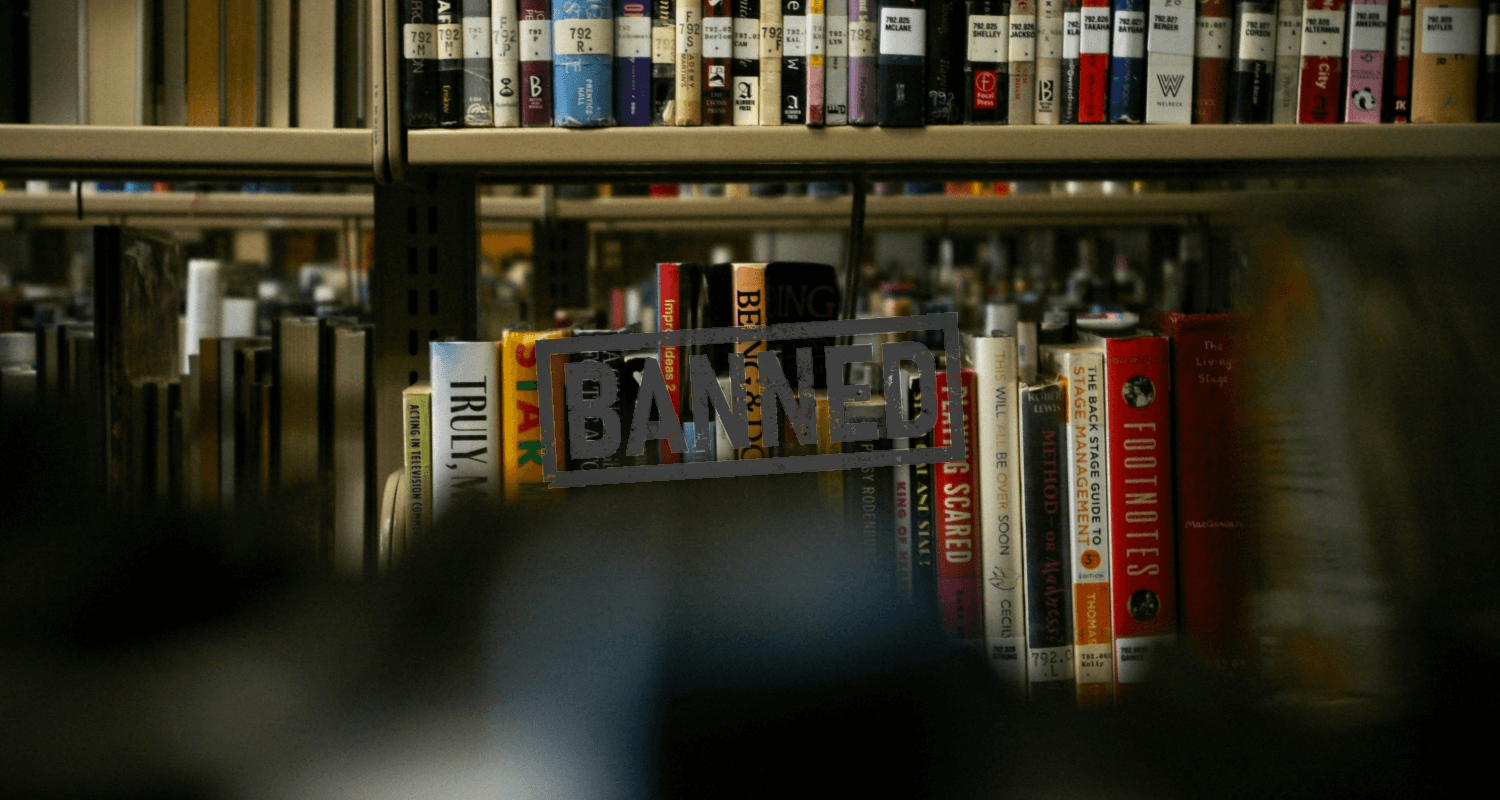
Photo by Matthew Kirk on Unsplash
The living room was quiet except for the soft hum of the dishwasher and the occasional rustle of pages turning. Mara sat on the couch, half-listening as her youngest, Nora, read aloud from the school library book they’d brought home that week. Upstairs, her older daughter, Talia, was finishing a science project at the desk they’d squeezed into the corner of her room.
She smiled, folding laundry as Nora’s voice moved through the story. Then the reading slowed. A pause. A frown.
“Mom ... what does this mean?”
Mara turned. Nora was pointing to a paragraph halfway down the page. Mara leaned over. Her eyes scanned the passage once ... then again.
Her smile faded.
It wasn’t vulgar. Not exactly. But the language was raw, emotionally complex and suggestive, filled with unspoken things Mara didn’t think a nine-year-old should be untangling on her own.
She gently closed the book. “I think this one might be a little too old for you, sweetie.”
Nora didn’t protest. Just nodded and went to find a snack.
Mara remained on the couch a moment longer, the book still in her lap. She turned it over, examining the library barcode, the “recommended for grades 3 - 5” sticker.
It didn’t feel malicious. Just ... unnecessary.
***
The cafeteria felt warmer than usual, too many bodies packed between folding chairs and tables stacked with PTA handouts. Mara perched near the front, palms resting on a yellow notepad. Around her, parents shifted coats, passed coffee thermoses, and greeted one another in soft, familiar tones.
“Thank you all for coming,” said Principal Holloway, tapping the microphone. “Tonight, we’re covering how our reading curriculum is designed and evaluated.”
The agenda unfolded predictably. Standardized test benchmarks, reading comprehension strategies, and digital tablet access. Then came the last item.
“Before we close,” Holloway continued, “there’s been concern regarding content in the school library. A parent brought it to our attention last week.”
Mara felt the room subtly shift toward her.
She cleared her throat. “It’s not about censorship. We just want to be sure what’s available to kids is ... appropriate.” She chose the word carefully. “There was a book with a very mature scene. Not graphic, but intimate. And this was a third-grade title.”
A few heads nodded. One parent frowned.
“We’re not talking about banning books,” she added quickly. “We’re talking about protecting developing minds from content that might be overwhelming, or unnecessary for their age. We just want to make sure the right books are reaching the right kids, the ones mature enough to understand what they’re reading.”
Principal Holloway leaned forward. “We’ve already flagged the title in question for review. And we’d be open to forming a committee to help vet future acquisitions.”
Several parents murmured approval. Mara tapped her pen once, then twice.
She hadn’t expected to speak tonight. But it had gone well.
The motion passed unanimously by the end of the hour.
***
Mara stood, a printout in her hand. “Thanks, everyone, for making time. I know we’re all here because we care about what our kids are reading, and we want to support the library, not hinder it. So, this isn’t strictly about banning. It’s about guidance.”
Nods all around.
Mrs. Polanski, the elementary school librarian, added, “We flagged the original book in question, and it’s temporarily pulled, but I would caution us not to go overboard. What else did you have in mind?”
One parent leaned forward, flipping through a few pages of flagged content samples. “Obviously, anything with explicit sexual themes. No argument there.”
“Profanity should be off the table,” said someone else. “It’s one thing for kids to hear it. It’s another to have it normalized in school books.”
Mara nodded, jotting a few notes. So far, nothing she disagreed with.
Then Mr. Lyle spoke up. “What about books that push controversial science? I saw one where a kid joins a protest about climate change. It treats the whole thing like settled fact. That’s not really age-appropriate, is it?”
There was a pause. Someone cleared her throat. Mara shifted slightly. “I think it depends on how it’s framed.”
“It’s framed like the adults are wrong,” Lyle replied. “It plants seeds. My daughter came home asking why we weren’t doing more to stop the planet from dying. She’s eight.”
Mrs. Polanski spoke cautiously. “That one’s technically shelved as early middle-grade fiction. It’s meant to encourage empathy, not activism.”
Another parent chimed in. “I don’t think kids that age need books about identity crises either. There was one where the main character didn’t feel like a boy or a girl. It was confusing. Even to me.”
A few murmurs. Mara’s pen stilled.
“We’re not saying those books shouldn’t exist,” the parent clarified, “just maybe that they belong in another age group. Or at home, if parents want to introduce them there.”
Mara looked around the circle. No one was arguing, only gently redrawing the lines.
She circled three phrases on her notepad: confusion, disruption, too much too soon.
***
The elementary school gymnasium had been transformed for the evening, with folding chairs arranged in neat rows, microphones checked and rechecked, and a line of board members seated at the long table onstage. Fluorescent lights hummed above, a subtle undercurrent to the low murmur of parents chatting in clusters.
Mara sat near the front, her committee’s notes clipped neatly in a folder. Her talking points were concise, cautious. This wasn’t a confrontation. It was a clarification.
Board Chair Walker cleared his throat into the mic. “Item 4. Discussion and vote on the Elementary Library Review Committee’s recommendations.”
Mara stepped forward.
“I’d like to thank the board for the opportunity to speak. Our goal from the start has been transparency, ensuring parents and educators work together to foster a learning environment that supports developmentally appropriate content.” She held up a sheet of paper. “The seven titles in question include explicit themes that, while perhaps suited for older students, do not belong in the hands of third or fourth graders.”
Murmurs of agreement rippled through the crowd. Someone clapped, then stopped halfway through.
A woman from the back row stood. “But isn’t this just censorship dressed up as concern? What about letting parents decide what their kids can read?”
Another parent responded before the board could. “That’s the point. We don’t get to decide if those books are already in the library. If they’re there, our kids have access. Where’s our choice in that?”
Board Chair Walker nodded as if moderating a debate, then gestured to another parent. A man in a fleece vest leaned into the mic.
“Let’s not pretend this is a ban. That word, ‘ban’, that’s media spin. These books aren’t being erased from existence. They’re just being relocated to a setting more appropriate to their audience. Middle school. High school. Home.”
A few people clapped this time. Louder.
Mara stayed seated, her eyes scanning the audience.
One board member, a woman with silver framed glasses and a steady voice, spoke last. “I appreciate the work that’s gone into this. But I do worry we’re setting a precedent. The line of what’s considered ‘appropriate’ moves easily. Once we start pulling books from one shelf, how long before we pull them from all of them?”
Silence followed.
The board voted moments later. Seven in favor. Two opposed.
The language of the motion was carefully worded: “Titles flagged for age-misaligned content will be reallocated to more appropriate grade levels and suspended from elementary access.”
No one said “ban.” But the books were gone just the same.
***
The morning sun spilled through the kitchen window as Mara filled lunchboxes, her phone vibrating softly on the counter. A message from a friend: “Did you see this? Channel 4, just now. You’re basically famous!”
She glanced at the link and tapped it open.
A clean-cut anchor smiled into the camera. “Tonight’s spotlight, how one local school board meeting has parents across the state talking.”
The screen cut to footage from the gymnasium, showing Mara standing behind the podium, eyes steady, voice composed.
“Not banning books,” the voiceover echoed. “Just making sure they’re placed in appropriate grade levels.”
The anchor smiled. “While other districts across the country face backlash over sweeping book bans, this community’s parent-led approach focuses on empowerment, giving families the ability to decide what’s suitable for their children. Controversial titles aren’t banned outright. They’re simply shifted to middle or high school shelves, where older students can engage with them more thoughtfully.”
A graphic filled the screen: “Letting Parents Decide: One Book at a Time.”
The voiceover continued. “Supporters say it’s about choice. If families want access to more mature material, they can seek it out through public libraries or purchase it privately. But the school library should reflect shared standards, not force premature exposure.”
Mara stood frozen for a moment, then slowly smiled. Her inbox pinged again. Messages from other parents, an invitation from a state education blog, a former teacher she hadn’t heard from in years writing, “It’s so good to see someone standing up for common sense.”
She felt something bloom in her chest, a quiet pride. This wasn’t about ego. It was about doing something that mattered. And for the first time in a long while, she felt like she was making a real difference.
***
The committee had begun meeting in the district’s administrative annex, a neutral space with a long table and nameplates that hadn’t been updated since the budget planning subcommittee left.
Mara arrived late. The meeting was already in motion.
“…and it’s not that the book is wrong,” someone was saying, “just that it’s centered on a protest. And that’s not the kind of messaging we want to put in front of nine-year-olds.”
The book in question was Steps Toward Change, a picture-heavy story following a group of children marching alongside their parents during a large-scale demonstration. The language was simple, the illustrations vibrant. There was no violence, just kids holding signs, chanting, sitting on the grass waiting for change.
“It’s historically based,” said Mrs. Polanski, her voice cautious. “Very age accessible. And it includes a section on civil discourse.”
Mara turned the book over in her hands. She’d used this title during a read-aloud week years ago, back when her oldest was in second grade. It hadn’t seemed radical then.
“It encourages civil engagement,” Polanski continued. “There’s even a prompt at the back asking kids to write about something they care about.”
“That’s the issue,” another parent said flatly. “We’re telling kids to pick a cause and ‘speak up’ without giving them the tools to know if they’re being manipulated. That’s not empowering. It’s premature.”
“It’s planting ideas,” someone else added. “Ideas they’re not ready to question.”
All eyes shifted to Mara.
She didn’t respond right away. The room felt warm. The book’s pages were glossy beneath her fingertips.
“I think...” she began slowly, “...this one might be better suited for older readers. Not because it’s wrong. Just because the emotions it stirs up,” she searched for the phrase, “require more maturity to process.” Several heads nodded. A motion was drafted. The vote passed quickly.
Mara returned the book to the table and folded her hands. It was still there, the unease. But not strong enough to call out.
***
The county office building was newer than Mara expected, with glass walls, brushed steel, and polished stone in the lobby that seemed to muffle every footstep.
The conference room where the advisory board met was high-ceilinged and fluorescent-bright, with nameplates she didn’t recognize and a carafe of lukewarm coffee at the center of a long table.
She adjusted the visitor badge clipped to her sweater. It read Regional Materials Review Task Force - Parent Advisor.
There were a dozen people present, some from other districts, some from the County Education Office. A man at the far end of the table introduced himself as Director of Educational Media.
“We’re excited to have you here, Mara,” he said. “Your district’s approach has become something of a model.”
She smiled carefully. “It’s been a community effort.”
Another board member, the Library Services Coordinator for the county, gestured to a binder in front of her. “We’ve assembled a preliminary framework based on your committee’s model. The idea is to establish a shared criteria set for material suitability across all K–5 libraries in the county.”
Mara flipped open the binder. The framework was clean, efficient, and unmistakably broader than what her original group had drafted.
One chart categorized flagged content into three tiers: Explicit Language, Sexual and Identity Themes, and Ideological Content Likely to Create Student Discomfort.
Next to the third category were examples:
- Protest imagery or civic demonstrations
- Family structures outside traditional two-parent households
- Historical narratives depicting racial oppression or systemic injustice
Mara hesitated. “Some of these feel … subjective.”
The man nodded. “That’s why the review board will make the final decisions. It’s not about banning. It’s about anticipating age-appropriate interpretations. We trust parents to know when certain ideas are better introduced at home.”
Someone else added, “This is about consistency. We want to avoid district by district confusion. One parent’s ‘library treasure’ shouldn’t be another’s unexpected controversy.”
There was polite laughter. Mara didn’t join in.
Later, as she rode the elevator down, she turned over a copy of the framework in her hands. Her name was in the footer of the title page. “Based on materials developed by the Ridgeway Elementary Library Review Committee.”
It looked official. Impressive.
She slipped it into her bag carefully.
She hadn’t meant to end up here. She was drawing lines for people she’d never meet, schools she’d never see. She’d only wanted to protect her daughter. Her school. Her town.
This felt bigger. And heavier.
She stared at her reflection in the elevator’s brushed metal doors.
Maybe this was what it meant to protect something larger. Maybe this was how real change took root.
***
The hotel ballroom had been converted for the summit. Velvet drapes hung behind the stage, and folding chairs sat in neat rows. A podium was framed by flags and a digital banner that read, “Protecting Childhood, Preserving Choice: A Statewide Dialogue on School Libraries.”
Mara sat onstage beneath the lights, blinking into the hush of a hundred parents, educators, and school officials. Beside her, a panel of speakers shuffled notes. It included a state board liaison, a parent advocate from a rural district, and a representative from the Children & Families Policy Council, a nonprofit that had steadily gained influence in shaping library policy throughout the region.
“In conclusion,” the Council rep was saying, “these narratives may reflect emerging cultural trends in some parts of the country, but they don’t reflect the principles that have guided families in this state for generations. That’s why we believe parents, not institutions, should have the final say over when their children are exposed to these ideas.”
A few heads nodded across the crowd.
The moderator stepped in. “Thank you. And now we’ll hear from Mara Kim, whose district model has served as the foundation for many of the frameworks we’ve seen discussed today.”
Mara kept her voice measured. “Our goal was never to restrict ideas. Only to make sure those ideas reach children at a time when they can truly process them. We believe that’s not a ban. It’s good parenting, supported by policy.”
She glanced toward the audience, then back to the moderator.
“In our county, that message has resonated across school communities and parent groups alike. We’ve focused on transparency, clarity, and above all, choice. And I think what’s made the difference is that it hasn’t felt reactionary. It’s felt intentional. Collaborative.”
She allowed herself a small nod. “Because if we want this work to last, if we want it to be more than just a local movement, it needs to be built on shared understanding and avoid the controversial book ban efforts in other states.”
A ripple of applause moved through the audience. She sat back, palms lightly pressed to her lap.
Then the Policy Council rep leaned forward again. “Mara’s district has done something remarkable. It’s simple, replicable, and grounded in common sense. But there’s room to improve consistency statewide. Our proposal is to standardize flagged content access across the board. Titles with maturity concerns would be limited to high school libraries only. Fewer points of access, clearer expectations.”
Mara’s breath caught slightly.
High school only?
That wasn’t what she’d intended. Middle schoolers were, well, older. Capable of asking questions. Curious. She remembered Talia in sixth grade, devouring books that stretched her thinking. The idea of locking all those shelves felt … overly cautious. Not dangerous, exactly. But maybe not fair.
From the audience, a hand shot up. A teacher. “So, an eighth grader who’s ready can’t check out a flagged book unless their parent takes them to a separate library?”
Before anyone else could respond, the Policy Council rep offered a crisp reply. “If a parent feels that strongly, yes, they can always obtain the book themselves. The schools don’t need to be the gatekeepers of every difficult conversation.”
He paused. “And frankly, this protects our educators. In other states, middle school librarians have faced fines, or worse, for failing to enforce sometimes difficult to interpret policies. This approach removes that burden. It’s clean. It’s fair.”
The state liaison added smoothly, “We’re not just protecting kids, we’re protecting staff. This gives parents more freedom to introduce sensitive topics on their own terms, without putting librarians in the crosshairs.”
Mara’s grip on her pen loosened. Right. It wasn’t overreach, it was clarity. It wasn’t censorship, it was safety.
She didn’t speak. But she nodded.
It made sense. More than it had a minute ago.
***
The hearing room wasn’t grand, but it was crowded. Rows of folding chairs pressed against paneled walls, everyone filled with retired teachers in cardigans, PTA moms with laminated handouts, or grandparents clasping church bulletins like talismans. A printed banner stretched across the rear wall.
Parental Rights and Literacy Empowerment Act – Public Testimony
The name said everything. It sounded reassuring. Necessary. Unassailable.
Legislators sat at the long dais beneath the state seal, flipping through binders, sipping from branded water bottles. Most of them already knew how they’d vote. The bill had strong support. Quiet backing from the governor’s office, glowing headlines in local media, and the full-throated endorsement of the Children & Families Policy Council. A few districts had even preemptively implemented draft policies to show alignment.
At the edge of the room, a student held a sign. All Stories Belong.
It tilted slightly as she shifted her weight, ignored by most of the crowd.
The committee chair, a clean-cut man with a practiced smile, adjusted his microphone.
“We’re grateful to everyone who made time to speak today,” he said, voice amplified and steady. “This is a bill about clarity. About giving families the tools they need to make informed choices. We welcome respectful dialogue, but let’s remember, this isn’t about banning books. It’s about giving parents a stronger voice in what their children read at school.”
Mara sat in the second row, waiting for her chance to speak. Her prepared remarks were folded neatly in her lap, double-spaced and lightly annotated. A sticky note marked the paragraph she might shorten, depending on how long they gave her. She could hear her name being murmured in the row behind her. Friendly, admiring, expectant.
A woman approached the microphone, silver hair pinned neatly at the nape of her neck. She wore a navy blazer and carried herself like someone used to being listened to. Measured, firm, unshakable. She introduced herself as a school board chair from a rural district in the eastern part of the state.
“Our board reviewed library holdings this spring,” she said. “We found dozens of titles with content that, frankly, don’t belong in a school setting. Books that unnecessarily blur traditional family roles. Stories that question identity. Adult topics wrapped in child-friendly covers.”
She let that sit before continuing.
“No one’s trying to erase literature. But we’re long past the point of assuming all published books are appropriate simply because they’re labeled for youth. If a book makes a parent pause, it should make a district pause too. High school is one thing. But middle school? Elementary? That’s where we need real boundaries, not suggestions. Rules. We don’t want young children coming across something confusing, controversial, or untraditional. Something that parents will have a hard time explaining.”
The room shifted in subtle agreement. A nod from the committee chair. A low murmur of assent from a few seated behind her.
Mara kept her expression neutral, her fingers lightly pressed against the edge of her notes. She didn’t disagree entirely. The examples made it hard to, but something about the phrasing set her nerves on edge. Rules, not suggestions. That wasn’t how it had started.
But it wasn’t entirely wrong either, was it?
Parents weren’t losing access. They could still get any book they wanted. The act didn’t ban books. It clarified when and where they were available. That mattered.
And besides, this was going to help a lot of families. A lot of kids.
The clerk called her name.
Mara rose, smoothed her blazer, and stepped up to the microphone. A few audience members whispered softly. Recognition, maybe approval. She placed her notes on the podium, unfolded but untouched.
“Thank you, Chairperson Nolan, members of the committee,” she began. Her voice was steady, practiced. Familiar, even.
“I’m Mara Kim, a district administrator from Ridgeway County and a parent. Last year, our team developed a framework to address concerns around sensitive titles in school libraries. It was built locally, with our librarians, our teachers, and our families. The goal wasn’t censorship. It was timing. Making sure ideas reached students when they were developmentally ready to engage with them meaningfully.”
She paused briefly, scanning the committee, then the room.
“What surprised us was how well that message resonated. Parents who’d felt overlooked became active partners. Educators who’d been anxious about complaints gained clarity and support. And more than anything, our kids kept reading. Because we didn’t remove books. We just adjusted how and when they were accessed.”
She lifted her gaze.
“This is work I never imagined myself in. But having seen what thoughtful policy can do for a community, I understand how important it is to get this right.”
Another brief pause.
“This act, if carefully implemented, will give families across the state what so many in our county have asked for. Not silence or erasure, but support and clarity. A partnership between schools and homes.”
A light shuffle of approval moved through the audience. She could feel the committee nodding, as if confirming what they already believed.
Mara smiled, polite and composed, and stepped back.
A new name was called. Elena Ruiz, a high school librarian from the state capital. She wore a simple black dress and a lanyard heavy with enamel pins resembling book covers, with banned titles and a tiny stack of rainbow-colored spines. She approached the microphone with quiet confidence, unfolding a single sheet of paper.
“I’ve worked in school libraries for seventeen years,” she began. “I’ve helped students find books about grief, about joy, about identity. I’ve watched them light up when they see themselves on the page, or when they see someone completely different and realize they care.”
She looked up, steady.
“This bill may not use the word ‘ban,’ but let’s be honest about what it does. It removes books from shelves. It limits access based on vague, subjective criteria. And it does so in a way that disproportionately affects stories about race, gender, and family structures that don’t fit a narrow mold.”
A few murmurs rippled through the room, some supportive, some disapproving.
“I understand the desire for parental involvement. I support it. But this isn’t about involvement. It’s about control. And when we start deciding which identities are too ‘confusing’ or ‘untraditional’ for students to encounter, we’re not protecting them. We’re erasing them.”
She folded her paper, voice still calm.
“Please don’t call that empowerment. It’s censorship. And our students deserve better.”
She stepped away from the mic. A few scattered claps rose from the back of the room, quickly swallowed by silence.
Mara sat motionless, her hands still folded over her notes. She didn’t disagree with everything Elena had said. But she didn’t agree with all of it either. The word erasure felt too sharp, too final.
She glanced toward the committee. No one looked rattled. If anything, they looked more resolved.
***
The television cast a soft blue glow across the room. Mara sat curled on the edge of the couch, a mug of tea cooling in her hands. Onscreen, the anchor’s voice was smooth, practiced, just detached enough to make the story feel inevitable.
“Tonight, a new chapter in the national debate over school libraries. The Parental Rights and Literacy Empowerment Act, signed into law this morning, is already drawing attention from lawmakers in at least six other states. Supporters call it a model for balancing parental oversight with student access. Critics say it’s a book ban in disguise.”
A split screen appeared. One side showed the governor signing the bill beneath a banner that read Protecting Families, Empowering Schools. The other showed a student protest outside a high school, handmade signs bobbing in the crowd.
“The law limits access to flagged titles in middle and elementary school libraries, giving parents the option to authorize access through high school collections. It also establishes a state-level review board to evaluate materials considered too mature for young audiences.”
Mara’s name flashed briefly on the screen, Architect of Ridgeway Framework, followed by a still photo from the hearing. She looked composed. Certain.
“The legislation has sparked national debate. In Washington, some lawmakers are calling for a federal version. Others warn it could open the door to broader censorship.”
The segment cut to a panel discussion. One guest praised the law as “a commonsense solution to protecting our children.” Another called it “a chilling precedent.”
Mara muted the volume. The room got quiet, except for the faint hum of the television and the soft clink of her spoon against the mug.
She hadn’t asked for this, but she helped build it.
And now it had a name.
***
Her inbox pinged.
Subject: You’re in the news again!
The message was from Rachel, a former colleague from Ridgeway.
“Just saw this and thought of you. Amazing to see how far your work has traveled. You really started something, Mara. Hope you’re proud!”
Below the message was a link to a national education blog. Mara clicked.
“Several other states have introduced legislation modeled on the landmark Parental Rights and Literacy Empowerment Act, with some going further by adding provisions that allow parents to grant, at their discretion, consent for their high school students to access flagged materials within high school libraries.”
A photo accompanied the article, showing a smiling lawmaker at a podium, flanked by parents holding signs that read Empower Families, Protect Teens. The caption quoted him directly.
“We’re simply building on the thoughtful framework pioneered in Ridgeway. If it worked for middle schoolers, why not high schoolers too?”
Mara stared at the screen, rereading the quote. Her name wasn’t in the byline, but it didn’t need to be. The “thoughtful framework” was hers. What followed wasn’t.
She leaned back slowly. She wasn’t fully part of the conversation anymore. Her voice, the careful moderation and boundary drawing without silencing, had faded somewhere between committee rooms and campaign podiums.
The new provisions weren’t hers. They probably weren’t the choices she would have made. But they wouldn’t apply in her state. Other states had different needs, different politics. Let them fine-tune. Let them draw their own lines.
She marked the message unread and closed her laptop.
***
The red light on her desk phone blinked. One new voicemail.
Mara pressed play.
“Hi Ms. Kim, this is Jordan Ellis from KPRN News. We’re doing a segment on the proposed national rating system for children’s books, modeled in part on your Ridgeway framework, and we’d love to get your perspective. If you’re available for a quick interview or statement, please give us a call. Thanks.”
Click.
Mara stared out the window for a moment before turning to her laptop. She’d seen the headline yesterday. “Federal Literacy Framework to Introduce G/PG Book Classifications for Schools.”
She opened the official summary again.
G – General Audiences
Titles suitable for all school-age readers. These books may include themes related to friendship, family, learning, and personal growth.
PG – Parental Guidance Suggested
Titles that may explore belief systems, identity, relationships, or other culturally sensitive themes. Parents may want to wait to introduce these topics until a child is more mature and can make judgements based on a more established belief system.
The ratings would be applied nationwide. One classification for every child and young adult title in the U.S. The federal line had been drawn. States could choose what to do with it.
She recognized the language. Not because she’d written it, but because it had been patterned carefully on hers.
She hovered over the voicemail button. Then minimized the window.
Someone else had the microphone now.
***
The podium bore the seal of the Department of Education, but the woman behind it, Press Secretary Avery Grant, spoke with the clipped confidence of someone used to fielding fire.
“Today, the administration is proud to introduce the National Book Classification Framework, a commonsense tool to support transparency and family engagement in public education.”
She clicked the remote. A slide appeared behind her:
G – General Audiences
Suitable for all school-age readers.
PG – Parental Guidance Suggested
Titles that explore belief systems, personal identity, relationships, or other socially or culturally complex themes that introduce alternative perspectives some families may not be prepared to discuss.
A reporter raised his hand. “So just to clarify, is this a federal rating system for books?”
Grant smiled. “It’s a classification system. Like movie ratings. It simply provides clarity.”
Another voice cut in, Mendoza, from The Chronicle.
“But the PG label, ‘Parental Guidance Suggested’, could lead to opt-in policies that limit access. Isn’t that effectively a soft restriction?”
Grant didn’t blink. “No one is limiting access. This framework empowers families. It removes uncertainty for educators and gives parents the information they need to make informed choices.”
Mendoza pressed. “But what does ‘alternative perspectives’ mean? Alternative to what?”
Grant’s tone cooled slightly. “It means perspectives that may not reflect every family’s values. That’s not a judgment. It’s a recognition of diversity. Some families want to be part of those conversations. Others prefer to wait. This system respects both.”
A murmur rippled through the room.
“And Ridgeway?” someone asked. “Is it true this builds on the Ridgeway model?”
Grant nodded. “Absolutely. Ridgeway showed us that thoughtful categorization fosters trust. We’re simply scaling that success.”
“So, is this a template for policy adoption?” another voice asked. “Something states are encouraged to follow?”
Grant offered a composed smile. “States remain entirely free to determine how they engage with this framework. But with a number of states implementing or looking to implement a version of the Ridgeway model, we felt there was a need for federal standards to not only ensure consistency, but also to ease the burden for states from having to implement a rating system of their own.”
***
The children’s section of the Ridgeway Public Library smelled faintly of glue and carpet cleaner. Mara hadn’t been here in months, not since her niece’s last visit, but the layout was unchanged. Beanbags in the corner, a mural of woodland animals reading under a tree, and rows of low shelves lined with bright covers.
She wandered without purpose, trailing a finger along the spines. Then she noticed the stickers.
Small, circular. Color-coded.
G – General Audiences
PG – Parental Guidance Suggested
She blinked. This wasn’t a school library.
She crouched to read a few titles.
The Stars Between Us - PG
A House Called Tomorrow - PG
My Name Is Fire - PG
She pulled one down and flipped through it. A coming-of-age story. A girl with two moms. A subplot about questioning faith. Nothing graphic. Nothing she wouldn’t have shelved herself, once.
She stood and scanned the shelves again. The PG stickers weren’t rare. They were everywhere. Not clustered in a corner, but scattered, threaded through the collection like a quiet warning.
She hadn’t realized the ratings had made it this far.
She turned toward the front desk. A librarian was helping a boy check out a stack of picture books. His mother stood beside him, smiling.
Mara hesitated, then returned the book to its place.
She didn’t say anything. She just walked out. The automatic doors parting with a quiet sigh behind her.
Later that night, the glow of her laptop lit the room. She hadn’t planned to look. But curiosity, or maybe something closer to guilt, had pulled her back in.
She typed in PG stickers public libraries.
The first article was from a local paper in a neighboring state. A county board had approved the use of PG labels in public libraries “to help busy parents make informed decisions about the books their children check out, just like ratings for movies, music, and video games.”
Another headline: “Library Ratings Expand Beyond Schools in Several States.”
She skimmed the text. The stickers weren’t federally mandated. But in some places, they were now required for public libraries receiving state funding.
She closed the laptop slowly.
She’d stepped back to avoid the noise. But the system hadn’t stopped growing, it had just stopped asking for her input.
***
The room was packed. Cameras clicked. Press Secretary Grant, flanked by a senior Department of Education official, stepped to the podium with practiced calm.
“Good morning. Today, the administration is introducing the Parental Rights and Literacy Empowerment Act, a national framework to support transparency, consistency, and family engagement in public education.”
She clicked the remote. A slide appeared behind her:
Key Provisions:
• Requires all public-school libraries to adopt the G/PG classification system
• Supports states in implementing access rules aligned with local values
“This legislation builds on the success of the National Book Classification Framework and responds to the growing number of states already adopting similar policies. With this act, we’re providing a clear, consistent foundation so no family is left guessing.”
A reporter raised a hand. “Is this a mandate?”
Grant nodded. “It’s a federal standard for public-school libraries. States retain flexibility in how they implement access policies, but the classification system will be universal.”
Another voice, Mendoza, from The Chronicle.
“So, this is no longer voluntary. Every public-school library in the country will be required to label books G or PG?”
Grant’s smile didn’t waver. “Correct. The goal is clarity. Parents deserve to know what’s on the shelves in their children’s schools.”
Mendoza pressed. “And who decides what qualifies as PG? Is there an appeals process if a book is misclassified?”
Grant’s tone remained even. “The classification criteria were established under the National Book Classification Framework, which was developed with input from educators, child development experts, and community stakeholders. That process remains in place. As with any national standard, we’re committed to ongoing review and refinement to ensure it reflects the needs of families and schools.”
“But consensus according to whom?” another reporter asked. “Some of these PG books include award-winning titles that reflect LGBTQ+ families, racial justice, or religious questioning. Isn’t this just a sanitized way to restrict access?”
Grant’s voice sharpened slightly. “This isn’t about restriction. It’s about partnership. Some families want to be part of those conversations. Others prefer to wait. This act respects both.”
A murmur rippled through the room.
***
The press conference played on mute in the corner of the staff lounge. Mara stood by the coffee machine, watching the closed captions scroll across the screen.
“...the Ridgeway model helped inspire this legislation…”
Her name again. She exhaled slowly, stirring her tea.
Outside, the sun was low. She gathered her things, slung her bag over her shoulder, and stepped into the parking lot.
That’s when she saw them.
Three reporters, clustered near the sidewalk. One held a mic. Another had a phone already recording.
“Ms. Kim, do you have a moment?”
She froze, just briefly. Then kept walking.
“We just wanted to ask. Your name came up in the briefing today. Do you support the new federal legislation?”
She stopped. Not because she wanted to. Because she knew walking away would say more than she was ready to.
“I saw the briefing,” she said. “I wasn’t expecting to be mentioned.”
“So, you weren’t consulted?”
“No,” she said. “I haven’t been involved in the national rollout.”
“But the Ridgeway model was cited as the foundation. How do you feel about where this is going?”
That one landed harder than she expected. She looked past them, toward the street. Then back.
She thought of the library. The PG stickers. The books that didn’t feel dangerous until someone decided they were.
Has it gone too far?
She didn’t answer the question. Not the one in her head.
“I’m proud that Ridgeway helped start a national conversation,” she said carefully. “That was always the goal. To take these questions seriously. To give families and educators a framework.”`
“And now?”
She hesitated. The mic hovered.
“Now, I think the country is having that conversation.”
“So, you’re not endorsing the act?”
“I’m not opposing it either,” she said. “I’ve stepped back. I don’t miss the spotlight.”
“But do you think it’s gone too far?”
She gave a small, tired smile.
“I think that’s for others to decide now.”
She turned and walked to her car. The reporters didn’t follow.
Inside, she sat for a moment before starting the engine. Her reflection in the rearview mirror looked calm. But her hands were gripping the wheel a little too tightly.
***
The television flickered in the corner, casting blue light across the room. Mara sat curled on the couch, a half-finished cup of tea cooling on the table beside her. She hadn’t planned to watch the segment. But the headline caught her eye.
“Library Access or Ideological Overreach?”
The host, a sharp-tongued liberal commentator named Reed Langston, leaned forward at his desk.
“Joining me tonight is Senator Thomas Kellerman of Arkansas, co-sponsor of the Guided Access to Literature Act, GALA, which, among other things, prohibits minors under sixteen from entering public libraries without a parent or guardian. Senator, thanks for being here.”
Kellerman smiled, all teeth and certainty.
“Glad to be here, Reed.”
Langston didn’t waste time.
“Let’s be clear. This policy doesn’t just classify books, it restricts access to them. Kids can’t even walk into a library alone anymore. What exactly are you protecting them from? Literacy?”
Kellerman chuckled.
“It’s about freedom, Reed. Something you progressives claim to care about. Do we let children walk unsupervised into adult bookstores? R-rated movies? No. Because some venues are too mature for children to navigate on their own. Parents should decide when their kids are ready.”
Langston raised an eyebrow.
“You’re comparing a library to an adult bookstore?”
“I’m comparing it to places where children would have unsupervised access to adult topics,” Kellerman shot back. “You can still go down to your local library and check out a book about how two male polar bears raise a cub in the wild. That’s your right, and we aren’t infringing upon that. But some families don’t want to be fielding questions about gender identity from their eleven-year-olds.”
Mara blinked. The senator was smiling, as if he’d scored a point.
“We aren’t taking anything off the shelves,” he continued. “We’re giving parents the right to decide when their children are ready for unconventional ideas. GALA is a common-sense expansion of freedom.”
“Let me get this straight, “ Langston said. “You’re not banning books. You’re banning people.”
He kept talking, but Mara muted the TV. The words lingered.
A common-sense expansion of freedom.
She’d used that phrase once. Or something close to it. Back when the framework was still a framework. Back when it was about clarity, not control.
She stared at the screen, the senator’s mouth still moving.
Then she reached for the remote and turned it off.
The room fell silent.
She sat there for a long moment, the glow of the television fading into the dark.
This wasn’t what she was trying to do.
When she’d helped shape the framework, it was about partnership. About trust. About giving families a way in, not building walls around what children could reach.
But now?
Now it was about parental permission and barred doors. About who got to decide what counted as “appropriate,” and who got left behind.
She leaned back, eyes on the ceiling.
She pictured Talia visiting the library, backpack slung over one shoulder, reaching for the glass door.
A sign taped to the entrance: “Minors must be accompanied by a parent or guardian.”
Would they stop her? Ask for ID?
Would she be told to come back with an adult? Like she’d wandered into the wrong place. Like she didn’t belong.
The thought made Mara’s chest tighten.
Talia loved that library. She knew the layout better than most adults. She’d once spent an entire afternoon tracing monarch migration patterns, flipping between field guides and picture books like a scholar.
And now?
Now she might be turned away. Not because she crossed a line. But because the line had been moved.
She closed her eyes.
It’s gone too far, she thought.
And for the first time, she knew she couldn’t stay quiet much longer.
***
Mara sat at the kitchen table, the afternoon light slanting across the floor. The house was quiet.
The statement had cost her three nights’ sleep. It wasn’t an apology, exactly. But it didn’t excuse her either.
I believed in the framework. I helped build it.
But I can no longer support how it’s being used.
The Guided Access to Literature Act closes more doors than it claims to open.
And that is not a freedom I can endorse.
She took a deep breath, then clicked “publish.”
She closed the laptop and sat still, unsure whether speaking now would matter after so much silence.
***
That night, Mara opened her laptop to see if there was any reaction to her post.
There was no breaking news banner. No eruption. Just a few stray pickups from education bloggers and one national outlet that linked to the post under the headline: “Architect of Library Ratings System Says GALA ‘Goes Too Far.’”
Her inbox pulsed.
One message from the Readers First’s regional director, read, “We’ve decided to remove your name from the Ridgeway model citation. You no longer reflect our core values.”
Another, this one from a progressive advocacy group she’d once quietly sympathized with, read, “While we acknowledge your recent statement, the harm is done. You enabled this framework. Your legacy is clear.”
Below her post, the reply thread was active.
“You built the fence. You don’t get credit for noticing it casts a shadow.”
She kept skimming.
“You gave the left everything they wanted. Total betrayal.”
“You don’t get to change the rules just because the backlash finally touched you.”
“You helped build the scaffold. Don’t pretend you’re shocked by the hanging.”
And then, simply:
“Traitor.”
No support from either side.
She closed the laptop. The room was quiet, but the noise lingered.