Long Short Story
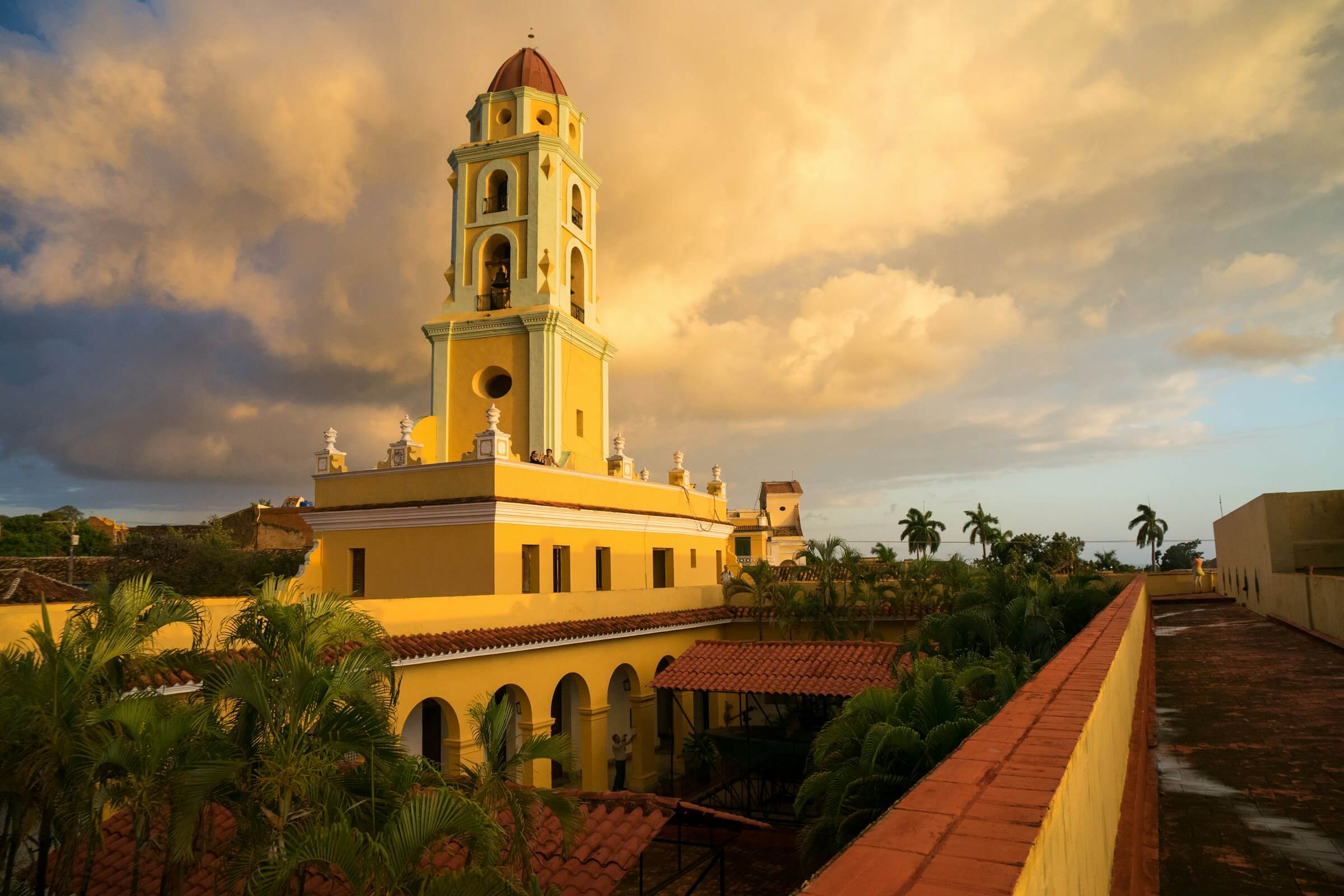
Photo by Elizabeth Gottwald on Unsplash
“Within the Revolution
everything, outside the
Revolution nothing.”
Fidel Castro
“With God, everything.
without God, nothing.”
Slogan of Cuban Catholic
dissidents
Fidel Castro, the man who had banned Christmas, was increasingly concerned about reports he had received about the apparition of a Holy Lady to an Afrocuban sixteen-year-old at a small grotto near a river close to the city of Holguín. The girl was apparently saying the Holy Lady appeared to her in blue and white robes – dressed exactly like Cubans’ Our Lady of Charity is portrayed – and had given her sundry messages about the fate of the Cuban people and its leader. At first, it was just a rumor that something strange was happening in Holguín: the daughter of a Santería[1] high priestess was reportedly having conversations with a Holy Lady – some said it was Our Lady of Charity, others that it was the Santería deity Ochun – but nobody could hear the Holy Lady’s voice other than Lourdes Santaliz herself. As the days and weeks progressed, greater and greater crowds visited the grotto to see the girl while she was immersed in her trances, what some would call a catatonic state. First, it was just Lourdes by herself, then twenty people joined her, then a hundred, then a thousand, then five thousand until by the first of November 1978 fifteen thousand people were at the grotto to pray the Rosary with Lourdes and to find out what the lady taught her. Based upon what Fidel heard, the Holy Lady was telling Lourdes that the Cuban people should repent, not just the crowds that had ceased attending Mass after the Revolution but more importantly el Comandante[2] himself. Fidel had always thought that popular devotion posed a threat to the Revolution so he summoned the mayor of Holguín to meet with him at the Palace of the Revolution in Havana to discuss the matter in person.
“What exactly is happening,” Fidel asked the mayor, speaking each syllable slowly and distinctly, “at the grotto in Holguín?”
“I think it’s some sort of Santería thing,” the mayor responded. “A young black girl is reportedly having visions of Ochun, goddess of rivers and mother to the Yoruba peoples, at a grotto next to a river. I’ve looked into the matter and her mother is not only a leading Santera priestess but also a member of the Communist Party of Cuba. I wouldn’t make too much of it.”
“Surely you know,” replied Fidel as he slowly dragged from a puro[3], “that in the syncretic faith of the Santeros Our Lady of Charity and Ochun are one and the same. Isn’t Santería just a clandestine type of Catholicism?”
“Yes, I know that, but those who follow Santería use Catholic saints only to camouflage their own. And you yourself have stated that Santería is Cuba’s majority religion.”
“I only did that to oppose the Christians. Do you even know whether those who attend her trances are not only adherents of Santería but Catholics as well?”
“I’m not sure,” replied the mayor. “I assumed they were all followers of Santería praying to Ochun. It’s the followers of Santería, not the Catholics in Cuba, who are given to mystical trances.”
“If they are Catholics, the situation is very problematic. Those who subscribe to Santería are not threats to the Revolution, they are mostly poor blacks who benefited from the change in regime by inheriting the living quarters of the worms who went into exile in Miami. In fact, the Santeros don’t even have churches or temples but congregate in people’s homes to worship. The Catholics, on the other hand, are a constant menace with unbridled power. The Catholic religion is a powerful weapon in the hands of the gusanos,[4] a reactionary faith at odds with authentic Christianity. The true Christ was a revolutionary.”
“How could they continue to be a menace when the regime has exiled all the priests, expropriated all their convents and seminaries, shut down all Catholic schools and forbidden all Catholic processions? Even children are taught atheism at school, and as far as I know, no churches have been built since you rose to power.”
“Joseph Stalin once joked that he had much more power than the Christians since the Pope didn’t have thousands of soldiers at his beck and call. The Russian leader was sorely mistaken. Pope John Paul II has a billion Catholics throughout the world under his control, including millions in his native Poland and millions here in Cuba. Don’t underestimate his power to use them in an effort to dismantle worldwide Communism.”
“Frankly I haven’t given the matter much attention,” responded the mayor. “It’s just a bunch of harmless superstitious dolts getting together to pray to an Órisha[5]. Their fervor will soon diminish.”
“What is the young girl saying about me?” asked Fidel.
“Nothing concrete,” replied the mayor. “She just said that you should repent along with all the other Cubans. She’s repeating meaningless platitudes.”
“You’re a fool,” replied Fidel witheringly. “Don’t you see that such devotions are inimical to the revolutionary project?”
“Even assuming that those attending the apparitions are Catholics rather than followers of Santería, how could that threaten the Revolution?”
“Miraculous apparitions of the Virgin Mary always redound to the benefit of counterrevolutionary elements. In France, the apparition of the Virgin Mary at Lourdes supported the opposition of the Church against an anticlerical Republic. In Mexico, the reported apparition of the Virgin of Guadalupe was used to convert eight million Indians to the Catholic faith and subjugate them in the process. In Portugal, the apparition at Fatima was just the excuse needed by the reactionaries to oust an anticlerical government and replace it with the fiercely Catholic dictator Antonio Salazar.”
“With all due respect, my Comandante, those are things that happened years ago in places, unlike Cuba, where atheism is not the official religion of the State. In Portugal, the government didn’t have Committees for the Defense of the Revolution which ferreted out traitors to the regime block-by-block and kept potential enemies under constant surveillance. And Portugal didn’t have leaders with a mano ferrea[6] such as you.”
“Still, I think the reported apparitions are a threat.”
“I’ll look into it,” said the mayor. He understood that Fidel was deadly earnest. “We’ll threaten to arrest her for counterrevolutionary propaganda unless the apparitions cease.”
“I don’t care how you do it but do it as soon as possible. The last thing I want is to have a Marian pilgrimage site in Cuba. I’m afraid it might become a focus of opposition to the Revolution.”
“If you feel so strongly about it, my Comandante, I’ll nip the devotion in the bud.”
“You must remember this, Manuel. After twenty years of relentless enforcement, I haven’t been able to extirpate the cancer of devotion to Our Lady of Charity from the hearts of Cubans. During the first year of the Revolution – you are too young to remember it – more than a million people gathered at the Plaza de la Revolución to venerate the Virgin Mary despite my opposition. The procession ended in violence as the Catholics used the occasion to protest against the Revolution, and a Catholic youth was killed by the security forces of the State.”
“I don’t think that could happen again, The majority of the Catholics in Cuba are pliant. The most faithful gusanos live in Miami.”
“Don’t forget the reported miracle of Our Lady of Charity happened more than three hundred years ago and faith in her powers has not diminished one whit. A famous Cuban author once wrote that to be a true Cuban you must believe in Cachita[7].”
“I understand,” replied the mayor.
“Just imagine what the Catholics of Cuba would do if they conclude that the Virgin herself supports their treasonous intentions. No, Manuel, this matter must be handled with the utmost seriousness. It is especially problematic because it is happening in the province of Holguín.”
Fidel knew Holguín was the exact place where the three Juanes – two men of mixed race and a ten-year-old black slave – found the statuette of Our Lady of Charity in the sea as the three were sailing on the bay of Nipe during a storm.
“Like I said,” the mayor responded. “I’ll get right to it, President Castro.”
“Do it right,” Fidel said trenchantly. “Don’t forget you serve as mayor of Holguín at the pleasure of your Comandante.”
“I have a question,” the mayor asked haltingly, “but it is a delicate matter.”
“Yes, what is it?” asked Fidel.
“Do you want – I don’t know how to put it – do you want Lourdes Santaliz to die in an accident, so to speak?”
“Are you kidding?” asked Fidel. “She would be a much more potent symbol against the Revolution dead rather than alive.”
“In that case, I’ll just retract my question. I was just wondering, given how seriously you see the situation, whether you might favor extreme measures.”
“We don’t want to make the same mistake the Americans made when they martyred Che Guevara. Sure, they killed one man but they created a folk hero who would inspire millions. You wouldn’t have schoolchildren chanting ‘We shall be like Che’ in school if he had never been murdered. You wouldn’t have his picture on T-shirts worn by the American sons of the bourgeoisie. Who remembers Camilo Cienfuegos outside of Cuba? The CIA would have accomplished their purpose much more efficiently if they had broken him, if they had forced him through torture or other means to abjure the Revolution. So, killing that young girl is out of the question. I don’t want to create martyrs but apostates. Your goal should be to break her. You can threaten her, bribe her, even torture her as a last resort, but don’t forget your purpose should be to make her retract her statements, especially her claim that the Holy Lady told her the leader of the Revolution should repent.”
***
Lourdes Santaliz had not been raised as a Catholic but as a devotee of Santería, focused on the worship of sundry deities called Órishas who were venerated with offerings of fruits, vegetables, grains, and alcohol. Followers of Santería have a multitude of deities including Chango, Babasu, Obatala, Ogun, Yemaya and Osain – all of them paired with a Catholic saint in their syncretic religion. Lourdes remembered her mother Belkis, high priestess of the Santería faith, using palo santo[8] and incense to purify the area where the rituals were to take place, makeshift altars called congos adorned by a coconut to resemble a human skull and located in a sacred space called the igbodu. Lourdes recalled her mother ringing a bell to summon the African ancestral spirits and sometimes engaging in mystical trances as she was being possessed by the Órishas. Lourdes’ mother often engaged in the ceremonias de los Órishas[9], a ritual to strengthen a bond with a specific deity, usually Oshun (for abundance) or Yemaya (for protection). African drums were used in private celebration, a host of instruments in public processions. And many Santeros dressed in white during the entire year.
At first, Fidel had frowned upon all Santería rituals, but with the passage of time, he had grown to reluctantly accept them as alternatives to detested Catholicism although he recognized that many Santería rituals involve both Catholic prayers and African chants. Indeed, he knew that many Órishas were identified with Catholic saints, thus equating each Órisha of their traditional religion with a corresponding Christian saint. Yemaya, for example, was worshipped in the form of a statuette of Santa Barbara. Ellegua was worshipped as Saint Anthony. Babalu Aye was conflated with Saint Lazarus. Oga was linked with Saint Teresa. It is one of the ironies of Afrocuban life that the Santeros first used Catholic saints to conceal their faith in the Yoruba deities as their faith was suppressed by Catholic Spaniards and that after the Revolution they had to use their Yoruba deities to conceal their faith in Catholic saints as the Catholic faith was violently suppressed by Fidel. It should not be forgotten that among the thousands of Cubans who fled Castro’s Cuba many were adherents of Santería although they had never been persecuted to the same extent as the Catholics and the Jehovah’s Witnesses, all of whom Fidel derided as gusanos and escoria – worms and scum – at odds with the Revolution.
When Lourdes had first reported the apparition of the Holy Lady, many of the adherents to Santería in her orbit had assumed she had been possessed by an Órisha. After all, Lourdes was the daughter of the region’s most powerful Santera and was expected to inherit the position once her mother died. The young black girl had let it publicly be known that she had witnessed the appearance of a saintly female figure at a grotto in Holguín but had advised the crowds that the spirit had told her not to disclose who she was until the appropriate moment. She also indicated that the saintly figure had commanded her to appear at the grotto next to the Cacoyuguin River every Friday at noon to listen to the spirit’s messages. As the rumor of the apparition spread throughout Holguín and its environs, more and more people assembled at the rocky opening to a cave in an effort to discover who the Holy Lady was and to know her messages. At first, Lourdes was cautious during the séances – disclosing the appearance of the saintly figure but not her words – but even based on the initial description many concluded that Lourdes was being visited by Our Lady of Charity of El Cobre herself. Nobody but Lourdes ever saw the Lady, leading skeptics – and the Communist authorities – to pooh-pooh the visions. They sought an explanation that didn’t require belief in Heavenly powers and came to two alternatives. It was either madness or mendacity, mental illness or deliberate deception, a hallucination or a lie.
Lourdes described the figure as a lovely woman of mixed race, a dark-skinned morenita[10] dressed in a long white robe tied to a blue sash at the waist, with the Infant Jesus in one arm and a crucifix on the other. Soon it became vox populi throughout Holguín that Our Lady of Charity intended to deliver some words for the benefit of the community. Some adherents to Santería insisted that the apparition was of Ochun, syncretized with the Lady of Charity, but in her first public message – as reported by Lourdes – the Holy Lady made short shrift of that idea. Nevertheless, a Santero recommended that Lourdes pour holy water on the image to make sure the figure came from Heaven rather than from the foe. Since the Holy Lady didn’t flee from the holy water, Lourdes easily concluded there was no reason to worry.
“I am speaking to you today to call my Cuban people to repentance,” Lourdes stated in a trance as she repeated with closed eyes what the Holy Lady was telling her. It was the same thing that happened when a santero was possessed by an Órisha. “I am deeply pained that so many of you no longer practice the Catholic faith. I’m heartbroken by the knowledge that so many of you have become atheists, troubled to no end because so many of you now worship pagan deities because you fear to be Christians. Only a few babies are baptized in the Catholic faith. Only a few couples wed in church. Only old women attend Mass. It’s time to return to Jesus. I implore you. I beseech you. Come back to the faith. Only Jesus can save the Cuban nation.”
And then the Holy Lady asked Lourdes to pray the Rosary with her, for the sake of the Cuban people and the world.
The next time the Virgin’s message was more trenchant. The teenager asked her questions and then stated Cachita’s responses, as if the young teenager were having a conversation with herself. The followers of Santería were not surprised by the exchange, as such colloquies were common in their faith.
“What message do you have today for the faithful, Holy Lady?
“Repent, repent,” Lourdes repeated with her eyes shut the answer she had been given by Our Lady of Charity. “If you are to be punished for fully embracing your Catholic faith, accept the punishment with courage and humility. If you are to be fired from your job or expelled from the university because of your belief in Jesus, keep on praying. If you can’t acquire a television set or a refrigerator without renouncing your faith, do without as your ancestors once did. Whatever you lose, the Lord will return to you in spades. You have no obligation to follow immoral laws. If the government has banned Christmas, you celebrate it in public. If the police use their batons in an effort to prevent you from celebrating my feast day on September 8, accept the blows and keep on marching, even if your face is bleeding and your back is broken.”
The following week, the Holy Lady addressed El Comandante directly.
“And to you, President Fidel Castro, I have a special message. I hope that you will receive it with the generosity with which it is being sent. I care about your soul more than you can imagine and love you as if you were my only son. As the undisputed leader of Cuba, you above all, have the power to transform this island nation. You alone have the ability to cease the repression of Cuban Catholics and other Christians. For too long, you have been an enemy of your own people and have exhibited what can only be called a hatred of religion. You have exiled priests and executed dissident Catholics. You have made atheism the state religion. You have made Catholics afraid to go to Mass on Sunday, have placed armed guards in front of churches to frighten the devoted. Easter celebrations have been replaced with the Victory at Playa Girón festivities. For the love of God, stop the repression! Stop interfering with people’s faith! Stop referring to Christians as worms and social scum! Jesus will reward you if you reverse course with respect to the matter of religion.”
Then the Holy Lady instructed the faithful to pray for Fidel Castro. By then, many in the crowds were saying the Rosary at the cave at Holguín, and many joined in the prayers for El Comandante.
Fidel heard the message loud and clear although neither Granma nor any other newspaper reported that more than fifty thousand people had congregated in Holguín to hear a warning delivered expressly to Fidel and to pray for his conversion.
The following week, Mayor Manuel Olivares was among the multitudinous crowds with a tape recorder in his hands.
***
When the mayor arrived at the grotto in Holguín, Lourdes was speaking through a bullhorn to a crowd of over seventy thousand people so it was not difficult to record everything she said. She was wearing a light blue jacket over a white blouse – the colors of Our Lady of Charity – and seemed to be in immersed in a catatonic state as she quoted the Virgin and repeated what she said.
“First and foremost: do not be afraid! God is always at your side. There will come a time when the celebration of Christmas will no longer be forbidden, a time when you shall no longer have an atheist government. No, the Catholic faith is not dead in the Pearl of the Antilles. Before too long, three Popes shall visit the island and shall be welcomed by more than a million Cubans who are unafraid!”
Then Lourdes continued to quote Our Lady of Charity of El Cobre directly, and Mayor Olivares smiled maliciously since she was handing him the evidence that he needed on a silver platter.
“I must tell you,” said Lourdes quoting the Virgin, “never engage in acts of violence to overthrow the current regime, but resist it peaceably without fear. Civil disobedience shall be your rifle and your spear. Go out in large crowds on Good Friday as you used to do. Engage in strikes to protest the incarceration of your Catholic brothers and sisters, especially your priests and nuns. Demand the return of democracy. Above all, do your utmost to unseat Fidel if he doesn’t engage in the necessary reforms. It shall be nearly impossible to do so through nonviolent means, but you shall always have me at your side. It may take fifty years but don’t doubt that change shall come to Cuba.”
Mayor Olivares had a transcript of the speech prepared and immediately handed it to three psychiatrists so they could force Lourdes to be placed in a psychiatric hold. The three doctors unanimously concluded that Lourdes was suffering from a type of schizophrenia, a sort of religious insanity, that she was deluded when she said the Virgin of Charity demanded that El Comandante be replaced. The mayor sent a cable to Fidel stating, “Problem solved. The young dissident shall be placed in a mental asylum. Details when I return to Havana.”
Fidel responded with a single word: “Brilliant!”
Putting Lourdes in the psychiatric ward made much more sense than placing her in prison as no trial would have to be held and the young mystic could be locked up in the psychiatric hospital at Mazorra indefinitely. That would give time for the doctors to work on her by convincing her that her visions were the product of madness. It would not be the first time a Cuban dissident was placed in a mental asylum for the psychiatric malady of not believing in the Revolution or the last time a Catholic was institutionalized for the “pathology” of being religious.
The following morning the mayor arrived in Lourdes’s home accompanied by three stocky men in white smocks – psychiatric orderlies – as well as three psychiatrists in hospital garb. The mayor did not waste time in telling her what his purpose was.
“You are going to come with us,” he said peremptorily. “We’ll go to Havana together in a van I brought with me.”
“Am I being arrested?” Lourdes asked quizzically. She had recognized the mayor but had no idea why he wanted to take her to Havana.
“Not at all,” responded the mayor, in feigned surprise. “You are not being arrested. We’re taking you to a place where you can be treated for your condition. I’m talking about the Havana Psychiatric Hospital, also known as Mazorra. But don’t worry about the expense. You’ll be treated free of charge, as one of the benefits of the Revolution. Fidel believes that people are entitled to mental health care irrespective of their ability to pay.”
“Well, I’m no need of psychiatric treatment. I haven’t had a panic attack in all my life and I don’t even suffer from depression.”
“You’re not being placed in a psychiatric hold because of depression. We’re taking you to the General House for the Demented for schizophrenia.”
“Schizophrenia?” echoed Lourdes, flabbergasted. “What makes you think I’m a victim of that condition?”
“I’ve brought the three psychiatrists who have signed off on the temporary psychiatric hold. Under applicable law, you have the right to make your arguments directly with the doctors in case you disagree with their diagnosis. ”
Then the mayor turned to one of the psychiatrists, a thin man in his mid-sixties wearing thick spectacles.
“Doctor Alcantara,” said the mayor. “Proceed with your examination.”
“Do you contend that Our Lady of Charity of El Cobre has been having conversations with you?”
“The Virgin Mary has communicated with me repeatedly.”
“Do you contend you saw her or just heard her words?”
“I saw her as she spoke to me in a grotto.”
“Did anyone in the crowds next to the cave see or hear her?”
“No, she appeared only to me.”
“And did she disparage President Fidel Castro during her comments? Did she recommend that Cubans rise in arms against him?”
“She stated that President Castro should reform the laws in order to halt the persecution of people of faith. She did not suggest an armed insurrection but only peaceful resistance.”
“Why were you the only one to see or hear her? Doesn’t that suggest that you’re imagining things, victim of a religious insanity? You should know that you wouldn’t be the first person with religious psychosis – a supposed ability to communicate with God or the claim of an encounter with the Virgin Mary in a mystical trance – to be institutionalized at Mazorra. Aren’t you like the woman who claimed the Communists were telekinetically moving the religious images in her home bringing her to copious tears? She’s at Mazorra now and has been there for the last ten years. Or like the black man who claimed he was Saint Martin de Porres and could bilocate?”
“I imagined nothing. Our Lady of Charity certainly appeared to me. I haven’t been surer of anything in my life.”
“You’re a member of the cult of Santería, aren’t you?”
“That has nothing to do with anything,” Lourdes replied defensively.
“Well, are you, or aren’t you? Do you believe in the Órishas?”
“I used to,” Lourdes answered rather sheepishly. “But after my encounter with Cachita, I believe only in the saints of the Catholic faith.”
“Tell me the truth, Miss Santaliz. Isn’t it the case that while you worshipped the Órishas, you often entered mystical trances where you directly received their communication? Weren’t you sometimes possessed by the Órishas?”
“I see what you’re trying to suggest and it’s disingenuous. Millions of adherents of Santería experience such mystical trances every day and they’re not all schizophrenic. So, my past practice of Santería is simply irrelevant to the question of my mental health. Belief in the Santería faith is not indicative of mental illness. On the contrary, Santería is a means to mental and spiritual health for all believers, much better than taking pills prescribed by a state psychiatrist, although, of course, the Catholic religion is the one true faith.”
“Your current position is that the Órishas don’t exist, isn’t it? And yet you confess to having been possessed by them in the past. Well, were you crazy then or are you crazy now? How could you have engaged in communication with beings that don’t exist?”
“I see where you’re going with this line of inquiry, and it doesn’t do anything to disprove that I engaged in colloquies with Our Lady of Charity.”
“Aren’t you admitting that your mystical experiences with the Órishas were the product of self-delusion? Tell me this, Miss Santaliz. Why shouldn’t I conclude that your communications with the Virgin Mary were also the product of self-delusion? Aren’t all your religious illusions, those originating in the Santería faith no less than those predicated on the Catholic religion, evidence of a deep-seated psychiatric malady?”
“It is not the same,” Lourdes vainly protested. “For most Santeros, the Órishas and the Catholic saints are one and the same in any case. And most of the Cubans on the island venerate Cachita and they’re not mad.”
“I’m not so sure,” replied Doctor Alcantara. “There’s much to be said for the argument that belief in saints, virgins and other fairy tales and superstitions are the product of self-delusion. But for our purposes that’s neither here nor there. The vast majority of Catholics don’t contend that the Virgin has appeared to them to deliver reactionary messages against El Comandante. I conclude that my initial diagnosis was correct.”
“So, you contend that I am mad?”
“Your imaginations about the Virgin Mary were psychotic episodes and for the sake of your own mental health you need immediate medical care. You should know that Cuban doctors – some of the best trained in the world – are loyal to the revolutionary project. The cure for many mental illnesses including psychosis – however defined – and homosexuality – however manifested – is Communist philosophy. You are a prime candidate for revolutionary re-education as your particular locura[11] is counterrevolutionary. There are many like you at Mazorra, tormented by insistent voices and outlandish visions at odds with the Revolution. One of the aims of psychiatric interventions in Cuba is Marxist socialization and socialist rehabilitation in accordance with modern scientific methods.”
“You mean Communist indoctrination,” Lourdes angrily riposted.
“Call it what you will,” responded Doctor Alcantara. “It’s an attack on alienation, political as well as mental, each feeding off the other.”
“Of course,” intervened the mayor, “we wouldn’t have to go to the notorious Havana Psychiatric Hospital if you publicly declare that your reports of apparitions by the Virgin Mary were the product of rank mendacity. I know that psychiatric care at the Mazorra mental asylum isn’t exactly child’s play. On the contrary, the institution is, and always has been, a sort of inferno on the island. Many of the wretched patients at the manicomio[12] are tortured with electroshocks without anesthesia and endure other harsh somatic treatments. The treatments have been used to advantage with many homosexuals and other social deviants. Others are given large doses of psychotropic drugs in order to subdue them.”
“It seems like you’re talking of a prison rather than a hospital.”
“And you should know there are many rapists, many murderers, many locos furiosos[13] among the two thousand patients at Mazorra, that there is a connection between mental illness and criminality even among the female wards. In addition, the interrogations at the asylum last several days and the doctors aren’t as kind as Doctor Alcantara. They use desperate methods, do you understand me? They don’t hesitate to use the lash. And I could go on and on about the way the guards at the hospital treat the patients. At a minimum the so-called ‘patient-workers,’ like the homosexuals, are forced to work to ‘therapeutic’ exhaustion cutting cane compulsorily for twelve hours a day under armed guard It would be so much easier to retract your statements instead. Do it now and we can forget this unfortunate episode altogether. I can even sweeten the deal. If you do what you should, you can go to the university of your choice and we’ll even get you a brand-new car.”
Lourdes shuddered in fear before she composed herself. She recognized the mayor’s words as a harbinger of horror but she resisted, nonetheless.
“Do with me what you will,” she uttered. “It’s not up to me to retract statements made by the Virgin Mary to all the people of Cuba. Even there, even in the insane asylum, Our Lady of Charity reigns supreme. I’m sure that before the Revolution, the hospital was full of images of Cachita brought there by the enajenados[14] as well as the nurses. I’m sure that even now you can find images of Our Lady of Charity hidden in the pockets of some patients.”
“You are crazy,” the mayor vigorously protested, “completely out of your mind!”
And he believed it.
***
As soon as Lourdes arrived at the Havana Psychiatric Hospital, she thought she heard a voice from Heaven, the words of Our Lady of Charity. “Fear nothing,” she heard, “I shall be your strength.” The young black girl made a sign of the Cross as she entered the manicomio, not knowing what to expect. Based on what the mayor had told her, she knew the Cuban island’s bedlam was a place of horror. The mayor, as well as Doctor Alcantara, had entered Mazorra an hour before her to alert the authorities about her arrival and discuss her case.
Lourdes was eventually ushered into a room where Doctor Aracely Fernández was waiting for her. The physician was a woman of mixed race who spoke in a soft voice, almost kind. She held her jet black hair in a barrette and was wearing light blue scrubs.
“Well, this is a requirement before you’re admitted to the hospital. Under Cuban law, before you’re institutionalized, you have to undergo a long interview to confirm you’re actually suffering from a mental illness. Your interrogation by Doctor Alcantara only allows us to keep you in a psychiatric hold for three days. It is up to me to determine whether or not you’re actually a schizophrenic requiring institutionalization.”
“I’m not,” responded Lourdes.
“Well, we’ll have to see,” replied the doctor. “Based on the report I’ve just read, it appears that you suffer from religious imaginations.”
“I imagine nothing,” Lourdes responded defiantly. “I lead a normal life and always have. I have never been incapacitated by any mental illness.”
“According to this report, you claim Our Lady of Charity is giving you messages criticizing President Castro.”
“And so it is,” Lourdes responded. “But receiving locutions from Cachita doesn’t prove I’m crazy.”
“This is going to take a couple of days,” explained Doctor Fernández. “We’re going to have to go over each and every one of Mary’s communications with you as well as all of your Santería trances.”
The torture began on the first day of the interrogations when Doctor Fernández gently offered to give Lourdes a tour of the facility. The sixteen-year-old for the first time in her life saw scenes of actual madness, men and women howling in a bottomless despair, lunatics making meaningless repetitious movements with their arms, madmen defecating wherever the urge found them, furious patients trying to gouge out each other’s eyes. Then Doctor Fernández, always in a kind voice, proposed to show Lourdes an example of electroconvulsive therapy. That was when Lourdes saw how a naked man was subjected to electroshocks as he lay on a floor full of feces. Since the man wasn’t given anesthesia, he screamed and convulsed in exquisite pain.
“Electroshocks are a necessary means to heal the mentally ill,” Doctor Fernández softly confided. “It keeps the most violent of the schizophrenics rather tame.”
It did not take long for Lourdes to figure out that the exploration of Mazorra had a purpose to frighten her out of her wits so that she would confess that the visions of the Virgin Mary were a hoax, or at a minimum, a product of self-delusion. Like many other patients at Mazorra, she was strengthened by her faith. Both the truly insane and those at Mazorra for political reasons sought some sort of solace from the presence of Our Lady of Charity.
At the conclusion of the third day of the interrogation, Doctor Fernández advised Lourdes that she had determined that the young girl was not suffering from schizophrenics and wasn’t required to spend the rest of her life in an asylum. Lourdes felt that a great boulder had been lifted from her chest, that she could breathe once again, and effusively thanked Doctor Fernández for her diagnosis.
“I was sure that I’d have to stay at Mazorra,” Lourdes exclaimed. “I was certain that psychiatrists, like other employees of the State, owe their allegiance first and foremost to Fidel. And given what Our Lady of Charity said about him, I felt I was doomed to spend the rest of my life at the Havana Psychiatric Hospital. Gracias, gracias, una y mil gracias![15] Tell me, Doctor Fernández. Can I leave this afternoon?”
“You’re welcome,” Doctor Fernández responded with a gentle smile as always. “Sure, Lourdes, you can leave this afternoon, but we first need you to sign an affidavit. One of my nurses just brought it to me. Take a look. Once you sign it, you can forget all about Mazorra forever.”
“An affidavit?” echoed Lourdes as she took the paper from the physician’s hands.
“Yes, it’s just a formality,” replied Doctor Fernández.
The statement consisted of a single paragraph, but the first two sentences stated everything that needed to be said.
“I, Lourdes Santaliz, hereby declare under penalty of perjury that all my statements about having received messages from Our Lady of Charity of El Cobre were fraudulent and pernicious lies meant to disparage the Revolution and its great leader, El Comandante Fidel Castro. I thank him for having generously accepted my apologies instead of sending me to prison for various counterrevolutionary violations of the Cuban Penal Code.”
“What is this?” Lourdes asked with anguish painted on her face.
“It’s not that I don’t trust you,” responded the psychiatrist. “I know that after having seen what would await you in this asylum, you’ll willingly abjure all your claims about the Marian apparitions, especially as they pertain to President Fidel Castro. I just thought that it would make sense to have it all written down on paper. Of course, if you go back to your mystic trances, you’ll be right back at Mazorra, with no possibility of reprieve.”
“You want me to say everything was a lie?”
“Look, Lourdes, I don’t think it was necessarily a willful lie. But you have to accept the possibility that you’re afflicted with schizophrenia. Why would the Virgin Mary intervene in political matters? Why would she entrust you, a lowly daughter of Santería, with such a message? I trust that you personally don’t have a political agenda. I know that you’re just repeating what your deluded mind tells you. But you should know that opportunist enemies of the Revolution are pouncing at your words. You should know that President Castro has taken a personal interest in your case. He doesn’t want to punish you given your age and your Afrocuban heritage, but he’s not one to suffer fools gladly.”
“Those aren’t my words. You’re telling me to take back the words of Our Lady of Charity. My only role was to convey what she had said. The message was not mine so I’m in no position to retract it. I was like a telephone, nothing more.”
“Like I said,” the doctor responded, still smiling. “You’re suffering from psychotic delusions. And ultimately, you’re going to take back your words, one way or another. You’re going to come against nurses who know how to break men and women. Between you and me, you qualify as what we call political prisoners. I can’t think of a single political prisoner, even the most stalwart among them, who didn’t sign a confession after being submitted to the torture of Mazorra.”
Lourdes once again heard the Virgin Mary’s insistent refrain. “Fear nothing. I shall be your strength.”
“Take your affidavit,” she said imperturbably, “and flush it down the toilet.”
***
During her first day as a patient at the Havana Psychiatric Hospital, Lourdes was to experience a daily ritual meant for the “recuperables”[16] at Mazorra, not the hopelessly demented but the political, religious and homosexual inmates who could supposedly be “cured” through faith in the Revolution. Every morning, about seventy people were congregated in a large hall where they were forced to listen to Fidel’s speeches, sometimes lasting four or five hours. That was when Lourdes determined that the internment of political prisoners at Mazorra was not done to cure them of a psychiatric malady or even to punish them, but first and foremost to convert them. It was not in vain that Fidel had said his purpose was not to create martyrs but apostates.
Lourdes also realized that the recuperable, even though sane by any medical standards, were deathly afraid of electroshock retribution if they fell asleep during the speeches or engaged in political discussions with their fellow patients. They mostly avoided all such subjects in case there was a mole among them, a spy meant to monitor and punish anyone involved in counterrevolutionary proselytizing. Indeed, there was only one man among them who spoke to Lourdes at any length. His name was Carlos Richardson, a Jehovah’s Witness institutionalized for refusing to engage in military service in keeping with the tenets of his faith. He was the Cuban-born son of American missionaries.
“You’re new around her,” said Richardson the first time he saw Lourdes. “What political crime have you committed? I have been committed for political reasons myself. That’s why I spend every day listening to Castro’s speeches- to see if I’m rehabilitated.”
“I’m not quite sure,” Lourdes replied, instinctively trusting Richardson, a man whose furrowed face and melancholy eyes announced he had relentlessly suffered. “I think it’s most accurate to say I’ve been brought to Mazorra for religious crimes. I made it known that Our Lady of Charity of El Cobre believed Fidel was guilty of crushing religion on the island. Since I wouldn’t retract my statement, I was declared a schizophrenic and placed in this asylum without hope of release.”
“I suffered a similar experience,” admitted Richardson. “I refused to be conscripted by the military or to salute the flag of Cuba because my religion forbids both acts. As a Jehovah’s Witness, I also refused to sing the national anthem or to join in Fidel’s mass demonstrations in support of the regime. When I refused to participate in the military, I was tried in court and the judge – an old-timer from pre-Castro days – said that conscientious objectors were protected by Cuban law. The very next day, I was placed on a psychiatric hold for schizophrenia and the psychiatrists at Mazorra declared that I needed to be re-educated. Curiously, the psychiatrists based their diagnosis of madness on how my faith departed from traditional Catholicism. They pointed out that, in keeping with my faith, I did not believe in the divinity of Jesus or in the existence of the Holy Spirit. They said it was madness to say that in the end only 144,000 people would be admitted to Heaven, another long-held belief of Witnesses. Similarly, they claimed I was crazy because I believed that blood transfusions are against the will of God. Perhaps my worst act of religious madness was the fact I had publicly declared that the Cuban dictatorship is controlled by Satan.”
“Did they give you the opportunity to recant? I was told if I took back my statements, I wouldn’t have to spend a day at the asylum.”
“Of course they did. Why do you think I’m forced to listen to Castro’s speeches every day? They want to convert me so that I’ll be an example to others. But frankly I don’t know why they persist. I’ve been subjected to every possible punishment – whippings, electroshocks, sleeping in rooms full of trash – and I still won’t budge. My religion strictly prohibits participation in acts of war, and I believe serving in the Cuban army is an act of war. The whole purpose for the Cuban military is to prepare for war with the Americans.”
Soon the relationship between Lourdes and Richardson blossomed and became more than a deep friendship. They each looked forward to the daily Castro speeches because it was the only opportunity for them to see each other. Although they came from different backgrounds, they shared a common scar – the effects of the mistreatment at Mazorra, all those sessions of electroshock therapy – and they shared a common challenge – how to prevent the nurses, guards and psychiatrists at the Havana Psychiatric Hospital from breaking them entirely.
Sometimes they were able to give each other a furtive kiss. They waited for all the political prisoners to leave the hall and then allowed their lips to meet. It was but an instant, and yet it was the highlight of the day. They knew that if they were caught, they’d be punished with more electroshocks and barred from ever being alone with each other, but they made short shrift of all the dangers and were transported by the joy of their encounters. Yes, joy! Even in a place like Mazorra, it was possible to enjoy the delights of love. Every night Lourdes thanked the Virgin Mary for the singular experience, and every morning she rose looking forward to her meetings with the outspoken Jehovah’s Witness.
Richardson was bold, even foolhardy, when it came to criticizing the Castro regime. He didn’t share his views only with Lourdes but with all the other political prisoners who got together to listen to the speeches. He loudly complained that the Jehovah’s Witnesses were treated even worse than the detested Catholics. Indeed, while the Catholic churches were never closed, all of the Witnesses’ Kingdom Halls were shut down, and by 1974 their religion was entirely prohibited on the argument, inter alia, that Witnesses refused blood transfusions for their children. A secret 1966 report made public by a dissident government official documented instances of torture and murder of Witnesses by the government agents who worked at the re-education camps where the followers of Jehovah were interned together with the queers and other “social scum.”
One morning Richardson greeted Lourdes with panic painted on his face.
“They’re going to lobotomize me,” he said in a frantic voice. “They figured out I continue to criticize Fidel and have given me a month to recant my faith and agree to join the military.”
“A lobotomy?”
“Yes, it’s a surgical operation which severs the connections between different parts of the brain, supposedly to cure mental illnesses, but it cripples the patient and severely impairs his intellect.”
“That sounds dreadful.”
“Following the operation, the patients are left emotionally blunted and limited in their intellectual range. Dementia is a common result of such surgery. The procedure was banned by the Soviets in the 1950s and it’s forbidden in Cuba as well, since it produces severe mental impairments and reduces patients to a surgically induced childhood, but I guess the powers that be at Mazorra simply don’t care.”
“Have you reached a decision as to what you’ll do?”
“I thought I was a survivor, that I could take everything they threw at me, but I can’t accept the possibility of becoming a drooling idiot or a demented fool. Rosemary Kennedy underwent a lobotomy and the procedure left her permanently incapacitated and unable to speak intelligibly for the duration of her life. It’s ironic, isn’t it? People go to mental asylums to be treated. I’m in Mazorra to be made crazy.”
“It’s up to you to decide whether you want to become a martyr,” Lourdes replied. “I don’t know much about my own Catholic faith since I was raised by a Santera, but I don’t think God requires martyrdom of anyone. Of course, I have no idea what your own religion teaches on the subject.”
“The Witnesses have always been martyrs, persecuted wherever they went. In Nazi Germany, a young Witness was given the choice between a bullet in the head or reneging of his beliefs and he chose martyrdom. When a group of German Witnesses who were present at the execution faced a similar choice, not a single one decided to recant. They had more fear of displeasing Jehovah than of the Nazis’ bullets. Even though they were the only group who could have left the concentration camp merely by forsaking their religion, the Witnesses chose not to do so. Everybody knew that no Jehovah’s Witness would perform a command contrary to his religious convictions. And this included serving in a German army during World War II. But I’m not sure I share their courage. I think perhaps I could accept death but not being lobotomized.”
In the end, Richardson decided to recant, to salute the Cuban flag, sing the Cuban national anthem and join the Cuban military. He simply couldn’t accept the idea of his brain being vivisected like that of an animal. He assuaged his soul by telling himself no good purpose would be served by allowing himself to be lobotomized. After all, Cuba was not at war with the United States, and the two countries had achieved a sort of modus vivendi after the Americans’ defeat at Playa Girón and the Cuban Missile Crisis so it was highly unlikely he would ever be forced to participate in a war. Still, when he disclosed his intentions to Lourdes, he asked her if she thought he was being a coward. What if he was sent to fight in Angola?
“No, I don’t,” she easily replied. “As long as the decision comports with your conscience, I have no objection to it. Frankly, I don’t know if I wouldn’t make the same choice if I was in your shoes. I’d like to believe I’d be faithful to Our Lady of Charity to the end, but as they say ‘del dicho al hecho hay mucho trecho.’ There is a great difference between what one says and what one does.”
“I’m not sure my decision comports with my conscience,” admitted Richardson. “But I am deathly afraid. Do you understand that? I lie awake at night seeing images of my shaved head being dissected by the physician’s surgical knives. I can feel the blood running down my face. And I can’t bring myself to accept that even though by enlisting in the Cuban Fuerzas Armadas I am spitting in Jehovah’s face.”
***
About two months after Richardson’s departure from the Havana Psychiatric Hospital, Lourdes was summoned to appear at the office of Doctor Aracely Fernández. As usual, the doctor greeted Lourdes with a smile and even offered her a cup of café con leche before the conversation started. Doctor Fernández began with a snide remark.
“How have you been doing now that your boyfriend has left Mazorra to serve in the Cuban military?”
“My boyfriend?”
“Yes, I know all about it. You know, I have a thousand eyes and ears. He’s a smart one, isn’t he? He decided to reconcile with the Revolution rather than enduring extreme measures at Mazorra. I hope you’ll be of like mind.”
“What do you mean?”
“I hope,” the psychiatrist said witheringly, “that you too will agree to retract your statements about Fidel rather than being lobotomized.”
“Are you threatening me? Why would I be lobotomized?”
“Well, the orders come directly from Fidel. He is very concerned about your mental health. And since neither sticks nor carrots have worked – neither electroshock treatment nor hearing the glorious speeches of El Jefe – he has decided that brain surgery is the only option left. For Fidel, the health of his children is paramount. As you know, Cuba has more physicians per capita than any other country as well as the highest per capita number of Olympic medalists.”
Doctor Fernández did not mention that Cuba also had the highest per capita political prisoner population in the world or that it had the lowest per capita number of priests in Latin America. Most of the priests had been exiled, called “falangistas”[17] and modern-day Pharisees by Fidel, and there were few seminarians to replace them. By the time Fidel and Religion was published a few years later there were only five friars on the entire island.
“My mental health is fine,” said Lourdes. “If I’ve survived so many months at Mazorra without going completely mad, that should tell you something. If you go forward with a lobotomy, your only purpose would be to break me. And I refuse to be broken.”
“Of course,” replied Doctor Fernández with a smile, “if you confess the apparitions were a lie of great proportions, Fidel would likely conclude that you’ve been healed through your treatment at the Havana Psychiatric Hospital and no intervention would be required.”
“Well, I can tell you now that nothing will make me retract statements conveyed to me by Our Lady of Charity. Whatever you mean to do, lobotomy or whatever you call it, just do it quickly. I don’t understand why Fidel cares what I say. I’m in no position to spread negative messages against him from Mazorra.”
“You must understand Fidel. Large crowds continue to assemble at the grotto in Holguín where you claim you saw the apparition of the Virgin Mary. The place has become a pilgrimage destination for all Cubans and even tourists coming from abroad, mostly Europeans and the worms coming from Miami. They claim that water from a spring close to the grotto has miraculous powers. The disabled of all kinds have made it a habit to bathe in the waters of the spring or to take bottles of water to their homes, expecting a miracle. El Comandante cannot abide such a cult since it’s at odds with scientific materialism. He wants to rip away a cancer to the body politic before it metastasizes into counterrevolutionary sentiment and needs your collaboration to do so. Religion is a grave ideological diversion. He considers your refusal to recant after all he’s done for your mental health – at no charge – is a singular form of treason.”
“You can subject me to the most scathing torments of Purgatory and I would not betray the trust the Virgin of Charity has placed on me. If the crowds are experiencing miracles, it’s because of Cachita’s intercession. So, bring it on. No matter what you do, I’ll be under the protection of la virgencita[18]. You can’t take my religion from me.”
“I’m not sure you understand what a lobotomy does,” replied Doctor Fernández. “You will be cognitively impaired. Cognitive impairment refers to a massive decline in mental abilities, including memory, thinking and reasoning. You’ll become a pliant, docile idiot.”
“I’d rather become a cretin than to forswear the mission entrusted to me by Our Lady of Charity.”
“You don’t seem to understand. Once you’re lobotomized, you’ll accept everything we tell you as the truth. You’ll sing the praises of Fidel Castro and abjure Cachita. So, you’ll be sacrificing yourself for nothing by undergoing the operation rather than proclaiming the truth immediately. Either way, you’ll recant. The only question is whether you do so with full use of your mental faculties or you do it as an imbecile.”
“Our Lady of Charity of El Cobre is my strength. I fear nothing.”
“Well, I’m going to give you some time to mull it over. I’m sure that once you give the matter some thought, you’ll change your mind. So, let’s schedule the operation six weeks from now, say by May 15. The door to my office is always open if you decide to avoid an unnecessary surgery. And don’t forget I’m on your side.”
Despite Lourdes’ apparent sangfroid while talking to the doctor, the truth is she was greatly afraid. As the days passed, she became more resolute – she owed it to Cachita – but that didn’t mean she was any less fearful. She prayed the Rosary constantly, using her fingers to count the decades since she didn’t have the beads. She was able to keep the demon of despair at bay through her deep faith, but she became increasingly frightened as the May 15 date approached.
She was not about to change her mind.
Only a miracle could save her.
She made a sign of the Cross and entrusted her mind, body, and spirit to Our Lady of Charity,
***
On April 1, 1980, the day of Doctor Fernández’s ultimatum to Lourdes, something happened on the streets of Old Havana which would forever change the lives of more than a hundred thousand Cubans including the hapless denizens of Mazorra. Alfonso Dominguez, forty-six years old, stout and grizzled, was driving his ramshackle yellow bus along the Malecon together with six passengers. As he drove, he clutched an image of Our Lady of Charity on a medal below his neck, which he usually kept hidden beneath his shirt lest he be fired for religious revisionism. He had a single purpose in mind, and he prayed to Cachita for courage and protection: He intended to breach the walls of the Peruvian Embassy with his bus and seek political asylum. He had no idea whether his plan would work and didn’t know what the response of the Peruvian authorities would be, and he knew he would be risking incarceration if the Peruvian ambassador turned him over to Fidel. But he had had enough – enough of the constant surveillance, enough of the prohibition of religion, enough of the omnipresence of Fidel’s Communist State. So, as he approached the Embassy, he made a sign of the Cross and pressed his foot to the accelerator pedal to achieve maximum velocity. Once inside the compound – it was about the size of a football field – he and his six passengers turned themselves over to the Peruvians and stated they wanted to flee from Castro’s Cuba for political reasons. Ambassador Alejandro Luna soon told them he had no intention to return them to Fidel.
When Fidel was advised of the Peruvian Ambassador’s refusal, El Comandante would make a decision, which would forever change the course of Cuban history, although it is not clear whether he planned what happened from the get-go or whether he adjusted his methods as the opportunities arose. At all events, Fidel immediately dictated the removal of all Cuban guards from the Peruvian embassy, demolished the guard houses protecting it, and hauled away the large stones preventing unauthorized vehicles from entering the compound. When the Cuban people figured out that it was easy to seek refuge in the Peruvian embassy, many made the decision to try to emigrate, come what may, by invading the consulate. By April 6, 1980, thousands entered the compound seeking political asylum and Fidel announced that the “scum” and “gusanera”[19] at the embassy were free to leave the country. By April 13, more than eleven thousand people had crowded into the cramped quarters of the Peruvian embassy and Cuban-Americans started arriving at the port of Mariel to pick up their relatives. By May 5, fourteen thousand “Marielitos[20]” had already arrived in Key West. The number of refugees arriving to Florida would eventually reach more than a hundred and twenty-five thousand in an exodus of historic proportions.
On May 14, the day before the projected lobotomy, Doctor Aracely Fernández summoned Lourdes to her office, as usual with a benign smile.
“You don’t have any time left,” she told Lourdes. “All the plans have been made for the operation tomorrow. I want to give you one last chance to save yourself. All you have to do is sign a declaration stating you made up the story about the Marian apparitions and you are free to go. You can then join all the “worms” – Fidel’s words, not mine – emigrating to Miami.
“I have no intention of escaping to Florida if to do so I have to betray Cachita’s trust. I thought I had made that clear to you from the beginning.”
“I’m not even asking you to make an oral statement. All I’m asking is for you to sign an affidavit. Don’t you realize your life hangs in the balance? You can have a wonderful life in the United States. Knowing your history, the Cuban-Americans will venerate you and receive you with open arms.”
“It’s my soul that hangs in the balance. And I’ve resigned myself to living in the Havana Psychiatric Hospital under whatever conditions you impose. If the early Christians accepted being devoured by the lions and did not renege their faith, why should I do so for fear of an operation?”
“Is there nothing I can say?” asked the psychiatrist plaintively. “You should know I’ve grown fond of you.”
“If you’re so fond of me, you can cancel the surgery.”
“I suppose it’s time to tell you the truth,” Doctor Fernández said, suddenly without a smile. “I wanted to break you but it’s not in my hands any more. You have been saved by a higher power. Fidel wants me to send you, along with three hundred other patients, to the port of Mariel so you can board a boat taking you to Miami. He told me to see if I could get a confession from you by proceeding with my threats, but if I did not succeed, he told me to send you to Mariel. Under no circumstances, he told me, are you to be lobotomized. I protested, told him you were an enemy of the Revolution that had to be silenced, but he made short shrift of my advice. Fidel is pragmatic – too pragmatic in my view – and he told me he doesn’t want to make of you a saint. In Cuba, he said, you would be a powerful symbol of resistance, especially if you were lobotomized, while in Miami, you’d be just another reactionary worm. So, pack up your belongings. A bus will take you and the other patients to the port tomorrow. Fidel wants to fill the boats going to Miami with criminals and the mentally ill to teach the Americans a lesson and to sully the reputations of Cubans living in Miami.”
“So that’s it?” said Lourdes with a hint of trepidation since she wasn’t sure she could trust the physician’s words. “I can leave Mazorra tomorrow?”
“Yes, but don’t dream of meeting up with your lover in Miami,” replied Doctor Fernández with an acid voice, “You should know he’s been executed for his cowardice. He had been chosen to participate in the firing squad meant to shoot a terrorist called Betancourt who had tried to hijack a Cuban airplane going to Mexico City. But at the last moment Richardson couldn’t bring himself to do it. He was shot by the same firing squad that killed Betancourt.”
“He wasn’t executed for his cowardice,” Lourdes responded. “He was killed for his courage. I knew you couldn’t break him either.”
***
Epilogue
Pope John Paul II arrived in Havana on January 21, 1998 – eighteen years since Lourdes had left for Florida – after having been invited to the island capital by Fidel Castro himself. As a means to ingratiate himself with the Pope, Fidel had permitted the celebration of Christmas the previous December after nearly forty years of prohibition and a large banner with an image of Jesus had been placed on the Plaza de la Revolución opposite the banner of Che Guevara. The phrase “Jesus, I Trust in You!” was placed on prominent display below the image of Christ Crucified.
El Comandante hadn’t made the invitation to the Pontiff or his concession regarding Christmas because of any newfound faith, but because he thought the Pope would possibly be able to prod the Americans to finally lift their forty-year-old embargo prohibiting trade with Cuba. Ever the pragmatist, Fidel made it abundantly clear to his people that they should receive the Pope with open arms, attend all his Masses in multitudinous numbers, and generally give the impression that the Catholic religion was not suppressed in their Communist country. As such, Fidel gave his people a day off from work on January 21, and the crowds joyfully lined the streets from the airport to the Plaza de la Revolución holding the yellow and white flags of the Vatican, which they had received courtesy of Fidel’s atheistic government.
At the airport, Fidel greeted the Pope with enthusiasm as the aging prelate slowly descended from the airplane.
“Welcome to Cuba, su Santidad,[21]” Fidel saluted deferentially. “The people of the island have been waiting for your visit with anticipation and delight.”
The stooping Pontiff approached the dictator with a slow and difficult gait, using his pastoral staff – the ferula – as a cane lest he lose his balance and fall on the ground as had happened in the past. The Pope made a sign of the Cross on Fidel’s forehead with his trembling right hand and then slurred in passable Spanish, “Delighted to be in the land of Our Lady of Charity of El Cobre.”
The reason the Pope slurred his words, had difficulty walking, experienced the stiffening of his facial muscles, and couldn’t stop his hand from trembling was because he suffered with Parkinson’s disease. A doctor at Rome’s Gemelli Hospital had advised him about it seven years earlier, but the diagnosis hadn’t been made public. Still, his condition was plain for all to see. There was a running joke in Havana during the Pope’s sojourn in Cuba. According to the joke, someone asked the Pope if it would be better if he retired.
“After all, Holy Father,” the questioner pointed out in the joke, “you have trouble walking and your hand trembles.”
“Fortunately,” the pope replied, “I don’t run the Church with my feet or my hands, but with my mind!”
The truth is the Pope saw nothing funny about the joke. His biggest fear was that he would succumb to Parkinson’s related dementia and be forced to forfeit his papacy and abandon his flock. So, the idea of not being able to run the Church with his mind was certainly something he thought about on a constant basis and was no cause for laughter.
At all events, Pope John Paul II gave Fidel what he most desired in his initial speech at the Havana airport, telegraphing to the Americans in none too subtle terms that “the world must open itself up to Cuba” and suggesting rather forcefully that the embargo must be lifted for the good of the Cuban people. “To change, to change” was the Pontiff’s answer when a reporter asked him whether he had any message to the Americans regarding the embargo.
But the Pope soon made it clear that the purpose of his visit wasn’t to kowtow to Fidel but to strengthen the Cuban Church and make it easier for Cuban Catholics to practice their religion.
“A modern state cannot make atheism one of its political ordinances,” he stated unapologetically to the vast mass of Cubans congregated to hear him at the airport as Fidel silently listened in a blue suit. (He had taken off his olive-green military fatigues for the occasion.)
After a Mass at the Plaza de la Revolución, Pope John Paul II requested to be taken to the grotto at Holguín where the Virgin Mary had appeared to Lourdes almost twenty years earlier. By then, Fidel had made a reluctant peace with the cult of the Marian apparition. Indeed, in recent years he had learned that rather than leading to his ouster from power, the shrine to Our Lady of Charity of El Cobre had brought in desperately needed dollars as thousands of foreigners flocked to Cuba just to visit the grotto at Holguín. Reports of cures by those who bathed in the spring next to the shrine were commonplace, and Fidel could do nothing about it. Indeed, pilgrims from most countries from Europe and Latin America had left their flags at the grotto to honor Cachita. Only American flags had been removed by Fidel’s government.
As far as the Pope, he knew that the appearance of Our Lady of Charity – and her radical messages – had reinvigorated the faith of countless Cubans who would otherwise have remained silent or complicit. In keeping with Cachita’s direction, many Catholics had engaged in acts of public disobedience, had initiated strikes at work, had taught their children to believe in Jesus, had congregated in massive rallies to demand the right to practice their faith, and had participated in forbidden processions in honor of Our Lady of Charity and myriad saints. The Catholics had even built a shrine in Cachita’s honor near the grotto at Holguín, which Fidel had the good sense not to destroy since it would have aroused the wrath of multitudes.
Once he arrived at the small shrine to Our Lady of Charity, the Pope approached a five- foot statue of the Virgin and put a garland of roses about her neck, then he placed a crown above her head as befits the patron saint of Cuba. Embedded among the jewels on the crown was one of the would-be assassin’s bullets which had pierced the Pope’s abdomen in 1981. There were numberless ex-votos surrounding Cachita (rosaries, scapulars, small crucifixes and jewels which no one dared to steal), votive offerings meant to thank the Lady for unexpected miracles or for the ability to bear the crosses of daily life with Christian courage and conviction. And there were many crosses in Communist Cuba given the abuses of the totalitarian regime and the useless American embargo. If after forty years, the blockade had not achieved its purpose, thought the Pope, what was the sense of continuing to strangle the Cuban people?
The authorities had cordoned off the shrine to prevent the great crowds who had come to Holguín from interfering with the Pope’s address, and only bishops and stalwart Communist Party members, Fidel included, had been allowed to be in any proximity to the Pope. But that did not cause the Pontiff to mince his words. Instead, he doubled down. His message was directed to all Cubans but perhaps especially to Fidel and to all Catholic dissidents.
“Don’t be afraid to open your hearts to Christ,” he said in his slow, slurred speech to all including the Communist dignitaries. “Let Him enter your lives, in your families, in society so that everything will be renewed. The Church repeats this call to all – no one is excluded – so that following Jesus faithfully you discover the essential purpose of your lives, put yourself at the service of your fellow man, transforming family, labor, political and social relations, which will always redound to the benefit of the Patria[22] and Cuban society.”
The Pope paused briefly before continuing.
“Today we are at this holy site to thank Our Lady of Charity of El Cobre for her endless intercession on behalf of the Cuban people and her unending struggle to give you strength. Your beautiful land has been given the singular grace of a Marian apparition, like the Portuguese at Fatima, like the Mexicans at Tepeyac,[23] like the French at Lourdes. And the Virgin Mother has come to Cuba for the same purpose, to join you in your suffering and to encourage you to carry on valiantly with your faith despite every obstacle put in your way. Freedom of conscience is the most basic of human rights, and you must fight for it with all your heart.”
“Suffering is not only physical,” the Pope continued, “as with an illness. There is also the suffering of the soul suffered by the segregated, the persecuted, those imprisoned for reasons of conscience, those incarcerated for peaceful ideas which go against the government’s narrative. Such people suffer isolation and a punishment for which their consciences do not condemn them, and those in power should accept their opinions with respect and tolerance. Yes, hear me well! Respect and tolerance! To all those imprisoned for following the Gospel, I send my heartfelt blessing, encouraging you not to allow yourselves to be defeated by pessimism or despair.”
The Pope knew he was making Fidel fidget on his seat as the Pontiff directly addressed the issue of state incarceration of political dissidents, Catholic and otherwise, but that had been the chief purpose of his visit. Pope John Paul II was a master card player and knew that he held the single sword in his game of rocambor[24] with Fidel which the Pope had learned years earlier from a a Peruvian priest. If the dictator wanted him to become a powerful spokesman against the embargo, it was only right and fitting that he receive something in return. The Pope well understood that the Cuban people had been given a state holiday from atheism on the occasion of his visit, but also knew that as soon as he left, the iron-fisted Comandante would continue to quash religion. Although the Pope supported the lifting of the embargo for humanitarian reasons, he felt that the religious freedom of his Cuban sheep was the most important issue and the frail, wizened Pope was not unwilling to play tough with the robust, bearded former Communist guerrilla.
At the end of his speech, the Pope was invited to engage in a ritual in which all the other pilgrims participated. As he sat on a wheelchair – he was too fatigued to keep on standing – two young boys brought water from the spring and poured it on the Pontiff’s trembling hand. More than thirty miracles had been recognized by the Vatican in the previous twenty years, mostly healings by those who bathed in the spring’s waters. It was a new Lourdes, the Pope had no doubt about it, and he had come to make his own plea to the Virgin Mother, not the demand for a cure for the persistent tremor of his shaking hand or for his shuffling way of walking, but a request that he remain lucid and never succumb to Parkinson’s dementia caused by the deterioration of the nerve cells in his brain. On that score, the Virgin Mary did not disappoint. Although his body deteriorated more and more throughout the years, Saint John Paul the Great never lost control of his mental faculties. He died peacefully after a brief illness caused by an infection which developed into septic shock, repeating his mantra “Totus tuus!” in the end.
“I’m all yours, my Mary!” he cried before he breathed his last.
Footnotes
[1] Santería is a syncretic Afrocuban faith which includes faith in both African spirits and saints of the Catholic faith.
[2] “El Comandante” was a title given to Fidel Castro by the people of Cuba.
[3] A “puro” is a cigar.
[4] Gusanos” means worms, a term used by Castro to refer to his opponents, particularly Catholics
[5] An “Órisha” is a deity in the Santería religion.
[6] “Mano ferrea” means iron hand.
[7] “Cachita” is a term referring to Our Lady of Charity of El Cobre.
[8] Palo santo, also known as "Holy wood," is a natural wood that has been used for centuries in Santería spiritual practices.
[9] “Ceremonias de los Órishas” are ritual acts of prayer in the Santería faith.
[10] A :morenita” is an affectionate term for a woman with dark skin.
[11] “Locura” means madness.
[12] “Manicomio” means madhouse.
[13] “Locos furiosos” means furious madmen.
[14][14] “Enajenados” is the Spanish word for mentally disturbed.:
[15] “Gracias, gracias, una y mil gracias” means “thank you, thank you, once and a thousand times.”
[16] The “recuperables” were those who could be brought back to faith in Fidel Castro and the Revolution.
[17] The falangistas were a right-wing party who supported Generalissimo Francusco Franco during the Spanish Civil War.
[18] “virgencita is an endearing term meaning “little virgin.”
[19] “Gusanera” means maggot nest.
[20] :”Marielitos” is a somewhat pejorative term used to describe the Cubans who fled to the United States through the port of Mariel.
[21] “Su Santidad” means “Your Holiness.”
[22] “Patria” means “motherland.” Fidel’s slogan was “Patria o muerte!” ?Motherland or death!”
[23] The Virgin of Guadalupe appeared to Saint Juan Diegp at the Tepeyac hill in Mexico City in December 1531.
[24] “Rocambor” is a Spanish card game played in Cuba with a Spanish deck of cards. The single sword is the leading matador.