Photo by Ria Alfana on Unsplash
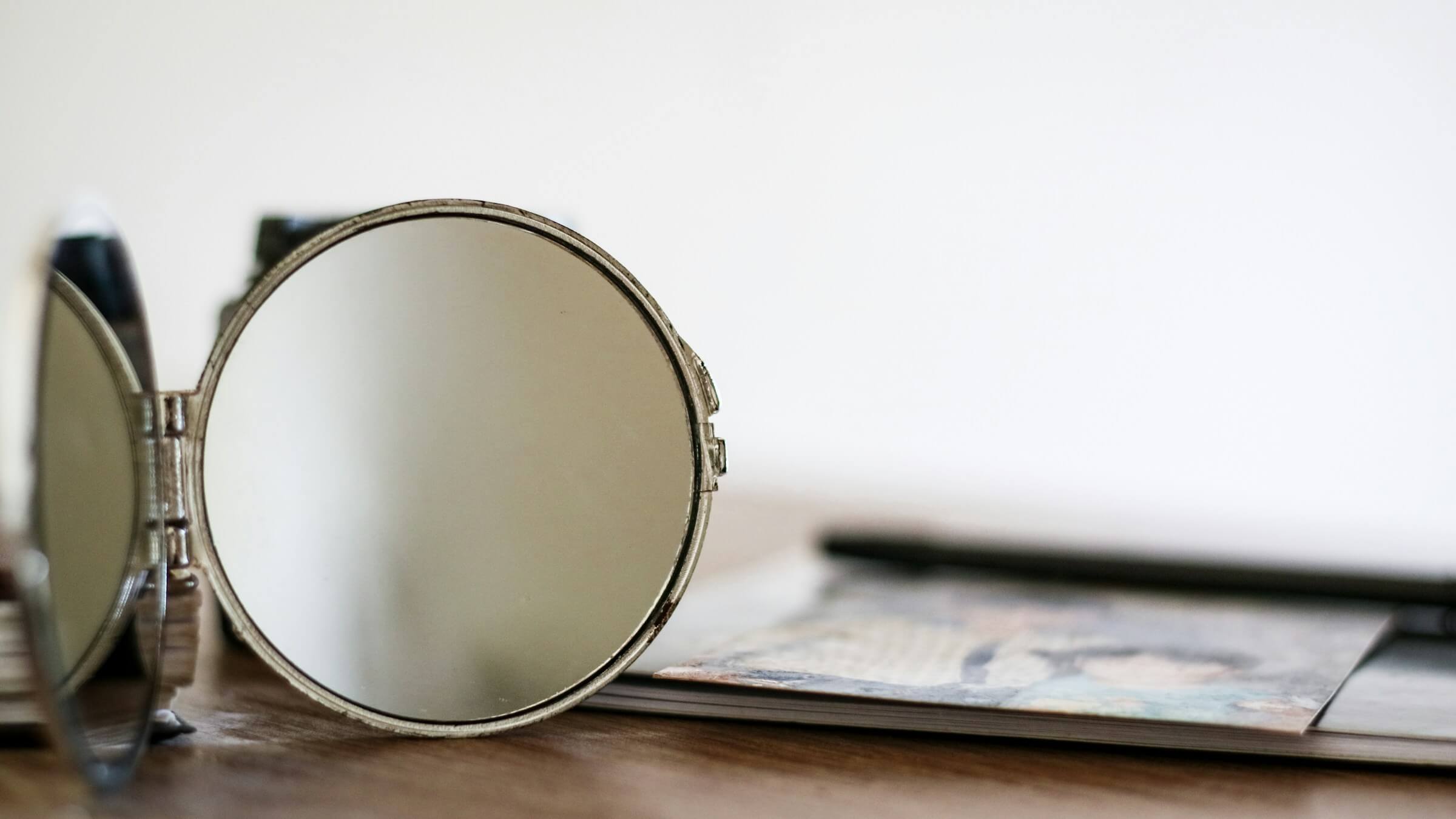
On June 21, 1941, forty-four year old Frida W., a resident of Kyiv, dropped a hand-held mirror, which shattered on impact. This happened around nine PM, at the end of a hot and sunny summer day. (On the evening news, the radio announcer had shared predictions of a record wheat harvest). The mirror fell as Frida was brushing out her hair, which was still black and full and hung down to her lower back. Breaking a mirror is bad luck, and Frida spit three times over her left shoulder in the hopes of warding off any evil her carelessness may have invited into the house. Then she collected the shards of glass in a dustpan, threw them in the trash, and went to bed.
At that moment, Georgy Zhukov, chief of the General Staff, was preparing his evening report to Joseph Stalin. Zhukov knew it was useless to raise the issue of troop movements on the German side of the Bug River, or to suggest that his own forces be placed on high alert. Stalin was insistent that Zhukov avoid a provocation and refused to believe intelligence reports that an invasion was imminent. All Zhukov could do was order his subordinates to remain at their posts instead of going home for the night. Frida went to bed that night unaware that the soldiers deployed along the frontier, her eighteen-year-old son among them, could hear the rumble of engines, the barking of commands, the sound of soldiers, still nominally allies, checking their kit. All they could do was dutifully report what they saw through their binoculars and heard with their ears, privates to sergeants, sergeants to lieutenants, all the way back to Moscow.
Frida W. knew none of this, but, awakened by air raid sirens shortly after six a.m., she was sure of something Comrade Zhukov would never figure out: her carelessness had caused the outbreak of war.
Her great-granddaughter and namesake, who lives in Philadelphia and teaches at a private school, has never met her great-grandmother, and barely knew her grandfather, who died when she was six. Frida imagines her great-grandmother as a silly and rather vain woman, but has always liked the story about the broken mirror. As a high school teacher, she has used the story as an icebreaker before diving into the unit on the second world war. She has added the details about Zhukov and Stalin and the situation at the front herself, to help the students situate the particular event (the broken mirror) in its broader context (armies stretched out over thousands of kilometers, about to go to war). She isn’t sure where she had heard the story about the broken mirror first and is always open with the students about the uncertain provenance of the anecdote. It is a way to get them to think about the nature of evidence and the kind of information that can and should be part of the historical record.
These days, Frida finds herself thinking about the anecdote weeks before the unit is about to start. War is in the air. More accurately, there are wars, multiple, going on, and now there is talk of her own country getting involved. Directly. In and of itself, she knows, this is nothing new. But she feels a familiar twitchiness. Something must be done. When she walks home along the Parkway, past City Hall, and down Spruce Street, everything appears normal. It is October, the days are sunny, the leaves are just beginning to turn. Near Broad, the stale air of the subway wafts upwards towards the street, gently steaming a homeless man. At home, she turns on the radio. The host speaks in a voice that is calm and assured. Her guest is making the case for intervention. The reasons are moral, humanitarian, and strategic. The host presses him, respectfully but firmly. Haven’t we tried this before? Completely different situation, the guest insists. A matter of our technological capabilities. The precision of our weapons, the accuracy of our intelligence.
Everything seemed so normal when she was walking home. Frida remembers reading that on the morning of September 1, 1939, hours after Germany had invaded Poland, people went about their business much as they had the day before, when war was only a rumor. Men went to work, women dropped off their children at school and continued on to the market. They had heard the news on the radio, had seen the reports in the morning paper. Still, there were jobs to do, food to buy, dinner to be prepared.
Frida sighs with relief when the official says that no decision has been made.
The next day, Frida is in the teacher’s lounge, eating lunch with her colleague Mark. There are a few round tables, old copies of the New Yorker, and a half-full pot coffee made that morning. She and Mark sit on an old cloth couch, eating off a wooden crate repurposed as a coffee table. Usually, Frida looks forward to seeing Mark, but now she is having trouble keeping up the conversation.
“You seem worried,” Mark says.
She’s worried, she tells him, about war. The ocean is vast and the fighting is far away, he reminds her. But this doesn’t seem to put her at ease.
“Hey,” he says, crumpling the foil from his sandwich. “I heard there’s going to be a protest on Saturday.”
What does Frida know about Mark? He is younger than her, but not by much. He has sandy blonde hair, wears glasses with transparent frames, favors cotton button downs and gray slacks. He is trim and has the slightly stooped posture of a runner. He does not wear a ring and has never mentioned a girlfriend. At lunch they usually gossip about students. Mark is never malicious, but his impression of teenage boys singing never fails to make her laugh.
“I’m going to record an album,” he said just last week. “The Mating Call of the American Teenage Male.”
Frida did not think that Mark was the kind to go to protests.
“How did you find out about it?” she asks him.
“Honestly? There was a flyer on my bike when I got out of work yesterday.”
“Are you planning to go?”
“I will,” he says, smiling, “if you will.”
She smiles back, but she is both heartened and disappointed. Heartened because Mark had learned about the protest from a flyer left on his bike, meaning that she did not have to feel bad for not knowing about it. Disappointed because Mark had not seemed all that concerned or knowledgeable about the situation. Then again, he was a music teacher.
That afternoon she is covering the Munich Crisis with the AP Euro class. It is her favorite group, by far. The students are bright, motivated. They will be in college soon enough and are eager to show her and each other that they are ready. Four of them have asked Frida to help supervise their senior project in the spring. Even the worst students win a place in her heart. Michelle, the captain of the field hockey team, still has trouble distinguishing primary and secondary sources. But accounts from the Spanish Civil War, recorded by Spaniards who had escaped before the Republic fell, had her in tears.
Frida stops class five minutes early, asks if anyone wants to talk about the war.
The class is silent. The students fiddle with their pens, look at each other, stare out the window.
“I’m sure you guys know,” she says “that our government is considering going to war.”
More silence. Frida, too, looks out the window. From her classroom she can see out to the Parkway. The sky is a clear blue. There is a wind blowing, and it is knocking the leaves down from the tree canopy, sending them down to the ground, shimmering yellow and orange in the afternoon sun. Frida is eager to be outside, to walk home. She imagines taking a longer route, staying outside until the light fades. But first she wants to make sure the students understand the urgency of what she has just said.
“It’s happened before, you know. Not that long ago. It doesn’t end well.”
She waits another beat.
“Well, I’m here if anyone wants to talk about it.”
The students take that as their cue.
“Have a good day,” Michelle says cheerfully on her way out.
The last time that her country was planning to invade another, Frida had joined a group at her college to protest the war. They met at the student union, made signs, marched across campus to the president’s office.
The president of the college was a short woman with blonde hair that was turning grey. She came out to greet the protestors.
“So wonderful to see your engagement!” she said to the students. “As you know, I have no say in foreign affairs, but I absolutely support your call for peace.”
Frida invited her US History professor to the protest. He met them at the campus commons, told them that he was proud of them, that his own generation had been slow to understand the crimes committed in their name, but this new one was obviously different. He knew from his colleagues at other colleges that protests were happening there, too.
Frida and her friends were emboldened. They gathered together to watch the evening news, hoping to see that their protests had resonated. But the news showed soldiers marching into giant transport planes, retired colonels making confident predictions about the course of the fighting.
They held a meeting and decided to join a larger protest happening that weekend in New York. They piled into cars, into rented vans; some took the train. There were thousands, tens of thousands, just like them. They gathered at City Hall and marched uptown.
In Times Square, the giant screens showed aircraft carriers moving across the ocean.
Afterwards, Frida took the commuter train back to campus. Her head pressed against the glass, the brown brick of the Bronx giving way to stretches of green, she thought about her great-grandmother.
Two weeks later, the war already underway, Frida talked to a recruiter for a teaching program that was visiting campus.
With her US history professor’s encouragement, she had been practicing for the GRE and planning to apply for graduate school. Suddenly, the idea of graduate school seemed pointless. What was the use of spending seven years writing the history of one war while another was getting underway?
Her professor agreed.
“High school teaching – that’s how you really make a difference,” he said. “Don’t get me wrong. I love teaching college kids. But high school is where you really shape minds. You want to make long-term change, this is where to start.”
Three months after her college graduation, Frida was standing in front of a high school class in North Philadelphia, desperately trying to get forty teenagers to calm down so she could talk about Columbus. She had carefully crafted lessons plans. She was ready to present the standard version, the one they learned in middle school, and then immediately complicate it for the students. She would talk about the expulsion of the Jews from Spain right before Columbus set sail; the previous “discovery” of the continent by Vikings, and, most important, his complete misunderstanding of the people he encountered, people who had no need of being discovered.
“Yo Miss,” she heard before she’d finished introducing herself. “Can I get your number?”
Frida turned to the voice, only to feel something hit the side of her head. A crumbled sheet of looseleaf paper lay on her desk. There was a crude drawing, one clearly meant to show her.
Frida lasted five years at that school, long enough to have her students loans forgiven. It was longer than most recruits, she knew. Five years, through all of which she had kept the drawing made on the first day.
And then she took the job at the private school. These kids needed an education, too, she told herself. Their lives were sheltered, and they needed the exposure to more critical perspectives. And she found the work more pleasant, more rewarding. The classes were smaller, the students mediocre at worst. She could draw much deeper on the books she read, the things she had learned in college, the ideas she had hoped to pursue in graduate school. She enjoyed the way these students, the girls especially, came to her with their problems; they talked to her about boys, and friends, and even their parents. Frida no longer felt like crying at the end of the day.
But her life was quieter. She lost touch with most of the teachers from the old school, the ones who would join her after work to commiserate over beer. At the private school most of the teachers were older and lived in the suburbs. They rarely had time to socialize. After work Frida took long, meandering walks, stopping in bookstores and grocery shops on the way back to her one-bedroom apartment. At home she preferred the radio to the computer, or the television, or her phone. The calm, thoughtful voice of the hosts kept her company as she cooked dinner, and as she ate her food. And afterwards she would listen to music and take a book to bed. A quiet life, but not without its comforts.
On Saturday, Frida wakes up at eight, turns on the radio, and makes coffee. She pours the water carefully over a filter, waiting for the announcer to say something about the protests. Finally, it comes at the end of the news roundup: protests are planned for Philadelphia and other major cities across the United States.
Frida has grading to do but finds it impossible to concentrate. She is reading the same passages over and over. “The causes and effects of the great depression,” one reads, “are truly hard to fathom.” The kind of opening that will guarantee a ceiling of a C on the exam. But she cannot summon the words that would explain to the students how to write a better one. Finally, she sets the whole stack of papers aside. Instead, she showers, dries her hair, puts on make-up – all of it, she realizes, ridiculous preparation for a protest, and motivated entirely by the fact that she is meeting up with Mark.
She is wearing jeans, a T-shirt, ankle boots. The morning is warm, but a few blocks from the house she realizes the weather might turn suddenly. She has lived in the city long enough to know the signs: the sudden greying of the skies, the intermittent gusts of wind, as if someone were operating a giant leaf blower. Still, she does not go back, afraid that if she did, she’ll lose a half hour trying on new combinations.
She meets Mark near Jefferson Station. He’s dressed more or less the way he is on a school day, only he has a Boston Conservatory sweatshirt hanging over his shoulders. Market Street feels empty, but in front of City Hall there are a few hundred people already milling about. A stage has been set up. Frida chides herself for not reaching out to any friends or co-workers. It could have been a bigger crowd.
The first speakers take the podium. It’s hard to hear what they are saying, but Frida and Mark applaud during the pauses. They join in the chants.
“What is war good for?” one speaker asks.
“Absolutely nothing!” they shout back.
The protesters head out to the parkway. The group moves slowly. Mark and Frida follow an older couple that takes turns holding up a sign that says “Peace, not Bombs.”
At the art museum, there are more speeches. Then the wind picks up. Red and brown leaves come flying off the Parkway to the oval where the protesters are gathered. One gets stuck in Mark’s hair, and Frida reaches over with her right hand and removes it, then smooths his hair back down. Mark smiles at her. His smile is warm, easy, unrestrained.
But now the temperature has really dropped. Frida is shivering, and Mark offers her his sweatshirt.
“Let’s get some coffee,” he suggests.
By the time Mark and Frida find a coffee shop they are a good five blocks from the protest. The coffee warms her up, but Frida realizes that the cold has tired her out. When Mark tells her that he lives nearby and offers to cook dinner, she readily agrees.
Mark’s place is a second-floor walk-up, just a few blocks from Fairmount Park.
“It’s a myth,” he tells her on the way over, “that musicians prefer to live with roommates. The truth is that we get on each other’s nerves pretty quickly.”
Mark opens a chardonnay, pours each of them a glass. He has a galley kitchen and she sits on a chair, back against the wall, sipping her wine as he cooks.
Frida had assumed that they would talk about the protest, about the war, but she realizes quickly Mark doesn’t have much to say on that score. So, she feeds Mark questions about himself.
Mark, she realizes, is pretty happy to talk about Mark. He does this while chopping a zucchini and tossing it in a pan; while setting water to boil; while peeling the plastic cover of a package of smoked salmon, while adding tomato paste and heavy cream and grating parmesan. He tells Frida about his piano teacher, a strict Russian lady who put silver dollars on his wrist to make sure he kept them straight while running scales. He tells her about his parents, who never suggested law school, even when he was struggling, about the years he spent living in New York, with roommates, auditioning for orchestras and surviving on piano lessons, before going for his Masters in Music Education. Frida likes watching him. His movements are controlled, and he doesn’t use a recipe or even set a timer. She wonders if he had gotten the groceries because he expected her to come over, or if he cooked like this every night and just happened to have the ingredients on hand. She decides it doesn’t really matter.
Later, they sit on the couch, and Frida lets her head rest on Mark’s shoulder. Only then does he turn his head and kiss her, tentatively at first, then with more confidence. She sets down her wine glass and climbs on top of him. In bed, he is attentive, and patient. A dirty joke about oboe players crosses Frida’s mind, and she stifles a laugh.
The next morning, she is pleased, but not entirely surprised, when he makes her breakfast. Afterwards she tells him that she has grading to do, and he laughs. “Never have to worry about that as a music teacher. The kids destroy my hearing during the week, but my weekends are my own.” Mark says goodbye to Frida outside. The day is shaping up to be a warm one, and she walks back down past the art museum, retracing her steps from the day before.
She catches footage of the protest on the evening news, imagines that she can make out the back of Mark's head and her own in a shot taken from a helicopter hovering over the art museum.
Monday comes, and Frida has her AP Euro class first thing in the morning. She waits for the kids to file in. She knows nine AM is early for teenagers, so she gives them a minute to settle in, while she leans back against her desk, holding her coffee cup with both hands. Then she sets the coffee down. The desks are arranged in a horseshoe, and she steps in the middle of it.
“There was a protest this weekend,” she begins. “I suppose you heard about it.”
The students look at her sympathetically but give no indication whether they had, one way or the other.
“Do any of you know what the protest was about?”
Several of the students are looking at her. You’ll tell us anyway, they’re thinking. She knows this.
“Well,” she continues after a moment. “Last week, we learned about the Italian invasion of Ethiopia.”
Joey, a good-looking kid with a mop of blond hair, who has no business being in an AP class, raises his hand.
“Are the Italians going to do it again?”
The whole class laughs, and even Frida can’t help smiling.
“No, Joey. They’re not. No, it’s our government that is thinking about war.”
Leaning back against her desk once more, Frida lays it out for them. She does, she thinks, a fair job of explaining the government’s case, and the objections to it. The class is listening. Michelle, of all people, is furiously taking notes. When Frida looks up at the clock she realizes she has used up most of the class period.
She sees little of Mark in the days that follow, but once, when they pass each other in the hallway, he smiles at her and gives her elbow a squeeze. She resists the temptation to watch him rehearse with the upper-class orchestra. It is Thursday before their lunch breaks line up again, and she tells Mark about her attempts to talk to the AP Euro class about the war.
“Anyway,” she says. “I don’t think it landed. Mostly I think I just confused them.”
“I wouldn’t be so sure,” he tells her. He’d overheard students talking about her lecture right before rehearsal started the day before. Some of them were even planning to make contact with other high school students in the city.
For the rest of the afternoon, Frida is beaming. And not only because Mark said he wanted to see her next weekend – this weekend he was visiting friends in New York. But because she feels she’s reached the students. She imagines advising the group, organizing a teach-in, maybe even getting in touch with her college professor to see if he would come down to Philadelphia to speak to the students. But she won’t push them. Instead, she’ll let them come to her.
Over the weekend she prepares her unit on World War II. She skims the textbook chapter, which she knows by heart, and reads over the primary sources: speeches by Hitler and Stalin, a diplomat’s account of the negotiations in Poland, some letters from the front by German and Soviet soldiers. She checks the video clips she plans to show, documentary footage of devastation, including, of course, the camps, but also, for later in the week, the firebombing of Dresden. Houses, schools, museums, and theatres, incinerated. Charred bodies visible through the smoke. This is the reality of war, she wants them to see, though she has not decided, yet, if she will make the comparison to the present-day explicit.
Frida begins class on Monday the way she always starts the unit: with the story about her great-grandmother. But something is off. The class is silent. Usually, she gets a laugh when she describes great-grandma Frida cleaning up the glass on her knees and spitting over her shoulder. Not this time. Michelle is still taking notes, but everyone else is looking out the window, at their desks, at the door, anywhere but the front of the class.
Before Frida can finish, she is interrupted by a voice, polite but insistent. Strained. It’s Rita, an intense, dark-haired girl; quiet and a consistent A– student.
“I’m sorry, but why are we hearing this? I mean now?”
“Do you mean the anecdote? I just wanted…”
“The anecdote. All those stories about Europe and the war. Here we are, about to bomb a place to pieces, kill all of these innocent people, and we are still talking about something that happened in Europe like a hundred years ago.”
“Well, that’s a good point,” Frida begins, but she is interrupted again, this time by Joey.
“This is such bullshit!” He is yelling at Rita. “Why the hell are you in a history class anyway?” Frida realizes that Joey is angry, genuinely angry. His skin is turning pink, his jaw is tense, there is spittle coming out of his mouth. Frida wonders if he is trying to defend her. But she’s an experienced teacher – she knows that this is the continuation of something that started before class, maybe days before. Before she can intervene and try to channel this disagreement into a productive discussion, most of the students have begun jumping in, some supporting Rita, others Joey. Frida can barely make out the points being made, let alone keep up. If she could only grab onto on to a thread, one thought or emotion coming out of these kids, she could turn this into some kind of organized debate. But it is useless. Frida realizes she hasn’t lost control of a classroom like this since she left the public school. All of her interjections are ignored. Only Michelle, who has been following the melee with increasingly panicked eyes, is able to bring things to a halt.
“OH. MY GOD,” she cries out. “Can everyone just shut up? Some of us just want to pass the class and get on with our lives.”
The class calms down, but the mood is tense. Rita is picking at some dry skin on her forearm; Joey has his arms crossed and is staring out the window. There is no hope of following a lesson plan. Frida hands out a worksheet on the primary sources and tells the class to work on them for the remainder of the period. She sits down behind her desk, cradling the coffee that has long gone cold.
“Thank you!” Michelle says, smiling, on her way out the door.
Frida wants to stop Michelle, ask her to stay back a minute, see if she can explain what is going on with the class. But Frida feels a barrier between her and the students, one she had never noticed before. For the first time since coming to the private school she fears that whatever they tell her will be a lie, or a truth she is unable to understand.
Frida is not surprised when, coming into work the next day, the receptionist who sits near the main entrance says that the headmaster wants to see her.
“When?” Frida asks.
“Now. He’s in there now.” The receptionist is a middle-aged woman with a thin face and a perpetual cold. She works at the school so that her two sons can go there for free. The receptionist knows better than anyone what happens at the school, and Frida would like to interrogate her, to find out what’s been going on among the students, what the headmaster has in store for her. Could it be that this is all about her and Mark seeing each other? Was there a policy against faculty dating? The receptionist would know. But instead of asking the receptionist Frida just nods and goes across the hall.
She knocks on the heavy wooden door.
“Come in,” a cheerful voice calls out. She opens the door partway and looks in, waiting to be encouraged further.
“Well, don’t stand there. Come have a seat.”
Headmaster Roberts sits behind a big brown desk, a cup of coffee on his left and a stack of student files on his right. In front of him is a yellow legal pad. Frida surmises that he has been working on his speech for this week’s assembly. With his round glasses and bald head, sitting with his back perfectly straight and his hands clasped in front of him, he is the very image of a kindly protestant minister.
“How are you, Frida?” he asks.
“I’m well,” she says. She isn’t nervous. The night before she drank half a bottle of wine, by herself, sitting in the dark. She woke up calm, with only a trace of a headache. “How are you?”
“I’m doing just fine, thank you. Distressing times, of course. Emotions are running high.”
Frida nods in agreement. There is a gentle rhythm to his sentences, the words are distinct. He would have made a great radio host, Frida thinks. The students, she knows, ignore his little sermons, on honesty and education and community, but she loves hearing him speak. The message is never particularly original, but the delivery is so convincing, so welcoming. Even now she is mostly happy to sit in his office and hear what he has to say.
“I’m sure you can guess why I’ve asked you to come in. Don’t worry. You’re not in any kind of trouble. I think that it’s very good that you’re trying to engage the students, to get them to think critically about what is happening in the world.”
“Did someone complain?” Frida surprises herself with this interruption. Her own voice sounds strident to her at that moment, and high-pitched, an ugly contrast to the headmaster’s baritone.
“No,” he replies gently, looking her in the eye. “No one complained. But word gets around.” He waits to see if Frida wants to say anything, then continues.
“The pupils haven’t made up their minds on most things. That’s the beauty of teaching. But their parents have. Too much so, perhaps.” In fact, he says, tapping the legal pad with his finger, the text he was working on for the next assembly was on this very topic.
“A few of them think I’m a fascist for even allowing the military academies to recruit our students,” Headmaster Roberts says. “Others get upset because they think we are teaching our kids to hate their own country.”
He goes on in this vein, talking about the parents, their role in the school, the importance of finding a balance. Frida has to stop herself from looking out the large wood-framed windows that face out to the school’s garden. It is a sunny morning, luminous. A few panes are open and a fresh autumn breeze comes into the room. Her last time in this office was five years earlier, her last meeting after a morning of interviews. What struck her then about the school, but particularly about the office, was the smell. At the public school in North Philadelphia, the windows were sealed shut and the air was always stale. The plumbing system was old and the toilets backed up on a weekly basis. The smell of urine was present in almost every hallway. But the private school smelled of wood, of church pews, of fresh air. Frida relaxes into the chair, letting the headmaster’s words wash over her. She wonders if Mark, too, was seduced by the smell of the school.
“In any case, I just wanted to put that out there,” Headmaster Roberts says, concluding their meeting. “I’m always here if you want to talk.”
That night, brushing her hair, Frida thinks back to her conversation with the headmaster. He didn’t tell her what to do, one way or the other. That didn’t bother her at the time, but now she finds it frustrating. If the headmaster had encouraged her to keep going, Frida thinks, she would have felt like the school had her back. And if he had told her to stop, she would have been ever more certain that she had to get the students talking, to make them aware of what was going on. The class, which met in third period, acted as if nothing had happened. Frida went along with it, walking the students through the debates about the Hitler-Stalin pact. Only Rita wasn’t there, and Frida was sure that the girl was cutting class because she’d seen her in the hallway earlier that day.
Frida thinks again about her great-grandmother. She tries to summon some more information about her, beyond the anecdote with the mirror. She must have known that her son was stationed right on the frontier, she thinks. Did she know that war was imminent, or did she believe the official line, that peace with Germany was secure and the country could prepare itself for the world historical struggle with capitalism? Did she know that her son had survived the initial onslaught when the time came to evacuate Kyiv, a few months later? Was she tempted to stay behind in the hopes of seeing her son among the retreating troops? Was she relieved, two years later, to hear that he had been severely wounded, had lost an arm, but survived? She must have been. For her son, at least, the war was over. He would live to marry, to have a daughter, to emigrate, even to see the birth of a grandchild who would know her great-grandmother only from a few disconnected anecdotes.
The latest news was that negotiations, led by a European country, had stalled. The country’s diplomats were pleading for time. The people in Washington were skeptical. There was a window of opportunity to launch the attack and it was going to close.
Frida looks in the mirror, wondering if she has any of her great-grandmother’s traits. She’s only seen one picture of her, in an album her mother kept but rarely opened. The long, straight nose? The dark eyes? If so, are these features that Mark has found attractive? She knows other men have.
Perhaps she’s inherited her great-grandmother’s power to influence world events. Frida wonders what would happen if she broke the mirror that was fixed to the wall. Would it start the war? Or stop it? Or did the internal logic of the superstition demand that the mirror be broken by accident?
Frida finishes brushing her teeth and turns out the light in the bathroom. Outside she can hear a group of people passing under the window. They are talking loudly, laughing. It sounds like they are on their way to a bar. Don’t they know what’s about to happen? Or do they know that anything that happens will never affect them, not directly? And then she thinks that maybe the people in Berlin were right to go about the first day of war with Poland as if nothing happened. They, too, would suffer – not right away, but five and six years later. Their sons would die, their homes would be destroyed, the women brutally raped. Why should they give up a day of drinking coffee and eating good bread while such pleasures were still available? Why should they forego conversation, a pint of beer with friends, making love in a comfortable bed?
Frida stands near the window, listening to the voices fade as the group turns the corner at the end of her street.