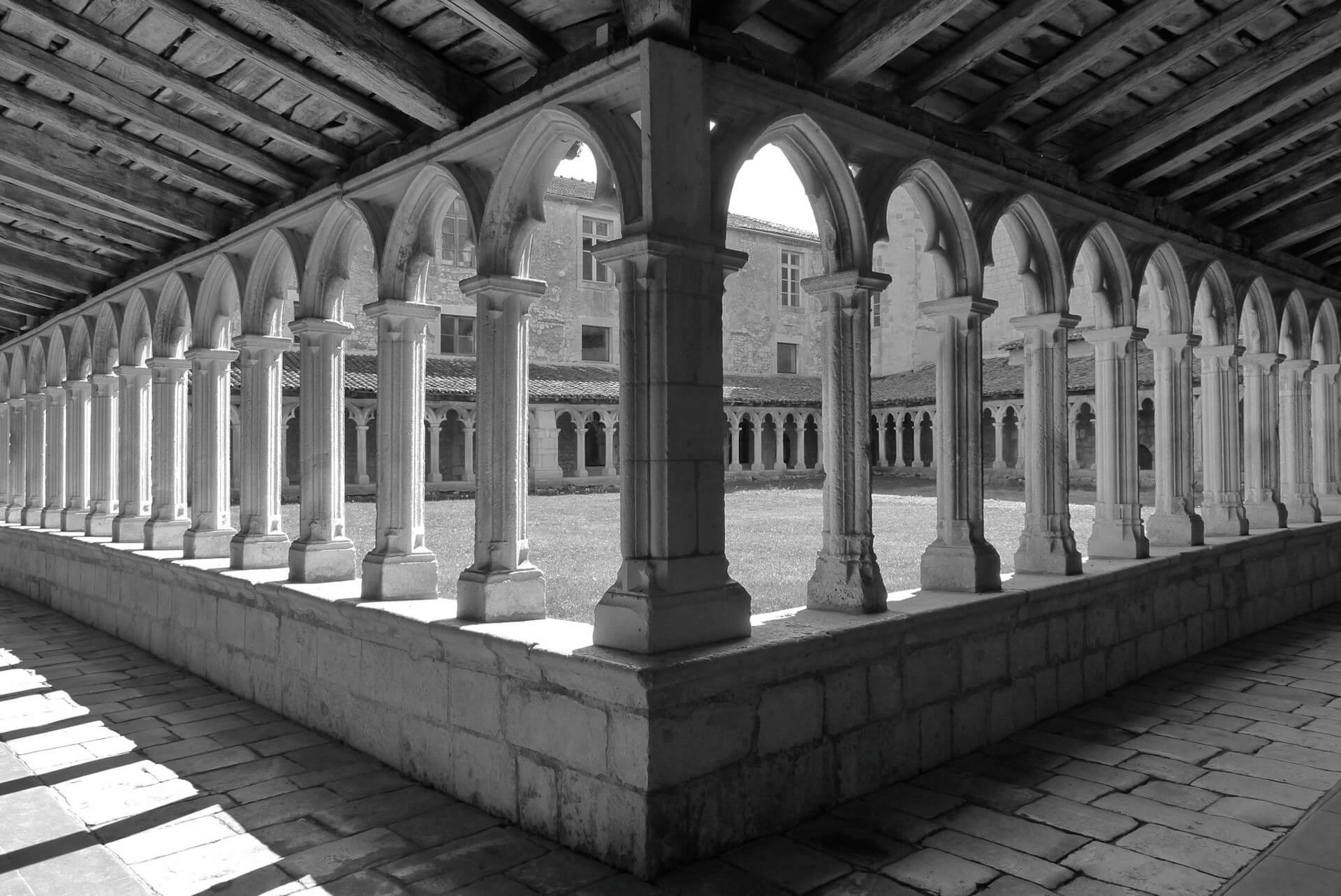
Photo by Ben Berwers on Unsplash
“God is crazy in love with you.”
Saint Catherine of Siena
Saint Catherine of Siena
Margaret Mary Alacoque saw the Man in the loincloth when she was returning home fromthe dancing and festivities at the great ball which her cousin Corinne had been planning for months. At the time she saw the bearded Man, Margaret Mary was wearing a tight-fitting rose-colored satin gown and was holding her blonde hair in cascading golden curls, all in an effort to play up her beauty and attract potential suitors. When she first saw the bearded Man in the loincloth, she thought He was a specter, for His bloodied body glistened like the moon in the darkness of the night and His smooth lustrous skin appeared to be transparent like a crystal. His was a strange juxtaposition of loveliness and pain, a preternaturally handsome man whose many wounds made His gaunt sweating body look like that of a butchered bovine carcass, a man whose back was more scarred than that of the most furious of the hooded Flagellants. There were purplish welts all over His naked back and punctures both on His hands and feet, with a long gash in His thoracic region and a streak of coagulated blood on His fevered forehead. Stranger than everything, Margaret Mary could swear she could see His beating heart, surrounded by a crown of thorns and lit by a spiraling fire, as He walked toward her. At first, Margaret Mary was frightened out of her wits, for she had no idea who He was and had never seen such a sight, a Man of a supreme beauty who had obviously been relentlessly tortured, a Man who had obviously engaged in a bitter combat to the death and had survived.
“I thirst,” He told her, as though hallucinated, His eyes fixed on the beyond. “Only you can satiate my thirst.”
Margaret Mary was dumbfounded.
“Do you want me to bring you a glass of water or would you prefer some wine?”
“I have an unquenchable thirst for love,” He answered. “I have been forgotten by so many. Even you forgot the pledge you made to me one day when you were but a child and which you renewed when you were healed from a great illness at the age of fourteen. At that time – don’t forget – you consecrated your life to me under the guidance of my mother. Today you go to ornate balls seeking suitors and dress in tempting clothes in order to entice them. You wear golden ornaments on your hair to make yourself attractive to them. Do you no longer remember the promises you made when you told me you’d be my own and would never belong to another?As a child, you used to repeat again and again, ‘To God I give my purity, and vow perpetual chastity.’ Have you so easily forgotten?”
Margaret Mary was suddenly perturbed. With a frisson of fear she recognized her luminous interlocutor was the Christ.
“I have not forgotten,” she responded. “I told my mother about my desire to remain chaste because I pledged my life to you, but she insisted I get married lest she live in penury. She herself chose the clothes I wear tonight. She is the one who insisted I wear a mask in order to incite the curiosity of young men of marriageable age. After all, she has been a widow for years. She thinks if I marry she would improve her lot in life and if I don’t she would be ruined. She tearfully tells me that if I don’t wed, I would be dishonoring my filial duties in contravention of the Lord’s Commandments, that if I become a nun, I shall cause her untold grief. What would you have me do, my Lord? I have my solemn vows to you on the one hand, my God-given responsibility to care for my mother on the other.”
“I am a jealous suitor and love you to folly,” the Man in the loincloth responded in an anguished voice as His body emitted the scent of roses. “How could I so easily lose you? Why do you punish me with such ingratitude and coldness of heart? Have you also forgotten what my Mother told you in your earliest youth? ‘I am surprised, my daughter, that you serve me so negligently!’1I am surprised, too, that while you venerated me in your childhood, you are now spending your time in the pursuit of vain and empty pleasures and have decided to forsake the vows you made to me with such devotion. You see me bruised, battered and bloodied. It is your vanity which has reduced me to such a state, the tepidness of your love. You have betrayed and persecuted me despite the many proofs I have given you of my love. Every drop of blood I shed at Golgotha I shed for you! And still you resist a full conversion.”
“Other women marry and you do not hold it against them,” responded Margaret Mary. “Isn’t holy matrimony a sacrament sanctified by God?”
“Marriage is fine for other women, but I want you to be entirely my own. Don’t you see my heart beats for you like that of a fervent lover? Don’t you recognize I bleed for you in my endless longing? Haven’t I given you enough proof of the vast extension of my love?Wasn’t I scourged for you? Wasn’t I crucified for you as well? Why seek the embrace of ordinary men when you are betrothed to the Son of God, pledged to give your life to God and God alone, when you have been especially selected to be my spouse?Would you seek pleasure when I never had any and delivered myself to every kind of bitterness for love of you and to win your heart?2My divine Heart is so inflamed with an insatiable passion for you that it can no longer contain within itself the burning ardor for the one I have chosen to be my own. We pledged fidelity to each other when you made your vow of chastity as a child, a pledge I urged you to make before the world had any share in your heart in order to have it quite pure and unsullied by worldly affections.3 Tell me now, Margaret Mary. Will you refuse me?”
“Let me say it clearly now so that you will know my truth,” replied Margaret Mary. “In my childhood, as today, my only desire is to give comfort to my suffering Jesus. All the vanities of the world mean nothing to me. I yearn to know You and to do everything in conformity with Your holy will. But I am such a weak vessel for Your grace, my Lord. I’m afraid that given my current condition I cannot say that I will never again entertain a suitor. As long as I live with my mother, that will remain a stubborn temptation, dare I say an ongoing source of potential sin.”
“Give yourself to me with all your heart and soul. I mean to enrich you with such graces that you will not believe I am granting them to so poor and miserable a creature as yourself.4Return me love for love, my dearest bride, and you will not regret it although you will suffer much! But fear nothing. I shall be your strength. Be attentive to my voice and to what I shall require of you.”5
“I don’t know, my Lord, if I can meet your purpose given my weakness, but with your grace everything is possible. And yet I dread being separated from you forever given my sensual nature and my unbridled vanity, my unimaginable pride.”
“What do you fear? Can a child loved as much as I love you perish in the arms of a Father Who is Omnipotent?”6
***
Margaret Mary Alacoque made a vow of chastity to the Risen Lord by the time she was just six years old. Truth be told, she didn’t know what the word “chastity” meant, but she had learned from Father Etienne’s homilies at church that chastity was a difficult thing for the majority of believers, but it was very pleasing in the sight of God. And even before Margaret Mary had reached the age of reason, she already knew the whole purpose of her existence was to please God and earn His grace. Her pledge to Jesus Christ was not a one-day thing. Every Sunday when she was at Mass she swore during the two elevations, “O my God, I consecrate to You my purity, and I make You a vow of perpetual chastity.”7 By that time,Margaret Mary had also developed an absolute horror of sin, although again she didn’t quite know what “sin” really meant. All she needed to know was that it displeased the Lord, however, and that was sufficient to lead her to abjure all sin and try to avoid it at all costs. She had such a notion of the hideousness of sin that the least stain was an unutterable torment to her.8As the years passed, she experienced an inordinate scrupulosity, for she believed she had committed grievous sins where others might find trifles, even fearing eternal perdition for her petty transgressions and for what she perceived as her continual resistance to the risen Christ, particularly when it came to the issue of suitors.Indeed, she accused herself of having committed “great crimes”9 for having disguised herself at a festival “for vain complacency”10 and stated that “crime” had caused her bitter tears and grief during her entire life, that her actions had led her to “merit hell”11 were it not for the Mercy of the Christ. On other occasions, she confessed mortal sins which she had not committed, with the idea that she may have done so and forgotten them. At all events, the deep repugnance she felt at the very idea of sin, perhaps seemingly exaggerated to the majority of men, is what allowed her to lead a life of virtue which was indeed pleasing to the Lord.
From her ninth to her fourteenth year, Margaret Mary suffered from a crippling illness which left her bedridden and in pain. And yet she did not complain, for she saw her suffering as a way to join in the passion of her Christ. Indeed, she was one with her predecessor Saint Teresa of Avila who famously said, “Let it all come then, desertions, crosses, disgraces; if God is your treasure, you will lack nothing.” In like manner, Margaret Mary thanked God for permitting her to suffer lovingly as it made her more like Him and allowed her to share in the torment of His Passion. She felt blessed when her “whole life, body and soul [were] nothing but a cross” and attributed her suffering not to His Justice but to His Mercy.12“Crosses, contempt, suffering, afflictions: these are the true treasures of the lovers of Jesus Christ crucified,”13 she wrote. More than her own trials, however, what truly troubled Margaret Mary was the toll her illness was taking on her mother’s health and spirit. Her father had died when she was eight and her mother found it increasingly difficult to barely keep the house running, especially since her husband’s estate was now in the hands of some avaricious relatives who prevented her from having any access to the money. To have to tend to the ailing Margaret Mary on top of all that taxed her mother’s abilities to the hilt and sometimes, although she tried to avoid it at all costs, she found herself weeping at the side of her bedbound daughter.But just when Margaret Mary’s mother despaired of her daughter ever being healed from her paralyzing illness, the miraculous intervened as Margaret Mary saw an apparition of the Holy Virgin Mary.
When her pain and that of her mother’s became impossible to bear, Margaret Mary consecrated herself to the Holy Mother, repeating her childhood vow to lead a life of chastity and promising to become a cloistered nun if she was healed. As soon as she had uttered such words, the Virgin Mary appeared to Margaret Mary in all her splendor and glory, dressed in virginal white. Then she spoke to Margaret Mary, telling her in a soft but insistent voice, “You are completely healed, my daughter. Now don’t forget your promise when you regain your health and once again are facing the temptations of the world, the devil and the flesh. Don’t succumb to a senseless search for sinful pleasure as so many others do. Henceforth you are my beloved Son’s betrothed and must avoid all truck with men, no matter how handsome or intelligent, since you will never find a suitor more worthy, more loving or more virtuous than my Son. Never, ever, for no reason whatsoever, must you find yourself kicking against the goads of Jesus’ love and submitting to the adversary.Henceforth you shall be His unworthy slave as well as His beloved. And rest assured that I am your loving Mother and will lead you by the hand to protect you from all temptation and all harm.”
***
Despite the appearance of the bloodied Christ to Margaret Mary after her cousin’s ball, that did not mean her great interior conflict was resolved. Her mother continued to invite gentlemen callers to the home and urged her daughter to be courted by men of advantage who would let them live in luxury if she consented to marriage. Worse than that, several wealthy men actually sought her hand in matrimony which she felt compelled to refuse despite the insistence of her mother. Margaret Mary’s mother constantly complained that the young girl was being ungrateful to a mother who had lived her entire life devoted to her, and cried out that if Margaret Mary joined a nunnery, she would be placing a dart in her mother’s heart. At the time, Margaret Mary thought she was hearing locutions from the devil taking her mother’s side. “Poor wretch,” she heard the enemy mutter in his raspy voice, “what do you mean by wishing to be a nun? You will become the laughingstock of the world, for you will never be able to persevere.”14But the Blessed Jesus was not silent and parried in return: “If you remain faithful to Me, Margaret Mary, I will never leave you and I myself will be your victory over all your foes.”15 He was referring to the enemies of her soul whose name is legion.
Margaret Mary’s inner struggle was intense. She was prodded by her mother to attend a myriad soirees, lively feasts and dances which were the source of a guilty pleasure, for as soon as Margaret Mary realized she was enjoying herself she felt a pang of shame as thick as mud and heard Christ’s incessant refrain: Will you refuse me? Do you love the world more than the Sacred Heart of your Divine Spouse? Margaret Mary was not certain that she should become a nun despite all the pleas of the risen Jesus and yet felt she was sinning through her resistance to what she clearly saw as the Lord’s demands. The Christ was not making a request; he was issuing an order. “Oh! Be assured,” He said, “that if you do me this wrong, I will abandon you forever.”16He also once warned her, “Remember, therefore, if ever you should be unmindful of the gratitude you owe Me and not refer the glory of all to Me, it would be the means of making this inexhaustible source of all good dry up for you.”17She enjoyed the merriment – that she could not deny – but her desire to please her God was so pervasive, so complete, so total that she was often brought to tears in the gayest of dances. “Give me strength,” she begged in her moments of greatest weakness. “Teach me, detestable sinner that I am, to resist the world.” And gradually, over a period of several years, she developed such a repugnance at the very idea of marriage that she found the world of dances and suitors most oppressive. And the Lord Jesus Christ made it clear, again and again, that He was with her in her battle. Margaret Mary felt that if she lost her war against the foe by consenting to marriage as required by her mother, she would lose her very soul. In fact, she lamented, later in life, that she had been “deserving of the most rigorous eternal chastisement on account of her continual resistance to God and to His grace.”18
***
Things came to a head one afternoon when Margaret Mary’s mother brought home asuitor, a certain Count Pierre de Saint Salvy, a forty-year-old widower who was visiting Margaret Mary constantly. He was tall and solidly built, with the slightest facial tic, and he constantly licked a golden tooth.
“They plan to have a feast at his castle,” said Margaret Mary’s mother mirthfully. “He wants you to attend as a special guest, as his companion for the evening. But rest assured, I’ll go together with you as your chaperone. What do you say?”
Margaret Mary felt anger and pity at the same time, anger because her mother failed to respect her wishes to become a nun, pity because her mother was so absorbed by the impossible idea that she should marry.
“I’m sure Count de Saint Salvy is a worthy suitor, but I’ve told you both that I am not interested in any mortal lover. I thought I told the two of you that I am betrothed to Christ Himself and that no one else can compete for my aching heart.”
“Surely you’re exaggerating in your faith,” Margaret Mary’s mother skeptically admonished her. “It is not a sin to enter a marriage blessed by God.”
“What you don’t seem to understand, although I repeat it to you night and day, is that I love Jesus with all my might. And that He reciprocates my love, indeed loves me more than any human husband can love a wife, even if I am entirely lacking in all merit. I wish to be His bride and no one else’s. Why do you refuse to accept the demands of Jesus Christ Our Lord? Don’t you see He wants to make me a holocaust to His love?”
“It’s just that you’re imagining things,” replied her mother.“You’re giving yourself to unbelievable flights of fancy.”
“Do you recall how much you loved my father? Do you realize why you have not wed another? The reason is that you loved him with all your might. Well, let me tell you this. Compared to how I love my Jesus and the priceless treasure of His Cross, your love for my father was as nothing.”
“You shall not be far from Jesus if you wed me,” intervened the Count with avid eyes and a furrowed brow that made him look much older than his forty years. “I can have a chapel built on my estate so that you could pray whenever you want. I would place no restrictions on your prayer life.”
“You don’t seem to understand the extent of my love for Jesus,” Margaret Mary responded, her eyes gleaming. “I want to spend the whole day in adoration, the entirety of my night in prayer. I want to live in a convent where I do nothing else but praise the Lord.”
“The Christ does not demand such sacrifices from His creatures,” said the Count in a slightly mocking tone.
Suddenly Margaret Mary was incensed.
“Modesty won’t let me show you my naked back or my bare midriff, Count Pierre. But know that I bind this miserable and criminal body with knotted cords, which I draw so tightly that I have difficulty in breathing and eating. I left these cords so long that they were buried in the flesh which grows over them, and I cannot extract them without great violence and excessive pain. I also sleep on a plank and besides all this, I take the discipline. Does that prove to you the extremity of my love?19 You should know there is no true love without suffering and the greatest love calls us to be crucified like our Crucified Spouse. For in the end, suffering strengthens faith and calls God’s Mercy upon us.”
“Such actions are perverse,” objected the Countsarcastically as he frowned in disbelief. “If God wanted you to be punished so, He would inflict the punishment Himself.”
“I didn’t know you did that,” confessed her mother, suddenly taken aback.
“Well, now you know. Know too, that if I’m not allowed to live in a convent as I’ve been pleading for the last four years, my corporal punishments will only get worse. Our God is an exigent God. If I’m not allowed to join Him in a spiritual marriage, He will demand from me the strictest penances. It is impossible to resist Him. And every time I try to do so, I fail miserably.Thus the stripes of discipline and my continual self-abasement which alone lets Him reign regally in my heart.”
“I didn’t know you did that,” her mother repeated in a small voice as she seemed to tremble.
“Don’t you see I have no interest in being a Countess although you would glory in it? That would only incite me toward pride, chief of all the cardinal sins just like humility is the chief of all the virtues. No, I want to be as little as possible, as humble as possible, to lose myself in the abyss of my nothingness,20to live my life in the anonymity of the cloister where I could do nothing but love and love and love my God.Don’t you see? I am little more than a criminal in the eyes of Jesus, and yet He has chosen to give me His love. If anything, I desire nothing other than humiliation, abjection and contempt, to be forgotten and despised by all,21 to be the least of creatures so that I can offer my well-deserved suffering to my Lord and Master, the sole object of my love.All other creatures, yourself included, I can only love as I love them in the Heart of Christ. There is no joy, no satisfaction except in God. I exist only for Him.”
“If it has gotten as bad as that –” Margaret Mary’s mother halted in mid-sentence. “If you think God is demanding such an extreme sacrifice from you –”
“What you don’t seem to understand is that Jesus communicates with me constantly through interior locutions and asks me without respite, ‘Will you refuse me?’ It is not my imagination. If I’m not allowed to join Him, I think I shall die of pain. And He will withdraw all His favors as a result of my resistance like a lover spurned. He will not make light of my infidelity and my reluctance to share His Cross, me, His undeserving servant. You should understand that even my suffering – especially my suffering – is a manifestation of His Mercy. And yet I often resist it through my wicked, sensual inclinations. The only reason we have hearts is to venerate His own. I long for the complete conversion of my soul.”
“Well, now you have my blessing,” said Margaret Mary’s mother. “I shall no longer be an obstacle to your love. If you love your Divine Suitor so much, if you are willing to endure such suffering for Him, who am I to stand in the way? You can join the convent now and I will not object.”
The Count took his hat and harrumphed, rising to his feet, “Adieu! I’m not enough of a man to compete with Jesus!”
***
Margaret Mary didn’t see the convent of the Sisters of the Visitation as a place of incarceration. Rather, she thought of it as a place of liberation and the outside world as the prison from which she had been trying to escape for years. She was now in the cloister, the object of her desires ever since she could remember, and she felt an inexpressible joy.
Not long after she joined the other nuns, the Lord made her see a wondrous, outlandish and disconcerting miracle. As she was praying before the Blessed Sacrament in silent adoration, her Sovereign Master appeared to her in person, more resplendent than a hundred suns. He invited the young nun to rest her head against His breast and caressed her blonde hair for almost an hour. Then He opened His chest with one hand and held His flaming heart with the other, so radiant that Margaret Mary felt a burning heat envelop her entire body as if the Lord’s heart was a glowing furnace.
“My Sacred Heart,” He said as he briefly put His heart in the hands of Margaret Mary, “is so inflamed with love for men, and so unable any longer to contain within itself the flames of its burning charity, that it must spread them by your means, you who shall henceforth be the Apostle of My Sacred Heart. I must use you to spread the flames of My divine love to all mankind in order to enrich them with the precious treasures which I disclose to you and which contain graces of sanctification and salvation necessary to withdraw them from the abyss of perdition.I have chosen you as an abyss of unworthiness and ignorance for the accomplishment of this great design.”22
“My sweet Lord,” Margaret Mary responded, “may it be done according to Your will. I am the handmaiden of the Lord. My only desire is to find solace in your lover’s heart despite the hidden depravity of my wayward and unfaithful soul.”
Jesus then opened up her breast as He had done to His own and held her heart in His hands before He placed it within His own, where it was ignited in a great flame. He promised her that the flame would never be exhausted, since it was a token23 of His love, and that the wound at her breast whence her heart was taken would cause her an exquisite pain for the remainder of her days even though it would be invisible to others.
”Yes, an exquisite pain,” He said to her, “for you shall be sharing in the torment of my wounded heart, which burns incessantly as a result of the dark ingratitude of men. I give them everything – the Eucharist, the sun, their children, the most delectable fruits, their spouses and their friends – and they thank me for nothing. Yes, you must suffer, Margaret Mary, since there is no other way to emulate Me on the Cross. ”
“There is nothing I want, O Lord, other than to be crucified with You and abandon all self-love, to immerse myself in the ardor of an unremitting Calvary for love of You and You alone. May the miseries of my soul be ransomed by that love! May I beg for nothing and deny You nothing. Just to do Your will is reward enough.”
In the ensuing days, she was unable to eat or sleep as a result of the great gash at her side and was consumed by an exceedingly high fever. But rather than complaining about it, the wound was a cause of inconceivable joy and consolation to her, since she saw it as way to become conformed to her Lord and Master. “But alas!” she said to herself, “what could I suffer that could equal the greatness of my crimes!”24Soon the Sacred Heart appeared to her again, a furnace brighter than a star, and she saw each of the five wounds from Jesus’ Crucifixion emanating blue and yellow flames. The Christ told her His Sacred Heart burnt as a result of the lovelessness of men, which caused Him a pain greater than His agony on the Cross, and asked her to accomplish three demands for the expiation of the sins of men. First, she was to take the Eucharist as often as possible, in order to make herself one with Him. Second, she was to suffer every night between Thursday and Friday the solitude He felt in the Garden of Olives when His apostles failed to accompany Him during His night of anguish before the Passion. Third, she was to rise between eleven o’clock and midnight and remain prostrate praying for an hour begging Mercy for sinners and mitigating in some way the bitterness which He felt on finding Himself abandoned by His apostles.25 When the Mother Superior found her trembling and burning with fire, unable even to stand, the older nun chastised her for believing the Christ was communicating with her directly, a lowly worm such as her, a little nothing, and forbade her from obeying the Christ’s demands, which was some sort of odd consolation to Margaret Mary, as she wanted nothing else but to suffer more, since that was the only way she could make atonement for the injuries done to the Christ through the neglect of men and her own crimes. She felt she could only make amends for her transgressions and those of other souls throughthe fuel of the Cross, that is to say, with pain, contempt and humiliations of every kind.26She often admitted to her Confessor that perhaps she loved herself much more than she loved Jesus. She was so laggard on the road to perfection required by God that she needed a perpetual Cross!
Despite believing herself completely unworthy of God’s favors, Margaret Mary’s Sovereign Good continued to lavish her with grace and did not abandon her even for an instant. At one point, when she was still ravaged by the fevers which attacked her, the Holy Trinity – all three persons of the Godhead – appeared to her in all their glory and majesty, each one promising a future full of suffering, which overjoyed Margaret Mary, for all she wanted to achieve in life was to suffer for her Lord and participate in His Passion.
The first person of the Trinity, God the Father, showed her a heavy Cross beset with thorns and surrounded by instruments of the Passion – the nails, the scourges, the crown of thorns – and promised to make her the same gift He had given to the Christ, in other words, the agonizing torment of the Crucifixion.27 For His part, Jesus promised He would fasten her to the Cross as He Himself was fastened28 at Golgotha, offering a share in His dolorous Passion, the sorrow and anguish of it all. And the Holy Spirit vowed to purify and consume her on the Cross.29 Although an ordinary person would have been terrified by the predictions of the Holy Trinity, Margaret Mary was given a measure of peace for she was sure that without the Cross a vile criminal such as her – she called herself a wicked and miserable sinner – would find it impossible to become one with God.She felt such difficulty conforming to His will that no sacrifice was too onerous for her – no privation, no illness, no pain corporal or spiritual – and she felt there was no respite from sin but on the Cross.
Soon the Virgin Mary appeared and confirmed what the Trinity had said, promising a future full of agony and multiple trials. “Take courage, my dear daughter,” the Virgin offered, “for you still have a long and painful way to go, always upon the Cross, pierced with nails and thorns and torn with scourges.”30Margaret Mary took the Virgin by the hands and thanked her profusely, for there was nothing she desired more than conforming to her suffering Jesus. To agonize on the Cross was her supreme ambition, the most delicious viand, even though at times she shuddered at the thought of what that meant. Sometimes, in the most inward recesses of her soul, she thought the surfeit of God’s pain would lead to madness although she deserved it being but a criminal. She comforted herself by remembering everything she suffered was done for the reign of the Sacred Heart and never flagged in her desire for the happiness of the Cross. And yet in her own mind she felt she kept resisting, sinner that she was, trying to avoid things which caused her a natural repugnance–writing about herself for instance,being but a criminal, or letting others know about her converse with the Christ– even as the Lord desired them.
In fact, throughout the remainder of her years, Margaret Mary was never without an exterior or interior Cross. As far as exterior trials, she often spent months with a fever so intense everyone at the convent thought she was soon to die; long periods when she could not get out of bed due to a stubborn and excessive languor; weeks she felt revulsion at the mere sight of food and was unable to consume anything other than water, since she vomited whenever she tried to eat. As far as interior trials, she had to deal with the contempt and envy which many of the other nuns felt for her given her dubious relationship with the Christ; the doubts about the veracity of her visions, with some even suggesting that her “illusions” were brought on not by God but were the product of her nervous condition or rank mendacity; and, in addition to all that, she felt endless pain at her breast at the place where the Good Lord had taken out her heart even though the wound remained unseen by all. In a word, there was not a day of rest for her soul or for her body, not a moment without the Cross, but she persisted, always going forward, always knowing she could rely on the Heart of Christ and in His Mercy.
***
The Lord was punctilious in His demand that not the least stain soil Margaret Mary’s virtue, since He wanted to purify her soul in the refiner’s fire. And sometimes His desires seemed contradictory to the confused nun, like when He told her that even if He issued her an order she should not obey it if her Mother Superior was not in agreement with it. Obedience as a religious trumped any other virtue. And so it happened one day in an excess of rapture, Sister Margaret Mary carved the name of Jesus on her breast with a sharp knife. Surely, she thought, that should be pleasing to the Lord as the act symbolically turned over her heart to Jesus. Soon, however,the wound got infected and her Mother Superior arranged for Sister Augustine Marest, a former nurse, to attend to the infection. Margaret Mary was reluctant to allow it as she did not want anyone to know of her great sacrifice to the Christ. So she begged her Lord and Master that the wound be healed. “Oh my Lord,” she cried out. “O my only Love, will you permit others to see the wound I have inflicted on myself as a sign of my love for you? Are you not powerful enough to heal it for love of you?”31 The Lord promised she would be healed by the next day, and so it was.Soon she hastened to tellher Mother Superior that there was no need of care from Sister Augustine Marest. Since she could not find the Mother Superior, she simply sent the nun away when she arrived. Little did she suspect that by doing so she would be inciting the wrath of God.
“What have you done, oh sinful wretch,” said the Lord in a harsh and peremptory voice, “that you should use a miracle as an occasion to sin? Don’t you see I do not abide the slightest imperfection in my creatures and in you especially? And if the Mother Superior ordered you to be seen by someone to tend to your wounds, you had no alternative but to obey. Since you were unable to obtain the Mother Superior’s consent to your desires to avoid being seen by Sister Augustine, you had to comply with her directions to the letter. No, Margaret Mary, I am not pleased at all. You are a miserable, wretched creature in the eyes of God, an amalgamation of every sin – pride, vanity, and disobedience...”
“I’m sorry, my Lord,” responded the young nun as she began to sob, her temples pounding. “I never thought such a simple refusal would cause Your anger. I’m sure that if I had been able to get in contact with the Mother Superior, she would not have forced me to be seen by Sister Augustine given that You had healed me. I didn’t want anyone to see Your name upon my breast lest it led me to vainglory. You should know that I made a slight incision on my flesh as proof of my willingness to shed my blood for You, to become a bloodied martyr to Your love if it was Your wish, my Lord.”
“Don’t forget your nothingness and don’t think the fact I give you the grace of talking to you regularly relieves you of the duty to obedience,” Jesus reprehended her with severity. “Quite the contrary, given My love for you, you must surrender yourself to your Mother Superior in everything. Obedience is the summit of all religious’ virtues. Disobedience has never found a home in Paradise.”
“I did not realize that I was sinning,”the disconsolate Margaret Mary protested in horror as she plunged into a crisis she had never known before. “But I suppose it was to be expected. There is no greater aggregate of infidelities large and small than my transgressions before God. But I distrust myself for in my blind self-ignorance I do not always recognize my sins. There are so many times that I resist You and do not even realize it. It is a sinful innocence, combated only by the most rigorous of self-examinations since my soul is so twisted and defective.”
“Your conscience is like a muscle, Margaret Mary. If you follow it in the most difficult moments, it becomes strengthened and allows you to withstand greater temptations. If you disregard your conscience in little things, it will wither away like an unused muscle such that you will be ill-prepared to face the greater tests. If today you disobey your Mother Superior on a trifle, tomorrow you’ll breach the Rule on a more important matter. And going down that road, the enemy will exploit your weakness and guide you to greater and greater sins.”
The miserable Margaret Mary burst into tears.
“The last thing I wanted to do, my Lord, was to disappoint you. I would suffer the most scathing torments of Purgatory rather than to cause You the least bit of displeasure. If I wrote Your name with blood upon my breast, it was to make manifest to You that I am pledged to Your Sacred Heart forever. If I failed to see Sister Augustine as directed by the Mother Superior, it was because I thought it would be act of pride to let others know of my great sacrifice and Your undeserved reward.”
“I am going to give you a singular favor,” said the Christ, “since you are both my bride and my favorite daughter. If I gave such a favor to all men, none of them would sin and none of them would face perdition upon death. You see, unlike humans who can only see the body, I as God can see your soul. A lovely outward appearance may well conceal a detestable and disfigured spirit. Let me show you what will happen to your soul if you follow in this way of disobedienceand forsake the Rule, if you veer off the road to perfection.”
Then Jesus Christ showed Margaret Mary a portrait of her soul as it would be transformed if she continued in the path of disobedience. The distraught woman shuddered when she saw it. The figure in the picture recognizably bore her face, but it was the repugnant face of an old crone, covered with bleeding pustules and crimson blood. Her empty eyes had a look of despair about them and her teeth – the few she had left – were gnashing in supreme pain. She had thick ropes about her waist and both her feet and hands were chained as a spiraling fire consumed her.”
“Behold,” said the Lord, speaking each syllable slowly and distinctly, “the peril a soul is facing when she allows herself the slightest blemish. The smallest sins, if left unchecked, can lead to greater and greater sins until sin becomes a habit. In that case, it becomes almost impossible for the ordinary soul to muster the strength and courage necessary to resist the attacks of the enemy in the most important moments.”
“Alas! O my God!” said the inconsolable Margaret Mary. “Let me die or withdraw this repulsive picture from me. I cannot see it and live.32 I submit to You in all things! Everything else is fleeting, everything else is lost. There is only satisfaction in being nailed to the Cross.”
***
One day on the octave of the Blessed Sacrament, Margaret Mary received the most important revelation from the Christ that she had received to date. Complaining about the infidelity of men, and at the same time pitying them for their helplessness, He spoke of His desire to bring them back into His fold, and for that purpose He desired Margaret Mary to propagate a special devotion to the Heart of Jesus. Then He showed her His suffering heart, wrapped in a crown of thorns and burning with fire, and told her His heart loved men so much that it consumed itself in order to make manifest His love, but that the majority of men responded with ingratitude, irreverence and sacrilege.33 So He disclosed His special mission to her for the first time, which left Margaret Mary dumbfounded, not knowing how she could possibly fulfill the Lord’s designs. After all, she felt her devotion to the Sacred Heart was lackluster and hopelessly weak in the face of His infinite love. The Lord asked that the Friday after the Octave of Corpus Christi be set apart by the Catholic Church for a special Feast to honor His Heart, by communicating on that day and making reparation to it by a solemn act, in order to make amends for the indignities which it had received during the time it had been exposed on the altars.”34 And He assured her that those who venerated the Sacred Heart and put an image of it in their homes would not be unprepared at the moment of their deaths. Mary Margaret was a simple cloistered nun and did not know how the Christ thought she could institute a new devotion in the Catholic Church, which would require the approval of the French bishops and perhaps even the Pope.
“My sweet Jesus,” she responded, half delirious, “nothing would make me happier than the institution of a new devotion to the Sacred Heart, which you know I perfectly adore, but I am afraid it is beyond my means to do anything for such a feast to be recognized by the Church. I commend You to accomplish Your purpose by making use of powerful men such as kings and bishops who could do a lot more than me to institute the new devotion You desire.”
“I have chosen you and you alone for this great task. Don’t worry, Margaret Mary, and do not be afraid. I shall guide you by the hand. You can begin your mission with your Visitation sisters at Paray-le-Monial, then spread the devotion throughout the local region, ultimately foment it throughout France, make an effort to persuade the Pope to promote it in Rome, and before long the devotion to my Sacred Heart shall reach the multitudes of the whole world and be venerated to the end of times.”
“I am unworthy of your designs, a wicked, sinful creature, a hypocrite of sorts, no better than a common criminal,” said Margaret Mary. “I’m afraid what You’re asking me to do is impossible. How could I reach the Pope in Rome, me a little speck of dust, a little nun hidden in obscurity and, I might add, a soul steeped in so many sins that her very nature is to sin? If anything, I would be an obstacle to Your formidable purpose. No, my Lord, select a better candidate for Your mission and let me rest in Your Sacred Heart. But if it is not Your will that I rest, I humbly submit to whatever plans You have for me.”
“Nothing is impossible with God,” the Christ responded. “I shall use you to accomplish My most fervent wishes so long as you are compliant. As far as your worthiness, or lack thereof, leave that in My most powerful hands. I have told you this before. Do not kick against the goads!I have prepared you even when you were a young girl, and continuously thereafter, for the great task I now require of you. Don’t you see that is why I have appeared to you so often, to mold you as is my wont so you can reach the pinnacle of perfection? You shall have the inheritance of all the jewels of my Sacred Heart, now and forever, to distribute as you will. I myself will grant you the wisdom needed for the accomplishment of My designs. Follow me blindly and without fear!”
Fittingly, the new devotion to the Sacred Heart began at Sister Margaret Mary’s convent at Paray-le-Monial. On the Feast of Saint Margaret, Margaret Mary asked her sisters that, instead of giving her the marks of honor which they had intended to offer her on her feast, they should pay them to the Sacred Heart. To this they willingly agreed, arranging a little altar whereon they placed a small ink etching representing the Sacred Heart.35The overjoyed Margaret Mary spoke to the novices at length about the glories of the Sacred Heart and encouraged them to hasten to venerate it, giving them the sketch of the Heart of Christ as a gift, the first of thousands of images that would be produced over the ensuing years at the insistence of Margaret Mary. However, Margaret Mary’s actions immediately drew the wrath of her superiors, who didn’t think a simple nun could institute a novel devotion not sanctioned by the Church, and she was surprised that even many bishops raised their voices to condemn the new devotion. As a result, some of the novices at Paray-le-Monial were prohibited from commissioning a painting of the Sacred Heart for which they had collected money on the grounds they were establishing a suspect and heretical devotion. Although Saint Francis de Sales, founder of the order of the Visitation, had committed the order to the Sacred Heart since its inception, the Pope had never recognized any such devotion and some thought Margaret Mary presumptuous when she attempted to revive it. But she pressed on and persevered, since, having accepted the mission from the Christ, she dedicated her whole heart and soul to its accomplishment and saw the resistance and opposition from all quarters as the handiwork of the enemy.
Indeed, from the day she received the mission to the day of her death, she spent every waking moment trying to spread the devotion to the Divine Heart even as it forced her to become a sort of public figure, engaging in a public ministry, something so inimical to the nature of a woman who desperately wanted to live her life in anonymity but who recognized she needed to engage with others to glorify the Savior. “My only desire,” she wrote, “is to procure glory for the Sacred Heart.It is always a new death to me when I must show myself and make myself known.For to be known is for me an inexpressibly cruel martyrdom. “36 Without fanfare, without noise, following the still voice of God, she built a chapel in honor of the Sacred Heart at her convent at Paray-le-Monial and her Mother Superior did not object.
She soon received from Mother Greyfie, her former Superioress, a dozen pen and ink drawings of the Sacred Heart, which pleased her beyond measure. After having received the pictures, she enlisted Mother de Saumaise, Mother Superior at Dijon, to have two copper plates made for printing pictures of the Sacred Heart since otherwise it wasn’t possible to make copies of the drawings in large numbers. She felt there was no shorter way to perfection, no surer way to salvation, than to be consecrated to the Heart of Christ.37 The idea was to mass-produce the engraved images for distribution to all the faithful and for veneration in churches so that the Sacred Heart would be loved and honored across the length and breadth of France.Large images of the Divine Heart could be prepared for the faithful to hang on the walls of their homes, smaller ones for them to carry on their persons. Sister Margaret also commissioned a painter to prepare an image of the Sacred Heart to be framed and exhibited at the small chapel at her convent and encouraged other priests and nuns to do the same in their own churches.
But obstacles abounded.
The Jesuit priest who had offered Mother de Saumaise to prepare the copper plates bearing the image of the Sacred Heart was unable to perform the task, as he was called to address the actions taken by some heretics. Margaret Mary was disconsolate over the delay and thought the Good Lord was more interested in having His image reproduced than in correcting the infidels. “I think by postponing the completion of the copper plates,” wrote Margaret Mary, “the good priest is hindering his work with the heretics, for the Sacred Heart will not reward the priest for postponing a project which the Heart of Christ holds dear.”A year passed and the priest was unable to prepare the copper plates, for reasons unknown. He fervently apologized but Margaret Mary was incensed. How could the wishes of the Sacred Heart of Jesus be fulfilled if she was unable even to procure His image on a copper plate? At all events, she blamed herself for any failure to instill the devotion in the hearts of men given what she called her criminal and wicked life, her unworthiness before the Lord, the manifold sins which made her tremble in shame.
And still she persisted!
***
Margaret Mary, faced with so much opposition to the new devotion, even among French bishops, prayed to God for strength, for she feared all her efforts had been in vain and the Sacred Heart was being received with disdain by all. It was at that time that she was given a singular grace from Heaven to reassure her. Jesus let her see the wounded Heart of Christ on a throne of fire bright like the sun from which brilliant flames emanated, with Mary his Mother, Saint Francis de Sales (founder of the Sisters of Visitation to which Margaret Mary belonged) and Margaret Mary’s confessor Father de la Colombiere all at the side of the golden throne. The nuns from Margaret Mary’s convent also appeared, each one accompanied by an angel holding in his hands a small heart. Soon the enraptured Margaret Mary heard the Virgin telling her and her fellow nuns that she had carried the Divine Savior in her womb for nine months and that ungodly men had crucified Him so He could carry on His dying flesh all the filth and putrefaction of men’s sins. The Virgin then led their eyes to the Sacred Heart of Jesus on its throne and told them that their Order was especially treasured by the Christ, that He meant to use them to spread the faith in the Sacred Heart among all people they encountered and was prepared to give them special favors in their work of evangelization. “In proportion as they give Him this pleasure,” said the Virgin, “this Divine Heart, source of blessings and graces, will shower them so abundantly on the works of their ministry that they will produce fruits far beyond their labors and expectations.”38
Then the glorious ghost of Saint Francis de Sales told them to pray to the Heart of Christ which would henceforth be the mediator between God the Father and His creatures, an interlocutor bringing Mercy to the undeserving. He expressed to the nuns that their faith and obedience to the Sacred Heart would be an example leading many men to salvation such that the Sisters of Visitation would provide a golden crown for Jesus’ crucified heart. At that time, the angels approached the palpitating heart of Jesus and offered it the small hearts they had brought with them, which shone brightly as soon as they touched the gash in the Heart of the Christ. Margaret Mary heard the words of the Holy Mother as she parted: “In this abyss of love is your dwelling place and repose forever."39 Margaret Mary crossed herself and said a prayer of thanksgiving to the Sacred Heart, her faith in her God-given mission renewed. “May it be done according to Your will,” she said, quoting the Virgin. “May the Heart of Christ be venerated and acclaimed by one and all.Is it not the throne of Mercy, where the most miserable are the most graciously received?”40
After the celestial vision, Margaret Mary, banishing all fear,exalted and jubilant, redoubled her efforts to propagate the cult of the Sacred Heart, printing booklets full of meditations and brief ejaculatory prayers connected to the devotion and distributing them to thousands, encouraging special Masses in its honor, seeking the composition of Litanies celebrating the Heart of Christ, setting the Office of the Sacred Heart in verse, sending emissaries to King Louis XIV to convert him to the cause, even making the futile attempt to obtain Pope Innocent II’s approval of the Feast of the Sacred Heart as requested by Jesus. All her messengers obtained from the Holy See was the allowance of a Mass to the Sacred Heart in certain French bishoprics, but he refused to approve a devotion to the Heart of Christ to be observed by the universal Church. Nevertheless, although she was very disappointed, Margaret Mary was satisfied that in due course the devotion to the Heart of Christ would be approved by the Bishop of Rome and then celebrated everywhere. (And so it was!) She was pleased that some French bishops had already approved the devotion. As far as the King of France, he failed to make good use of the opportunity provided to him by the Christ and ignored the petition issued to Margaret Mary by the Lord asking that the king consecrate himself and his nation to the Sacred Heart.
But Margaret Mary was pleased by the progress of the special devotion nonetheless. Soon people everywhere were celebrating the Feast of the Sacred Heart, commissioning oil paintings depicting it, attending Masses said in its honor the first Friday of every month, praying novenas seeking its protection, putting thousands of its images in their homes, setting prayers to the Sacred Heart to song, building chapels for its veneration, entrusting themselves entirely to its protection.
It was like a torrent, an avalanche, as more and more souls were seeking to lose themselves in the Sacred Heart and in the process finding their God, as more and more convents placed representations of the Heart of Christ in their oratories and chapels, as books of the marvelous apparition were sent even to the missions and to foreign countries, translated to Italian and mailed to Polish Catholics, as certain religious spent every first Friday kneeling the whole day in adoration before an image of the Sacred Heart, as a Confraternity for the Perpetual Adoration of the Sacred Heart was established and eventually numbered in the thousands, including many in Spain, England and Germany. Margaret Mary didn’t attribute the success of the devotion to her own meager efforts but to the matchless powers of the Risen Lord. Not for a moment did she consider that but for her relentless insistence, encouraged constantly by Jesus, the foes of the new devotion might have prevailed.
The first edition of the booklets explaining the images of the Heart of Christ finally produced on copper plates was sold out in a month, the second in a fortnight and were sold out not only in Paray, but also in Dijon, Moulins, Semur, Lyons, Marseilles and Paris. A thousand copies were published in Marseilles alone. Margaret Mary knew that despite all her deficiencies and her natural aversion to proselytize in public the Sacred Heart of Jesus was taking care of everything.For the love of the Sacred Heart, Margaret Mary knew no limits, no restraint. She even accepted being thrust out of her long-desired obscurity, her wishes to remain hidden in Christ Crucified, since she knew it was the will of God and required by holy obedience that she allow herself to be hounded day and night with fervor by those who already considered her a saint. Nothing pleased her as much as seeing the reign of the Heart of Christ established throughout France, spreading like a wildfire, and in the recesses of her own soul. Until the day of her death, the only thing she lived for, the only thing she worked for, was the glorification of the Sacred Heart and the empire of His Mercy.
Permissions
Permission from the Sisters of Visitation
To quote from The Autobiography of Saint Mary Margaret Alacoque
Dear Sandro Piedrahita
On behalf of the Sisters of Visitation, I hereby grant you permission to quote anything you want from The Autobiography of Margaret Mary Alacoque and Thoughts and Sayings of Saint Margaret Mary Alacoque.
With prayerful good wishes
Sister Mary Joseph VHM
Monastery of the Visitation
Waldron
East Sussex
TN21 0RX
England
Permission from TAN Books
To quote from The Autobiography of Saint Mary Margaret Alacoque
Hi Sandro
Thank you for your request to print quotes from our Autobiography of Saint Margaret Mary Alacoque. Please consider this our official confirmation that you can use those quotes in your story.
Please let me know if you have any questions or need anything else from me.
Good luck with your story!
Tim Hill
Author Relations
TAN Books - Tuum Adoramus Nomen
Permission from TAN Books
To quote from The Letters of Saint Mary Margaret Alacoque
Tim Hill
From:im@tanbooks.com
To: Sandro Piedrahita
Fri, Feb 27 at 9:26 AM
Dear Sandro Piedrahita,
We hereby grant you permission to quote from the Letters of Saint Margaret Mary Alacoque, which is currently published by TAN Books.
Sincerely,
Tim Hill
Author Relations
803 992-4236
TAN Books - Tuum Adoramus Nomen
Footnotes
1 From The Autobiography of Saint Margaret Mary Alacoque, PAGE 4.
2 From The Autobiography of Saint Margaret Mary Alacoque, PAGE 21.
3 From The Autobiography of Saint Margaret Mary Alacoque, PAGE 22.
4 From The Autobiography of Saint Margaret Mary Alacoque, PAGE 9.
5 From The Autobiography of Saint Margaret Mary Alacoque, PAGE 56.
6 From The Autobiography of Saint Margaret Mary Alacoque, PAGE29.
7 From The Autobiography of Saint Margaret Mary Alacoque, PAGE 2.
8 From The Autobiography of Saint Margaret Mary Alacoque, PAGE 2.
9 From The Autobiography of Saint Margaret Mary Alacoque, PAGE 13.
10 From The Autobiography of Saint Margaret Mary Alacoque, PAGE 13.
11 From The Autobiography of Saint Margaret Mary Alacoque, PAGE 24.
12 From The Letters of Saint Margaret Mary Alacoque, Letter 1, to Mother Marie Francoise de Saumaise at Dijon
13 From The Letters of Saint Margaret Mary Alacoque, Letter 10, to Mother de Saumaise, at Moulins, November, 1680.
14 The Autobiography of Saint Margaret Mary Alacoque, PAGE 23.
15 The Autobiography of Saint Margaret Mary Alacoque, PAGE 24.
16 The Autobiography of Saint Margaret Mary Alacoque, PAGE 24.
17 The Autobiography of Saint Margaret Mary Alacoque, PAGE 34.
18 The Autobiography of Saint Margaret Mary Alacoque, PAGES 21-22.
19 The Autobiography of Saint Margaret Mary Alacoque, PAGE 17.
20 The Autobiography of Saint Margaret Mary Alacoque, PAGE 44.
21 The Autobiography of Saint Margaret Mary Alacoque, PAGE 50.
22 The Autobiography of Saint Margaret Mary Alacoque, PAGE53.
23 The Autobiography of Saint Margaret Mary Alacoque, PAGE 54.
24 The Autobiography of Saint Margaret Mary Alacoque, PAGE 112.
25 The Autobiography of Saint Margaret Mary Alacoque, PAGE 57.
26 The Autobiography of Saint Margaret Mary Alacoque, PAGE 58.
27 The Autobiography of Saint Margaret Mary Alacoque, PAGE 59.
28 The Autobiography of Saint Margaret Mary Alacoque, PAGE 59.
29 The Autobiography of Saint Margaret Mary Alacoque, PAGE 59.
30 The Autobiography of Saint Margaret Mary Alacoque, PAGE60.
31 The Autobiography of Saint Margaret Mary Alacoque, PAGE 105
32 The Autobiography of Saint Margaret Mary Alacoque, PAGE 61.
33 The Autobiography of Saint Margaret Mary Alacoque, PAGE 95.
34 The Autobiography of Saint Margaret Mary Alacoque, PAGES 95-96.
35 Autobiography of Saint Margaret Mary Alacoque, PAGE97.
36 Letter 39 to Mother Greyfie, at Semur, January 1686.
37 Letter 58 to her brother. Parish Priest at Bois-Sainte-Marie, January 22, 1687; letter 132(a) to Father Croiset, September 15, 1689.
38 Letter 89 to Mother de Saumaise, at Dijon, July, 1688.
39 Letter 89 to Mother de Saumaise, at Dijon, July, 1688.
40 Letter 90 to Sister Felice-Madeleine de la Barge, at Moulins, August 12, 1688