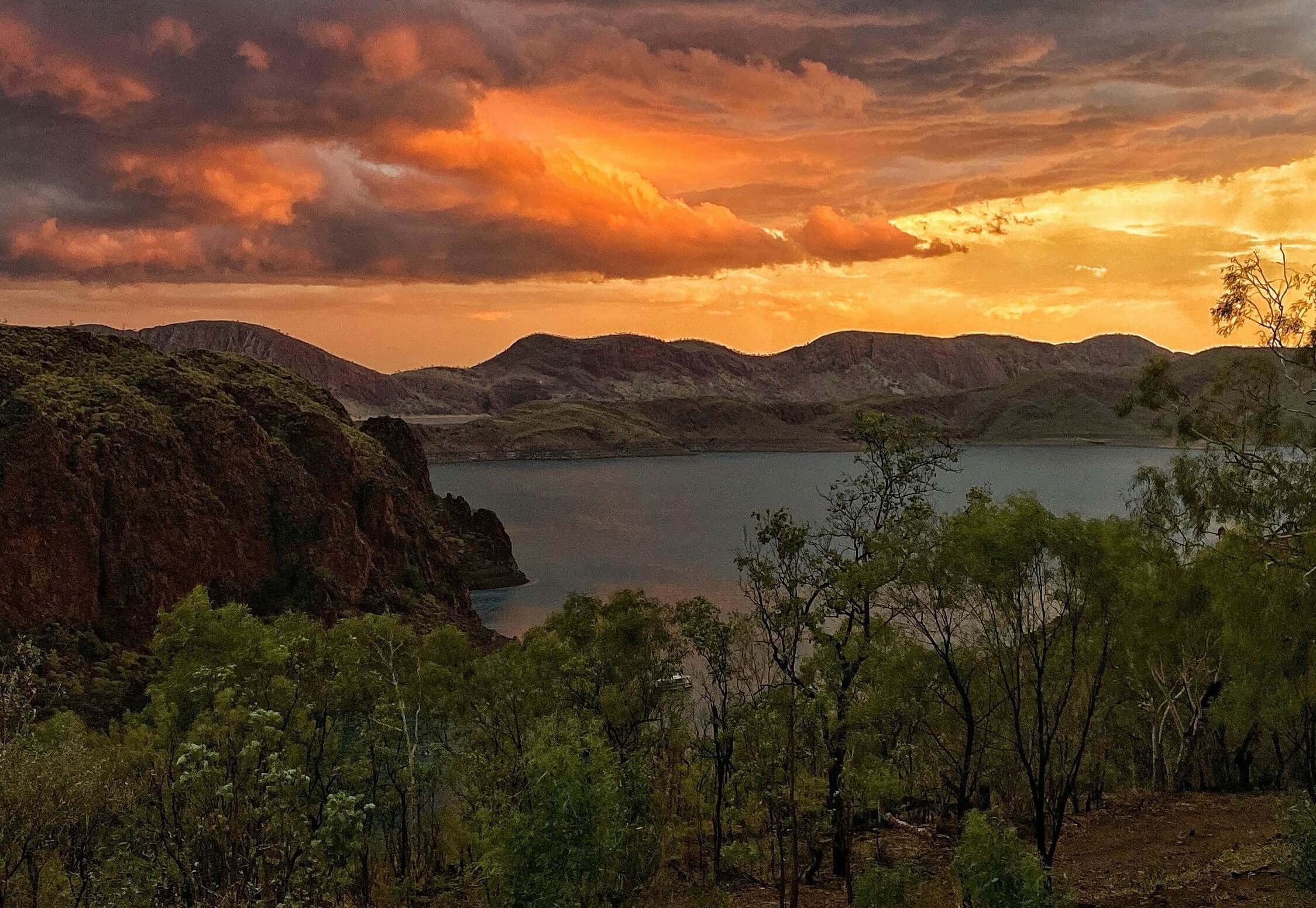
Photo by Will Roocke on Unsplash
Sister Barbara has always been drawn to the unknown. In 1965, a week before her eighteenth birthday, she travelled some 400km from Mount Gambier to Adelaide to join the Sisters of Mercy. Her entire family piled into the car and for five hours, Barbara and her siblings sat in the backseat watching lonely farmhouses tear past the window. Barbara had no idea that this would be the first of many long journeys that would take her across the vast deserts of Australia and, eventually, to Papua New Guinea (PNG).
After graduating as a teacher, Barbara spent more than two decades working with Aboriginal communities. She began in Port Augusta in South Australia, where on a hot, dry day she met Pat Dodson, Australia’s Father of Reconciliation and first Aboriginal person to become a Catholic priest. “Dodson is so wise,” Barbara says smiling, “and so impressive.” It was the late 1970s, still several years before Dodson left the priesthood and several decades before he became a Labour Party Senator. Dodson has influenced a nation Barbara tells me: “His leadership, especially of the reconciliation movement, has made non-Indigenous Australians think differently and question things.” After spending four years teaching in Port August, she worked in Coober Pedy, a remote town in the north of South Australia where opals are pulled from the earth and most residents live underground to escape the sweltering heat.
But she would spend most of her time working in the Kimberley, an ancient landscape in Western Australia. “I was sent to work in adult education,” Barbara tells me as we sit in her living room filled with Aboriginal art. The paintings — with their vivid reds and earthy oranges — were parting gifts and serve as a reminder of old friends from the Kimberley. She arrived in 1989, one year after the late Prime Minister Bob Hawke was presented with the Barunga Statement, which called on the government to recognise the rights of Aboriginal Australians.
Barbara lived with other nuns who were also teachers. The nearest town was Halls Creek, which was about three hours away. The nuns stayed for varying lengths of time, and most, like Barbara, stayed for several years. But for some, Barbara says, the remoteness and limited facilities were too difficult: “One nun left after three months.” Barbara speaks cautiously, making sure not to involve the lives of others in telling her own story. Every now and then she glances at the recorder which sits between us on the table.
The sisters had a landline phone at their home — one of few in the community at the time. “Landlines had only recently arrived, and no one had one at home. The school had a phone as did a couple of the services but that’s it,” Barbara says. Nor does she remember there being any public phones either. “They were very tough times for the community,” Barbara continues. “The Department of Health had withdrawn its nurses from the community after some kids had tried to start a doctor’s plane parked on the airstrip. With no health facility people would often come to see us at all hours.” One night, Barbara woke up to the sounds of fists pounding on the front door. “A woman and her husband stood outside cradling their baby who had died. It was so sad. The parents were distraught. We called the police — who were three hours away — and then the Royal Flying Doctors.”
Barbara falls silent as she leans her petite frame against the high-back chair. I watch the sunlight fall onto a turquoise lamp in the corner of the room. “One other night,” Barbara begins, “a pregnant woman knocked at our door at 2am frantic that her waters had broken. We called the Royal Flying Doctors who stayed on the line giving us instructions as they put a plane in the air.” By this time, the house was full of both children and adults. Barbara tells me her job was to keep everyone out of the tiny room where the woman was about to give birth “except for the plumber’s wife who was a mother and knew more about giving birth than us!”
“How long did it take for the Royal Flying Doctors to arrive?” I ask.
“Around three or four hours — it was the middle of the night, so they had to find a pilot. When I picked up the doctor from the airstrip, the sun was beginning to rise. We tore back to the house and when we arrived the mother was holding her baby girl.”
Barbara and the nuns worked with the community to jointly advocate for health facilities. “We petitioned the Department of Health and politicians,” Barbara says. “It took a long time but eventually someone from the Department of Health came to visit and we [the Sisters of Mercy] ended up taking responsibility for reopening and running the health clinic.”
The sounds of children playing spill over the fence as Barbara and I talk. A young child squeals in delight as her father bundles her on his shoulder and runs through the garden. The child’s blonde hair flutters wildly, covering her face which is just visible over the fence. When he puts her down, she screams, “Again, Daddy!”
Born in 1947, Barbara grew up on a farm 50km north of Mount Gambier. “We had a lot of freedom on the farm,” Barbara says, “but looking back I realise my parents worked very hard, struggling to make ends meet.” Her father, who fought during World War II, was one of many servicemen who, upon returning to Australia, took part in the Soldier Settlement Scheme. According to South Australia State Records, approximately 12,000 soldiers took up land under the Scheme, which intended to help repatriate returning soldiers.
Barbara attended a Catholic school and most of her school friends, who were Catholics, lived in the town — too far away for her to ride her bike on the weekends. Her neighbours though were Protestant. “It was still the days of Catholics and Protestants,” Barbara says referring to the Catholic-Protestant divide which was still deeply entrenched at the time and would be until the 1970s. “Our neighbours’ kids were my good friends,” Barbara says. “Me and my sisters played with them; we would ride horses together. For our families, there was no such religious divide.”
In the 1950s, the numbers of Catholics in Australia grew rapidly, with parishioners filling Church pews while the numbers of young men and women committing their lives to being a priest, sister or brother continued to grow. Barbara would be one of them.
Barbara was only seventeen years old when she joined the Sisters of Mercy in 1965. The order was established in Ireland by Catherine McAuley in 1831 and fifteen years later was brought to Australia by Ursula Frayne in 1946. Barbara’s parents, still working hard as they would all their life, struggled to understand her decision but did not stand in her way. I ask why she chose to become a nun. Barbara runs her hand through her short white hair before responding: “I think I was very naïve in a sense, but in secondary school [a Catholic boarding school] I was impressed by the nuns who cared for us. I was impressed by their spirit, the nuns seemed happy. They had a freedom about them, and they appeared to care about each other.”
“Did you experience a calling to religious life?” I ask.
“Oh yes,” Barbara responds without hesitation. “I don't understand how you would describe a calling. It was a stirring inside me. No one told me I should do it. I had no clue what I was getting myself into.”
Though she could not quite envisage what life would look like as a nun, she followed the calling. During the long journey to the convent in Adelaide, she thought about the parting words of her parish priest. Perhaps he sensed her nervousness at the unknown future that lay ahead: “Don't worry,” the priest said in his Irish accent, “if being a nun is not right for you, they [the nuns] will send you home. And don't be ashamed to come home.”
At first, Barbara tells me, she did not see herself as equal to the other nuns. “I think I put the women on a pedestal on which they did not belong,” Barbara says. She soon discovered the multiple complex layers of the women with which she was living and the challenges of living in community. Seven other young women joined the convent at the same time as Barbara; only three of them would take their final vows six years later. When the other four women left the convent, no one explained why, nor was there a chance to say goodbye. “We were just told they were gone,” Barbara says. “To this day, I don't know why anyone left.”
During her first year at the convent, Barbara spent each mealtime listening to older nuns read aloud documents that were emerging from the Second Vatican Council. It was 1965: Bishops from around the world together with the Pope were in the final stages of the three-year meeting, which intended to 'open the windows of the Church’, to map its role in the modern world. The Declaration of Religious Liberty was one of the final documents that emerged from the Council. “When I entered the convent, I knew nothing about the Second Vatican Council,” Barbara says. “But I could feel that everything was about to change.”
Like many other Sister of Mercy nuns, Barbara studied teaching, though she never believed she could be a teacher. The idea of standing in front of a class was not a comfortable one for Barbara but with growing confidence, she eventually discovered that she in fact could teach. I ask whether she had a choice in what she studied. Barbara turns toward the garden and gazes momentarily at the peach tree teeming with fruit. “Yes and no,” Barbara replies. “In South Australia most Mercy nuns were teachers at that time.”
By the time Barbara committed to her final vow as a nun, it was 1973. This was a time of immense social change in Australia: it was the year that the Whitlam Government became the first government in the world to appoint a dedicated adviser on women's affairs (Elizabeth Reid) to the head of government and introduced maternity leave for Commonwealth employees (Maternity Leave [Australian Government Employees] Act 1973).
Barbara pauses to take a sip of icy water. The silver ring cupping her wedding finger slides forward. We fall into a silence neither of us is in a rush to fill with words. Behind her is a painting from the Great Sandy Desert, whose sunburnt-orange sands stretch across the continent. A lot has changed since Barbara entered the convent — in the world, in the Church, in her life. I ask whether the reasons she decided to become a nun are the same reasons she has stayed for almost six decades. Barbara’s brown eyes study my face before she replies: “In some ways, I suppose they are. I have never seriously entertained leaving. I don't even think: If I did not do this, I would have done that.”
While her commitment has remained unchanged, Barbara is adamant that a lot needs to change in the modern-day Church. “I am not a radical feminist, and I have no desire to be ordained,” Barbara says, “but I think the choice of being ordained as a priest should be allowed for women.” After adjusting her blue glasses, she continues: “Though priests will be allowed to marry before women will be allowed to ordain.”
Another change she welcomes are those that have resulted from the Royal Commission into Institutional Responses to Child Abuse. “The people that have suffered, it must be unimaginable suffering,” Barbara says referring to the victims of child sexual abuse. When I ask about the moral failure of the Church, Barbara responds, “Were the priests fooling themselves?”
“In what sense? Do you mean fooling themselves about who they were?” I ask.
“Yes, to be publicly professing to being a priest but privately committing a heinous crime. Is this because priests have been treated like little gods, so they begin to see themselves as little gods? I don't know….” Barbara responds.
At the time the Royal Commission released its Final Report in 2017, Barbara had just returned to Australia after working in PNG for six years. Barbara oversaw the formation process for women considering becoming a Sister of Mercy — she would get to know the women as they were in the process of discerning a call to religious life and if they entered the convent, she would then help them through the transition. I ask about the numbers of women becoming nuns in PNG. “The number of women for us, the Sisters of Mercy, were not that high. More traditional orders, such as those that still wear the habit, attracted higher numbers,” Barbara says, unable to explain the phenomenon. “We were often criticised by other Catholics in the community for not looking like nuns as we no longer wear the habit — something which changed after the Second Vatican Council.”
Barbara lived in a house in Mount Hagen in the PNG Highlands with four other local nuns. With Human Rights Watch warning that a woman is beaten every thirty seconds in PNG, violence was an issue the nuns encountered frequently as they worked in the community. Sometimes they themselves were the target of violence. Once, on a trip to the capital, Port Moresby, Barbara was mugged, an experience that left her with a black eye and a cut on her face. The next day when she returned to Mount Hagen, she went to a bakery close to her house early in the morning hoping to avoid a crowd. A woman standing next to her, a stranger she had never met, gazed upon her bruised face and asked, “Did your husband beat you, love?” “It was too hard to explain the situation, so I mumbled an inaudible reply,” Barbara says. The experience left her feeling shaken but with quiet determination, Barbara set about living her life as she had done before the random attack. Barbara tells me many other stories about her life in PNG, but she will not allow me to write about them; they touch too close to the lives of others, revealing their pain and vulnerabilities.
At the age of seventy, Barbara returned to Australia to be closer to her mother, who was in her 90s. Barbara admits that the transition back to Adelaide has been hard: “There was a loneliness to coming home,” Barbara says. “I did not have the life-long connections to people in Adelaide as I have worked for so long outside of the state. And few people could relate to my experiences, I felt like a bit of an oddity.”
“I know exactly what you mean,” I say. I tell her about my experiences of returning to Australia after years spent living abroad and how hard it is to start over and meet new people in a small city when most of your friends are now scattered across the globe. Barbara smiles knowingly at me as I speak about the loneliness of returning to a hometown which no longer feels familiar, and where, at every turn, you stumble into the memories of your younger self and her imaginings of the life ahead.
Despite the difficulties of returning home, Barbara tells me she has no regrets. She pauses, as she often does, to search for the right words. In the silence, I look outside the large windows. Two rainbow-colored lorikeets dash towards the peach tree landing with acrobatic prowess on one of its branches. After a few seconds, they fly away with the same urgency with which they arrived. “I have had a wonderful life,” Barbara continues. “If I died tomorrow, I would say to God I have had a pretty good time here.”