Image from Adobe Stock
Delwyn nodded to the woman as he walked from his allocated parking space. She was leaning against a directional sign, her legs crossed at the ankles in a pose of inappropriate insouciance, a cigarette paused between her fingers, her face wreathed in a fine gray ash. He thought it unseemly for women to smoke and certainly not a good look for the hospital. He sighed, wiped his palms against his trousers, and strode with confidence and quiet resolve through the entrance to his new office. Lining the wall were the photographs of the medical staff. Although he expected a certain tension between him and the physicians, he wondered which of them would prove the most troublesome.
*
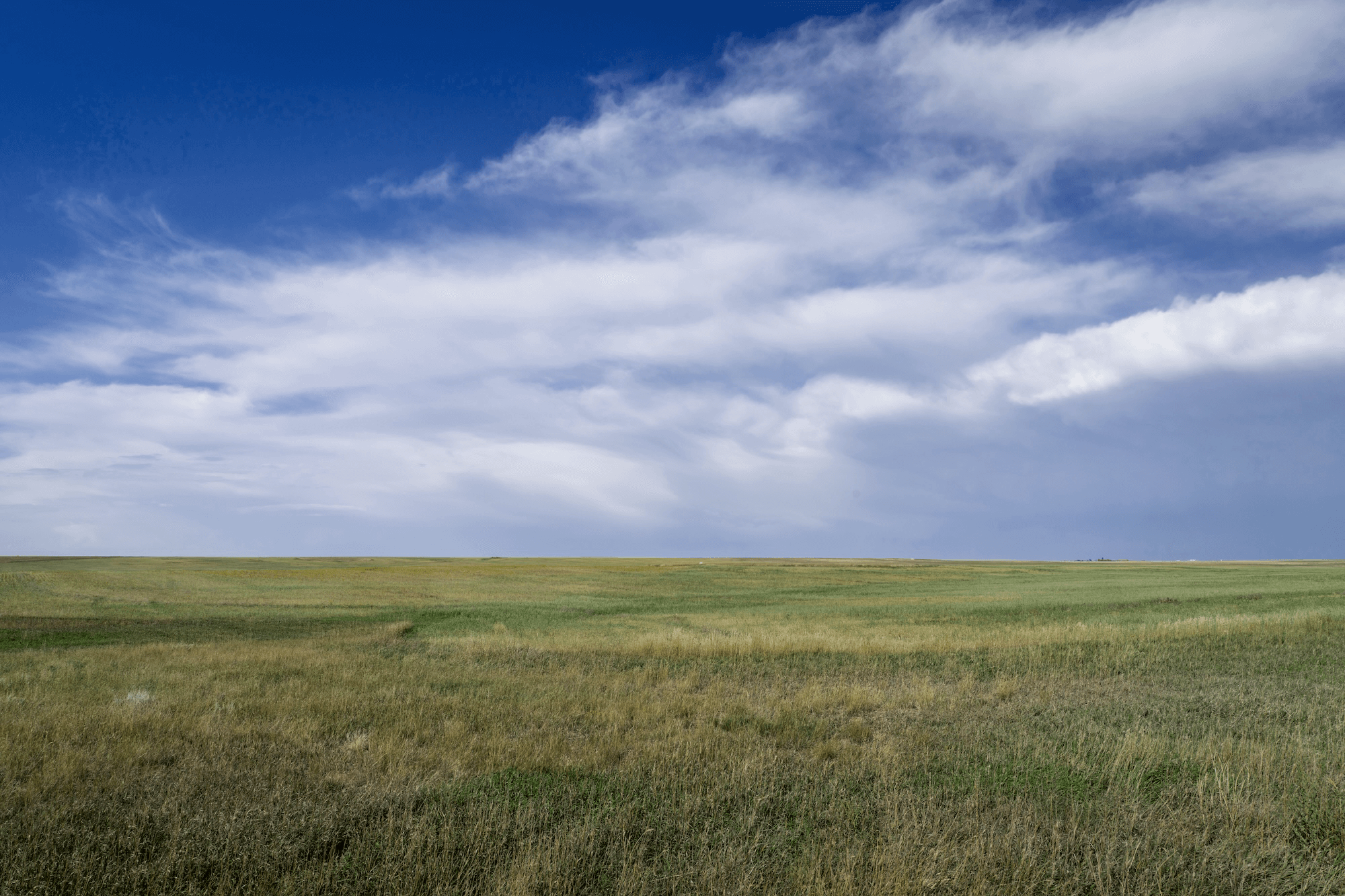
This wasn’t his first rodeo on the High Plains with its sheltered rural towns and small hospitals. In this austere, horizontal world where the straight line of the horizon severs the sky from the earth, the land is an endless, empty expanse. It is the kind of place that can break you.
The farmers long ago upgraded their draft horses for a John Deere; the women wear Levi’s instead of hoop skirts and Mother Hubbards. Still, the hard going that tested the mettle and grit of the early settlers endures. There is the melting heat of brief summers and the brutal, unremitting freeze of winter. And the wind—it never ceases. It follows you! The blown dirt and dust intrude upon everything, and its moaning, whining, shrieking sounds grate on the nerves. Burdened are the many with depression, anger, and hopelessness. There are the distant echoes of “Prairie Madness” here.
Rain is scant in the High Plains and the growing season short. A year of drought and the yields of winter wheat, hay and other dryland crops are hardly worth the costs of harvesting. Many of the farmers and cattlemen gradually sold parcels of their land to pay creditors. Soon there was nothing left but the tractors, combines, threshers, farm trucks and some livestock. In time these too were sold and the former landowners would vacate to a small home in town. Hobby farmers, corporations, and investors became the owners of much of the arable land.
Many of the young people, once graduated from high school, leave the area and emigrate to Cheyenne or Denver or join the military. The women that stay behind get pregnant, marry, and settle into their unremarkable country lives. The men without land ownership find employment in the feedlots or as unlicensed mechanics or roofers or in county road maintenance, useful employment but irregular and with poor wages and benefits. They seek respite from their tedious lives and harpy wives in risky behaviors, often ending in hunting accidents, bar fights, or high-speed crashes. They are patched and sewn up at the hospital and sent away to be recycled through at a later time. With this demographic to draw from, the hospitals constantly teeter on financial disaster.
The physicians attending these patients were usually refugees from big city hospitals where they had fallen from grace following some personal obsession or indiscretion. Here in the void of the trackless plain they could find anonymity and a measure of professional respect. The patients didn’t much care if the alcohol smell in the examining rooms came from the breath of their health care provider, since they considered themselves fortunate that someone was willing to prescribe a tonic for their fatty livers, painful joints, and flagging libidos, the women thankful for their anxiety and depression meds.
*
At his prior stint, nearly half of his staff physicians were under state supervision for having perpetrated one if not several of the cardinal sins, the most common being wrath, greed, and lust with an added dollop of medical malpractice. One surgeon’s license was revoked after he punched a patient who refused to cooperate during placement of a subclavian line. It might have passed unnoticed were it not for the nurse creating a scene and then blabbing to the newspaper about it. After this blot on the hospital’s good name, Delwyn felt it best to move on. Let his successor find someone to remove the town’s gallbladders and appendices.
He knew this job was going to be just another bullet point on his resume. Administrators were hired to resuscitate these hospitals back to financial health. They were analogous to coaches recruited to return the local high school football team to its former glory. When after a few years the team continued to flounder, it was time for a new coach. What the locals on the hospital boards didn’t seem to understand was that the playing field wasn’t level out here, and the team members possessed only a modicum of talent or incentive.
Later that day he called a town hall meeting to address the entire medical staff. He gave an upbeat assessment of the hospital and related how pleased he was to be tasked with the goal of bringing extraordinary medical care to the community in cooperation with so many dedicated professionals. Among the doctors at the gathering were two Canadians on visas who found it more lucrative to work in this medical outpost than within their own healthcare system. There was a Persian female general practice physician; an anesthesiologist husband and his wife, a pediatrician; a divorced orthopedist with his girlfriend; and a semi-retired Jewish psychiatrist seeking respite from the stress of his former teaching hospital.
Delwyn’s first weeks at the hospital were pleasant with the physicians and board members warmly welcoming him. It was not unlike the initial phase of courtship when the couple are on their best behavior and their future together looks promising. A bit later in the relationship the irritants and accusations begin followed by the quarreling and yelling, and you start to wonder what the hell you ever saw in this chick in the first place.
Being near an interstate and the only hospital within a hundred miles meant that vehicular accident victims were frequent passive recipients of the hospital’s trauma services. The lead singer of a German heavy metal band totaled his expensive automobile on the way to a performance, was mended back together and, im Geiste der Dankbarkeit, gifted his caregivers with tickets to his next gig. Then there was a contingent of Buddhist monks who flipped their van with several of the holy men hospitalized for several weeks. Having taken vows of poverty, they blessed the hospital in lieu of payment.
*
Early on, Delwyn was asked to address a complaint by the surgeon about his dictation being altered by the medical transcriptionist. When she showed up at his office, he recognized her as the woman smoking outside the hospital entrance. Her name badge identified her as Jody. She wore functional, non-medical attire for her work, isolated as she was all day in a tiny cubicle wearing earphones and listening to doctor garble that she had to translate to the page. She was slim with a charmingly gamine appearance; her light blue eyes sparkled with mischief; her smile artfully canted slightly higher on one side. Unlike the many farm and ranch wives who aged in dog years, she was perky and cute.
Assuming his professional demeanor, he got to the crux of their meeting. “Dr. Grindle says that you deliberately altered several words on his op report. You know, of course, that’s not your prerogative. You need to type exactly what he dictates. What if you changed a drug dosage or lab result? That could result in real harm to the patient and possibly a lawsuit.”
She fixed her gaze upon him and smiled politely. “Are you aware of the words that I changed?”
“No, but that’s not the point . . .”
She went on. “He excised a pilonidal cyst. He dictated the site of surgery as ‘just superior to the butt crack.’”
“Yes, but . . .”
“I changed it to read ‘intergluteal cleft’ which is the correct terminology—not ‘butt crack.’ He’s an idiot. His dictations are awful. He needs to take a remedial English class.”
He found himself suppressing a grin—this girl had chutzpa. He liked cheekiness in a woman, someone with an edge. His ex was more of the submissive type, excessive in her agreeableness.
“O.K., Jody, you’ve got a valid point. We desire that the proper medical vocabulary be used in our hospital reports. Maybe something this egregious you could run by me next time?”
“Sure. You want me to change it back to ‘butt crack’?”
“No, you’re good.” She got up and, smiling brightly, turned to leave.
She later confided to him that she botched many reports during the initial weeks of her employment. With a medical dictionary resting on her lap and no experience with this line of work or lingo, she typed away with more enthusiasm than knowledge, confusing aortic aneurysms as erotic aneurysms and authoring reports with mangled medical verbiage. The hospital was desperate to hire for the position so the bar was set low with the requirements being a general knowledge of the English language and the ability to type fast. Of the handful of applicants, she was the only one that qualified. She had been abruptly fired from her previous job as a cashier at the local grocery after taking an unscheduled day off to have her car plowed from a snowbank. The manager told her she would never work at another Safeway store again. She told him that he could stuff it!
*
His complete name was Delwyn Moody Jr. His namesake was an obscure utility infielder of his grandfather’s home town Cincinnati Reds, and Delwyn’s father thought the name was unique and appropriate for his only son. The family name aptly described his parents, both of whom were given to rumination on eschatological questions and brooding about the Book of Revelation. In a past era they might have been flagellants. They were loving and affectionate, but severe fundamentalists who abided with anxious anticipation of the foretold Rapture. As for Delwyn, he was fearful that he would lose his baseball card collection once the Day of Judgment arrived.
It was presumed by his parents that he would attend a Bible institute where he would study and interpret biblical prophecy. But Delwyn enjoyed sports, and the school had no interest in such things, so he enrolled in a secular university with a nationally ranked football team. It was a world profane to his religious upbringing, but a welcome distraction from the daily pitched battles his soul waged between the forces of good and evil. Gradually, his somber demeanor lifted, but he was well versed in the commandment to honor his parents and of Paul’s Epistle to the Romans about the “wages of sin.” Throughout his life he harbored the restless foreboding that such a transgression against his parents would someday result in divine retribution.
*
Delwyn entered Ruby’s Steakhouse and Brandin’ Iron Bar after a particularly trying day at the hospital. He was in sore need of a drink and a satisfying meal. A large mural decorated the entrance wall. This was not the lavish, sweeping Western landscape of a Bierstadt but a rough depiction of emigrants in company with their prairie schooners passing beneath the benevolent gaze of Plains Indians on horseback and in full regalia. Probably not an accurate portrayal of a real event, he surmised. Other Western-themed art work cluttered the place: cowboys, buffalo, cattle drives. There was an adjacent, well-worn dance floor. The bar thronged with happy hour regulars, loudly talking, laughing. He was seated in a raised booth, handed a menu, and ordered a Coors. He noticed that two women seated at the bar glanced his way and then turned back to their animated conversation. Shortly thereafter, one of them got up to leave; the other, holding a colorful drink in her hand, approached him. “May I?” she asked. He recognized her as the hospital transcriptionist. He smiled and she eased herself across from him.
“I noticed you when you came in. I told my friend about our little incident.”
“My first time here,” he answered. “Thought I’d try some of the local cuisine.”
“Well, you’ve come to the right place. Best steak in town. I’d recommend their 16 oz. Cowboy Ribeye. Their salads are excellent also.” She looked down at her hands. “Anyway, I want to tell you that I was remiss in not thanking you earlier for supporting me in my dispute with the doctor.”
“There’s no need; you were entirely correct. I told him that we were going to let your description of the patient’s anatomy stand. He grunted, but agreed.”
“You’re the bomb! Our past CEO would have sided with the doc.”
“Well, there’s a new sheriff in town.” They both laughed.
He admired her closely. She had a healthy waist-to-hip ratio. Her russet-brown hair was styled in a pixie cut and a purple scarf swept round her pretty neck; her hoop earrings danced whenever she moved her head. A frisson of desire cascaded through him; he felt his face reddening and quickly looked away.
“Your friend had to leave?” he asked, his voice cracking slightly.
“Yes, she has dates tonight.”
He gave her a quizzical smile. “Didn’t know midweek was date night around here. There’s little in the way of entertainment that I’ve found except maybe for this place. The movie theater is only open on weekends. I’ve already checked that out.”
She looked at him directly. “Jobs are limited for women here. There’s warehouse work at twelve bucks an hour or part-time at a crummy fast-food place. Unless a girl can wrangle a husband or a boyfriend who isn’t shiftless, she’s pretty much on her own. My friend, Lisa, isn’t an escort girl or a lot lizard. She provides a girlfriend experience for the long-haul truckers from the interstate. They’ll meet at the Walmart parking lot in town or at the highway rest area and spend time together. The truckers then move on to their overnight stops in Cheyenne or North Platte. She’s got a regular clientele, so she’s pretty safe. Best to have happy truckers on the road, don’t you agree?”
He hesitated a few beats while weighing an appropriate response. “Well, guess so. Don’t want to be run off the road by an angry, frustrated trucker.” He tried to casually redirect the thread. “But you’ve managed financially, haven’t you. You have a decent job at the hospital.”
“Maybe an increase in my salary would help,” she hinted. “But I also work at Grandma Flo’s down the street on weekends. You should come by—great breakfasts and lunches.”
A pert dishwater blonde came to take their orders. Jody knew her and they exchanged pleasantries. The waitress suggested Dorothy Lynch instead of French for his salad dressing since it was the accepted Nebraska substitute. He also ordered the steak and a refill for Jody.
“Thank you so much,” she said, lingering a smile.
He guessed she was in her mid-forties, more than a decade younger than himself. As she later told him, her three adult children lived nearby. Her daughter was a barrel racer and had a boyfriend; her oldest son worked the oil fields in the neighboring states; her youngest son was a mechanic. Her ex had remarried and lived with his new wife in her former house. After the divorce, she transitioned through various jobs.
He looked across the table. She seemed happy and relaxed.
After chatting amiably during his meal, she placed both her elbows on the table and covered his hands with hers. Lids heavy with intoxication, she leaned her face into his. “So, are you going to survive this town?”
Later, he pushed quarters into the juke box, led her to the dance floor, and they slow danced to multiple replays of Willie Nelson’s “Stardust.” He held her close as she tucked her chin into the crook of his neck. Afterward, he walked her to her car and asked if she would like to live together.
*
Delwyn found them a place near Pumpkin Creek. His nearest neighbor was a summer Bible camp several miles away in Reddington. The house was old, a reconstructed former one-room schoolhouse with a tornado cellar. Pitched on a rise near a homestead cemetery with a windbreak of eastern red cedar, it had a grand view of the eroded sandstone of the Wildcat Hills across the valley. Inside, a fireplace in the main room and a pellet stove in the corner provided more than sufficient warmth during the wintry nights. The original owner of the house had a plat map hanging on the wall. In 1913, the land belonged to A.L. Hoffman; another family member owned the adjacent quarter section. Remnants of a rusted barbed fence separated the two properties. The creek meandered along the valley floor to terminate at the nearby North Platte River. Seen from the expanded porch, the rising and setting sun painted the sky in watercolor hues.
Except for their home on the craggy hillock and the cemetery, the remaining acreage was rented to the Department of Agriculture. It was a rewilding project to restore the native grasses as a habitat for birds and animals as well as recharge the underground aquifer. He thought it ironic that in the late 19th century all this land was free to anyone who would build a rude living structure and farm or ranch it; now the Government wanted it back and would pay the landowner an appreciable sum.
Jody moved her things over in a U-Haul along with her dog, a large, dark rescue. He terrorized the ring-necked pheasants and sharp-tailed grouse and small mammals but cowered before snakes and slunk away from the yipping howls of coyotes. His feral spirit and dopey demeanor imbued their home with vitality and light-hearted cheer.
Jody embraced the hygge way of living: she transformed their little abode into a cozy cottage with a crackling fire, candlelight, and fluffy blankets to canoodle under. Born and raised in the area, she was on a first name basis with what seemed all the residents of the county. An authentic country girl, she possessed easy self-confidence, could ride a horse, shoot a rifle, and stand her ground in any argument. Her ancestry dated to when her grandparents weathered the elements in a sod house and tilled the soil with their sweat and harnessed animals. Jody was a person known as a “sticker.” She was proud of her rural heritage and of the homespun values that she inculcated in her children. She befriended her neighbors, played the organ at church, and was an admired presence in the life of the community—one of those people whose passing would be mourned on the front page of the local weekly. He, on the other hand, was a “boomer,” moving across the land, chasing job after job, never forming deep connections with the people he met. The rusting pumpjacks dotting the countryside were the legacy of other boomers, those who drilled all the wealth they could from the land and then moved on.
Delwyn found contentment with this woman and with the rustic simplicity of their life together. There was a new richness to his being. He noticed that people often waved from their vehicles as they passed on the long, straight gravel roads. He liked that small town friendliness. He wished to be a “sticker.”
She drove him about the county to sites of historical interest and places she enjoyed visiting. At Mud Springs there was a small stone monument. She pointed to an area containing wood fragments and broken clumps of earth. “That used to be a Pony Express station. The riders changed horses, got a meal, and then continued their ride. Then it became a telegraph station. There was a bloody skirmish nearby between the Army and several Indian tribes. No one visits this place now. It’s like nothing ever happened here. It seems as though we just pass through life scarcely noticed and then we’re completely forgotten, doesn’t it?”
He could have mentioned Ozymandias, but she probably already knew about him as well as Shelley. She was an educated woman, both book and street smart. He had seen the unkempt pioneer cemeteries scattered about with their moldering headstones and wind-scoured inscriptions. He wondered if anyone still held thoughts for those buried there, or had their memory been lost to time? Perhaps they had accomplished amazing things or done heroic deeds. Delwyn considered his own life and found it wanting. He remembered advice his father once told him as a young man: to imagine the world without him in it and to create something that outlives him. “Leave something behind when you depart,” he said, “something your hand touched with intent and feeling: a child, a tree, a book, someone you loved deeply.”
*
One day, driving along the section lines, he asked Jody what was behind the chain-link fences topped with barbed wire that stippled the landscape.
“That’s where the silos are,” she said.
“I thought they were located above the ground and stored grain and corn and other crops.”
“Not that kind. These are buried under the ground and contain missiles.”
He laughed at her response. “What?”
“There are dozens of them hidden out of sight here and in eastern Wyoming. They carry atomic bombs to destroy the commie cities if we’re ever attacked.”
“Then I would think those missiles would be the first target in any serious armed conflict,” he argued.
“You bet. If there’s a war and you’re living out here, better bend over, put your head between your legs, and kiss your sorry ass goodbye!”
He snorted. “Then why do people stay out here if it’s so dangerous?”
“No one’s leaving the place where they grew up and have relations and friends. Their forebears homesteaded the land, worked it, lived their entire lives and are buried on it. They remained steadfast despite the prospect of injury and death by accident or by the natural world they inhabited, and their descendants are of the same defiant mindset. We’re staying put!” She continued. “It’s not that we’re ignorant of the risk. There are tornado shelters for limited protection and we keep potassium iodide tablets handy in case of radioactive fallout. But if the farmers and ranchers are vaporized by the blast, then their property will be also, and the land is what really matters to them. This land is their life.”
It was, Delwyn knew, a part of the country that Willa Cather searingly described of desperate families battling the barren prairie and hostile climate and by sheer force of will creating a home for themselves out of nothing. He had seen photographs of the early settlers in Nebraska. One of the more arresting was of the four dark-haired Chrisman sisters standing tall in front of their sod home with two of their ponies. Wearing their print dresses of percale and gingham and holding their large-brimmed hats, the handsome young women look proudly into the camera. Never would they have quit their hard-won homesteads.
*
He believed he and Jody got along well as a couple with only occasional gentle disagreements and brief sullen silences. Their little talks and walks, as they sauntered hand in hand across the short prairie grasses under a domed sky of azurite blue, were halcyon days for Delwyn. They road tripped to big cities, National Parks, and obscure places off the beaten track. There were several quirks in Jody’s behavior that at times he found unusual, if not odd. When he questioned her about these, she simply said, “It’s who I am,” and left it at that for him to ponder. Though he found her pixilated ways a bit confusing, he considered them as probably an avoidant attachment style honed by her environment, mere speed bumps on their road of life together.
Work at the hospital was generally satisfying for Delwyn save for occasional issues with physician shenanigans to include a case of Medicare fraud and a few incredibly errant diagnoses. The typed reports from his transcriptionist were flawless. It was the hospital’s perilous financial situation which gave him concern, and when the largest employer in town, an outdoors outfitter, was bought by a rival company and nearly two thousand employees with their excellent medical insurance were let go, the fate of the hospital was sealed.
“He’s a total asshole,” she said, raging on the man who was taking over the local company. “He’s moving everything to his headquarters in Omaha. He doesn’t have to destroy this town and ruin the lives of the people here. He’s greedy and a pathetic human. I’ll never buy anything from his company—ever!”
*
Delwyn timorously broached the subject of their future together later one evening. They sat before the fireplace and he took Jody’s hands in his. “It seems that both our jobs are about to be terminated. The board has decided to close the hospital. Only a small clinic will remain.”
She seemed unperturbed by his news. “I’m not surprised. The whole town has been anticipating the layoffs. People have been trying to sell out before their home prices drop.”
“There’s a job opening in Silver City for a CEO and also for a transcriptionist,” he continued. “We could move there.”
She bit her lip. “Where’s Silver City?”
His concern grew as he studied her face, the portal to her emotions. “It’s in western New Mexico.”
She slowly shook her head. “Nah, way too far. I’m staying here. You’re gonna have to make that move without me.”
In the ringing silence that followed, he tried to assemble his thoughts. “But this town won’t survive. You won’t be able to find work here.”
She managed a weak smile. “I’m quite resourceful—always have been. I’ll find employment somewhere. As I’ve told you before, my friends and family all live here. My roots go down deep. If I move, I’ll wilt like the prairie rose transplanted from its native soil.”
“But what about us and our relationship?” he protested. “Doesn’t it mean anything to you. Aren’t you being a bit callous?”
She narrowed her eyes. “Of course it means something. I cherish what we have together. It doesn’t mean I don’t hurt inside, but I’ve learned to harden my heart against life’s inequities. It’s how I survive.”
He resisted further importuning for if possible nuclear annihilation couldn’t prompt her to move, what chance did he have to change her mind? He asked if they could stay in touch, but she dismissed the idea. It was better to bear the heartbreak of separation now and allow the pain to slowly ebb with time than to refresh it again later.
“I’m sorry,” she said, “but that’s the way it is.”
Perhaps his parents had been right all along, he thought. Life is about suffering: there’s crying when we enter the world and more crying when we leave it. In between there are brief intervals of happiness but always with sadness smoldering in the background. As the crushing weight of despair fell upon him, Delwyn sensed that this tribulation was being delivered for his past disobedience.
*
On the day of her leaving, he arrived home late. She was standing by her car, cigarette in hand, awaiting his return. The dog was in the passenger seat, its head poking through the half-opened window. At his approach she tossed the cigarette to the ground and quashed it with her foot. “I packed what I need. You can have the rest or donate it somewhere.” She stood on her tiptoes and kissed him, hard. “So, I guess this is farewell or goodbye or whatever you want to call it. Anyway, thanks for the memories.” She started down the driveway, her arm extended out the window in a wave.
He felt dizzy, like he was going to fall. The night was clear, and he could see the red tail lights as she drove down the section road. There was the flash of brake lights when she turned the corner toward the highway. The lights flickered for a moment as she passed behind a small stand of cottonwoods—and then winked out.