Long Short Story
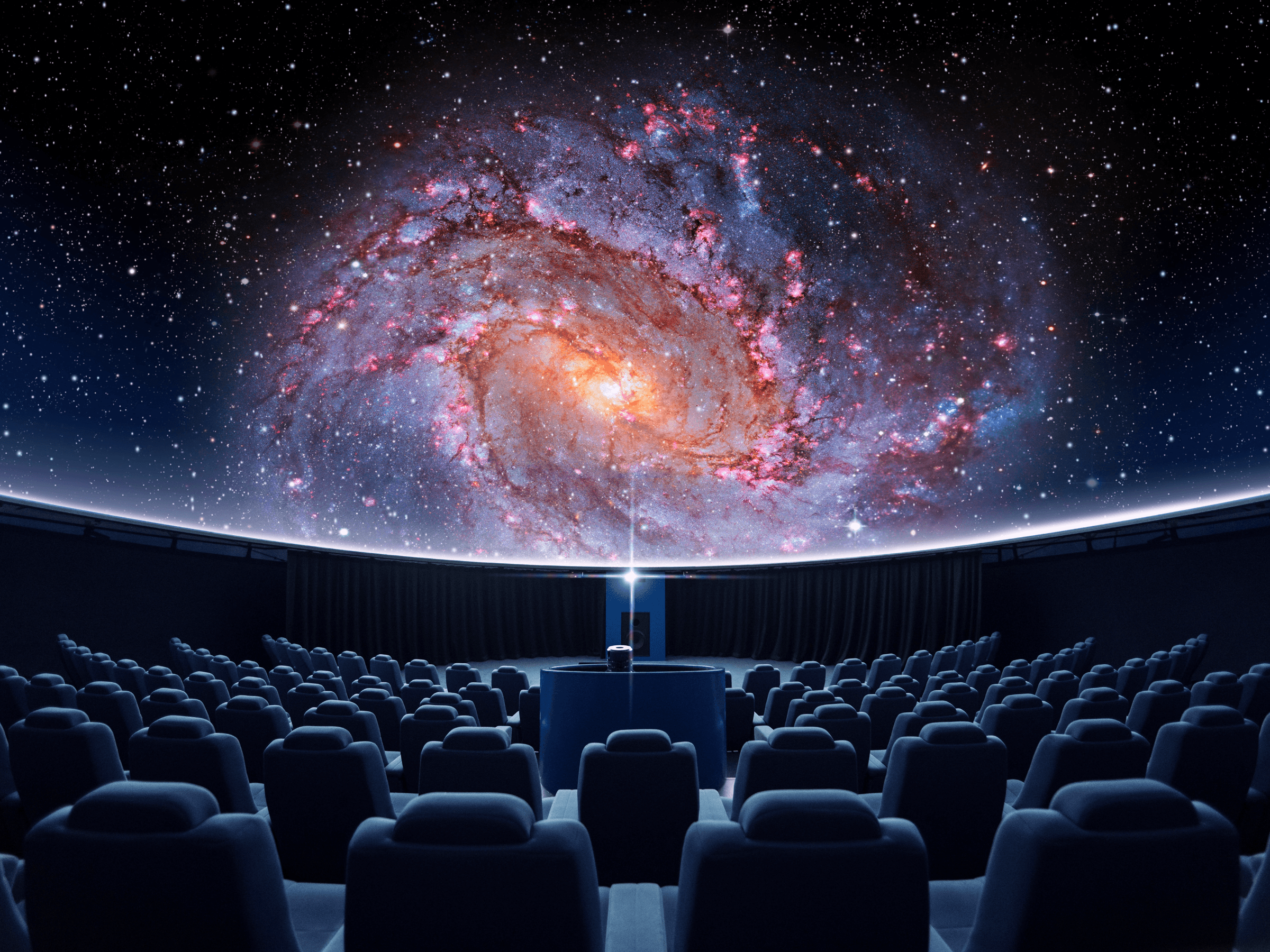
Image from Adobe Stock
for
The M.D. Anderson Planetarium at the University of Memphis, Lambuth, faculty, staff, patrons and donors and its NASA Ambassador Holley
1
Most people in the community didn’t know, or care, about the planetarium at the small, private Methodist college. If they’d driven by, they might have noticed the add-on to the four-story science building on its backside with a half-moon dome roof jutting upwards toward the heavens. If it had been a human body, it would have been a mole or tumor, but the dean believed the addition would bring much needed funds, and besides, the donor who wanted to see the college add the planetarium and integrate it into the curriculum had given enough to cover the building costs. The NASA scientist alum wasn’t able to fund the inside décor, the projection machine in the center, the seating, or the multiple shows needed for a start-up, all of which required redirected funds from the Humanities. The funds would not be redirected from administration or the sciences, but anytime there were cuts or funds needed, the Humanities was seen as easy prey, a lone gazelle prey on the Sahara for a lion crouched in tall grass.
The planetarium was the first in the state, and unlike the haphazard architecture at so many state colleges and universities, the Methodists were obsessively consistent in their planning for uniformity across the campus and designed the building to fit and match the Jeffersonian architecture already built on campus. It was no doubt a stunning addition and attracted a couple of hundred to its grand opening and ribbon cutting ceremony complete with the unveiling of a bronze plaque for the donor who opted not to attend though she attended a show a few months later, had a dinner in her honor hosted by the president, where the old maid scientist promised to leave more in her will to support the planetarium. What the president didn’t expect was that she would live another fifty years, probably because she didn’t have children, when the president hadn’t lived but a few more. The funds weren’t received until seven presidents later when the planetarium needed renovation.
When his administrative assisted asked how the dinner went, he replied, “It was fine. She was a bit eccentric.” She interpreted that as if he didn’t know what she’d talked about; he’d been a business major and had an online doctorate in higher education, which most of the faculty saw as a dumbed-down degree that could literally be bought without the tedious and difficult work of a dissertation. They saw it as the Pinto to the Porsche. The NASA scientist alum was a genius, a member of MENSA, and he told his assistant she worked for the famed von Braun, a Nazi German top scientist the U.S. recruited for his knowledge of rocket technology and who subsequently helped stop the war and got us to the moon. She told the president all of that during the dinner and added, “I grew up here, and I want the people here to stay connected. I want the college connected. It’s important. I wish I could tell you more.” He’d nodded while cutting his filet and chewing the rare meat with blood. He told his assistant, “I don’t know what the hell she was talking about. The main thing is we got a planetarium.” Of course, for most presidents who were fundraisers and not academics, it was simply another donation to check off his list for a board reviewing him at the end of the year.
The first show wasn’t advertised until a month after construction when the initial excitement had taken a back seat to a state-wide beauty pageant, a surge in drug raids and shootings, and a hotly contested mayoral race when promises made would not be promises kept. Mostly through word of mouth, and a need for other faculty to build their service documentation in their tenure portfolios, the first show was mostly made up of brown-nosing faculty and staff combined with a few spouses or children. While some oohed and aahed at the galaxies cast on the dome, the president and dean of faculty had both fallen asleep in the hour long show about the origins of space and constellations in the night sky.
In the years to come, schoolteachers from within a hundred miles who needed to reward students fill a blank space on lesson plans or simply wanted a break from the hell of K-12 planned a bus trip to the planetarium. There was ample parking for a bus across the street, and a crosswalk sign and stripes of paint kept visitors safe, particularly since the street was a dead end to the cemetery that had no entrance, the gates being on the opposite side of the cemetery. In the fifty years since the planetarium had begun, shows had taken on new thematic effects that fused music from mainstream pop culture almost anyone would know such as Beyonce, Taylor Swift, or Lady Gaga, and such shows did assist in bringing even more of the public to the planetarium with annual attendance going from a few hundred of mostly senior citizen groups from churches and local elementary schools to a couple of thousand. There were rules, of course. Once the show started and the lights were out, the doors were locked, so restroom visits needed to be made before or after, and if anyone was late, they had to sit outside on the benches that flanked the entrance until the next show opened. The coordinator of the planetarium was a retired science teacher named Margaret who could draw her retirement, get paid by the university, and work mostly part-time through the week and rotate every other Saturday. She was a rule enforcer and kept visitors in line as much as she had kept children in line whether to march out for recess, line up for lunch, or line up for a special presentation in the auditorium. In her younger days, she might have rapped a student on his hand or leg with a ruler or pinched the lobe of the ear to get attention, but she could yell a “shh” when she needed to halt talking or whispering in a show whether school children or senior citizens.
The president and dean learned very quickly in the early days that the planetarium was not going to bring the revenue they’d hoped to supplement a declining budget. The planetarium didn’t function like the local movie theatre with genre films that had audience screaming or making out, and they didn’t sell overly expensive popcorn, candy, cotton candy, and soft drinks. They did a brief trial where they’d ask everyone for fifty cents, but the seniors were living on social security, and the school children were mostly on reduced or free lunches. No one could afford to pay, so attendance dropped. Like a medicine that didn’t work, the administration quickly reverted to their former free philosophy in hopes alumni and donors might offer token donations or estate donations to keep shows updated. In fact, they invested in a stainless-steel stand at the entrance for people to take fliers that the development office had created.
2
The maximum capacity in the planetarium was sixty, but if the number of visitors was close to that number, the coordinator normally split the group into two. While some were in the show, others roamed the college grounds to identify species of trees of the arboretum across the campus. With over ninety indigenous species of trees in the arboretum, this was a great educational exercise for students or other visitors. In the fall, in particular, the colors were stunning, and in spring, the campus popped with new growth. Many of the trees were over a hundred years old having been planted by an expert botanist who was the first faculty member of Biology. As much as everyone figured there was a method to his planting and design, no one really knew or understood it, even the current Biology faculty.
Over the years, trees had been lost due to storms, and most agreed that it was sad to see an old tree come down, particularly large species of Red Oak and others that had appeared in photos throughout the history of the college. In one instance, the dean had the oldest Red Oak that had fallen cut into smaller pieces and gave them to an alum who was a wood turner. The wood turner then created several bowls and writing pens from the wood, and the dean gave them as gifts to the longest serving faculty and staff. The gifts were not a raise or promotion, so while the recipients were appreciative on the surface, they grumbled in hallways, at copiers, on sidewalks to other employees who were upset they hadn’t received a gift at all. The culture was one of self-absorption with little appreciation for having a job at a prestigious college where work was never difficult, where personal issues and family issues took the front seat while work was in the back seat, where time off and time needed was more valuable than a fifty cents per hour raise. In addition to the wood gifts, the dean had a complete slice of the tree cut, several inches thick, all the way across. The biology faculty thought it would be a great illustration of a tree’s age with its rings illustrating the tree’s life. What the maintenance crew hated, however, was attempting to move the section of tree from the grand front lawn to the science building. With over six men lifting over a thousand pounds, they moved it a few feet and stopped, wiping sweat and catching their breath, until they got it to the ramp to the building. Then, they had to turn it up right to get it through the front doors and then again into the biology lab. The next day, two of the men called in sick to visit chiropractors, the other four grumbling they were sissies and lazy, but all of them hated the dean for directing them to do such heavy and senseless work, and some of them told and retold that story through the years, the tree slab becoming larger and heavier with each telling, but as long as that memory stayed in the forefront of their consciousness, they didn’t complain of the daily tasks of mowing, weed eating, gardening, changing light bulbs or air filters, unclogging toilets and other minor projects.
On a cloudy Tuesday, a group of seniors from a Methodist church about twenty miles outside of town visited the planetarium and were to have lunch at one of the downtown cafes set up in a building that was a historic bus depot in art deco style. They arrived in two church vans and were excited for their outing. None of them had previously been to the planetarium during their working years, but all of them had heard about the planetarium, since some were alums and got the campus newsletter with its humble plea for donations on the back, a move by the president to solicit more gifts by seeming less conspicuous. His idea worked well, and while he wasn’t receiving multi-million-dollar gifts like his public flagship counterparts, he was receiving fifties and hundreds in checks that helped bankroll scholarships. If they were not specific about the type of scholarship, the money poured like hard rain into the athletic pool to give coaches discretion if they needed more to recruit players. Truth be told, the athletic teams were what floated the financial boat of the college year after year, despite the faculty who felt academics should be first and foremost. None of the student athletes gave a damn about the oxford comma rules; literary analysis of Hemingway, Twain, or even Harper Lee and certainly not Shakespeare or even the Bible; algebra or the building blocks of biology. Most got by with Cs from extra credit in the form of events or service, and while some of the students had to repeat classes from what they considered difficult faculty members (assholes they called them), most graduated and would remember their friendships, their parties, and their crushes. Gifts came from these things, not faculty or classes, though those seemingly irrelevant classes taught them to think, the appreciation coming many years later.
After that show was over for the senior Methodists, one of the ladies, married to a former state legislator, was missing. The group figured Anita was in the restroom even though no one noticed her exiting the planetarium for the restroom (and didn’t know the door was likely locked), and after a few minutes, one of her friends went into the restroom to see if she was alright. She wasn’t there. So, the group meandered outside and looked around, and one of the group went to the vans to see if she’d fallen ill and went to rest in the van, but she wasn’t there. The group scoured the science building, all four floors, peeking in science classrooms that made students wonder what all these old people were doing. Margaret called the main administrative office to see if she was in the historic rooms seeing the mementos that had been collected and displayed for visitors (photographs, yearbooks, sports jackets and balls, antique science equipment, etc.), if she was in the chapel, the bookstore/gift shop, or even in the dining hall with students. One of the seniors even suggested they check the cemetery behind the campus since some of Anita’s family were buried there, but they couldn’t imagine her seventy-eight-year-old body climbing the chain link fence to get inside. Initially, they were not concerned Anita had been abducted, but the campus police were called.
Margaret opted out of the investigation conversations because she had a group of third graders due for a show, but police asked the difficult questions no one wanted to hear: Had anyone seen her come in or leave? Since her husband had been a legislator, did they have political enemies? Could she have fallen victim to neighborhood thugs who often preyed on seniors for quick cash to support drug habits? Most importantly, they asked about her memory, whether she might be suffering from dementia or Alzheimer’s. Often people who suffered from these diseases wandered off from family and friends, being driven by hallucinations or false memories, but the group shared she didn’t have either and was sharp as a tac, completing crossword puzzles daily, crocheting potholders or baby blankets for members of the church, and being a member of the women’s prayer group that met once a week to send messages to God and angels to help the least of these.
In short, the senior group wanted to get to the café in the old bus depot before it got busy and they couldn’t get tables, so they gave the police some of their cell phone numbers, a technology they’d never had before in their lives, growing up with rotary phones, then push buttons, before cells. Half of them didn’t even know the features on their phones. They’d tried to call her several times, but she’d never set up voicemail, the automated voice repeating, “We’re sorry. The customer has not activated voicemail.” They told the police they would come back to check if Anita had been located before going home, and some of the women who discussed among themselves hoped she hadn’t been abducted for ransom by thugs, or was tied up in a basement in one of the old homes that populated the neighborhood and was being tortured or raped.
3
Beginnings and endings were often intertwined in life, opposite sides of the same coin, that limited human consciousness did not readily experience in time. When Anita finally regained consciousness, the college police had searched buildings on campus trying to find her, the local police were searching the neighborhood, but technically she hadn’t been missing for the required length of time. Nothing more was going to be done. At first, she lay there, squinting her eyes at the bright sunlight. She was disoriented and didn’t understand where she was. She recalled the van coming into the town for a planetarium trip and plans for lunch at the café in the old bus depot downtown. She rolled and sat up and tried to stand, but she was too weak. She knew she needed something to grip to help her up and saw a curved metal pipe extending from the flat roof. She scooted toward it, gripped it with both hands and pushed herself up, but she was still weak and got dizzy. When she looked out at the campus, she saw a few faculty, staff, or students moving across the sidewalks in and out of the leaf canopy from the trees. “Help,” she yelled, but knew her throat was dry like it typically was in the morning after a good night’s sleep. She also knew she snored. When her state legislator-husband Bob was alive, he used to complain to her about it, and she had gone to the doctor. At that time, the only thing available to first diagnose it was a sleep study at the hospital followed with a contraption of a mask and machine making noises all night. She decided then and there that either Bob could move to one of the spare rooms or she would. Besides, the kids, now in their mid-fifties, came home only at Christmas, all their furniture collecting dust upstairs the rest of the year.
Anita moved closer to the edge, swallowed a few times until her throat wasn’t as dry, and yelled again, “Help me.” It was clearer and louder, and people squinted upward to the roof of the science building, their hands acting as visors, and a couple of them scrambled toward the main administrative building. It may have seemed like another hour before the police came through the locked door to the roof, but it was only a couple of minutes.
“Let’s get you down,” one officer told her and guided her down the stairs to the fourth floor, onto the elevator and to the first floor. He called 911 on his radio fastened to his uniform shirt lapel, and one of the staff in the president’s office called a cell phone number left behind from the church group. They had eaten lunch downtown, browsed the shops downtown, and then headed to the mall to look and walk off the lunches from the café. The vans were loading up to head home when the president’s call was welcomed news, some of Anita’s best friends throwing up their hands to thank God she’d been located. Next, they wanted more information. Had she been found in one of the neighborhood basements? Was she hiding? Had she experienced some health episode?
The police had questioned her, more curiosity than interrogation, and the experience was the highlight of their year and a substantive change from writing parking tickets to students and visitors in wrong spaces, an add-on to their hefty private tuition bill the parents already grumbled about. Anita had no recollection of how she got to the roof, shared that she couldn’t believe she made it up there with her bad knee, didn’t understand the scrapes and bruises on her ankles, and why she’d been asleep for so many hours when if she did take a nap, it wasn’t for long at all. Her paper-thin skin was burned from the sun, but only on the side facing the sun, and her hair was flat on one side where her head lay on the flat roof. When the EMT’s arrived, they checked her as best they could, and suggested she go with them to the hospital, but she refused saying she would visit her physician the next morning when they opened. She had no paralysis from a stroke, and her heart and blood pressure seemed to be okay. There were no tests for dementia an EMT could perform. She just wanted to go home and rest. She told her friends she was sitting in the planetarium seat one minute, her purse hanging from her shoulder, and the next minute, she was waking up on the roof, her purse still with her. Nothing had been stolen. She just didn’t remember and wondered if she was experiencing some dementia episode. Her mother had experienced cancer and morphine in her final months, but her dad had lingered in a nursing home with dementia. He’d walked off only to be discovered in a store downtown confused and mumbling until a massive stroke had taken him a year later. Some days when Anita visited him, he had no idea who she was, but she just played along and comforted him as best she could.
Church friends whispered among themselves that Anita was headed the way of her dad. No way that leads to death is necessarily a better way than another. Each has its own positives and negatives, and while many hope for falling asleep and never waking, a gentle slipping away that comes suddenly leaves a difficult mark on the family that more prolonged illnesses do not, since it gives people more time to plan and prepare. The fact is, however, that no one is fully prepared to say goodbye to others, and while everyone slips away at some point, survivors’ lives feel less complete. Anita called her kids that evening to share what had happened, that she was okay and safe, but they both understood that she shouldn’t be in that big house alone, that the stairs were probably not safe anymore. They also knew they wouldn’t be able to get her out of the house any more than they could take her car keys, and after repeated calls among themselves decided they would wait a few more months to see how it went. Neither was living close by, and it took them at least four hours to get back home.
4
The administration asked staff to report anything unusual, asked them to complete a written ticket of any abnormalities from stained ceiling tiles, carpet stains, electrical anomalies, or plumbing issues and place it in a maintenance box in the administration building. Maintenance workers occupied an old house the college bought where equipment was stored behind a fence in the back to keep the equipment from cluttering the college grounds. If the president had learned anything in his short tenure as president, he knew that small problems were often symptomatic of much larger issues that would drain a budget quicker than a small raise for which employees hoped.
Custodians normally arrived at the college at five o’clock in the morning five days a week. They had three hours to empty trash cans, vacuum, sweep, mop, and clean restrooms. Most of them had worked their entire lives and stayed behind the curve of the American dream whether they were immigrants or citizens of the lower class who felt trapped in generational poverty. Eddie was seventy-two, was six feet tall, weighed just over two hundred pounds, was bald except for a small outcropping of hair on the back and sides of his head, had hazel eyes and light brown skin. He’d worked in mostly dead-end jobs his entire life and received a small pension from a manufacturing facility on the outskirts of town next to farmland that farmers hoped to sell and make windfall for their own retirement. The pension (which was cut as a benefit after Eddie retired was costing the company more than they could afford since many manufacturing jobs had been part of the giant sucking sound into Mexico like Perot had said), plus his part-time earnings, and Social Security were barely enough to pay his rent in an old clapboard house split into four apartments in the poor section of downtown, and Eddie knew some younger folks in his own family who had been homeless, even though they worked full- time around town because they didn’t have enough saved to pay deposits to landlords or the electric company.
Eddie had cataracts but hadn’t saved the thousand-dollar copay he needed for the doctor and the outpatient facility. When he drove to the college, the streetlights looked like mini sun bursts in his vision, and he frequently didn’t see signage. He was fortunate to have driven the streets so long he had memorized them. Eddie also frequently thought he saw things that weren’t there—a bush as a deer, a discarded milk jug as an opossum, a pile of leaves by the curb a dead body or small bear. He blinked those ideas away and knew his cataracts were getting worse.
He began cleaning and emptying trash on the fourth floor. Sometimes, the fluorescent lights in the hallway or classrooms made him see shadows, and while he’d heard of ghosts in the building, he usually had headphones playing gospel music. The gospel music alleviated his anxiety of ghost stories and kept him on track after the Sunday sermon. He also believed the music kept the devil away, and if the shadows were ghosts and not tricks of his eyes from the cataracts, the music kept the ghosts at bay, too. He worked his way to the third, second, and first floors, the last area to clean before faculty, staff, and students arrived to work or class was the planetarium. It wasn’t a large space, and he knew Ms. Margaret, as he called her, wasn’t particular. She simply wanted the tile floors swept and mopped with the pine scented chemical, so the planetarium smelled fresh to its patrons. She wanted the garbage emptied and any pieces of paper visitors had left behind picked up and recycled. Technically, there wasn’t supposed to be drinks or food in the planetarium, and she had signs posted to that effect, but because it was dark and she was managing the equipment, she didn’t notice if someone snuck in a pack of M&Ms, Skittles, or peanut butter crackers. If she did notice it, she didn’t confiscate it like she had in the school system, but she did tell them, “This isn’t a movie theatre. Please put your snack away.” While some patrons felt this was rude on her part, no one complained to the administration. Ms. Margaret had taught Eddie’s children who left the town for bigger cities when they graduated. One of them had become a teacher, one was a policeman, and one worked in a large retail store. He talked with them weekly. His wife had died from metastasized breast cancer after insurance had denied a third round of chemotherapy. He wasn’t bitter or resentful because she told him, “It’s okay, Eddie. I’m so tired.”
When Eddie opened the door to the planetarium from the hallway, the lights from the hallway showed into the dark room with no windows, and Eddie noticed small lights dancing on the ceiling. While he immediately thought it was fireflies, it stopped, and he assumed the lights must have been his cataracts. He switched the lights on, but the switch didn’t work. On the third try, the planetarium lights came on, the dancing lights were gone, and Eddie didn’t think anything about completing the maintenance work order. He finished cleaning the planetarium before 8 a.m., sat down in one of the chairs, and nodded before he heard Ms. Margaret fumbling with the lock from the street entrance. He stood and waltzed to his mop bucket and trash bag.
“Good morning, Ms. Margaret.”
“Good morning, Eddie. Place smells fantastic.”
“Thank you. Just finished. About quitting time now.”
“Hope you have a great rest of your day.”
“Thank you, mam.”
“How are your kids?”
“They’re fine. Doing well. They loved you as a teacher.” His adult children recalled her as strict, but love would be a stretch. Eddie believed in staying positive.
“Well, good. I appreciate that.”
“I heard they found that woman. Such a shame.”
“Yes, poor thing probably has dementia. Slipped away and nobody noticed. It’s a miracle she wasn’t hurt.”
“Yes, mam. You have a great day.”
“Thank you.”
Eddie pushed his mop bucket to his broom closet, emptied the water in the industrial sink, and took his trash to the dumpster before joining up with the other custodians to clock out in the Human Resources office in the administration building.
5
Anita felt sorry for herself the next morning, and she knew her kids were talking about her behind her back, their whispered comments and suggestions to her on the phone becoming lengthy calls between themselves as if she didn’t have a say about her own life anymore. She felt like the sooner she could get answers from her own doctor and come up with a scenario about why she disappeared, the more quickly her kids would leave her alone. She was determined she wasn’t going to live with them or go into a nursing home, come what may. She thought maybe it would pacify them for a while if she decided to sell the split-level Brady Bunch-like home and move into a one level garden home. In a newly developed area on the outskirts of town, once farmland owned by the Baker family and now named “Baker Farms” as the large brick sign indicated, a complex was built, and one couldn’t even buy there unless she was fifty-five or older. The patio homes were a little on the high side but had three bedrooms and two baths, enough to accommodate her kids when they did make their annual visit. Since they’d married after college and settled into large cities in different states, she knew they had morphed into something seemingly bigger and better than what they were when they were young, and it was almost as if they were both so now a part of large city life they couldn’t enjoy the smaller town and life anymore. They asked about boutique coffee shops, chic and organic grocery stores, and large stores like Target that would never land in Anita’s small town because the investment and costs would outweigh revenue eked out of a monthly Social Security allowance.
Anita’s appointment with the doctor was at 9:00 a.m., and her commute was only five minutes. She arrived at 8:30 a.m. and sat in the lobby sifting through a stack of magazines on the side tables, the same old issues she recalled reading the last time she’d visited. That alone, she assumed, would prove she didn’t really suffer from dementia like her father had. When the nurse opened the door and called Anita’s name, she got up, draped her purse onto her shoulder, and said, “Well, good morning.”
“Are you doing okay?” the nurse asked.
“I am. Just wanted to get checked. I had a little spell this week when I was on a planetarium trip with the church.”
“I heard about that and hoped you were alright. Let’s get your weight first. Looks like you’ve lost a pound.”
“Probably those sugar free snacks.” They both laughed, and Anita wondered if the doctor had heard about her spell, too. He went to her church, but he wasn’t there every week like she was. She also thought it was ironic they made her sign new forms about privacy every time she came since there was no privacy in a small town, like the lyrics of the “Harper Valley P.T.A.” song. While she found that annoying on one level, she knew it was a much safer place to live than the cities where her kids lived. She prayed for them every night, but she never stopped worrying about them, hoping they were alright and loving their lives. Her own life had been much richer when they were in it whether toddlers, middle schoolers, or even college students.
The nurse took her blood pressure, which was perfect, and listened to her heartbeat which was normal. She said, “I’ll get someone to come in a take some blood.”
“Okay,” Anita replied.
She glanced at the same signs posted, one about CPR, one about diabetes, the eye chart, which she thought was odd since her doctor wasn’t an eye doctor. She moved, and the paper crunched under her until the knock from the phlebotomist and then, finally, the physician.
“I had a little spell the other day when I was on a planetarium trip with the senior group from church.”
“What sort of spell?”
“I remember watching the show and a few hours later, I woke up on the roof of the building and didn’t recall anything at all. The EMTs checked me out on the campus, but they didn’t note anything. My feet and ankles are still sore.”
“We’ll take some blood, check your AIC. I may want to do an MRI or CT scan to see if you’ve had a mini-stroke.”
“Did you have any numbness or tingling sensations?”
“No, not that I recall. My dad had dementia and wandered off as he got older. I think folks in the church and even my kids felt I might have had an episode.”
The doctor was listening to her heart, reviewing her chart, and felt her feet and ankles. “Do you recall how you got these markings on your ankles?”
“No, when I woke up on the roof, they were there, and my face was burned a bit on one side from facing the sun.”
“We will have your AIC results shortly, and I could get a CT later today if you’d like. Do you have trouble walking?”
“No.”
“I’d like to x-ray those bruises around your ankles, make sure you don’t have a small fracture. The nurse can do those here. I’ll have them call you once the CT scan is set and give you the AIC results. You’ve never had high blood sugar, but if it’s low, you might be hypoglycemic. That could certainly trigger confusion, and symptoms may be seen as dementia.”
“That’s fine,” she said. “Hope to see you on Sunday.”
“We’re not open Sunday, but I’ll see you first of the week to give you results.”
“I meant in church.”
“Yes, I hope to make it. Usually, I’m doing rounds at the hospital on Sunday morning. I try to watch the TV service Sunday evening.”
“We’ll miss you in person.”
“Thanks,” he said, dashing out the door, grabbing the next chart from the wall, knocking, and saying hello to the person in the next room. She figured she was easy money compared to some of the people in that lobby. Once she’d paid her co-pay, she told the administrative assistant at the desk she’d be home most of the day when she got her AIC results and scheduled the scan. She drove home, made her a mid-morning snack, and rested in the den in her recliner. When the phone rang, she picked it up.
“Ms. Anita, can you be at the imaging center at 3 p.m. today?”
“Sure can,” she said. “Did you get my blood sugar results?”
“They were too low. The doctor said he’d like to talk with you next Monday about that and go over your Xray and scan results. You didn’t have a fracture,” she said.
“Okay, that sounds good. See you then.”
Anita decided she’d leave messages for her kids on their cells. She knew they wouldn’t answer calls while at work but would check them at lunch. The low blood sugar and potential hypoglycemia might just do the trick, get them off her back, and she’d make sure to tell enough people Sunday morning at church that they’d quit talking about her as if she’d rode out of town on the dementia train.
6
Margaret kicked the door stopper down to keep it open while the teachers led the students from the bus to the planetarium, all neatly marching in a line while still displaying their needs to stretch, yawn, kick, skip, and jump, and it brought many memories of lines through her teaching years. She greeted them and directed them to a seat, not skipping any seats. When she closed the door, she noted there were only two seats left vacant in the very back row, a flipped perspective from church seating when the front seats always had vacancies.
During the show, the students pointed, oohed and aahed, at the sights and sounds of the constellations cast upon the dome; the one thing making it less real than being thrust into the clouds on a dark night to see the wonders was the specs of dust floating in front of the projector. When the show was over, Margaret was warmed once again when the lead teacher said to the students, “What do we say to Ms. Margaret?”
In unison they said, “Thank you, Ms. Margaret.”
She clasped her hands together and could have cried, but old teacher’s eagle eyes noted a vacancy in the fourth row. She moved toward the lead teacher and pointed it out. She called the two children who were seated in opposite seats to her and asked, “Who was sitting next to you?” Both of them agreed it was Sam, but they didn’t know where he was, and Margaret and the teachers hadn’t seen him exit in the dark, for they, too, had been captivated by the planetarium show. The teachers made them stay lined up against the wall, something Margaret didn’t like because she knew there would be little shoe prints up and down the wall and she’d have to get Eddie to wipe it all down.
Margaret immediately called the campus police and then the administration that they had a child missing. Campus police were there in a couple of minutes, their blue lights flashing next to the curb by the planetarium. Faculty and staff were alerted by emergency emails and texts, and many came over to the science building to see what they could do to help. Like Anita’s recent experience, faculty, staff, and students scoured buildings with no sign of the missing boy. Local authorities were notified and were also on the scene within minutes. The lead teacher called the elementary school and talked with the principal who immediately grabbed his briefcase and left for the planetarium, asking his assistant to call the parents and ask them to come to the scene.
By the time everyone had arrived, the scene seemed chaotic with a lot of nothing to do. Fortunately, or unfortunately, Sam’s dad was a policeman, and there was concern Sam had been abducted by a parolee or arrested suspect out on bail who lived in the neighborhood, so they issued a state wide Amber alert, phones blaring across the state, the news showing a third grade photo of Sam with a cowlick in front where his hair stood straight up while the rest lay across his head. The cowlick looked bunched and wet as if he’d used spit to try and tame it for the photo. The local news reporter interviewed his parents who dropped tears, his teacher, a policeman, and even one of his peers in the fourth grade who said, “We want Sam to come back to us in school,” all of which touched hearts in the community and someone started a “Go Fund Me” effort that raised several thousand dollars in just a few hours for ransom. The phones stayed silent from criminals demanding ransom, no one saw anything on the campus, and no reports came from the state, except from an elderly woman who claimed she’d seen a boy wandering in a Wal Mart in a large city close to the state’s border. Authorities invaded that store but didn’t find Sam and watched video footage that didn’t reflect the octogenarian’s story.
It was a sleepless night for the teachers, Sam’s parents, and even the administration at the college. While they’d wanted all the free press they could get, believing it would help with recruiting when there was a shrinking population of high school seniors from which to recruit, they didn’t want negative publicity, particularly from a planetarium that was simply a freebie for the community. The president had even had weather cams installed on the science building through a partnership with the local television station, so when there was beautiful or adverse weather pictures that were live shown on the morning or nightly news, the campus got multiple views per week. No one actually studied or documented if the weather cam helped recruitment, but certainly a child abduction on the campus wasn’t going to help matters. When someone suggested the police check the cemetery for Sam, people winced, but it had been a good suggestion since crime often happened at night in places like vacant warehouses and cemeteries. In fact, a community member had gone missing, and they found his body, shot by suicide in a vacant warehouse. No one wanted to believe little Sam was dead or had wandered into the cemetery and become victim of a crime, and when they did search, they didn’t find him but found a homeless encampment out of vision for passersby behind a mausoleum with woods behind it. The homeless man was a known addict and was passed out inside his small tent, bags of dirty clothes, a hole by a rotten tree full of urine and feces, and even some used needles close to his sleeping bag. The revolving door of mental health was well-oiled and swinging back and forth, and while no drugs could be found, they told him he’d have to pack up, go to the shelter, or relocate to the homeless camp in the woods by the river. He didn’t want to go back to the river camp because of the last flood that washed several homeless friends downstream, later found dead, one hanging from a tree, but as directed, he packed up and began heading down the street toward downtown, toward the shelter, which would turn him away if he showed up with needles. If nothing else, it was an opportunity for him to shower, get a free meal, a few donated supplies, and do his laundry.
7
Eddie arrived a little before 5:00 a.m. Having had his coffee, he felt alert, parked in the planetarium parking lot across the street, and came in the side entrance of the science building. After turning on the lights, he headed to the closet to get his bucket, broom, and mop to head up to the fourth floor, but when he opened the closet door, a boy was curled in a fetal position, his thumb in his mouth. Eddie squatted, touched the boy’s shoulder, and the boy opened his eyes, squinted at the hallway lights, and said, “Where’s my mom and dad?”
“I don’t know, son. What’s your name?”
“Sam.”
“Why are you in my closet?”
“I don’t know. I remember watching a planetarium show.”
“Come on.” Sam got up and walked with Eddie down the hallway. He fumbled with his keys to the biology office, turned on the lights, told Sam to sit in a chair by the desk, and called the campus police number.
“This is Eddie. I think I may need someone to come to the science building. I just found a boy named Sam in the closet sleeping.”
“On our way.”
Always suspicious, the police had Eddie recount his steps and asked him about the day before. Eddie shared he had just come in a bit before 5:00 a.m. as always to start his cleaning routine. He shared he hadn’t watched the news yesterday evening, having taken a nap in his recliner. “Didn’t know nothing about a boy missing,” he said.
The officer was the only one on the campus at night, but he called his supervisor who answered and told him not to keep Eddie from his work, that they would question him later if they needed to. The supervisor told him to call the city police. The officer asked Eddie if the closet was locked.
“No, sir. We put the extra paper towels and toilet paper on the shelf. That way the faculty and staff can get some if they need to or if a student spills something, they can get the mop. I only work 5:00-8:00 a.m.”
“Thank you. If they have questions, I’ll send them to find you.”
Eddie reached in his pocket, handed the boy a peppermint, and he gobbled it up.
“You’ll be fine,” the officer told him. “I’m going to stay here with you until your parents come.”
Sam’s parents did come after the local police and EMT’s were on site to check the boy. He shared the same thing with them that he’d shared before with Eddie. He remembered coming with his class to see the planetarium show, and then, the nice custodian woke him up in the closet. People were suspicious of Eddie because of the time of day, because he was alone, because it seemed strange and unrealistic, but Eddie’s story was pretty solid. He didn’t have a record of any sort or sketchy past and had been at the college in his role for several years.
It wasn’t uncommon for the police to call the president, particularly when drunk college students were arrested or pulled some antics on the campus, but the president was already awake at home drinking coffee and preparing draft emails to donors. “Thanks for letting me know,” he told the officer. “That’s the best news I have had all day,” but the officer didn’t get his dry humor.
The detectives questioned Eddie, but his story seemed plausible. The EMT’s indicated the boy was fine, and they suggested his parents have him more thoroughly checked by his physician. They decided to keep him out of school and have him checked. The news reporter couldn’t get a comment from the parents, not because they had anything to hide but were simply exhausted from worrying about Sam. The officer reported the facts, but when she interviewed Eddie, he told her the boy was curled in a fetal position and was sucking his thumb. The reporter didn’t put that in the news story. It was a simple observation made by the custodian and one in which readers would not be concerned, but she felt that it might indicate some sort of trauma for the child. She was simply perplexed that the college had had two incidents of people disappearing from a planetarium show in such a short amount of time. The odds of that happening were too high. She decided to visit Anita; it was a short commute to the rural community, and the reporter decided a cold call might be more revealing than a planned visit. She decided to put out the story of Sam and then drive over after lunch. Besides, it was too early to call on Anita, though she knew she was likely awake given she was older.
When the president arrived on campus, he asked his administrative assistant to arrange a meeting with Margaret so they could discuss the events and see if they could come up with anything that might help explain. When Margaret arrived, the president wondered if they posted a security guard outside the hallway into the science building and one outside the street side entrance and exit if it might help. Margaret didn’t think it was necessary, and in the past year, she’d only had to run a homeless person off when he’d come in during a show. He didn’t give her any trouble. Even after retirement, old school teachers were often not going to be bent or broken. After the homeless man had been run out of the cemetery, Margaret didn’t think they would have any trouble.
“It would help determine, however, if something else was going on,” she told the president.
“What do you mean?”
“I’m not sure what I mean. To say anymore would indicate I believe something else—maybe paranormal—is going on.”
“Do you?”
“No, but I don’t understand how that young boy got out and where he went. We had several teachers there and the door to the hallway was locked. It just doesn’t make sense. The senior citizen could have easily and quietly slipped away though we didn’t notice.”
“That hallway into the science building is on the same light switch as the hallway running perpendicular, right? So, if the hallway light is on, you would probably notice that light interfering with the show if the door was opened, even if it was opened quietly, right?”
“I think so. Students have mistakenly opened the door from the hallway even though there is a sign posted that a show is in progress, even when I might forget to lock it. They don’t read any more than they did when I tried my best to teach them back in the day. Times change, but people don’t.”
The president chuckled. “I understand.”
“Depending on the show, I might or might not have noticed.”
“Exactly what show were you playing?”
“It’s about the star constellations. This show has some spectacular lights and scenery. It really is captivating. I never get tired of watching it, so I easily couldn’t have noticed someone slipping out.”
“You were playing the same show for each group?”
“Yes.”
“I’ll try to get over there this week and watch some of it.”
“That’s fine.”
8
Anita arrived at the doctor’s office right after lunch and signed in. Fortunately, the administrative assistant hadn’t asked her to fill out the privacy form again, and when the nurse called her back, they didn’t even take her weight, blood pressure, or check her heart rate. The nurse said the doctor would be with her shortly but didn’t really give her any additional information.
“Good afternoon, Ms. Anita. How are you feeling?”
“I feel pretty good.”
“So, your bloodwork, as they told you, came back fine, except your AIC was a full point lower than average. Have you been doing anything different?”
“Well, I’m trying to eat more vegetables, less carbohydrates.”
“Have you had dizziness?”
“Not really.”
“Your CT came back clear, but your foot and ankle x-rays showed something.”
“So did I have a break?”
“No, both looked fine, but your skin did exhibit a half-moon scar above the heel of your feet on the back.”
“Have you ever had anything done to your feet?”
“Not that I recall,” she said, “but I was a very active, tom boyish girl. I was into all the sports at the time and could have easily injured myself, or maybe I wore some sandals that strapped on in the back and rubbed by skin raw.”
“Okay.”
“Since I was wearing what we used to call clam digger pants, and I wasn’t wearing panty hose like I would when going to church and wearing a dress, I recall specifically putting lotion on my feet and legs. I tell you I just never noticed.”
“They aren’t bothering you is what’s important.”
“Well, if I have had them all these years, maybe a little longer wouldn’t hurt anything.”
“Yes, and well, I just don’t think most people opt for plastic surgery on the back of their feet.” He laughed.
“Oh, no, I wouldn’t do that. My kids would definitely put me away.”
The doctor laughed. “We hope not.”
She laughed. “I’m impressed you have a sense of humor. I’ve never seen that before.”
“Well, I’m trying. Just know we’re here if you need us. Have a great week’ Like a little tornado, he was out of the door and in the next room wishing whoever a good morning before Anita slid off the paper on the table, picked up her purse, and headed out the door to her car for the short commute home. She didn’t have to pay another co-pay, fortunately, because the visit was seen as a follow up to the previous visit.
When Anita pulled into her driveway, the reporter was knocking on her front door. Anita pulled her car under the carport and dreaded talking with someone trying to sell a poor widow something she didn’t need. If she had needed whatever it was, she would have already had it.
“Can I help you?”
“Are you Ms. Anita who had the spell at the planetarium?”
“Yes, why?”
“I’m Laura from WCRT, channel six. I tried to call you but didn’t get an answer or voice mail.”
“Well, at least you aren’t selling me anything,” Anita said. “Come on in and get out of this heat. I don’t know how to set up voice mail and I’ve had a doctor’s appointment. Would you like a glass of tea?”
“Thank you,” Laura said.
“Here we are,” Anita said, placing the glasses on coasters. “Now, what brings you all the way from your studio in town to out here in the country.”
“I don’t know if you saw the news yesterday, but we had a boy named Sam who went missing from a planetarium show. He was there with a class from his school. This morning, a custodian found him.”
“Oh my. Was he okay?”
“Seemed to be, but like you, he doesn’t have any recollection of what happened, and no one saw anything.”
“Did he wake up on the roof?”
“No, he woke up in a broom closet downstairs. A custodian found him early this morning and called the campus police.”
“Well, I was at the doctor. At first, people had assumed I had dementia, but it turns out, my blood sugar was low. I don’t understand it at all.”
“Is that all they noted?”
“Yes.”
“Well, I’m happy you checked out okay.”
“There was one other strange thing. The doctor noted old scar marks around my ankles and the doctor thought I might have a fracture even though I wasn’t having trouble walking in any way. They did x-ray them but didn’t find anything. Not sure what that might be. It’s probably something that’s been in there since childhood.”
“That’s really odd,” Laura said, recalling UFO abduction cases she’d seen on television shows where people had scars and bits of off planet metals implanted in them and were removed. No one ever understood it, that had been reported, but abductions had mostly been recounted by people home alone in the bedrooms at night sleeping, not taken from a room full of people. She knew there were some more visible abductions like the guy out west who worked in the forests whose friends reported he’d been abducted and then appeared a few days later. She added, “I’ve taken up enough of your time, Ms. Anita. And thank you for the tea.”
They said goodbye to each other, and Laura wondered if Sam’s parents had taken him to his doctor for a check and if there were markings around his ankles. She didn’t want to impose, but she decided to drive by when she got back to town to see if they were home. Both the mother’s vehicle, Laura assumed, and a police cruiser were in the driveway, so she stopped. The front door was open while the glass door was closed and she tapped on the glass several times.
Wearing pajamas, Sam opened the door.
Laura immediately noticed red marks and bruising around his feet. His mom came from the kitchen and scolded him. “Sam, we’ve told you not to open the door.”
“She’s okay mom. She’s the tv reporter.”
“Oh yes, hello. What can we do for you? We’ve already shared everything we know.”
“Thank you. I just wanted to stop by and see if they had shared they had any leads or not.”
“No, nothing new.”
“And Sam was checked by the doctor and was okay?”
“He was.”
“What did they think of that bruising around his ankles?”
“I guess nothing. We just figured something from the mop closet must’ve landed on them. He’s fine.”
“Well, if anything comes up, would you give me a call? Here’s my card. We’d like to do a story if you guys are willing. More than just a reporting type.” She handed Sam’s mother her business card.
“Thank you. We’ll be in touch if we are interested and closed the door.”
9
The president visited Ms. Margaret in the planetarium later in the week, commented on its fresh smell and cleanliness. Since it didn’t technically have a budget, she pitched him another show idea she thought the public would like, but she knew the $4,000 price tag was a bit steep. Nonetheless, he knew she was a great coordinator, and the numbers of visitors had increased dramatically under her tenure. He knew he could pull the money needed for the purchase from different departments on campus who had budgets but never seemed to spend their funds. Besides, Margaret was working in tandem with the public relations coordinator to produce a schedule sent to local media outlets, and she had developed a Facebook and Instagram account where shows were advertised. She also liked snapping pics on her phone that she could upload to those accounts. She had developed quite a following to the point that kids wanted a planetarium birthday party with a picnic on the college grounds after a show. The administration balked at that idea because they didn’t have custodians on the weekends and it would increase that budget, especially since they couldn’t count on kids or their parents to clean up. After watching the constellation show, he told Margaret how impressed he was and that he would buy her the show she requested. She clasped her hands together and thanked him.
Other than the president’s private show, Margaret had a small group of alumni who had planned to meet up on campus and have lunch after. They were mostly good friends, sorority sisters, and enjoyed the show. A couple of them even remembered some of Margaret’s older relatives who’d gone to the college. They had the chicken salad on croissants and sat in the color coordinated black iron chairs with college logo umbrellas that were opened every morning. The umbrellas had another function. They doubled as solar charging stations for phones. The umbrellas coupled with the college’s hammocks around some of the older trees put a splash of color on the campus when viewed from the weather cam or from one of the upper stories of the buildings in the quad that helped the campus look like a watercolor by Monet. When the fountain was running in late spring through summer and the pink azaleas and yellow irises were in bloom, it was the perfect spot for graduation pictures, wedding photographs, or even the subject for local painters.
That night, Andy, a baseball player and a member of a fraternity, and his new crush Tammy he’d met in an elective class about history of Rock and Roll met up at the fountain at 9:00 p.m. They sat on one of the wrought iron benches flanking the fountain, held hands, and listened to the soothing sounds of the water spilling over the edge and into the pool below. They kissed, and Andy said, “Hey, I have an idea.”
“What?” she asked. She figured he wanted to sneak into the chapel, maybe climb up into the steeple from the stairs behind the organ next to the pipes, watch stars, maybe go the next mile in their budding relationship.
“I’ve got a master key from when I worked with the coach. I can get us into anything on campus but let’s go to the planetarium. It’s really dark and we can turn on the equipment and watch the constellations in the dome. There are no windows, so no one will see us.
“Okay,” she said.
They walked across the dewy grass in the quad, their tracks the only evidence, and noticed that only one faculty member still had his lights on in the upstairs window. They went into the science building locked up tight and down the hall on the first floor and into the planetarium. They giggled, made jokes about their professors, mostly eccentric and anti-social personalities, who weren’t realists at all and probably couldn’t function out of the hallowed campus walls—a Marxist who wanted to overthrow capitalism but wore expensive tennis shoes made in China off the backs of the poor; a poetry professor who likely believed she was the reincarnation of Dickinson, focusing primarily on her morbid writing and wearing essentially the same outfit devoid of color and out of style (while many of her students believed she wore the same clothing, some said the longer dresses were a bit different, but the same color as if she’d ordered them from a Russian catalog); and the Math and Physics professor who fancied himself a protégé of Einstein, complete with the wiry hair, writing endless equations on the board for an audience of students who understood absolutely nothing but wouldn’t make less than a C.
About midway through the constellation show projected onto the dome, Tammy reached for Andy’s hand, but it wasn’t there. “Andy,” she whispered. He didn’t respond and she thought it strange he would have gone to the restroom without telling her or that he might play a trick on her. She got up, afraid, and turned on the lights, the show still playing. “Andy?” she said a bit louder. She walked to the foyer to see if he was hiding, maybe trying to scare her. He was gone. When the projector stopped showing, she turned it off, walked down the hall of the science building and out the front door, across the quad to her dormitory named for a Methodist preacher no one remembered, and cried herself to sleep. She believed maybe Andy didn’t like her after all, maybe he had something more important to do, though she couldn’t think of anything more important than her.
When Eddie arrived at work, he kept to his routine and cleaned the planetarium last, but he assumed Ms. Margaret had left the lights on. He knew better than assume given two disappearances, so he did make a call to campus police before he left at 8:00 a.m. that when he went in, the lights were on.
When the sun had risen, and Tammy had showered and dressed in shorts and a baseball t-shirt, she had a latte in the café, asked friends if they’d seen Andy but their heads moved side to side as if watching a tennis match, and she went to her first class she and Andy shared. He didn’t show, and she wondered if he was sick. She saw another baseball player after class in the hallway who lived next door to him in the athletic dorm, a building that should likely be condemned for the sweat smell alone, if he’d seen Andy. He hadn’t, and what finally drove her to a police confession, was when Tammy saw his roommate on the quad, and the roommate shared he hadn’t come back to their room last night. “I thought he had snuck into your dorm room.”
Tammy marched straight to the small police hub located in the freshmen dorm and burst into tears. The desk attendant wasn’t sure what to make of it and simply handed her a box of tissues, but the chief came out and suspected a sexual assault or a stolen wallet. He was surprised to hear her confession: they snuck into the planetarium with Andy’s master key the coach had given him, they watched a constellation show, and when she reached for Andy’s hand, he had disappeared. He hadn’t gone back to his dorm last night, and she simply boo hoo’d something about she thought he’d be the one, it was all her fault, and her parents were going to kill her. The chief, like any good soldier who followed orders or a dedicated employee, immediately alerted the president’s office and called the local police to help with the search.
10
A search revealed no Andy, and the president’s office notified Andy’s parents who lived about three hours away, and they left immediately to drive to the campus. It was difficult enough to send adult children off to college for parents and the only thing parents could do is hope and pray their adult children do well, make smart decisions, and are successful. Andy’s parents had supported him throughout his K-12 experience, one of them attending every baseball game whether rain, sleet, or snow. The Post Office employees had nothing on parents who were always there. The dad drove more focused than usual and surpassed the posted limit while Andy’s mom wrung her hands, wiping sweat from her hands on her jeans and dabbing the corners of her eyes with small pack of car tissues.
They shared with the chief he hadn’t talked about leaving, and in fact, he’d shared just the opposite, that it had been his best semester in college with his baseball record and meeting a girl named Tammy. They wondered if something had gone wrong in the relationship, if he’d become depressed, since it seemed to run in the family, but when they met Tammy and she boo-hoo’d through their conversation, confessing they’d been by the fountain and then snuck into the planetarium and watched a show, them rolling their eyes more than once at each other, that it likely wasn’t the relationship. They felt Tammy was ready for a ring and would follow their Andy anywhere, particularly if he was able to get drafted to play pro ball, his dream.
At some point when they felt they’d had all the coffee they could stomach, the chief got word Andy was unconscious in the dugout. The baseball coach had sent one of the players to the field to pick up any gloves or balls since rain was in the forecast. They usually do that after a game, but the last game had been a double header until almost 8:00 p.m., so many left their things for the next game. They’d never had a problem with stealing before, and the field was fenced and locked up at night. The coach knew he might hear about giving Andy a key once Andy was awake and recovered, but he decided to keep that information to himself until it came out. Local police, the campus chief, and Laura the reporter were on the scene and wanted to talk with Andy once the EMT’s had thoroughly checked him. Laura noticed that Andy wore sandals and no socks, and she noticed similar marks and bruising around his ankles, just like Ms. Anita and Sam. Laura was more determined than ever she was onto something that others were dismissing.
Like the others, Andy didn’t recall anything. One minute he was sitting in a seat watching the constellation show with Tammy, and the next minute, he was waking up in the dugout at the baseball field. He was okay, according to the EMT’s, but they suggested his parents have him more thoroughly examined by a doctor back home or locally. The president and chief didn’t inform Andy’s parents about previous disappearances, but the story did make the news thanks to Laura, and the president was adamant that they do something to understand the disappearances. He said that the college couldn’t afford black eyes in the public’s view.
The president called the chief and charged him with discovering where the three people sat in the planetarium. He’d moved on from earlier theories that they’d each gone to the restroom or went off wandering by themselves. The president was a realistic fellow who didn’t like theoretical or abstract, but he also understood there was more to reality than he knew or understood. He didn’t believe in ghosts, for example, who haunt places after they die like movies portrayed or liked students shared around campfires or in dorm rooms.
The president left a voice mail for Dr. Cheatham, the old wiry-haired theoretical physicist and mathematician who was an eccentric. The president wasn’t sure how old Cheatham was, but he seemed as old as Methuselah. The old professor had tenure and until he exhibited signs of inability to do the job, they couldn’t really make him retire. He was the longest-serving tenured professor on campus and while his student reviews were not particularly positive, people generally didn’t fail the class unless they stopped attending. His formulas and theories were summarized on long yellow sheets of paper, many of which were ripped or had holes. Some believed if a student stole his folder, he would quit since the folder of yellow sheets was his crutch to walking to class each day. The president understood Cheatham might not return his call, that he likely didn’t know how to operate the voice mail system on his phone, so he sent his administrative assistant to find him and bring him to the office.
She found him in the lab and told him the president would like to see him.
“What’s he want with me?”
“He needs your assistance.”
“Oh, well, I’m happy to assist.”
He accompanied the administrative assistant back to the office, and the president didn’t dilly-dally. “What do you know about the planetarium?”
“Not much. I know it was founded by an alum who worked at NASA for von Braun. That alone is an impressive resume, but you know, back then, von Braun had worked for the Nazis in Germany, and they were rumored to have received a lot of technology from aliens. The government has recently admitted they’d covered up info about UFO’s and aliens. I don’t want to sound an alarm here that I believe everything from the Loch Ness monster to Big Foot and alien abductions, I’ll be a skeptic until there is scientific evidence, but there is something extremely unique about this planetarium. Even in the darkness of the science building’s hallways at night when I was leaving, I’ve seen flickering lights under the door of the back entrance. My keys don’t open that door, so I’ve never checked. If you want to know what I think, you can put your money on some sort of theoretical technology, maybe a portal like the Skin Walker ranch is purported to have, or maybe a worm hole like some accounts in the Bermuda triangle. These things, whether they are tears in the fabric of space from environmental damage or naturally occurring phenomena, are real based on some scientific data coupled with experience. I think the question to ask here is if these people who have disappeared have any memory of what happened to them. Secondly, if we could somehow run an experiment on the planetarium that might illustrate something on camera, particularly infrared, that might be helpful. Finally, we need to determine if the phenomenon is coming from the constellation show itself, the equipment, or something the NASA alum might have installed in the early days of the planetarium’s existence. I’m not sure about you, but this can’t be the best thing for the college.”
The president thought Dr. Cheatham was nuts, but he also understood his perspective. “Will you help us run the experiments?”
“Yes, sir. Such an opportunity gives this old faculty member an infusion of new energy and enthusiasm.”
“I don’t think any of the three who disappeared and reappeared know what happened to them. None of them said they recalled anything. You’ve been here longer than any other faculty member. Through the years, were there disappearances you ever heard about?”
“No sir, not that I recall.”
“I have the chief checking on the seats to see if they were identical or not, but the same show was played each time. I don’t think that’s a coincidence, but it’s not a historical show and came from a company. I just approved an order from Margaret for another show to add to the collection.”
“It’s all very odd, but I’m happy to help in any way I can.”
“Thank you, Dr. Cheatham.”
“You’re quite welcome.”
11
Dr. Cheatham walked out of the administration mumbling to himself, stopping, looking back, and continued to walk and mumble. Staff and students who saw him headed back toward the science building were surprised when the octogenarian didn’t even speak to them, rubbed his chest, but he seemed absorbed in his own thoughts. Dr. Cheatham knew there had never been incidents in the planetarium, despite deep and historical connections to NASA and others who likely had been involved with alien technology. He was also convicted that a show purchased from a company about the constellations didn’t have anomalies that would make people disappear and then reappear elsewhere on campus even if their ancestors were believed to have originated elsewhere—the seven sisters cluster of Pleaides from Greek mythology, Orion and Sirius where Egyptians and others believe they had their origins, or even ancient Sumer, Mesopotamia, and other areas who believed the Anunnaki were their ancestors from a planet in our own solar system who came to mine gold.
Cheatham didn’t know if any of that were really true, but he didn’t believe these incidents were plausible in that way. In fact, he felt confident, but while feeling confident mentally in his eighties, he was also exhausted. His mind was racing, his heart was racing, and he asked the science department’s administrative assistant to cancel his first class the next day while he worked with the media department on setting up an experiment for the president in the planetarium.
After the experiment was over, he decided it was time for him to retire. The college had been his life, lecturing to students kept him feeling young, and his life’s work and own discoveries would leave a mark on the world. What concerned him, however, was if his mark was a positive or negative one. His own naps in his office between classes are what led him to connect the dots of theoretical physics and create his work. He never imagined as a boy in church praying or star gazing at night would one day lead him to invent and develop, but it had. He didn’t have a younger faculty with whom to share his work, and mostly what he had was noted on worn yellow pages in his folder.
The president’s office had worked with Margaret who agreed to be there to run the show, the media staff ran the cameras, even the infrared one, and the president, chief, and Cheatham sat in the back rows. While the president didn’t want any media present, because it was just an experiment, he had finally decided to allow Laura to sit with them and take notes. He felt they needed the media more than the media needed the story. Plus, it illustrated he had nothing to hide.
Laura had reached out to Ms. Anita who didn’t believe undergoing hypnosis would be helpful for her in any way. Laura didn’t reach out to Sam’s parents because he was so young, but she’d found Andy the baseball player after a game and talked with him. He told her he thought she was crazy, and he wasn’t going to undergo hypnosis either. Laura felt like the experiment might be all they had at this point. The chief had learned that each of the people who’d disappeared had been sitting in different seats, so that theory had been ruled out.
When Margaret ran the planetarium’s equipment and the show casts the constellations into the darkness of the dome, the viewers were all fascinated, their heads tilted slightly upwards. It had been the first time Laura, the chief, and even Cheatham had been in a planetarium show. This was the second for the president, but when the show came to an end, no one had disappeared (though Cheatham needed a restroom visit), and the media guys running cameras ran them back quickly and said everything seemed normal.
The president said to the group, “It’s a head scratcher.” They nodded.
Cheatham pulled him aside. “I’m going to retire at the end of the year. I’ve had a great run here, but it’s time.”
The president shook Cheatham’s hand. “You’ve earned it and should enjoy it.” Like any budget driven president, he immediately knew he could get two faculty in the sciences fresh out of graduate school for what they’d paid the old geezer, or he could hire one new science faculty and bleed out enough salary from Cheatham’s to get another nursing faculty member, a program that showed promise and growth and doubled as a community need with a shortage by local health care agencies and the hospital. He was happy he’d not been there when the faculty voted against a nursing program, but the president who’d been a tank driving military man, mowed them down and started the program anyway. Some faculty had been disgruntled ever since because it showed them a glimpse of the future, of their own lack of power they’d always believed they had. That president hadn’t lasted, but the next presidents didn’t kill the program, and it had proven an enrollment booster that provided the revenue to keep others on the payroll with their low enrollment programs, like Cheatham’s.
The president whistled the Disney classic “Zip-a-Dee-Doo-Dah” back to his office in the administration building, reared back in his leather chair, put his legs and feet up on the desk, and dialed the nursing director. “How many more can you bring in next fall with another faculty member?”
“Given the ratio from accreditation, we could enhance the cohort at least by ten to twenty, tops.”
“Great. You’ve got another faculty salary line.” He hung up, decided to take an early lunch to celebrate, and felt like his annual review would go well because of the expansion of the nursing program.
Laura felt somewhat befuddled. She believed these disappearances were likely alien abductions, but she also knew without cooperation from the abductees, she’d never get the story. She hoped they’d remember being zapped by the saucer hovering over the dome of the planetarium in dreams, even though no one outside had reported seeing saucers, and would come to call her in the coming months. She knew it would make for a fine story and be a career booster for her, maybe even propel her into the capital city for a spot on the prime-time news channel. Before she forgot details, she decided she’d go ahead and write a draft of the story. It was the only explanation of what happened to the planetarium viewers and explained the markings on their ankles, where she believed they’d been tightly fastened to a medical table aboard the ship. She just wished she’d been abducted. She wanted to be an explorer and felt if they would just give her a chance, she’d be an asset for them whether they were underground below in Italy or the Western mesas, on underwater bases in the Atlantic like U.S. Navy, and even as far back as Columbus had witnessed and written in his journals in the 1400s.
The chief, who believed the experiment was bunk and thought the chair theory was ridiculous, reverted back to something an old officer had shared with them many years before in the police academy—namely that investigations boiled down to the lowest common denominator most of the time. Either people are lying and making it up, or someone, usually the closest person to them, had something to do with it. For Ms. Anita, he believed she had some sort of spell, found her way to the roof, and passed out. For Sam, he believed he had to pee, couldn’t figure his way back into the show, was embarrassed and felt he’d get in trouble with the school, and hid in the closet. For Andy, he believed he’d snuck into his girlfriend’s room, and her display of boo-hoos was bad acting to cover for him sneaking into the girl’s room for a night of fun and games. When she couldn’t wake his sorry ass up, she covered with this mystery. It all made sense to him whether they admitted it or not. All this UFO, constellation bull was what people had dreamed up throughout history because they didn’t want to face the facts that we are alone until we blow each other up in some final nuclear show-down, like a fight at the O.K. Corral.
12
While the administrative assistant in the sciences had cancelled Dr. Cheatham’s earlier class, had given his students a reading assignment, and asked them to summarize Einstein’s theory of relativity, which he knew they’d google and turn in Wikipedia summaries, he hadn’t planned on reading them anyway. It was simply busy work, but when he didn’t show for his next class, and students went to the science department office, the administrative assistant was concerned, went to Cheatham’s office, and saw him leaned back in his chair, eyes closed. She and others knew he slept in his office between classes, but he’d never been late. She pounded on the door calling his name and then went back to the office and called the chief and the president’s office. Both came and used her key to go into his office, check him, and discover he’d passed. They called 911 from his office for an ambulance, and as it arrived, the EMT’s rolling a stretcher into the building, faculty, staff, and students figured it was yet another planetarium disappearance, but they learned after they witnessed a stuffed body bag being rolled away that it was something altogether different.
A note on yellow paper was on the desk addressed to the president and read:
I am sorry to have recently caused you and others so much stress. You must know that I have felt the weight of that stress myself. Sitting on my desk is a box and inside is what I labeled an evaporator. I used ideas from the Einstein-Rosen bridge theory combined with what I think Leedskalnin had invented that helped him in building the Coral Castle in Florida by moving extremely heavy matter as if by magic from one location to the next. Please do not test this. Because my office is above and next to the planetarium, when the evaporator is turned on, the magnetic energy and rays go out and below (a folding if you will) and focus on matter and weight, evaporate it, and transport it, much like the concept of a wormhole folding dimensions onto themselves. There are kinks, no doubt, that I couldn’t figure how to adjust and compensate for, such as the markings on the ankles of those moved. I believe that was the area of contact. To be honest, after the first lady disappeared and wasn’t found for hours, you can imagine how frightened I was. My palpitations continued for well-over twenty-four hours. I knew I alone was responsible. Then, when she was found and okay, I tested it twice more. Sometimes, there are risks science must take to advance. That doesn’t make me innocent, but it hopefully will help. I don’t know how long each was gone, but I don’t believe they visited anywhere, just evaporated and reappeared through the wormhole.
Since I have no family myself, this paper doubles in addition to my confession as my last will and testament to leave you my papers, my evaporator, and my house and savings for the betterment of the college, particularly the planetarium because of the interest it generates in young minds. May my development long solidify the financial well-being of the college. Please do not sell it to the military, for they will only use it for power and for harm, just like the bombs the planetarium founder helped develop.
The Ph.D. after Cheatham’s name showed a long line with the period that trailed off the yellow page, the pen landing on the floor, and they imagined Dr. Cheatham leaning back in his desk chair, breathing his last.
“My, oh my, what a wonderful day,” the president said, adding, “Plenty of sunshine heading our way.”
The chief had no idea what the president meant and half-smiled. “It was nice of him to leave his estate to the college.”
“I figure it’s worth a lot more than you or I know.”
“Good, because I’ve been wanting to see if we might get a new vehicle, maybe a new side by side, and another night position. We just can’t rely on one employee at night if something happens.”
Nothing, of course, had ever happened other than drunk students screaming out windows, putting soap in the fountain, or decorating the bronze statue of the founder behind the administration building, but the president nodded. “Let’s discuss that later. Now is probably not the best time given Dr. Cheatham’s passing.”
“Yes sir. I understand.”
The college attorney had corporate connections and got them three hundred million. Because the letter had been addressed to the president, and it was a last will and testament, he got ten percent, taking only five percent after having donated five percent back to the college for a tax write-off and to immortalize himself on a new nursing building. Then, he retired to a condo in the Gulf where he and his wife wintered and a cabin near Asheville where he summered.
The Humanities faculty didn’t like that the resident eccentric science professor was getting the attention: endowed scholarships in his name, planetarium upgrades, and a building being renamed from a long-dead Methodist preacher no one remembered to Cheatham, but the Nursing faculty were pleased there would be three new positions, two endowed chairs named for Cheatham.
Ceremonies were well attended by community members and alumni, and while the NASA alum who’d funded the start of the planetarium had long forgotten, if truth be known, she’d been right. It would come to be a huge part of the campus in the future. Laura got first dibs on the story and was recruited by the capital news, and the Chief got a new side by side, which faculty, staff, and students have complained about because they were killing the manicured grass because they were driving the side by side instead of walking like they’d always done.