Photo by Yohan Marion on Unsplash
I got my first teaching job, of a sort, fifty years ago right after I finished my credentialing program. It was in a two-room schoolhouse on one of the small barrier islands off the Southeastern coast. About a hundred people lived there strewn across its eight square miles along narrow sand and oyster shell roads. Except for the woman who ran the general store/post office and drove the school van, the teacher couple, and me, all of the residents were descendants of escaped slaves. The majority of them resided in worn, clapboard houses raised against flooding and built before the turn of the century. The mainland school district provided the teachers a double-wide trailer behind the students’ play yard. The store owner had an A-frame beside her store that overlooked the island’s tiny boat harbor and surrounding marshlands. I had a room the district rented for me at the other end of the island from a woman named Brenda Smith, one of its longtime residents.
My position at Mary Johnson School was only “sort of” a teaching job because I didn’t actually get paid for it nor did I have my own classroom. Instead, because of the school’s unusually large primary grade enrollment numbers at the start of that particular year, my university’s credentialling program arranged a continuing-ed “internship” for me in which I assisted the wife, who taught the twelve students in grades K-3; her husband had the seven fourth through eight graders in the next classroom and also served at the site’s principal.
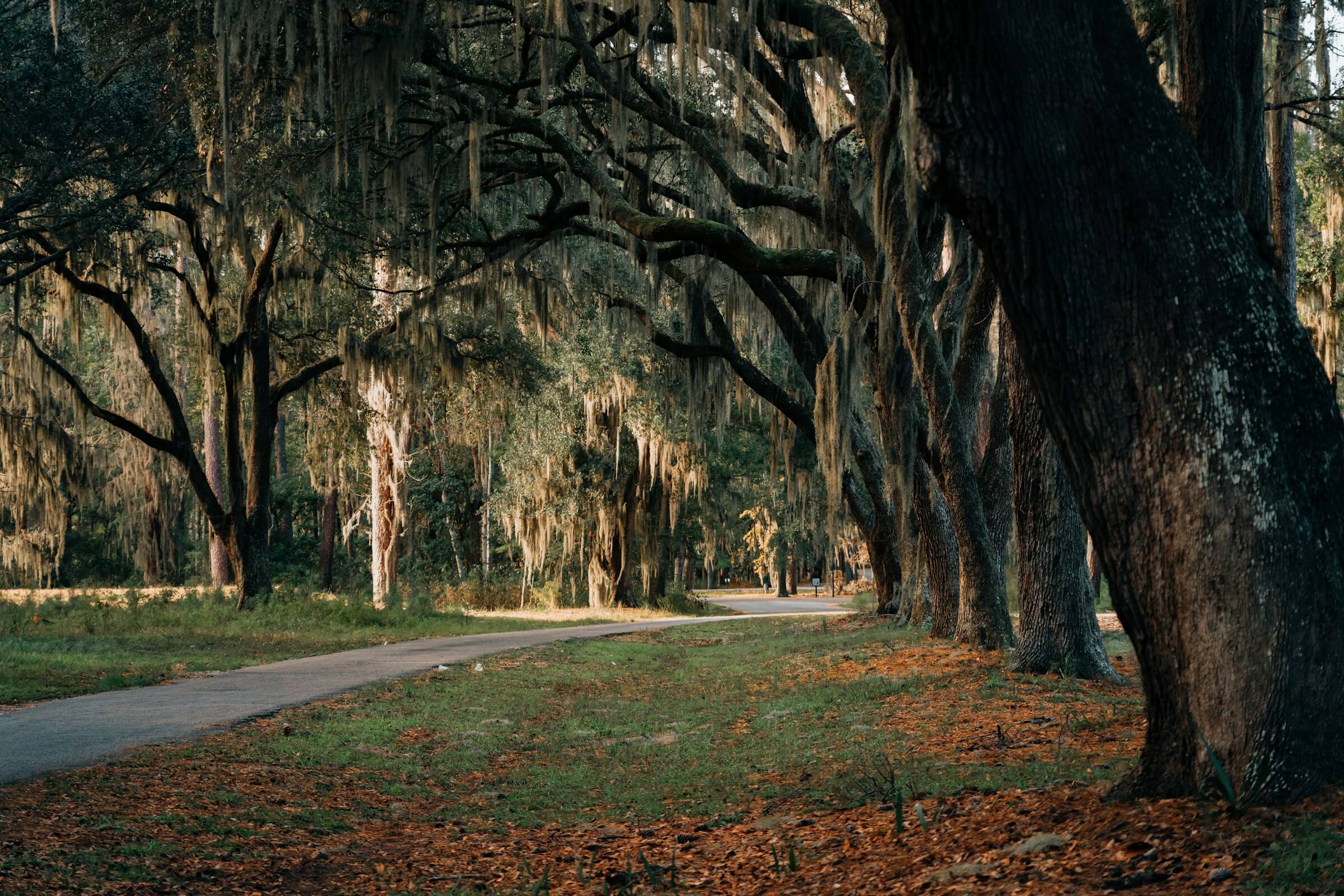
I arrived at the end of the first week of school on the Friday ferry from the mainland. The vessel was a converted fishing trawler whose main purpose was to shuttle workers and high school students to the mainland on Monday mornings and back again on Friday afternoons. I sat alone at the bow, my dirty-blonde hair whipping about, and watched the island approach, a bone-white beach gradually appearing in front of a tangle of oaks from which Spanish moss drifted languidly on the soft, tepid breeze.
After I disembarked with my backpack and headed up the dock, I saw a woman in a tattered ballcap over salt-and-pepper hair wriggle fingertips at me from where she stood beside the idling school van.
“Welcome, name’s Millie,” she said when I came up beside her. The corners of her eyes crinkled as she looked up at me. “Well, you’re a tall drink of water. Kids will get a kick out of that. Hop in. I’ll run you out to Brenda’s.”
The early evening had already begun as we entered the island’s interior under a canopy of trees surrounding both sides of the road. The ribbon-like road remained entirely our own. Millie pointed out the school with its scarred dirt play yard, the Baptist church, and the remains of what was once a small oyster canning operation. After a couple of miles, she turned towards the sound and continued for a few more minutes until she came up against it where a pair of identical ramshackle houses on the inland side sat in a clearing under enormous pecan trees.
Millie stopped the van, and we got out into complete silence. A large turkey pranced between the dwellings towards what seemed to be a shared outhouse, and a pair of mangy dogs regarded us with disinterest under the raised bottom of the nearer house. Its screen door squeaked open, and a big woman with the darkest skin I’d ever seen bridged its gap.
“Evening, Brenda,” Millie said.
Brenda nodded once, looked me over for several long seconds without expression, then finally said, “Come on, then. I’ll show you your room.”
Millie wished me luck before driving away, and I followed Brenda inside into a front room painted a faded lime-green. A plaid couch and matching armchair faced a muted television flickering black-and-white under-clothes-hanger rabbit-ears. The turkey passed the room’s open side window, glanced in at us, gobbled loudly, and disappeared.
Brenda opened a door on the opposite wall, flipped on a ceiling light, and said, “Through here.”
I scooted by her with my backpack into a bedroom that was once pink with a chenille bedspread covering a metal-framed double bed beside a bureau. A slight hairspray-like smell hung in the air.
“Cleared out three drawers for you,” Brenda told me, her voice flat. “Ain’t no closet.”
I frowned. “Looks like this might be your room.”
“Used to.” She motioned with her chin. “Moved into my son’s old one back there. He’s all growed-up and gone to the mainland, so that’s fine.” She shrugged. “Get yourself settled, then come in the kitchen. Got a plate warming in the oven for your supper.”
It didn’t take me long to unpack. I passed through the living room into the kitchen where Brenda was setting a place for me at the small round table in the corner.
She looked at me, pulled out a chair, and said, “Sit.”
After I did, she used a dish towel to take a plate of fried chicken, black-eyed peas, and collard greens out of the oven that she slid in front of me. It smelled delicious. “Anything you don’t want, leave, and I’ll give to the dogs.”
I watched her go into the living room, and the sound of the evening news on the television began. I started in on the meal and looked around the cramped space. A darkened hallway behind the stove led to what looked like a second, smaller bedroom and a back door.
After I was done, I washed my things at the sink and was placing them in the dishrack when I heard the television shut off, and Brenda appeared in the doorway. Her unruffled gaze travelled from the dishrack to my face before she said, “You didn’t need to do those.”
“Happy to.” I watched her don a bemused frown and added, “That was really good. Appreciate it.”
She nodded once, then said, “Breakfast ready before seven. Millie picks up the kids in these parts at seven-thirty, up where she turned off the main road. You can probably squeeze in with them or use my son’s old bike.”
“Bike’s fine.”
Brenda nodded again. “I’ll put it out front for you in the morning.” She used her chin again to indicate the darkened hallway. “Privy’s out yonder. Flashlight’s hanging from the back door handle.”
Moonlight flooded the kitchen when she flicked off the ceiling light. I watched her pass by me into the hallway and heard the door to the second bedroom close.
~
The next morning, I dressed, used the outhouse, and washed up at an outdoor pump using a basin, soap, and towel there. Brenda had my breakfast waiting in the same spot as the previous night: scrambled eggs, grits melting a pad of butter, and something resembling sausage links.
I sat down and asked, “The sausage homemade?”
“Them’s chitlins. Linings of pigs’ intestines I stuffed.”
I tried to keep my face impassive, ate a hunk, then grinned at her and said, “Yum.” She gave a soft chuckle and shook her head. “Bike’s leaning against the porch. I’m going next door to fix my brother and sister-in-law breakfast...she’s feeling poorly. Dorothy sure to include you in the school lunch. She’s the cook and custodian.”
“All right,” I said. “Thanks.”
When I came out onto the front porch, the turkey stood staring at me fiercely under the closest pecan tree. I jumped on the bike and pumped, lurching around him out of the clearing onto the road. A girl and boy perhaps nine and twelve years old crossed a similar clearing next door carrying school books as I passed. I waved, and they each gave a nod that seemed both shy and reluctant in return.
It took about a half-hour to reach the school. I propped my bike up against its far side, then climbed three steps to an open classroom door facing the play yard and knocked on the frame. A man sitting at the desk in the front of the room looked up at me, while a woman cranking a mimeograph machine in the far corner turned and did the same. They both smiled and walked over as I stepped inside.
The man extended his hand and said, “You must be Tom. I’m Gene, and this is my wife, Carol.”
“Glad to meet you.” I took turns shaking both their hands, his grip firm, almost painful.
“And we’re excited as hell to have you here,” Gene said. He glanced at his wife. “Twelve little rugrats in four different grades have been running her ragged.”
“I bet.” When Carol nodded, I did the same. They were both a couple of years older than me and short in stature; he was dark and intense looking, her fair and attractive. I’d been told it was their second year on the island. “Happy to help however I can.”
“Well,” Carol said, “the superintendent told us you’d finished your student teaching in a 2/3 combo.” She had a mild voice and manner. “So I thought perhaps you could concentrate with my five kids in those grades while I work with the younger ones.”
“Sounds good.”
Gene squinted up at me. “How tall are you?”
I shrugged. “Little short of six-four.”
“Play basketball?”
“I did, yeah.”
He nodded slowly as the school van pulled up in front of the open door, accompanied by a commotion of children’s voices.
“We’re over there,” Carol told me, pointing to a passageway holding a woodstove that joined the two classrooms. “We can do a little planning before instruction starts while the kids get their breakfast from Dorothy.”
Students began wandering into our classroom not long afterwards, eyeing me hesitantly as they settled into their desks. When everyone was seated in silence, she introduced me and explained our general division of responsibilities. The expressions of the students on my side became wary as we started all of them on individualized phonics assignments, then Carol and I took turns presenting reading mini-lessons to our small-same-grade combinations. It became quickly apparent that while the students were attentive and almost taciturnly compliant, none were even approaching expected grade level standards. Brenda’s niece, Eleanor, did respond to my praise after a correct response by raising the corners of her lips.
At ten, I joined the students in the play yard for morning recess. A trio of older boys were shooting baskets at a netless hoop fastened to blistered backboard on a tree. One was Eleanor’s older brother who I’d heard called Jonathan. I wandered over to them and began retrieving their shots and tossing the ball back to them, to which they exchanged laconic smiles. I felt the intermittent glances of other students elsewhere on the play yard.
Jonathan eventually cradled the ball against his hip, studied me, and asked, “Can you dunk?”
I hesitated, shrugged once, then said, “Used to be able to.”
“Try,” he told me and underhanded the ball back to me. I paced off a few steps, got a jogging start, jumped, and was just able to slip the ball over the rim, which would have been impossible without its downward bend.
The three boys stared at me open-mouthed until Jonathan whispered, “Wow.” He reached out to me grinning and initiated a high-five. His pals nodded, grinning, too, and kids from other portions of the playground clapped or hooted approval.
Gene had appeared in the doorway to his classroom ringing a big handbell. When I passed him following students back into the school, he said, “Helluva of a better start than I had with them. Wish I could do that.”
~
The rest of the morning passed similarly with math and spelling lessons. Then we all gathered on either side of a long table in a room off the kitchen where a thin, middle-aged woman in an apron with a head of cornrows was setting out steaming bowls at each place.
“We’re not exactly on the district’s meal plan over here,” Carol told me, the woman smiling in agreement. “That’s conch stew. Dorothy makes do with what’s available, and does it very well.”
Up and down the table, young heads bent to the task of finishing lunch before heading back out to the play yard. Carol, Gene, and I lingered at the table while they explained some of their shared history that led them to teaching on the island. They told me they’d met in the Masters of Ed program at the University of South Carolina after he’d graduated from The Citadel and she’d done the same from Vanderbilt. They’d completed their student teaching together in a rural placement not unlike my own during which they became both engaged and newlyweds, then went to a job fair together in Columbia where they were offered their current dual positions. Gene said, “We thought about it and decided, what the heck, let’s have a little adventure while we’re young and still can. Saved enough to buy a used sailboat we keep at the harbor, which we’re out on it all the time. We stay busy. She takes photographs, and I like to run the beach and research local history.” He gave Carol a glance. “All in all, it’s not bad.”
Carol shrugged with a tempered smile.
“Not saying the teaching isn’t a challenge,” Gene went on. “Not many of these kids had any adults read to them when they were little or have educated role models in their families. Most are resigned to the low wage, dead-end jobs they know they’re destined for over on the mainland if they don’t stay and try to make a living fishing or whatnot.” He shrugged himself. “Not exactly inspired, but pretty much do what we ask.”
“Wish you could have met Mary Johnson before she passed away,” Carol told me. Her countenance seemed to indicate a desire to change the subject. “She taught here for nearly a half-century, and the school’s been renamed for her. Amazing woman.”
“She was all right,” Gene muttered. “A little full of herself, if you ask me.”
Carol’s eyes and forehead dropped, and she didn’t reply.
That afternoon, the two of us covered social studies and science lessons with our separate groups. The day concluded with the younger students copying the alphabet from placards over the chalkboard, while I tried to lead the older ones in writing short descriptive paragraphs. Before starting, I watched most of them close their eyes in contemplation. When Eleanor opened hers, she said, “All I picture is our big pecan trees out front. And I got a load of windfall picking to do under them when I get home.”
The other students snickered, nodding.
“Mr. Tom,” Eleanor said, “you ever picked pecans?”
“Can’t say that I have.”
“Come on out, then, and give us a hand. Barging ‘em over to the mainland in a few weeks so need to get finished. But watch your back now.” She and her classmates snickered and nodded some more.
~
After I got home and had parked the bike under the eaves of Brenda’s house, I saw Eleanor, Jonathan, and a woman built like Brenda all bent over under the tallest pecan tree adding windfall to large burlap sacks. Brenda sat on a stool in the shade there, fanning herself against the heat with a palmetto frond.
When I came up to them, she told me, “Hip won’t let me help no more.” I took the empty burlap sack she reached my way. “But heard talk you want to give it a try.” Her eyes held a hint of merriment, and the others stopped working to stare at me, their faces glistening with sweat. Eleanor and Jonathan were grinning, and the other woman offered me an agreeable nod. “That there’s my sister-in-law, Pearl,” Brenda said, then swiveled on her stool. “Brother Frank, is yonder fixing another car.” I glanced over next door to a shed-like carport where a slight man in a sleeveless T-shirt gestured amiably at me with a wrench.
I raised my hand to them both, then did the same with my sack and asked, “So how’s this work?”
“Bend down and pick.” Brenda gave a soft chuckle.
Wide arcs under both trees were littered with windfall. I scooped up a handful and dropped them in my sack.
“There you go,” Brenda said with another chuckle.
We worked steady for the next couple of hours alternating among trees. It didn’t take my back long to start aching. Light gradually fell, and with its decline, the deepening, rich swamp odor from the woods’ shadows. It was nearly five-thirty by the time we finally heaved our fifty-pound sacks over to the side of Brenda’s house and leaned them there. I looked around at the faces that regarded me with something between tacit acknowledgement and tentative acceptance. Even the darkened figure of Frank raised his wrench to me again from the dimness of his shed.
Afterwards, I gave myself a stand-up sponge bath out back at the pump and changed clothes in my room. Brenda had dinner waiting for me when I finished, which she set on the table with a small smile. After she’d left and I heard the television go on in the living room, I smiled myself.
~
Word got around about my pecan-picking willingness, so I spent after-school hours the next couple of weeks helping mostly older islanders fill their burlap sacks before the barge came for their collective bounty at the end of the month. Many of the them sat on stools or benches in the shade like Brenda had and after some initial reserve, began telling me stories about the island and their heritage on it. Their ancestors had carved out mostly agrarian and sea-based livelihoods or worked in the oyster industry that had sustained many until pollution curtailed that. The guarded nature I first encountered with them dissolved shortly into easiness and appreciation; I was often sent home with canned vegetables in Mason jars or packages of squirrel jerky.
Outside of teaching, other activities filled my time. After pecan picking season ended, I still stopped by older folks’ houses to visit and do little chores for them. I rode my bike out to explore various, deserted stretches of beach, including the curving, long one at the island’s eastern point that fronted an abandoned plantation with an old lighthouse; it was unnerving to pass the rows of crumbling shacks along the far side that I was pretty sure had been slave quarters.
I also often assisted Frank as he repaired other islanders’ mishmash of vehicles. I accompanied him and Brenda, too, down to the harbor dock to help them meet the weekend party boats where she sold deviled crabs and he did the same with apothecary-like bottles of homemade blackberry wine. And most nights after dinner, I sat between Eleanor and Jonathan at Brenda’s kitchen table to help them with their homework where I was pleased to see their progress and confidence grow.
I did occasionally spend some time, as well, with Gene and Carol. Shortly after I arrived, they had me over for dinner, during which I learned more about their backgrounds – Gene’s upbringing as a military brat and Carol’s as the daughter of two nurses. Gene again did most of the talking, and after dinner showed me examples of his local historical research while Carol silently made coffee.
More than a month had gone by before I heard the first instance of Gene using the paddle I’d discovered several weeks earlier behind the wood stove; I’d caught my breath when I stumbled upon it. Just before dismissal one afternoon, the sharp crack of the swung paddle erupted from the passageway between the classrooms, followed by the muffled yelp and sobs of a student. All the heads in our primary grades turned once towards the sound, then returned quickly to their books and papers in a way that seemed oddly practiced.
Gene’s harsh voice came next as he hissed, “Don’t ever talk back to me again. Do you understand?”
No student response followed, just a pair of retreating steps to the upper-grade classroom. My eyes met Carol’s disturbed ones; she bit at her lip, then turned to face her younger grade group, a small, pained smile struggling to her face.
As the fall wore on, three other paddling incidents occurred, one accompanied by a cry I recognized as Jonathan’s. I winced each time at the sound. Carol did the same, but we never spoke of it, and if she did with Gene, I wasn’t aware of it.
In early December, they asked me to join them for a Saturday afternoon outing in their sailboat. It was winter weather by then, cold and blustery when we embarked. Gene narrated nautical information as we made our way around to an inlet bordering the former plantation beach, desolate and empty as far as we could see. Gene anchored and ran us ashore in their dinghy. We gathered a few plugs of oysters from the inlet’s mouth, then found a spot in the dunes where we built a small driftwood fire. We gathered around it for warmth and took turns drinking from a large thermos of potent Hurricanes that Gene had concocted before we left. As he prattled on with historical facts about the plantation, I saw Carol avail herself of it more and more.
At one point, she interrupted him and said, “I came here a couple of weeks ago by myself to take some photographs. Wanted to try to capture the lighthouse at sunset.”
She pointed and Gene muttered, “I didn’t know that.”
“You were out on the boat. I took the jeep.” Carol shrugged, swallowed off another pull from the thermos, and said, “Watched a loggerhead turtle make her way up the beach to lay her eggs. Pretty magical.”
I nodded into the silence. Then we pulled up the collars on our coats against the chill, while we waited for the oyster plugs to steam open in the fire’s coals.
“Speaking of surprise visits,” Gene said to me. “I saw your neighbor Frank out here the other day when I sailed by.” I watched him stir at the coals with a stick before continuing. “He was all by his lonesome at the little cemetery behind the slave housing doing some sort of rubbing with paper and charcoal. Not sure what that was all about.”
I just nodded and shrugged although I knew what Frank had been doing. He’d shown me the rubbings while I was helping him replace a muffler. He was making a collection of them from his ancestors’ graves. “Something to help me remember where I come from,” he’d explained.
Gene took a long pull from the thermos before continuing, “Never knew Frank or any of that bunch to have much interest in historical artifacts. In fact, I’m pretty sure none of them even know what those are.” He chuckled. “Only skills I know of from that bunch are making wine, deviled crab, and fixing cars. Jonathan’s sure heading that way...no other talent the boy has that I’ve seen.”
From the corner of my eye, I saw Carol’s shoulders drop, then she took a couple more pulls from the thermos herself, firelight flickering across the dull cast of her face in the deepening dusk. Quietly but clearly she said, “Enough, Gene.”
He glanced once at her in a manner I found curiously hard, then used his stick to fish out our plugs of opened oysters from the coals and said, “Dig in while they’re hot.”
We gingerly picked at the sizzling shells, slurped oysters, drank, and didn’t say much more while darkness gradually engulfed us under a high curtain of stars. Just to be doing something, I began stirring at the coals with a stick of my own.
Gene stood suddenly and announced, “I’m going to take a little jog. Haven’t done mine yet today.”
“You’re going for a jog,” Carol said, her voice weary. “In the dead of night.”
“Yep, just a short one. Up past the lighthouse.” He removed his coat, revealing a Citadel sweatshirt along with his sweatpants and running shoes, gave us a lopsided grin, and said, “Back in ten, fifteen minutes.”
I heard Carol mutter, “Bon voyage.”
Gene’s dark shape disappeared into the inky night. Carol sat very still next to me where we both leaned against a bleached, fallen tree trunk. The fire’s hovering flames sputtered while I continued stirring it before tossing in my stick. Finally, I heard Carol sigh, tip the thermos back, and wipe at her lips. “All gone,” she told me. She shook its emptiness, then let it tip over next to her in the sand. “He’s kind of an asshole,” she said facing the fire. “Isn’t he?”
I felt my brow knit as she turned and gazed evenly at me with glassy eyes. “He is,” she continued. “You don’t have to say it. I know it in here.”
I watched her tap her chest and blow out another long breath. Then she leaned her head onto my shoulder. “I’m so cold,” she said. “Hold me.”
Without really considering what I was doing, I reached my arm around her. She snuggled closer, gripping my coat in both hands. I sat as motionless as I could staring straight ahead into the dying coals. Perhaps three or four minutes passed before I heard her breathing deepen into sleep. I lifted her head from my shoulder and her hands from my coat, settled her against the tree trunk, stood up, and made my way down the water’s edge. I shook my head slowly back and forth and watched a low-hanging moon cast a silver sheen over the sound.
~
That next week, I received a letter from the school where I’d done my student teaching offering me a paid position replacing my former master teacher who’d abruptly retired because of a stroke. I had only a few hundred dollars left to my name, so of course, was thrilled at the prospect, which would mean curtailing my internship early and starting right after Winter Break. From the pay phone outside Millie’s store, I called my university advisor and then the district’s superintendent, both of whom were supportive when I explained my decision to accept the position.
For reasons I didn’t completely understand, I waited until just before the start of the break to tell Gene and Carol I was leaving and why. They nodded somberly when I did; Carol quickly left the room after I finished. The reactions of Brenda, Frank, Pearl, and the rest of the islanders were warmer but of a similar ilk; Eleanor and Jonathan both cried openly when they found out.
On my last afternoon, Millie ran me down to the dock to meet the ferry and gave me a swift, grim hug before driving away. Then I walked alone to the end of the dock with my backpack in the faltering late-afternoon light. As I watched the ferry’s slow approach, I somehow felt as much regret as I did excitement about this new chapter in my life and was surprised to find myself struggling to overcome a heat behind my own eyes.
~
I taught in that school for three years before following the principal to a larger district across the state where I met my wife and ultimately became the district’s Curriculum Director. My wife and I weren’t able to have children, but we built a nice little house on our town’s outskirts where we kept bees and a large garden against a stand of woods. We were content until shortly after we’d retired when she developed an aggressive form of cancer. She died not quite a year later.
Of course, I was in pain afterwards, at loose ends, untethered. But I gradually forced myself to try to return some purpose to my life. I began volunteering at a food pantry, as well as selling some homemade products from my hives: honey, beeswax candles, jelly. At first, I did that mostly at crafts fairs, but then was told I should have my own website, so an old IT district colleague helped me build one. It included product descriptions, ordering information, and a business email I created for queries and questions.
I was utterly dumbfounded one morning a few months afterwards to open that email and find a message from Carol waiting. She said she’d happened upon my website and decided to reach out to say hello. She told me she and Gene had resigned their teaching positions on the island at the conclusion of the same school year I’d been there, and that shortly after they’d returned to Columbia, she left him and filed for divorce. She remained in that area, started her own preschool, subsequently remarried, and had also retired. She went on to say that she’d ordered a pair of my candles and hoped I was well.
She attached two photos about which she provided no explanation. The first was what must have been a recent one of herself: still small and attractive, with cropped gray hair and somewhat startled eyes. The second, when I enlarged it, was a shot of tombstones from the island’s old plantation graveyard: Brenda’s, Frank’s, Pearl’s, and Jonathan’s.
I sat blinking at the cursor under her closing that read: “Fondly, Carol.” Eventually, I looked outside at my hives dotting the tree line. I thought about that long-ago fire on the beach, Brenda’s smile, chitlins, the smell of lowland mud, whatever may or may not have happened for Eleanor. I thought about my wife’s gentle touch. I thought about how much of life was full of small events, encounters, and experiences, some planned and others complete surprises. And I wondered how many or few of those I might have left. Then, like that night on the beach after the fire, I shook my head back and forth for quite a while before heading out to tend my bees.