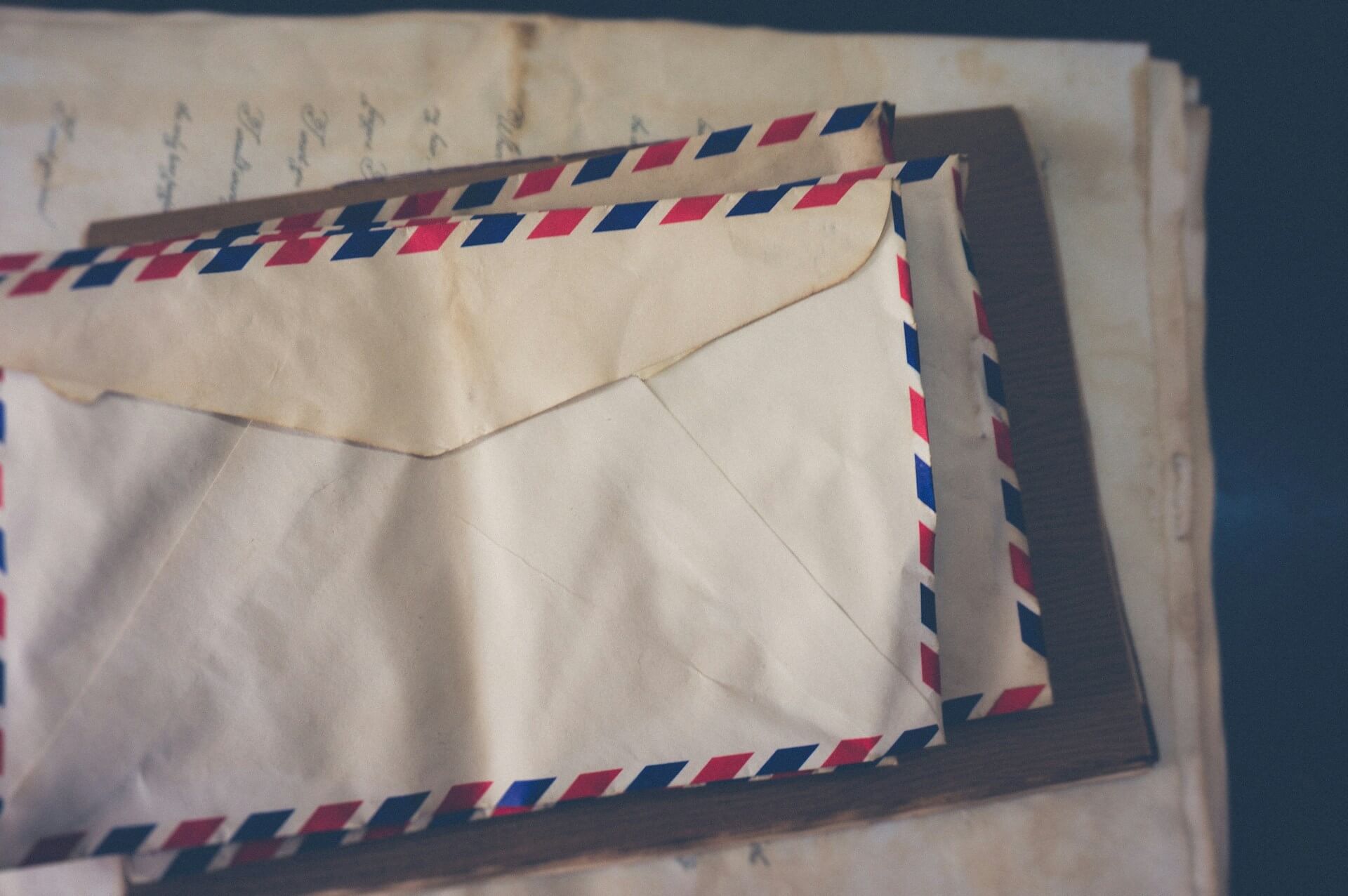
Photo by Liam Truong on Unsplash
BR31. 15 hours and 24 minutes. From JFK to TPE. Departs at 1:33 a.m. I’m going back—to see my family, and of course, you.
When I heard your name from my mom on the phone last night, it felt like only yesterday we had lingered after school, as if time would never touch us—we were on your bike, laughing and talking, or in our usual corner beside the banyan tree, secretly holding hands. Your name hadn’t surfaced in years. The memories had been folded away, locked in the deepest part of my heart—so buried that I wasn’t sure I was brave or mature enough to face them now. But wait—it was me. I was the one who cut off our communication, who refused your letters. I was the one who created these fifteen years of silence, this void between us, this emptiness within me.
I lay in bed, hands tucked under my head, staring at the blank white ceiling. The usual restful night turned restless. The rumble of the heater in my bedroom was hypnotic. Memories of my bittersweet time with you began to stir, sharpening into focus. Our friendship had begun with a bicycle accident near our high school. I remembered riding with a stack of books in my left hand, the other gripping the handlebar, when you suddenly appeared and crashed straight into me. The rear wheel of my bike bent out of shape, useless, while yours remained somehow untouched. My books scattered across the road, dirt streaked my shirt, and my palms were scraped raw as I tried to break the fall.
“Don’t you have eyes?” I snapped, gathering my books without so much as looking at you.
“I’m really, really sorry,” you said, rubbing the back of your neck with a sheepish smile. “I’ll have your bike fixed and return it to you.”
Perhaps it was your prompt, unexpected sincerity—or your awkward charm—but my anger vanished without a trace. I handed you the wrecked bike. You promised to take it to the repair shop and offered me a ride home. It was the first time I sat on the back of your bike—the first time I felt so close to you. The memory lay far behind me now, yet it still glimmered with startling vividness.
Outside, freezing winter rain streaked my bedroom window, blurring the already dark sky into a dull smear. I began browsing Facebook on my phone and accidentally found an old album titled high school, scrolling through a number of photos. There it was—a group picture I had avoided for years. You stood slightly tilted, smiling faintly, your hand resting on my shoulder. I smiled too, though I had long forgotten how it felt.
One particular photo brought back that unforgettable day when you gave me a ride home on the back of your bike—it was raining then too, pouring just like today, though it was a hot summer afternoon. You were completely soaked, having given me your only raincoat and taking the full force of the storm yourself. At first, I held onto the edge of your shirt, but slowly my arms crept forward until they wrapped tightly around your waist. The warmth of your back, the steady rise and fall of your breath, the clean scent of rain and skin—all of it pressed deep into my memory. That was the moment our friendship felt real—closer, somehow private. Only after the accident did I begin to see who you truly were, genuine, attentive, unexpectedly sensitive. At first, you offered to take me home on your bike, but even after mine was fixed, you continued to do so. In the weeks that followed, I searched for ways to return the favor—not just for the bike repair, but for that ride through the storm, for the warmth that still seemed to cling to my skin.
At 6 a.m., the shrill, mechanical tone of my alarm dragged me from sleep. It was unnerving, almost rude. The dream had felt vividly real—your face still hovering at the edge of my vision—yet by the time I sat up, it was already dissolving. I sighed and looked at my suitcase, my laptop, the pile of papers on the couch. Work—the only reason to wake now. My phone was already buzzing with messages from my boss.
Outside, the winter rain had turned to heavy snow, blanketing everything and muffling the world into silence. For some reason, I missed the egg sandwiches you used to buy me for breakfast when I arrived at school. I missed the plates of dumplings we shared after night study sessions. Here, I was too exhausted to cook, too cold to leave my bed or even the blanket. Just then, my phone rang. “Come to the office. Immediately,” my boss barked, then hung up. I dragged myself out into the snowstorm. Driving felt reckless—the roads were slick, visibility low. When I arrived, the office was deserted. Just me.
“Where are you?” I asked my boss, flat and exasperated, over the phone.
“I’m not coming in now. I’m still having breakfast with my family,” he said. “I’ve sent you a file. Redo the numbers before I get to the office.” He hung up before I could answer.
Running on my last ounce of energy, I finished the file and sent it off. By the time my boss arrived, I was already waiting, the task done. That was it—I couldn’t hold it back.
“I’d like to take a few days off,” I said evenly. “To visit Taiwan.”
He didn’t look up. “Why all of a sudden? Do you really need to be there? How long?”
“To visit a friend. For a week.”
“What friend? Doesn’t sound very important.”
“A very close friend from high school.”
A very close friend? I stopped there. The words caught in my throat. How could I define what you had been to me? I knew my boss’s conservative views, and I wasn’t about to explain further. Some things were better left unsaid.
I had often asked myself the same question: what exactly was our relationship? The truth was, I didn’t know. I was too proud, too afraid to look for the answer. Once, I even tried to ask you, but something in me recoiled—fear, shame, some unamenable force. The words dissolved before they reached my lips.
After graduation, I left for Harvard while you remained in Taiwan. Studying at Harvard had always been my dream, and suddenly it was real. But it came at a cost: the Pacific Ocean between us, and the emotional distance that slowly unraveled our closeness. I asked you not to come to the airport to see me off, and you didn’t. Or did you?
For the first year after our separation, we managed to call each other every day, sharing everything as if the ocean between us didn’t exist. Things went well—until one night.
“I’ve been hanging out with a girl recently. Her name is Heather. She’s really sweet,” you said, your voice buzzing with excitement, though shaded with a timidity I hadn’t heard before. “Thought you might want to know—just like us in high school.”
A girl? Just like us? We went to an all-boys school. There was nothing like us.
“Oh... funny you haven’t mentioned her before.”
You went on, describing how you met, how you spent your days together, but I remembered none of it. My mind had gone numb.
“Are you with me?” you asked.
“Yeah, of course.”
“I was saying you might want to meet her someday.”
“What do you mean?”
“I think you two could be close friends.”
“I don’t know. It might be weird, since we haven’t met.”
“Anyway,” you said, brushing it off, “we can video chat next time—so the three of us can talk together. That’d be fun.”
A terrible idea. Did that mean our calls would no longer belong to the two of us? That they would now be shared? A stranger’s voice—hers—would slip into our private space, and I would be expected to listen, to nod, to accept. The thought repulsed me. It terrified me. So when you called the next day, I let it ring. The day after, the same. Calls unanswered. Texts ignored. Day after day, until finally—out of petulance, pride, fear, immaturity—I blocked your number. And yet, deep down, I wanted you to beg me for forgiveness. I told myself it was easier this way. Cleaner. But even as I pressed the button, I felt the sting of it. Some part of me knew what I was doing. I wasn’t ready—might never be ready—to face the truth: you no longer belonged to me alone. Since then, I had never unblocked you. To be more precise, I had not dared to. I never wrote back. I never responded.
It was a 15-hour flight from New York to Taipei—sleepless, exhausting. The chatter of passengers and the drone of the engine kept me from reading The Odyssey. I tried to sleep instead, but some nameless pain kept jolting me awake. In that half-dream, half-waking state, memories surged—stronger and stronger, rising like a tsunami, unstoppable, overwhelming.
I had learned from our friends that you were once married to a woman—not Heather—but later divorced. Over the years, you couldn’t imagine—or perhaps you could—how many times I tried to call you. But my remorse, your voice, my timidity, your concern—all of it kept me from dialing your number or writing to you. My mom told me that you had visited my childhood home many times and sent me letter after letter.
Looking back, I began to feel regret for what I had done to you. I resisted your explanations. I gave up what we had too easily. I took our memories too lightly. I thought only of myself. Now I genuinely hoped you would forgive me—but it was too late to ask. I didn’t know what I would say in your presence. Maybe, in the end, nothing would be said, nothing needed to be conveyed. Maybe I should have called you; maybe I should have at least responded. But I hadn’t done anything. Nothing.
The plane touched down under a sky heavy with clouds and wind. I had forgotten how winter looked in northern Taiwan—the damp chill, the grayness that clung to everything. At immigration, the officer stamped my passport and said in Mandarin, “Welcome back to Taiwan.” The words landed with unexpected force—familiar, yet dreamlike—as though I had been gone far longer than I realized.
My parents had arranged a welcome party at home that I hadn’t known about. It was, I knew, a gesture of their joy—their exhilaration at seeing me again. Yet, whether from jet lag or the weight of my return, I felt a quiet reluctance to step into it. Despite the liveliness of the party, my mind drifted elsewhere. Their voices blurred together—local gossip, politics, mutual acquaintances—and I found myself disinterested, detached. My mother noticed. She crossed the room and placed a hand on my arm.
“How are you holding up? You know, it’s okay to talk to me about him.” She had always intuited how I felt about you.
“Thanks, Mom. Actually, I want to be alone to process everything. Can I go to my room now? I feel really tired.”
“Of course, sweetie. Don’t worry. Go then.”
I hesitated before stepping away, then asked, almost in a whisper, “Mom, do you remember the letters he sent me? Do you still have them?”
“Of course,” she said gently, as if she had been expecting the question. “I knew you would want to read them someday. They’re on your bookshelf.”
I returned to my old bedroom and went straight to the shelf. The room had been kept almost exactly as I left it: books lining the walls, the brown desk in the corner, the lamp still standing crooked beside it, the queen-size bed neatly made. My mother had dusted everything, but the air still smelled faintly of paper and something older—memory itself. I ran my hand along the spines of the books, the notebooks stacked on the desk. The sight of them brought back long nights spent poring over applications, the scratch of my pen, the nervous hope for Harvard. And beneath it all, the memory of your voice—our calls every evening, your laughter filling the silences—echoed as if the phone were still on the desk, buzzing to life.
In the corner of the bookshelf, I spotted a thick bundle of envelopes bound by a tired rubber band. Your letters. The postmarks revealed the years—they had all been sent after I blocked you. My fingers traced their edges: some envelopes bent and creased, others still smooth and white, as if waiting patiently. Each one carried a piece of you, words you had once intended for me. I ached to tear them open, yet the weight of the years—the silence, the guilt—froze me. That night, I placed the bundle against my chest as I lay in bed. In the dark, the paper pressed into me like a heartbeat not my own, and I wept quietly. It was the first time I had allowed myself to cry in more than a decade.
Today was the day I would finally see you again after all these years, and I brought the letters with me. The weather was surprisingly warm and sunny, almost at odds with the heaviness of the occasion. When I arrived at the venue, a small crowd had already gathered—old classmates, familiar faces from a life that now felt both distant and intimate. They seemed surprised to see me. I exchanged brief words, smiled politely, and responded in careful, simple Mandarin. The language felt foreign in my mouth—like trying on clothes that no longer fit.
Just as I was beginning to feel completely adrift—alienated from the people around me—my eyes landed on a framed photo of you. Something in it—an intimacy, a closeness, a bittersweet familiarity—rose up and struck me. Memories welled up from nowhere, implacable and merciless. How I wished I could speak to you, even now. How I longed to hold you just once more, to feel the warmth and scent of your body against mine. But it was too late.
A soft voice pulled me back. It was your sister, whom I had seen countless times at your house. Aside from longer hair and a bit of weight gain, her face and voice were immediately recognizable.
“It’s been so long. Thank you for coming—for my brother.”
“Hi. Of course. I wouldn’t miss it. How have you been?”
“I’m... doing fine. Still, I can’t believe it.”
“I can’t believe it either.”
A silence settled between us—not awkward, but weighted, each of us trying to hold our emotions at bay.
“That’s the photo he loved most,” she said, glancing at the frame.
I followed her gaze. In it, you were smiling—genuinely, openly—looking toward something just outside the frame. You wore a pale pink shirt with blue collars, and on one side, an embroidered letter: S. My breath caught. It was the shirt—the one I had given you for your birthday. Had I taken this picture? I couldn’t remember.
“I have something for you. Come with me,” your sister said, her tone shifting. She led me into a quiet room at the back and handed me a carefully folded piece of clothing—the shirt. “He asked that this be returned to you. There’s also a letter. He wrote it a month ago, I think.”
I stood frozen, stunned. I took the shirt and the envelope with shaking hands. Time seemed to stop. The air thickened—heavy, suffocating.
My hands trembled as I turned to the envelope. For a long moment I hesitated, afraid of what his words might do to me, afraid of what they might reveal. At last, I summoned the courage and unfolded the letter. The characters flowed across the page in Mandarin.
My dearest,
I don’t know if you’ll ever read this. If you do, please don't be shocked or be harder on yourself than you must be. For years I tried to understand why you stopped answering my calls and letters. I don't know why you withdrew. If it's about Heather, please believe me: there was, is, and will be nothing between us. She was only a friend. None of that matters now. I am very ill. I don’t think I have many days left. The pain is with me every day, but the ache that kills me most is not physical—it is the thought that I might never see you again.
It may have been easy for you to cut me off, but for me it has felt like the end of the world. I don't know if you ever knew how much you meant to me. I don't have the words to name everything—perhaps I don't even know how to name it—but I know this: your kindness, your laugh, the way you made me feel lighter—those things made me whole. When you disappeared so suddenly, I felt like I'd lost half of myself. I kept hoping you'd reply, that you'd come back, that I might get a chance to tell you what you had always been to me.
I am weak now. I am frightened. I need your comfort more than I can say. But perhaps it's too late. I want to return the shirt to you. Let it be a reminder of what we had—brief, true, and beautiful. Maybe I am foolish to hope you remember it the way I do. Still, it is my last gift: not merely a shirt, but the memory of something real. Something pure.
With love,
Song
I began to picture you writing the letter—feebly, laboriously—propped up in a hospital bed, each word costing you more strength than you had to give. The thought filled me with remorse, with a hollow ache that seemed to widen the longer I lingered on it. I did not cry. I only sat there, gazing at your photo, whispering my apology again and again. I was not ready to read the stack of letters I had brought with me. I needed silence, time, space to process my feelings. When the ceremony ended, I spoke to no one.
The service began, and I slipped quietly back into my seat. Somber music swelled, speeches unfolded, but my focus stayed fixed on the shirt and the envelope in my lap. I pressed the fabric to my face. The scent was faint—diluted by years, perhaps by careful washings—but still there. It carried me back to those bike rides home, when I would wrap my arms around you from behind, rain soaking us both, clinging to you for a warmth no weather could take away.
After the ceremony, I didn’t feel like going home, nor did I want to meet my old friends. What I longed for was solitude—with your letters, your shirt, the remnants of you that still clung to me. So I wandered through the city. My steps, almost without intention, retraced the paths we had once shared. I passed by the gate of our high school. Some of the buildings behind it had been refurbished. The gate was locked, but through the bars I caught a glimpse of the corner where we used to talk in secret during lunch breaks. At the noodle shop, I paused. Yes—this was the smell I remembered, unchanged. It was where we often came after school, before heading home. Further along, I found myself in the quiet park. The path, the trees, the fountain—all looked the same. I remembered this was where our hands brushed for the first time. Neither of us spoke then, but in that silence something had shifted. Now, sitting in that same spot, I let the silence return—heavier, lonelier—and allowed the memories to fill me.
I took out the bundle of your letters and began to read—slowly, carefully, chronologically. They unfolded like a diary, day by day, moment by moment, as though you were still speaking to me: your thoughts, your observations, your ordinary joys, your sadness, and finally, your illness.
I couldn’t stop reading, as if each page kept me from letting you go. In those words, I discovered how deeply you had searched for your inner self—something I might have given you, something we had both needed. And just like that, fifteen years of silence and emptiness filled with vivid images, rich emotion, a sudden, radiant aliveness. As I read, I wished I could speak back—to comfort you, to laugh with you, to cry with you. But how?
Sitting at my desk, the pink shirt in my hands and the letters spread before me, I stared at the blank pages, the reading light illuminating my hand, my pen, and my face. It had been a long day, and the sun had already set. Outside, it had begun to rain—lightly, almost unnoticeably. The drops on the rooftop formed a soft, rhythmic sound that soothed and steadied me. I pondered the strange capacity of objects to preserve fading memories. So I began writing to you—letter by letter, honestly, tenderly—as though my words might cross the silence between us. Not to revive the past, but to honor it.
Dear Song...