I was standing in a line that stretched out the door and down the sidewalk as we gathered to clock in. It was only 6:15 a.m., but already it was over eighty degrees. I could see sweat stains beginning to form on the shirt backs of the few men directly before me in line. Ahead lay nine and a half hours upstairs, on the second floor of the old factory building, that extra half hour representing our lunch. Nine hours of work—including one hour of required overtime, whether we liked it or not, a testament to the relative powerlessness of our union and the beginnings of what would become a long-term industrial decline in America, where workers had to put up with whatever came. But I was not thinking in such historical terms at that point. I was repeating in my head, once again, “It’s only for the summer.” It was late June 1973, and I had briefly joined the American factory labor force.
I did not see myself as a factory worker but merely as a kind of “observer,” like someone sent to watch the war being fought between another two countries. I knew that I would probably not have to depend on this job for anything more than the three months of summer during which I would be saving money for my return to college in September. In fact, I was grateful for the work because decent-paying factory jobs were getting harder to come by.I’d been able to get an inside track on this entry-level, unskilled laborer job in part because my aunt had worked for decades as a basting remover at the other plant across town. My hourly wage was 2.00, twenty-five percent above the minimum of 1.60, and more than I could have made in the fast-food places where my friends worked.Of course, I did have to work nine hours a day, with another 5 on Saturday, totaling 50 hours a week, but the extra ten hours brought overtime, so I was bringing in 110 a week before deductions (the equivalent of over 750 today).That seemed okay for an unskilled worker in the clothing industry.
Then again, I did have to show up and go through all those hours a week in what would turn out to be the physically hardest job of my life. While not actually a sweatshop, especially since we did have some union protections, the factory did often give the feel of one, especially during the hot summer days when the sun heated up the roof above the second-floor factory area (the lower floor being a storage area to keep the products cooler than the workers). The few open windows did little more than circulate the overheated air, also bringing in waves of heat that drifted up from the concrete and asphalt outside. Adding to all this was the additional heat from the steam pressers that occupied about one third of the factory floor—by afternoon, the whole place was like an enormous sauna filled with clouds of lint.
From 6:30 in the morning to 4 in the afternoon, except for the brief lunch break, I worked stacking bundles of cloth on carts and then moving sets of those carts around from place to place in the factory. It was a “pants plant,” and every effort was devoted to turning out what seemed like endless piles of trousers, that summer mostly in ghastly plaids and checks, for various stores to hang on the racks for the coming fall season. Most of the seamstresses and steamers were on piecework, and they drove themselves and their machines relentlessly to reach their initial quotas and go beyond in order to earn small bonuses. I had no such monetary incentive, but the rather grim reactions from the seamstresses, if I were late with a set of pants legs to be sewn, was enough to scare me into being quick and consistent. Of course, I had little use for the brain I had spent the prior fall and spring educating in my first year of college, so I let it wander as its whims took it, while my body became part of the factory system and pulled countless carts across the rough, old wooden planks of the plant’s second floor.
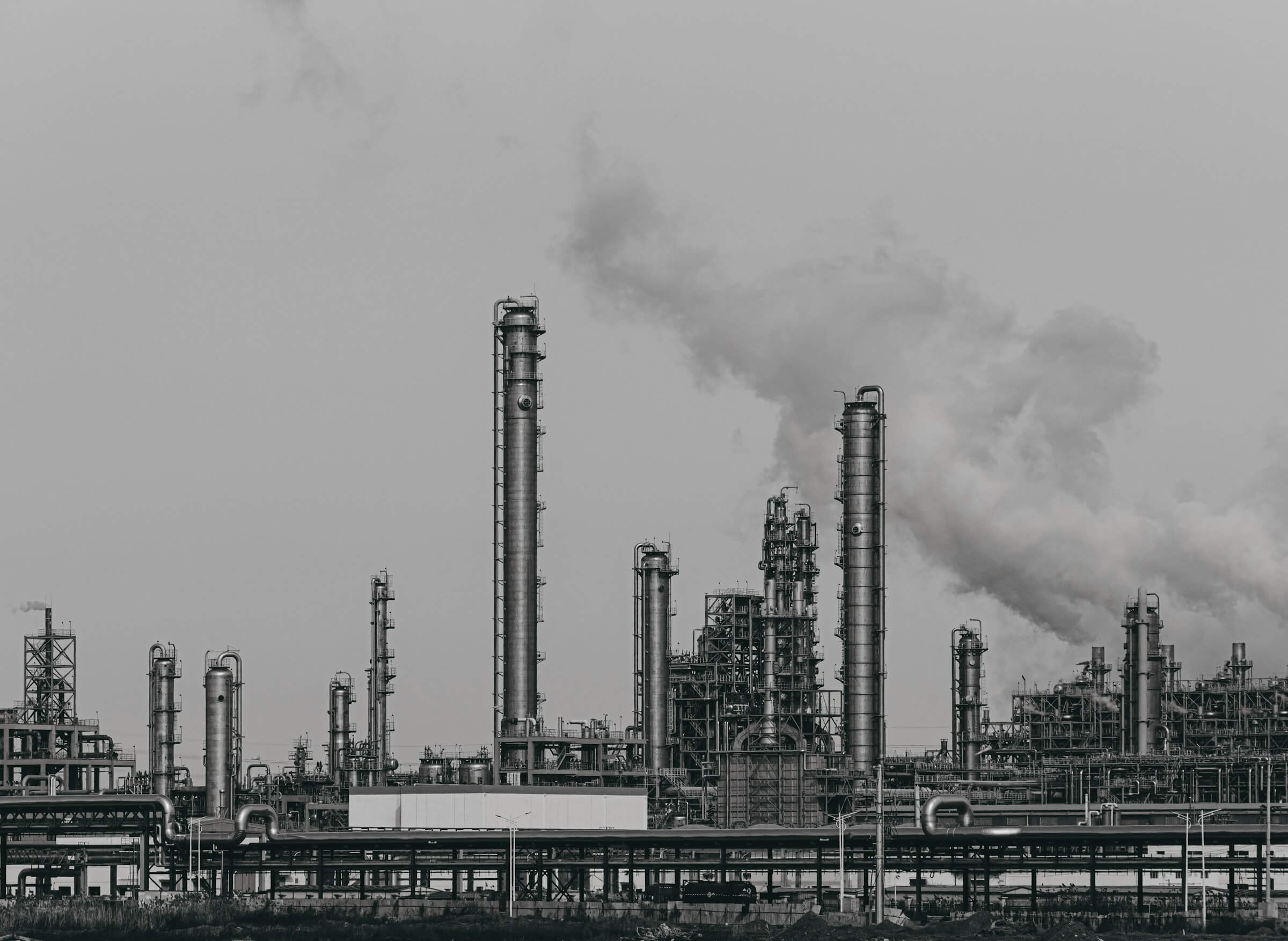
Ironically, a decade earlier would have been one of the summers when my father had been bent on taking the family on factory tours during his vacation, educating his two sons on the wonders and marvels of industrialization. We would pile into the old, turquoise blue ’57 Chevy and drive to some Ohio factory town, and once even up to Detroit to visit the Ford plants.After orientations by friendly company representatives, who handed out shiny brochures about whatever was being manufactured, from toothpaste to steel tubing, we would be guided on tours of the factory of the day. We were told to stay carefully in the areas delineated with yellow lines so as not to stray into the danger zones of machinery, but they did not have to worry about that issue for me. The intricate and overwhelming arrays of machines both dazzled and intimidated me to the point where I often just stood, staring silently at the movement and astounded by the constant noise.
Though I did not realize it at the time, I was experiencing the factory in much the same way as William James describes the perceptions of an infant, “assailed by eyes, ears, nose, skin, and entrails at once, feels it all as one great blooming, buzzing confusion,” words I would not confront until a senior college philosophy class. To the ever-cheerful guide, I must have seemed a child somewhat lacking in intelligence, not moving until guided along by the arm of my father. My brother, 5 years older and already on his way to becoming an engineer one day, could view the scene much more analytically. He was learning the systems; I was experiencing something like otherworldly power, incomprehensible to my young mind but still leaving its imprint on heart and soul.
Most overwhelming were the visits to the steel plants, where we followed on the protected, elevated catwalks that circled the plant’s perimeter. Still, we could see the sparks flying and feel the heat penetrating the glass that shielded us. My father thought of his metallurgy training in night school, my brother of his junior chemistry class, and I thought nothing—merely felt something that would come back to me years later when reading Dante or Milton or Blake— “Dark Satanic Mills” indeed, or so it later seemed.On the drives home, we would stop for hamburgers, and afterwards, I would usually drift to sleep on the overly warm vinyl of the back seat, with strange visions, only partially remembered, troubling my dreams.
As waves of heat flowed over me while the morning continued, visions from the old factory tours sometimes came back to me, along with so many other images and sounds. My mind could play with these, arranging them into some order, even while my body kept stacking cloth and moving carts. Sometimes, just before I took my lunch break, I would grab a few discarded paper slips used for labeling each batch of cloth, slips that always covered the plant floor. Then while eating my sandwich and apple, I would jot down what I recalled of my morning’s reflections. Most of these thoughts were too random to be of much use for anything more than verbal exercises, and yet I kept writing them, folding the scribbled slips into my jeans pockets, and then keeping them in an envelope at home. I do not know what my co-workers thought of this practice, but I once heard a rumor that someone thought I was working for a bookie and writing down the bets I’d been taking.
One lunch time, when I was not writing but merely sitting and nursing a coke from the vending machine, awaiting the time to return to the floor, I saw something that stuck with me, even though I never actually wrote about it at the time. The memory was so strong I needed no notes to preserve it. Our so-called “lunchroom” was no more than an area at the edge of the plant, separated from the factory floor by only a three-foot-high barrier wall. It was therefore completely open, and at lunch we shared all the dust, lint, dirt, heat, and sweat that surrounded those workers still at their stations on the floor (we had staggered lunch hours so that we could keep production going without a stop).
This particular day, I was sitting at a table right by that partition, and directly beyond it, only about five or six feet from where I was sitting, a woman was working, seemingly oblivious to my presence. She was a “pocket tester.” Pockets were made from two pieces of cloth, sewn together with a single seam around the entire edge of the pocket, with a wide mouth opening at one end, so that each one looked almost like an infant’s cap. Every few minutes, another worker brought a basket of sewn pockets to the pocket tester’s station, and she would take each of these and place it quickly over a ball-shaped metal piece at the end of a steel rod. Those pockets with tight seams went into a basket that headed to another set of seamstresses who would sew them into pants legs, while pockets with loose seams went into the “reject” pile, to be cut and re-sewn—and of course, seamstresses responsible for too many rejects would not get credit for meeting a quota.
The woman doing the testing was tall and lanky, in her forties, and she went through the same set of motions every several seconds. Bend, pick, rise, pull over the ball, throw.Bend, pick, rise, pull over the ball, throw.Again, again, and again, as if she were a machine. I stared at her in wonder, much as I had stared at those enormous assemblages of machines back during the days of the factory tours. I could not fathom how I could possibly keep up with her or how I could even attempt to do her job. The performance was stunning. Then it occurred to me that she had to do this all nine hours of the workday, five days each week, and for five hours on Saturday. Fifty hours a week, and fifty weeks a year. Twenty-five hundred hours of pockets, nothing but pockets, with only Saturday afternoons, Sundays, and two weeks of vacation as respites (and always the same two weeks of August, when the plant closed to reset for the next season).
I knew little of Dante at this point, but this endless task did seem close enough to hell to qualify for inclusion in his L’inferno, something that would occur to me when I would read it several years later. Pocket after pocket, hour after hour, year after year. Until when? Until what? I had yet to study Metropolis or Modern Times in film classes, knew few details of the history of modern industrialization, but in that lunch half hour, I witnessed something that stayed with me and enlightened my later schooling with the bright fire of direct experience. Scenes from both films now resonate in ways they could not had I not seen that woman at work. This was the factory, this was industry, this was the force that moved through the dark formulas and intricate data of economics. When I rose from my table a few minutes later, it was the only time I ever felt cold in that factory for the whole three summer months that I worked there.