The vast interior of the store hummed around her as she stood where she always stood between the stacked baskets and the queue of people. The soles of her feet pulsed, concentrated at the heels, and it was only when her tummy gurgled, an elongated growl which petered out into a squeak, that she could take her mind off her soreness for a second and focus instead on the incessant murmurs of customers, some discussing whether to buy one brand of biscuit over another, others talking on the phone about things they did not really care about, employees greeting customers and waving them bye-bye, with a backdrop of the supermarket jingles she’d been listening to for the two and a half months. It wasn’t long before someone started waving at her, pointing at the temperamental, unresponsive self-service machine flashing an alarming red. He was an older man with a crew cut, the top slicked back with gel, wearing the tightest jeans she’d ever laid eyes on. She rushed to him, maintaining eye contact, trying to gauge his mood from the hue of his skin and the veins in his eyes. She forced a smile, but the edges of her mouth resisted to turn upward, and she was glad they did. The man huffed and pointed at the screen summoning in bold black writing that he WAIT FOR AN ASSISTANT.
“Ah, they’re always like this,” she said. “A little problematic.” He remained silent, but his aftershave exuding from his freshly shaved skin, arms, chest, and neck, tickled the back of her throat.
“Are they now?” the man said, itching the back of his head with the corner of his credit card, looking down at the packing area on which he’d piled the shopping he’d scanned. Rocking forward, he pushed in the stalk of the butternut squash spilling over the edge.
“What was that, do you think?” he asked. “The butternut squash?” He dropped his arms, then leaned in to look at the screen, his chest bashing into her shoulder.
“It could be.” She glanced over the shopping, counted the items silently and quickly, then glanced at the number on the screen.
“That there,” he said, pointing to the bottle of whisky someone had left on the floor next to the till, “it’s not mine. I’m three months sober.”
She smiled at him, whilst keying in her attendant code and confirmed that nothing was wrong. “Card or cash,” blurted the machine, as the word Pay now flashed on the screen.
“She’s bloody condescending, isn’t she, this thingy talking through this machine?” he said.
“It’s all done now, sir,” she said to him and walked away to her usual spot.
She scrutinised him from afar, looking at the red blotches on his face that blemished his pasty-white skin. He tapped his card against the reader, his arms jittery, his left foot moving up and down. Sober, he’d said to her. She didn’t think so because the marks on his face, the mannerisms of his body reminded her of Mark, aka Mr. Supermarket, a well-deserved nickname granted to him because of his commando nod, arms by his side, unmoving, whenever a customer asked for help, but sometimes, as he leaned in over her shoulder to help her at a till, she would inhale the strong smell of alcohol—either whisky or gin—on his breath.
Some time passed and she thought it had been hours, but when she looked ahead again, she saw that the man was still packing, forcing a pack of two leeks into his reusable bag. And then he picked up his bag and walked out of the self-service area, stopping near her. She looked at him and noticed that he was mid whistle, on the verge of trying to capture her attention.
“Look at that guy over there,” he said. And she did. The man was flicking through the vegetable category on the screen, a bunch of organic bananas placed in front of him, his phone held up to his ear with the aid of his shoulder. He was conversing loudly about a million pounds and banks; things that she did not understand.
“What about him?” she said.
“He’s a bloody snob. Thinks he’s all pompous and better than everyone else because he’s from London.”
She looked back at the man he was referring to and saw that the man from London was in the process of tucking a sandwich wedge packet under his arm, still talking on the phone, the banana protruding from his trouser pocket. His vowels were long and drawn-out, blurting out a ‘K’ every now and again, more frequently “yeah.” She recognised the accent as her own, and before she could turn around and give this man, who was so against the people of London, a piece of her own mind, “excuse-moi, but I too am from London,” he was gone. She swung around, her eyes looking for him, but he was nowhere. The man from London was going now too in his pitch-black suit and shiny black shoes that glistened under the harsh white lights of the store, still talking, still saying ‘K.’ He walked past her, and she could see a single piece of salami which had slid out from inside the sandwich, pressed up against the plastic film of the container. She felt a sense of solidarity with this man who she didn’t know but who was from where she was born twenty-five years ago, a place she had left long ago now. But, sometimes, more times than she would like to admit, she did not feel such solidarity with these people, whose pasty skin was nothing like her own olive; their blonde eyebrows, barely visible, not like her own black ones; her eyes dark too, not like the blue and green of theirs. To her left, a woman was queuing up, clutching the handle of the basket with both hands, and when she looked at her, she smiled with her eyes, brown like hers, her hair dark like her own. She smiled back and directed the woman towards the till that had just freed up, and then she fixed her eyes on her trying to work out where she was from, whether she was from the land of her ancestors.
A voice blared from the Tannoy—Mr. Supermarket’s—announcing that there were offers on cheeses at the delicatessen today, a 30% reduced price per kilo, and she made a mental note to tell her husband when he came to see her in—she glanced at her watch—twenty minutes. She continued looking at this woman who was gliding the tip of her tongue across her lips whilst prodding the screen, looking for a specific type of bread she wanted to buy. “Uncle Ernest,” she heard a little girl blurt out to her left, standing at the Pick & Mix wall, one hand already plunged into a compartment from which she picked out a Foam Banana. Her uncle was at the checkout till mid-packing, and he turned to the girl and raised his eyebrows miming with his eyes, a “put that back now,” and she did, but as soon as he turned his back, she picked out another and threw it in her mouth, chewing ravenously, until it was all gone and she could run back with no qualms.
“Miss! Miss!” A hand rose and it was that of the woman who may or may not be from where her ancestors were from, and as she approached the till, she noticed the affection in her eyes, a permanent glisten that was the sign of happiness.
“Can I help you?” she asked.
“This piece of bread,” she said. “I don’t think it’s on here.” It was an olive bread, and she thought that maybe indeed the woman was from the land of her ancestors where olive breads were made in abundance, found all year round, cooked in massive stone outside ovens, infused with fresh herbs like coriander and mint, and cups and cups of olive oil which moistened the bread until it shimmered, greasing fingertips and adding a shine to one’s lips as soon as one took a bite.
She clicked on breads, then gourmet breads, and the one the woman had gripped between tight fingers was there, the first one amongst many with cheese, sundried tomatoes, rosemary and onion, sunflower seeds and hemp. The woman huffed and then tapped on OLIVE BREAD. She watched as the woman placed the bread down onto the bagging area. She glanced at this woman’s bagging area, at the two packs of nappies, a tub of hummus and couscous, and a tiny cast iron skillet for frying eggs.
“My children have eaten up my brains,” she said, striking at her temples with the tips of her index fingers. “Don’t have them too early.... Even late is too early.”
She grins, eaten my brains up, she thought to herself. She knew these words didn’t make much sense in English, but in the tongue of her motherland they meant something. She saw the words flittering in her mind in the original. Beyinimi yediler, meaning that one did not have the energy to think, to reason, because others were taking up too much space there, causing the mind to erode into nothingness. The woman pulled her card out of her back pocket and tapped it against the card reader which beeped then released a receipt.
“I’ll leave you to it,” she said, but waited, standing there still, watching as the woman yanked the receipt out of the machine, before throwing things into a plastic bag that she’d pulled out from the cluster under the till that needed to be paid for. The woman did not attempt to pay, but she did not say anything, and instead, she walked away, backwards and stood where she always stood, watching the tills but really watching the woman, leaned sideways, packing and mumbling something under her breath.
Her feet pulsed once again under her body, and she thought of her bed at home; the duvet scrunched up at its foot just as she had thrown it off in the morning; the pillow still engraved with the outline of her head. Every morning, she would wake up abruptly as if a gun was pointed at her temple and it might go off any second. She’d leap out of her warm bed in the early hours, the sky still dark, the streetlamps still on, the air cold and damp with morning dew. She’d switch on her bedside lamp, and gaze ahead at the piles of paper, the stack of books on the chest of drawers at the foot of the bed. In the dimly lit room, she couldn’t always recognize which stack was hers and which her husbands because they’d switch sometimes, depending on who finished writing up the thousand words they’d designated for themselves every day; the accomplished pushing that of the unaccomplished into the corner, pressed against the wall. Her husband’s side of the bed would always be empty, hours before she would have heard him walking around, washing his face, putting on his uniform—black trousers and a red shirt with the logo of the department store he worked at—making himself an instant coffee, brushing his teeth, before he would plant a kiss on cheek, and walk out the front door, off to work in the pitch blackness of the night.
The woman finished packing and walked out of the self-service area, looking ahead, puffing out her cheeks and letting them burst. There was no queue now, a single customer scanned items at the till furthest to her, twitching her lips in contemplation, and so making use of the lull, she started dragging the baskets that had piled up besides the tills across the floor and towered them into a corner. Gradually, sweat gathered under her armpits and at the nape of her neck where the collar of her sweater rested, and when she had picked up the final three, dropping them onto the tower that almost surpassed her height, she saw her husband standing before her. He looked at her silently, then scrunched up his face, stretched his lips miming out some words, lines emerging horizontally on his forehead.
“Are you okay?” he said. She liked the way he examined her face, attempting to understand what she was feeling, before she even answered.
She nodded and immediately his face contorted into a smile, crowfeet trailing outwards from the corners of his eyes. “I just moved the baskets and stacked them here,” she said, pointing at the pile. He stared across the shopfloor, and with the lunch rush hour finally over, the supermarket jingles sounded louder.
“It’s not that busy,” he said to her. “Rest now a little until your break in...” he looked at his phone... “in an hour and a half.” He knew, he always knew everything about her and that’s what she liked about him, this exclusive place she had in his mind, a segment reserved just for her.
She gazed at his bare face, devoid of his usual beard because he’d hit the wrong setting on the shaver the previous day and cut a titch bit too much across his right cheek and now it was all gone; his face looked thin, bony, the parts once covered by his beard pale, not having seen the sun for as long as she could remember. Submerged in a layer of dust, the colour of his shirt was a dusky pink instead of its usual red.
“Were you unpacking?” she asked him. “Did they deliver again today?”
He nodded and gazed down at himself to see how she knew, how she always knew, never missing the little details like the shock in his eyes, the small dot of a scratch on his chin a few weeks back when he’d come to see her again after having fallen from his bike when the tires had become stuck between the thin tracks of the tram, bringing him to an abrupt halt and throwing him off, upside down then straight onto his chin. She’d asked him if something had happened then, and when he’d said nothing, she’d insisted, and she was right to do so.
“You should go and rest,” she said to him. “And wear some clean, comfy clothes. Make a coffee and then work on your dissertation... you know so that we can finish.”
He smiled, a forced one that pulled up the edges of his mouth artificially, a smile that indicated that he was nowhere near the end, neither was she, and that the endless days at the supermarket, packing shelves for him, and collecting baskets and attending customers furious at the inattentive machines for her, was draining any remnant of creative and critical thought in both of them. She smiled back at him and grabbed his hand and placed it on her own palm, and then she heard a ‘hey’, and then the shadow of something moving in the periphery of her vision.
“I’ll leave you to it,” he said, and he dropped his fabricated smile and jutted out his lips, and she nodded and then he turned around and walked away. She swung around and gazed at this woman who was swinging her arms, the walls of the shop moving too, creeping towards her, the shelves nearing, the yellow discount signs hanging on the end of aisles closing in Buy 1 get 1 free for a multipack of assorted crisps, 50p off for a four-pack of baked beans. The products jolted left and right, developed faces that smiled at her, eyebrows that rose and fell. And it wasn’t until the woman said “excuse me” that the products ricocheted back into their places, and she looked at this woman’s face, her eyes enlarged, about to fall out of their sockets, held in place by the thick kohl line drawn around them.
“Can you fix this please?” she said, exasperated that she had been ignored for so long.
She leaned over looking at the scanned item area, and then at the list of scanned items on the screen. A small jar of smoked paprika. Three bulbs of garlic. A sachet of tomatoes. A pot of basil. The packet of sage and onion sausages resting beside the pot were not present on the screen. She picked it up, keyed in her code, and the UNEXPECTED ITEM ON BAGGING AREA pop-up disappeared.
“This one wasn’t scanned,” she said, passing the item across the till until she heard the beep. Leaning over, she placed it back beside the tomatoes.
The women’s demeanour changed, her lips swelled in disgust, her eyes narrowed in fury, her fingers splayed, her arm rose, doing a dance in the air. She then picked up the packet of sausages and threw it on the ground, and then she pointed at her, the tip of her fingers ever so slightly, touching her cheek.
“This woman is accusing me of stealing,” she shouted. She just stood there, the woman’s warm breath lashing her cheek, her voice scratching the inside of her ear, and she felt a sense of numbness, like her body wasn’t there but was stretched across a spa bed, hands massaging every ounce of her skin, and she looked up at the bright lights within the store and saw them change before her eyes into the soothing sun on the beach in her home country, heating up her body, all the way down to her bones, the faint sound of upbeat music instilling movement into her toes that jiggled in her shoes. People stared at them, mindless eyes looking, a tiny stretch of entertainment as they passed by and got along with their days.
She nodded silently, following the sway of the woman’s arm like a cat with a laser beam. She watched her lips move at a rapid pace, the pulse of her throat as she swallowed, but she was not there, her mind now transporting her to her journey home. Her back slouched over from fatigue and the weight of her bag which contained a book—The Mandarins by Simone de Beauvoir—a plastic Tupperware blemished with the remnants of the peanut butter that had oozed out of the sandwich she had made for lunch, and a fork so that she could eat the pre-cut fruit in the plastic container she usually bought from the meal-deal section. She walked into her home, and her husband was there at the door, happy to see her, and ready with a pot of cinnamon and clove tea that he made for her every day because it soothed the tension in her body. And it was only when the woman’s fingertips touched her cheek that she awakened, and her ears absorbed the jumble of words about how she did not know how to do her job, that they should avoid her completely, that she’s accused her of stealing, how dare she, shame on her.
As she lifted her head, she saw Ramona, the cashier team leader, standing in front of her, her eyebrows raised, lips sucked into her face, nodding “do you need anything?” She smiled back and swayed her head to indicate a “no.” To her left, the woman threw the pack of sausages on the floor and trampled them before walking away, loudly repeating the same phrases, until her voice was only a buzz in the distance, and it was when she stepped out of the doors that the sounds of the supermarket returned, people looked away and turned their attentions to what they were doing before. She looked down at the packet on the floor, split, a single sausage having escaped, lay stuck on the tiles. She picked it up, pulled away the remaining bright pink paste the sausage had turned into and rotating it into a ball between fingertips, she threw the packet and then the ball into the bin, the latter splattering against the plastic bag like paint on a canvas. Ramona walked up to her, pulling the headset away from her ear, a clipboard in her grip, a paper on which was printed the daily timetable attached to it.
“Are you okay?” Ramona asked, her skin shiny with a layer of grime that accumulated on their bodies after hours and hours of being enclosed inside.
“I’m okay,” she said. It wasn’t the first time this had happened.
“You need to toughen up a little,” said Ramona. “I was like this at your age, but you can’t let people trample over you like this.”
Her mother’s words, her father’s words; the former warning her to not let the latter trample over her as he had done to her throughout their marriage, the latter warning of the evil of other people, beware, beware, beware. Ramona tucked the clipboard under her arm, slid the pen over her ear, and pulled out a small burgundy tub from her pocket, opening its lid to reveal an assortment of sweets of different colours and sizes.
“Take one,” she said. “Sweets will always make you feel better.”
She took one, immediately putting it into her mouth and feeling the fresh soothing aroma of eucalyptus embrace her tongue, clearing her sinuses. Ramona shut the tub with a single tap of her index finger and placed it back into her pocket.
“I think it’s time for you to have a break,” she said. “It’s been a long morning.” And she smiled at her, all teeth, and then walked away towards the team-leader counter, signalled to Latisha who made her way over to the self-service area to take over. She nodded at Latisha and left the area, feeling her body relax, her shoulders ease, her breathing regulate, the tension between her eyebrows release as she ambled across the ground floor to the escalator that would take her up to the staffroom where her bag awaited her, the banana and peanut butter sandwich, the fork that she would not be using today because she yearned for the safety of the staffroom, away from the bustling interior of the supermarket where one never knew when an ambush would occur, where senses would be put on overload, fight-or-flight, fight or die.
As she stood on the escalator that carried her up, the sweet dispersing its syrupy inside across her mouth, she remembered her grandmother in their ancestral village in Cyprus coming to visit her whenever she went back for the summer, the pockets of her dress bulging with sweets. She’d grab a handful and extend her arm, palm open, revealing the sweets wrapped in see-through wrappers, always the same kind, Werther’s buttery candies or stripy mint humbugs (transported by her daughter who lived in London with her husband and two children), all a little too melty, the plastic packaging and the sweets merging in some places as if they were one. She remembered her grandmother’s face in such moments, smiling, her toothless gums, yellowed in some placed, on show, her round chubby cheeks which she loved to squeeze with affection, risen, pushing up at her bright blue eyes, concealing them behind folds of skin, the brown beauty mark—which she claimed was the result of a kitchen accident where the liver she had been frying sizzled up into her face, embedding a segment of itself into her forehead just above her right eyebrow—the only blemish on her pale white face.
As she neared the end of the escalator, the sweet now a thin sliver inside her mouth, she heard a noise to her left, a slapping of lips, and then saw a hand waving in her face while the sound continued. She looked at the owner of the hand, a man with strawberry blonde hair and dark green eyes, tall, towering over her even though he was on the other escalator going down. The man was blowing kisses at her, his face distorted by a smirk, and he stopped waving as soon as he realised he had caught her attention. He laughed as he descended, out of her view, but she could still hear him, the guttural sounds of his language grating the inside of her ear as he called down at somebody, probably a friend, probably telling him that he’d successfully caught her attention. Biting the last remnants of the sweet, she got off the escalator and pushed open the double doors that gave her access to the dim interior of the corridor just before the staffroom. The lockers on either side acted as a shield, a wrought iron barrier from the outside world. The inside of the locker room was cool, and it was only then that she realised how hot she’d been down on the shop floor in her red cardigan—woolly on the inside—and her thick navy trousers, the colour of the company logo. She reached into her pocket to pull out her locker key, and as she lifted her arms up to unlock her locker, she felt the cool breeze sweeping into the room through the open window, tickle her armpits, teasing the sweat gathered there.
She knew it was too late to take off her cardigan, sweat marks had probably imprinted her tee shirt under her arms, and there was still five hours to go; five hours of more sweat collecting, grime gathering on her face, covering her scalp, the roots of her hair—and she hadn’t planned to wash when she got home but now she would have to. As she pulled out her bag, scraps of scrunched up, folded A5 paper sheets fell out. She bent down, picked them up and sighed when she saw that nothing was written on them, not a single word for the past few weeks, even though she’d carried a notebook with her every day and a pen to write because she had to; to get out of this place, the humming on the shop floor that numbed the brain into a squelchy mulch that couldn’t think, the dazzling bright lights that stabbed at her eyes, always causing them to water at the end of the day from fatigue, deeming her unable to make out the letters and the numbers on the tills anymore, and the hissing customers that treated her like a stress ball. She had to finish that godforsaken thesis that would get her out of here. And yet the pages were empty, creased and scrunched up, unsalvable. A thought came to her mind that she could use elements of Freud’s Interpretation of Dreams to help prove that those who joined religious cults did so because of trauma, an ingrained pain in the depths of their brains that wouldn’t let go, that manifested in dreams and tortured the individual until they had no choice but to be swept into the dark world of the cult where everyone was accepted, where trauma was shared and dissolved, used as a creative outlet to benefit the cult. Such shallow thoughts, she repeated to herself and swung her bag over her shoulder, closed her locker and locked it, then opened the heavy doors and entered the staff room.
As soon as she entered, she was once more taken aback by how bright it always was inside, all the spotlights, big and beaming, on the ceiling switched on even though it was the middle of the day and surprisingly sunny, the sky visible through the large window that took up the entire back wall, blue, not a cloud in sight. The lady from the customer service counter was sitting at a table with Edgar, an attendant at the small cubicle on the second floor which sold phones, and Sarah from the delicatessen. She sat down, putting her bag on the table and pulled out The Mandarins. Opening the book where she had placed a cinema ticket to a screening—'Listen Up Phillip’—she’d been with her husband a couple of months ago where it had just been the two of them in the dark room—she cracked the spine until the book lay open, each side lying perfectly horizontal on the table. She listened to the women from the customer service counter talking about a holiday that she was going to take soon, to Cyprus, her homeland of all places. She smiled, pulled out her Tupperware gently so that she could still hear what the woman had to say about the land of her ancestors. “I just can’t wait to get a bit of sun,” she said. “And the sea is supposed to be so beautiful. Crystal clear blue, a beer, under a sunshade. Can you imagine?”
She opened the Tupperware, held the sandwich by its crusty edge and lifted it up, watching a single slice of banana fall out into the container. She lifted the slice of bread, tucked the piece of banana back in, and bit into it, the saltiness of the peanut butter complimenting the sweet sticky texture of the banana—a bit too ripe for her liking. “I mean you say that,” she heard Edgar say, “but it’s not all sun and sand over there.” She side-eyed their table and saw the lady from the customer service counter bite her lips.
She took two more bites from her sandwich, then put it back into the Tupperware to take a sip from her water bottle.
“It’s all criminal stuff on the other side of the island,” he said. “I mean the south you can trust, it’s recognised, there’s law and it’s in the European Union. But the north is an occupied territory, and it’s just full of soldiers walking around with massive guns. There’s no law, and if something happens to you it’s just swept under the carpet.”
The elevator dinged and the doors opened with a commotion, the lady in charge of serving food, pushed out a four-tiered trolley, containing large metal containers, filled to the brim with fresh produce, spinning it into the kitchen. The doors closed aggressively and the conversation resumed.
“I’ll be on the south side,” the woman said. “But I did plan a trip to the other side to see the ghost town there.”
“If I were you, I’d think again,” said Edgar, moving his head up and down.
She thought about intervening, to tell them not to believe in every narrative they heard, that the locals knew better and that their version was the most truthful. She wanted to tell them about how beautiful the island was all year round, how in spring the leaves sprouted on the fruit trees and the buds opened up, revealing their deep pink centres, and delicate pinkish-white petals. How if you looked close enough into the heart of the flower, where the pink was most concentrated, you could vaguely make out a tiny green circle, generally furry, a baby peach, apricot or almond. She wanted to tell them how rain dramatically fell from the sky in large heavy drops in winter, leaving dents in the soil and washing away the dust on the leaves, raising the smell of grass. How in summer the cicadas blared in the afternoon, filling out the silent when almost the entirety of the island was asleep, fatigued from the intensity of the heat. How in autumn after almost seven months of summer, skins dark and blistered from the constant pestering of the summer sun, people would look outside their windows and sigh in relief at the tree branches that were finally swaying, caressed by the gentle breeze, the first sign of airflow in a long, long time. But instead, she picked up her fork and twirled it around between her middle and index fingers, desperate for some fruit, her post-lunch snack, wishing that she’d bought one before she came up, frustrated at herself for always wanting to hide, to get away when things got hard. The conversation dwindled then, and so she gazed down at her book, remembering the scrunched-up papers in her locker. I need to write, she chanted to herself.
She needed to write to get out of this bright room that discomforted her retinas, the peanut butter and banana, peanut butter and jam, tuna and sweetcorn, tuna and cucumber sandwiches she made in rotation. She promised herself that she’d not have another single one of these once she was out of this place forever. And just as she started to read, she noticed a shadow over her table, then heard the crinkling of plastic packaging, before a single biscuit, shaped like a squirrel, iced in dusky pink, was placed in front of her, next to her wide-open book. She gazed up and saw the lady who had been carrying the trolley of metal containers. “This is for you,” she said. And she didn’t know what to say in return, caught unprepared for words. She opened her mouth, cringed under the sounds that were released from her gaping mouth, then managed a “Thanks.” The woman smiled and then was gone, and she read the words Chapter Three, and when she looked up, the woman was stirring the metal pot, steam rising into her face, wincing, squinting, and she was immediately transported into the future, into her own middle of life, where she imagined herself with children, bags under her eyes, baggy clothes because she needed to chase after them when they ultimately got themselves in trouble, and then she thought of herself childless, working, reading, cooking, continuing to order curry and naan and rice, pickles and Gulab Jamun from her favourite Indian every Friday night and eating until her stomach was expanded to its max, eyes tiny slivers, struck by the carb sleepies, and then passing out at 9 P.M. from the food, from the end-of-the week exhaustion, the pleasure of going to bed this early and she’d sleep until 9 A.M. the next morning, undisturbed, slightly dehydrated but happy to have the whole of the next day all to herself and to her husband, just snuggling together, under a blanket and watching movies—bang, bang—and sleeping some more.
And then she didn’t want to think about the future anymore because she was aware of how quickly time passed; she’d be there soon. It had already been three years since she’d started dating her husband, two since they moved in, six years since she’d met him at university where they were both studying literature, when their faces were heavy with baby fat, cheeks bulging up and out with youth, hair styled into perfection, set into place with a hair iron for her, and a thin layer of gel for him that gave him hedgehog-like spikes, unmoving even in the harshest wind. It had been just a year since they’d moved back from Cyprus to live with his parents while they applied for a PhD, and when they had both received acceptance emails, they’d checked their bank account to find there was only £5000, an accumulation of a scholarship they’d received during their undergrad and savings from a late-night job he’d taken on waiting tables. They’d moved then to England to undertake their PhDs, and then all of a sudden there was only £1000 left in their bank account after having paid their initial installment of tuition fees and rent and the first bulk of shopping which they hoped would majorly get them through most of the month. Eighty sunrises later here she was in the supermarket’s staffroom, her tummy not entirely full, even though she’d finished her sandwich, the inside of her mouth dry. She needed a drink. She eyed the coffee machine on the drinks’ counter, besides the store-brand bottle of lemonade and coke and the box of teabags, PG Tips and herbal, and then she glimpsed at the rest of the staffroom and noticed she was by herself, everyone gone, the room quiet apart from the spotlights that buzzed above her. Under the machine she spotted the paper cups, and she thought she’d give the machine a go.
Sounds reverberated from the staff kitchen, the clatter of kitchenware, and the murmur of people annoyed. She turned her book over, cover-side-up onto the table and made her way to the machine which she’d never used before, because machines terrified her, especially drink machines like the dispenser at Burger King with a million flavours, and so she usually asked her husband to pour the drinks for them when they went out to eat there, once in a blue moon, while she carried the tray of food to the table, because she always imagined it exploding from the pressure of the fizz, spraying her face and all those around her, flying across the whole interior of the restaurant until it was a soft drink bath, sticky, and impossible to clean. Her breathing hastened when she had almost neared the counter, her brain foggy with anxiety—what to do first? Oh yes, the cups. And she leaned in to pick one up, terrified that the whole pile would come tumbling down. She pulled one out hastily, holding her breath and watched as the column swayed slightly and then slowly came to a halt. On the lower shelf, there was a cardboard box, crumpled and held together with duct tape, in which lay plastic spoons of all sizes and colours, obviously an array of utensils picked up from fast food restaurants. She grabbed one, and as she held it between thumb and index finger its handle disintegrated and the scoop of the spoon fell on the floor and cracked. She picked up the pieces and slid them into her pockets, patting it down so the outline of the plastic bits disappeared amidst the thick fabric of her trousers. Cars droned by on the main road three floors down. From the window they looked like remote-controlled toys manoeuvred poorly by toddlers. One blared out its horn, and she bent down and picked up another spoon.
She stood upright in front of the machine, eye level with it, hoping that it would bless her with a cup of hot coffee. She looked at the buttons aligned next to each other; one with a horizontal green line, another with a red one, one imprinted with an image of a large mug, another with a small. Small, she thought. Press the one with the image of the small cup, then click on the green line for go and stand back. She placed the cup on the metal grate, followed out the instructions as she had decided, then nodded, pleased with herself for having fought her demons. The machine hissed and released steam, then started exuding a brown liquid, a bit at a time trickling into the cup. The room was shrouded in darkness all of a sudden as the sun disappeared behind a cloud, radiating rays all around it. She waited, thinking of home, the comfort of her sofa, its fake leather exterior, cold against her body, penetrating its chill through her tracksuit bottoms which had gaping holes along the seam of her inner thighs and was baggy around her waist, pulled tight with its worn-out threads which she knotted, and then double knotted to ensure they stayed in place. She visualised the cosy light emanating from her small lamp, bought for only £2, at the store where her husband worked, discounted on a store employee card, sitting atop a horizontal bookcase, filled with books she’d picked out from the charity shops which she visited sometimes on her breaks when she could be bothered. Her TV, sitting atop the cheap wood TV stand, bought from the same store on a discount, the TV from the store that she worked at, bought at a 10% discount on her own store employee card. She felt the beige carpet, soft under her feet, and envisaged the coffee table that was a tad too large for the room, bought from the charity shop where she bought her books. She remembered the day when they’d—her husband and herself—carried it all the way from the high street where the shop was; she holding on one side and he on the other, past the traffic lights, up the hill, past the train station, down the hill, left, turning it sideways to fit it through the entrance door and up a flight of stairs to their flat. It was chipped at the edges, scratched on the surface, but it was the best piece of furniture in their house because it was solid wood, the only real wood item that they owned.
Finally, the machine stopped buzzing, released the last puff of smoke, the trickling fizzled out, but from where she was standing, she couldn’t see any liquid in the paper cup. She leaned in and then was dumbstruck by a loud noise from behind her, and it took her a few minutes to realise that it was a baby crying, then yelling an elongated aaaaaaa and she wished that she too was a toddler with the freedom to release frustration in sudden interjections. She picked up the cup, placing her palm over it as if she did not want anyone to see and made her way to the table. It was the lady from the cheese counter who’d been working in the store for only a few weeks, and she had a child dangling over a shoulder. Upon a closer look, she noticed that the child, not more than three, looked exactly like the woman with his round blue eyes and his button nose and if he had a head of shoulder-length blonde hair, they’d be the splitting image of each other.
She put the cup on the table and looked down at the black coffee, frothy on the top. She tried to count the sips she would get out of it in her mind dividing the liquid into segments. She counted four at most and then thought about what she may have done wrong, eyeing the cup from the side. Was it a small cup? Or a big one? Should she have pressed the other button? She took a sip and it was thick in her throat and burnt as it went down, sizzling in her stomach, then plop sitting there at the bottom, a tiny pebble. The baby yelled, dangling over her mother’s shoulder, tapping a plastic toy against the back of the chair. She took another sip at her coffee and let the liquid rest on her tongue for a few seconds, until it burned with its acidity, and she swallowed, holding her breath, thinking that it’d ease the going down, like holding your breath when tasting something foul. She flipped over her book and was tortured with visions of her reading list on top of the large cabinet in her bedroom. She could smell their fishiness, the same as the interior of her university library, the scent of decay and books unopened for decades. She sighed, closed her book, closed her eyes and took a breath to try to relief the tautness in her nerves that worsened every time the baby babbled nonsense and hit the toy against the chair, swinging around to do the same on the table.
She put the book and the Tupperware into her bag, along with the cup, which she knew she’d regret later when she’d open her bag only to notice the pages of her book stained with the remnants of the coffee. She walked out the door; the corridor was dim, respite for her eyes, and she placed her bag into the locker, the key into her pocket, and strolled out onto the dazzling shop floor, the faint jingle of the music submerging the expanse of space into a realm of forced joy. She passed by the small corner of the shop where Edgar sold phones and he waved at her. She lifted her hand to return the wave but then remembered his words in the staffroom and decided against it, dropping it and walking off, reserving her smile to the woman on the other escalator, going up, her hands tucked into the pockets of her woollen coat, all smiles. But then her smile dispersed as she locked eyes with her, and she pulled her hands out of her pockets, fluttering her fringe with her gloved palms, covering her eyes. Taken aback, she turned around to look at this woman, to try to make sense of whether she’d caused her offence, and saw Edgar instead, sitting on his stool, glaring at her.
She stepped off the escalator walking towards the team leader nook where Amelia was standing, tall, bulky, gazing down, and she took deep breaths, preparing herself for what was to come; the glare in Amelia’s round eyes, smothered in mascara, encircled with black eyeliner, the conspicuous puff released from her lips, thin, always cracked, smeared in a deep red lipstick. She was always being bothered, this Amelia, and what bothered her the most were babies screaming their heads off at the tills while their mothers packed and staff members who walked up to her nook even when she was expecting them to. Once she reached the nook, she stood behind her, then forced out a “Hi”, then “my break’s over.”
Amelia swung around, her hair not moving even the slightest because it had been solidified into place by the spray that irritated her throat. She held in a cough, then cleared out her throat, tightening her ponytail until she felt the pleasant pain of the strands at her temple pulling back her eyes. She glanced at the time in the corner of the monitor on the counter at the nook and saw that there were four minutes until the end of her break and Amelia inflated then deflated.
“My break’s almost over, but I can just start working again right now.”
Amelia’s lips rose, revealing the spatter of lipstick on both her front teeth, and she said, “That’s perfect timing. I just needed to go to the loo. You can stay here for a while, monitor the tills until I’m back.”
She pulled the headset off her head and gave it to her. And before she could object, Amelia had already started walking away slowly like there were weights in her shoes, dawdling from side to side, her figure filling out the aisle, her yellow socks the only splash of colour on her otherwise navy outfit. She put the headset on, picked up the pen from the counter, to give her hands something to do, and gazed down at the clipboard which held a sheet of paper imprinted with the day’s schedule for the tills. There was a stack of tiny square papers on the desk, piled neatly into a box which reminded her of the papers in her locker and then the papers on the cabinet in her bedroom at home. And when she lifted her head, she noticed a shadow falling over her shoulder, a human form, large and looming, and as she turned around she saw two men standing there, one young and the other old, the former seemingly the latter’s son, their brown eyes glaring at her, and their thin red lips chapped in exactly the same places. She lifted her eyebrows and swayed her head, gesturing a “can I help you?”
“Where’s the whipped cream?” he asked her. “The ones in the tin bottles you can just squeeze into your mouth.” She held in a smile, imagining this grown man, with white strands of hair at his temples, and creases around his eyes, squeezing whipped cream into his mouth. She closed her eyes and tried to remember whether she’d seen any, and although nothing came to mind, she moved them along with the flurry of her arm and pointed down the aisle, ahead at the fridges. “They should be down that way,” she said, “where the dairy products are.”
Before she knew it, she was dazed by a blunt force to her head, and when she opened her eyes—she didn’t know when she had shut them—she saw father and son walking away, the man holding a rolled up newspaper, lifting it in victory, shouting “thank you” without looking back, lifting his weapon as Amelia emerged, strolling down the aisle with the crisps on one side and the alcoholic beverages on the other, anger imprinted on her face, biting into her thumb. When she reached the counter, she thought about whether to ask her if she was okay but then remembered the groans and puffs that emanated from Amelia’s body as if she were barely held together with sounds, and so she yanked off her headset and took her commands. “Upstairs till.”
She had barely made it half-way across the ground floor when the security guard, Peter, walked up to her, lifting a hand in greeting. She knew what was to ensue next, that he’d accompany her up the escalator, asking her if she was okay before telling her about his weight-loss programme—15 kilos in two months and just by drinking water—and she knew then she would ask her usual question of what he had eaten that day—not caring but not wanting to seem rude, always thinking about ways to make the other feel seen because she had been told time and time again when she was younger that children did not speak when adults were conversing, her mother always occupied by another task—washing dishes under a gushing faucet or staring at her nails that had gathered the flakes of skin from her scalp she’d itched away—when she was talking, and so she listened and she asked, never telling of herself.
She nodded, a meagre hello, and then stepped onto the escalator; Peter stepped on beside her, holding his water bottle, gripped by two hands, and he lifted it up as if it were a trophy and she impatiently waited for him to say the secret word: “Water,” and when he did she smiled. She had heard enough of his regimented diet, but she listened again after confirming that water was indeed a healthy drink, listened to how he had eaten half a sweet potato that morning, baked and topped with chickpeas and a dollop of sour cream. She asked him what he was going to have for lunch and he started listing out all the ingredients he had mixed into his brown pasta salad. The trip on the escalator came to an end, and they stepped off and she sat down at the empty till, logged onto the system with her password and forgot to listen to the rest of the ingredients, but she knew that the last word was cheese—Red Leicester to be precise.
A customer approached the till and with the flick of her neck commanded her to sit down and scan her things, and she did as she was ordered and scanned a size 14 pair of blue trousers, and she quickly glimpsed over the body of this woman to see if they were hers, and yes they were, a compact size 14 with the weight evenly distributed about. Peter stood near the wall where they had stepped off the escalators a few minutes prior, holding his bottle, unscrewing its lid, taking a sip, and then a gulp. “£25,” she said, before taking the money from the customer and extending the receipt in return. The woman walked away with her bag containing her trousers, no bye-bye.
Peter continued from where he had left off, telling her about his Tupperware of pasta salad waiting to be eaten in his locker, no salt just a touch of olive oil. “It’s past lunchtime,” she said to him, looking at the time on her screen, which in bold black numbers showed that it was 14.32. He looked up and twiddled his fingers, counting, and she waited for him to say what she was expecting, “I have another half an hour to go to complete the sixteen hours of fasting.” As he completed his sentence, a growl released itself from the depths of his stomach, and “It’s nearly time,” he said, letting out a chuckle.
When the conversation lulled, he tapped his fingers against the counter and said that he’ll leave her to it, stepped on the escalator and slowly disappeared.
After a few minutes another customer approached her till, her face contorted in frustration. “Nothing fits anymore,” she said. “These sizes are getting smaller every year. I’ll leave these here with you,” she continued, dropping the trousers onto the conveyor belt. “I really wanted them, but I don’t think they’ll fit, and I don’t want to try. It…you know…demoralises me.” The woman walked off and stepped on the escalator, and she scrutinised her body from afar before picking up the trousers and stretching them out, knowing why she had left them upon a quick glance. She put it on the counter beside her, where there was also a set of three toddler’s bib, and a set of highlighters with a single highlighter missing, and a stack of “leave us a review” cards, scattered across like fallen dominoes. She looked at the time on the screen. It was three o’clock. Just two hours to go, and she sat there looking around, not a single customer in sight, and then it started raining, the drops pattering on the metal ceiling of the building, dispersing darkness into the shop.
Then it was three-thirty and in the distance, between the rails of clothes, she could see a woman sifting through the huge metal box which contained all items on sale. Beside her was a child, no more than three, tugging at her trousers and within a few seconds she disappeared amidst the rails after picking up her child and it was 16.00. The rain stopped, and Mr. Supermarket, his voice quivering, summoned staff to sit at the tills as jingles played, the rain started again and it was 16.30. The thunder drowned out the music; she felt the energy drain out of her muscles and her eyes shut momentarily.
She thought of the weekend when she would be seated on the carpet in front of the wooden coffee table, a mug full of coffee on the floor beside her because she was scared of pouring the entirety of its content onto her laptop—she’d done it before, coke leaking into the spaces between her keys, rotting her device from inside out—books piled high, sticky notes adhered to their pages, full of quotes she’d noted down, to be used later in her thesis. There would be tabs open on her laptop, a document containing quotes from all the books she’d read so far. Books on religion and religious cults. Books on trauma. Novels about cults—Girls by Emma Cline, After Me Comes the Flood by Sarah Perry. There’d be a Word document open too, empty but titled ‘Thesis’. Her husband would be stretched out across the sofa behind her, laptop on lap, biting the flesh around his nails and gazing at his screen, reading article after article on the legitimacy of TV shows from the mid-20th century. Not a single word would be said the whole time, until 6 P.M. when they would cook dinner—an intermingling of something tomatoey and oniony—and they’d eat and watch a movie, cuddled, holding hands, sipping at their herbal teas.
She sighed and looked at the time, and it was time to leave. In the distance she could see Rowena approaching the till to take over. She stood up, logged out of the computer, pulled down her jumper that had rolled up above her waist and nodded at Rowena who told her she could go. Her eyes darted across the counter, looking for anything she might have forgotten, and she noticed the dent her bottom had made in the cushion of the chair.
“It might be a little bit warm there,” she said to Rowena, pointing at the seat and chuckling. Rowena chuckled back, typing in her password to log in. “Bye,” she said, before getting on the escalator and spotting her husband who had just walked into the store, dressed all in black. He was scanning the tills one at a time, looking for her, and she knew that he was in the process of clearing out his throat a little, trying to conjure up the courage to ask about her. She could see him approach Ramona who was bent over a till, wiping it with a cloth. Before he could query, she raised her hand to capture his attention, stepped off the escalator and called out. “Hey.” He gazed at her with cheerful eyes and she told him that she’d forgotten her bag. “I was rushing to leave,” she said. “I’ll go get it now.” Before he could say anything, she ran back up the escalator, past customers who tutted and moved out of her way, unlocked her locker, pulled out her bag and ran back down, her fork clattering inside the Tupperware.
“We can go now,” she said and he extended his hand out and she grabbed it, his skin cold against her own clammy, warm one.
As they were about to step out, she saw Ramona standing at the customer service counter and they locked eyes, Ramona narrowing hers into slivers, and she knew what Ramona wanted to convey, that he didn’t trust her and that was why he always came to “pick her up”, a phrase she had uttered to her so many times before. She waved at Ramona and stepped out into the cold evening which immediately awakened her senses, and she closed her eyes and inhaled the fresh air, feeling it fill her lungs and dry the grime that had gathered across her face.
“I put the tea on to brew,” he said to her. “I added cinnamon and cloves, a teaspoon of black tea.”
She caressed the top of his hand, flaky because of the cold, a thank you in gesture.
“I’ll make some pasta,” she said. “A big pot of chickpea pasta and we can eat it a few days that way.”
“That’ll be nice,” he said.
They crossed the road, waited on the island for the traffic lights to turn green for the pedestrians, and within a few seconds, the cars finally slowed down, then came to a halt, and within the vehicle just in front to her right, she saw the woman who had berated her at the self-service tills, squashing the pack of sausages under the soles of her shoes. She was tapping her fingertips against the steering wheel with one hand and biting into a raw courgette with the other, her jaw clamping and loosening as if she were chewing stone.
Her husband tugged at her arm and they crossed the road, and she thought about whether to tell him about her experience with the woman earlier that day, but when he gripped her hand tighter so they could ease each other’s burden as they climbed up the steep hill, she decided against it and threw her legs one in front of the other, wide strides to her husband’s small ones, because he was six foot one and she a meagre five foot. Finally, they reached the end of the slope and made their way down before turning left into a side road and walking into the courtyard of the flat they resided in, her eyes watering from the wind and the screens and the bold glare of the lights in the store. He patted down at his tracksuit’s pockets and pulled out the key, and it rattled in the hole, then the lock turned and they were in the dim hallway of the building, the smell of new carpet and fresh paint wafting into her face because the owner had renovated a few weeks prior. And as they climbed the stairs, she wiped her eyes with her sleeve and decided to tell him about the courgette-eating lady.
“Why didn’t you tell me before?” he said, grabbing her hand.
Her silence and the slouching of her shoulders were explanation enough, and as he opened the door to their flat, her muscles relaxed and her brain throbbed with the musty smell of their books and the chemical scent of gel-pens scattered across the table on top of papers filled with her husband’s scrawly handwriting. As she shut the door and pulled off her shoes, she glanced at her books on the drawer in the bedroom, piled high, and words returned to her again, not hellos and farewells, but jargon and theoretical ones, concepts she could finally embrace. And then she glanced to her right at the star-shaped light they’d bought from a department store, sitting on the window still, blinking its soft-yellow light, amidst the smell of cinnamon and cloves exuding from the glass teapot on the coffee table.
“Oh,” she said. “Cheese was on offer today. I should have told you earlier so we could have picked some up.”
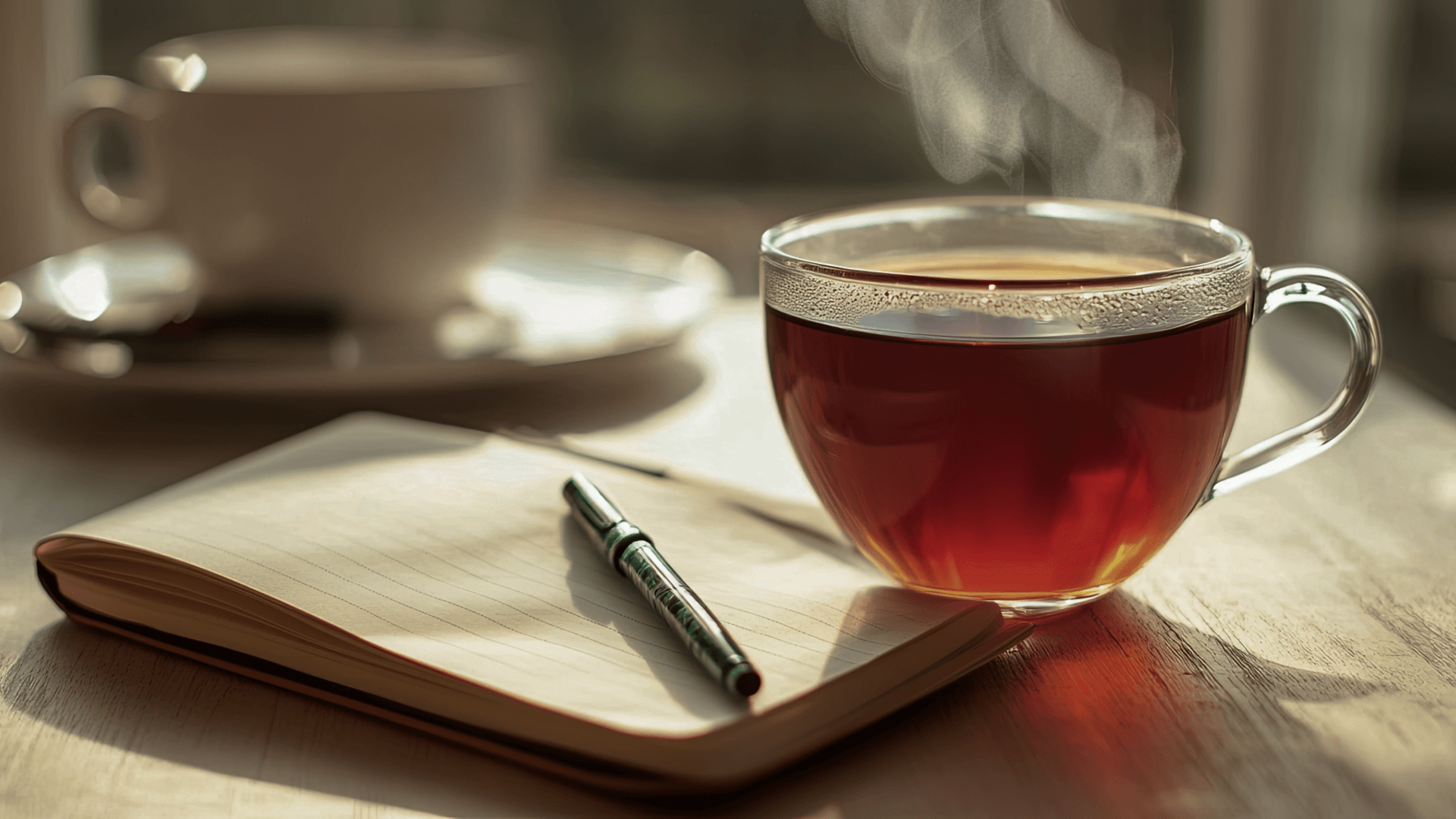
She could hear him tinkling mugs in the kitchen, and he extended his head from the side of the doorframe. “Ahhh, I could have done with some Wensleydale with cranberry.” He put the mugs on the table. “But let’s just have what we’ve got right now. Some tea?” She nodded and stepped into the sitting room, smiling as she saw the steam rise, infusing the room with warmth.