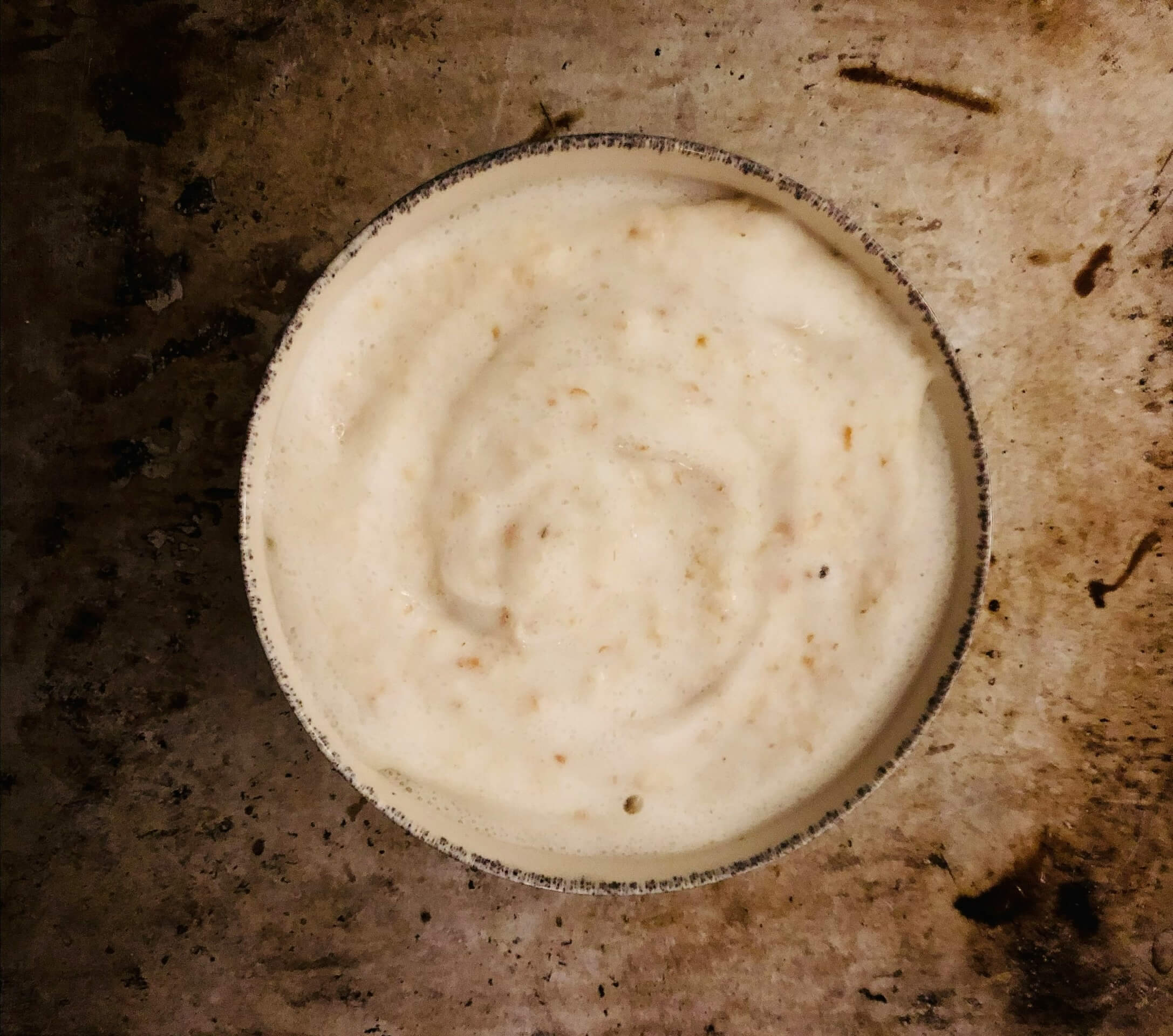
Photo by Mari Helin on Unsplash
It was 1962 in Taiwan, and I was five years old. The dormitory where my family lived had a single living space, with the bedroom raised three feet above the floor, and partitioned by a Japanese paper sliding door. My parents slept on a wooden double bed placed atop the Japanese tatami. Beside them, five children, ranging in age from seven to one, lay side by side on the tatami, sleeping soundly.
The kitchen, shared by five families, was located across the courtyard. It was larger than our living space and had a screen door that opened and closed with a squeaky noise. On rainy days, we walked under the eaves, sneaking peeks into our neighbors’ windows before stepping into the kitchen.
Inside, a large charcoal burning stove dominated the room. A thick layer of sooty dust coated the outside of the pans and pots, blackening everything they touched. My older brother sometimes used it to draw a makeshift mustache on his face.
I would sit at the wooden table, playing with something while my mother cooked. Aromatic steam filled the room, wrapping us in its warmth. My younger brother and sisters were often playing or napping in their shared bamboo baby crib. I don’t recall any commotion caused by us—perhaps we were too hungry to act out, or maybe we were simply very quiet. In my memory, these scenes play like a silent movie in slow motion.
My mother loved making this treat – fried flour paste – for us on quiet afternoons. The only sound that stood out was the rhythmic clicking of her spatula against the wok. Clink, clink, clink…these two metals collided as I counted each strike. She was charring the flour, patiently turning it brown. Gradually, the sweet, burnt aroma would fill the kitchen. My siblings and I couldn’t help but start giggling.
My mother would fill our bowls halfway with browned flour and top them with sugar. Before she poured in the boiling water, I would stare at the sandy sugar sparkling on the surface. Soon, the flour sank beneath the hot water, and the sugar dissolved. I stirred the mixture with a spoon, slowly and carefully, watching the water swirl into the flour. When my little hand felt heavy, I had to use the other hand to steady the bowl.
Stirring to the right, then to the left, I crushed the floating lumps of flour that clung to the bottom or edges of the bowl. I resisted the urge to take a bite, focusing instead on transforming the mixture into a thick, smooth paste. Finally satisfied with the texture, I scooped up a spoonful and put it into my mouth. The paste clung to the roof of my mouth, forcing my tongue to scrape it down. My teeth began to grind as saliva softened and liquefied the paste. That was when the tiny particles of burnt flour released their sweetness, and I started to savor the sugary joy.
Blowing gently on the paste to cool it down, my mother then fed it to my little brother and sisters, who were now standing up in their shared crib, holding the bar and waiting with mouths wide open. My older brother, as usual, was busy playing with something – perhaps flying a paper airplane – barely paying attention to what he was eating. As for me, I chewed and swallowed slowly, savoring each spoonful to prolong the precious enjoyment.
There were many days and seasons my mother and her children spent in this kitchen, but the image that remains fixed in my memory is always the same: a cold winter afternoon, while my father was out working, steam rising in front of me as boiling water was poured into the bowl. My mother, just 28 years old, was raising five children without any help. There were no books to read, no TV to watch, no phone calls to make, and no friends to visit. Preparing snacks between meals was part of her daily routine because only the wealthy could afford purchased candies or cookies, and my dad’s government job was not in this category.
Fried Flour Paste was a known but uncommon homemade snack. It required nearly an hour of nonstop stirring the wok over low heat on the stove – a task that demanded patience. Did my mother enjoy the process as we waited beside her? I never got the chance to ask her before she passed away in 2017.
In those moments, did she wish she could visit new places? Take a nap? Talk to someone? Was she overwhelmed by the endless duties of caring for so many children? I imagine most mothers would struggle, yet my mother never once complained about her role as a housewife: “I didn’t get enough education, so I think I am quite lucky to have a life like this.” She was comparing herself to many other neighborhood women who needed to work as the street vendors or factory workers to support the family.
She often mentioned how happy my dad felt whenever he saw us dressed neatly and well fed. “I never let my children look messy or dirty, and I can’t let them feel hungry,” she often said. I knew this was her deepest wish for us, shaped by her own experience as a wartime child, who endured extreme poverty and hunger. (Taiwan, as the colony of Japan, was bombed by America in the end of WWII.)
Later, I learned how to make the snack myself. When my younger brother had to return to his boarding school after the weekend, I would fry the flour and pack it into a large tin can for him to take to school. Now, I wonder: was this an assignment given to me because I was old enough to take on the responsibility? Or did I do it voluntarily? I remember performing the task with care, patiently ensuring the flour didn’t burn too dark. Once it was ready, I mixed in some white sugar and canned it. The final product reminded me of beach sand twinkling with crushed shells – it was delightful.
One time, my father stood beside me, watching as I worked. He showed me the best way to hold the spatula and stir, then he found a better-sized can for packing the snack. In his silent gestures, I felt his love and care for my brother. Yet, deep down, I also secretly blamed my brother for not getting into a good local high school, which burdened my father with the expensive tuition of the private boarding school.
Nowadays, many people treat carbohydrates as the villain in their diets. Candies, cookies, cakes, and other sweets have become so-easy-to-get indulgences but also could be easily discarded for health concerns. I haven’t eaten or cooked this snack in decades, yet its single ingredient – flour – has left me with a lasting memory. I’ve come to realize that the true taste of food doesn’t come from the food itself; it comes from the memories that live on.