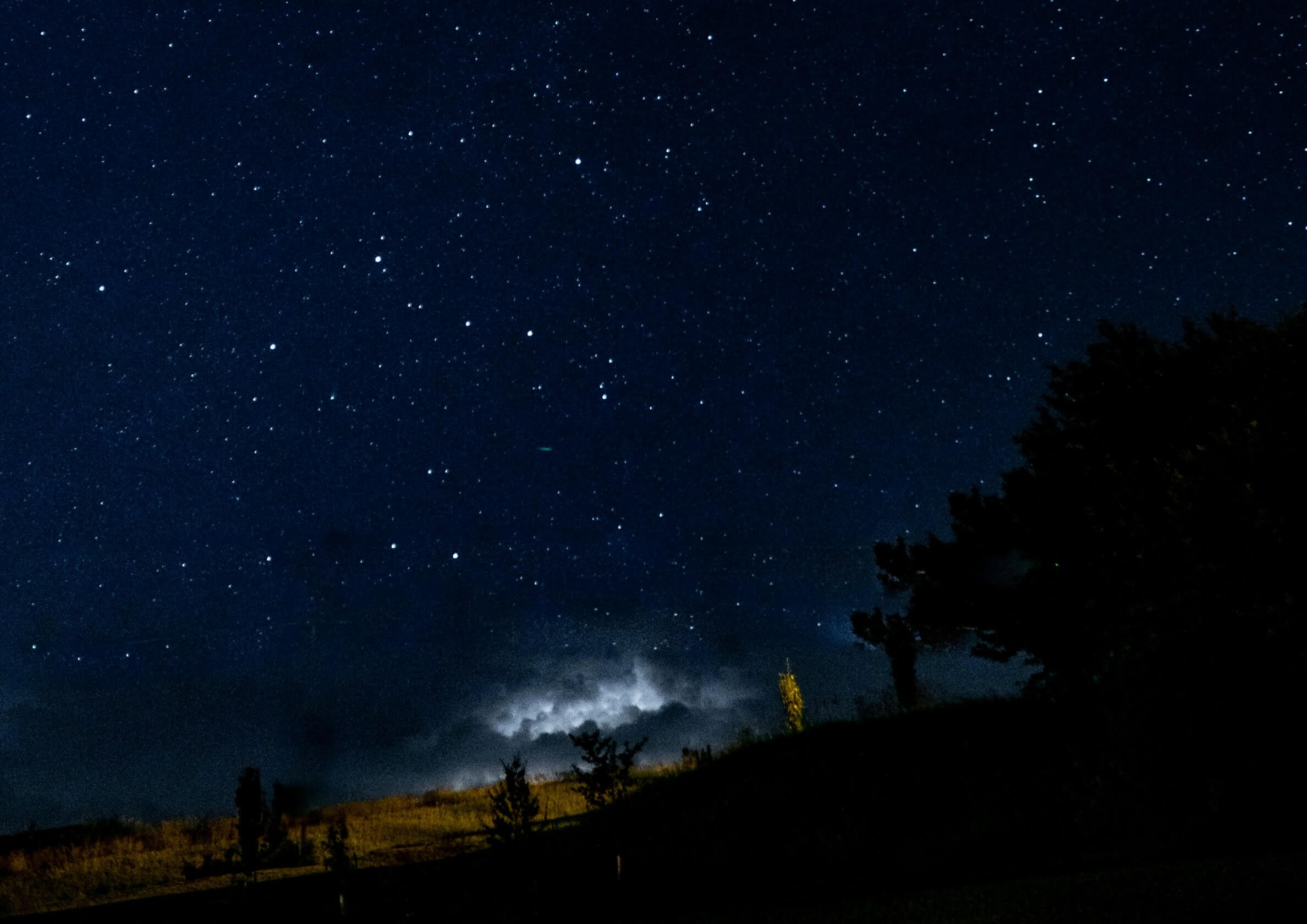
Photo by Tim Umphreys on Unsplash
Night at the Crest
Starscape obscured by
countless swarming pixels with 14-inch wingspans;
but no tangible color or form.
No sound, at least none perceived.
But there was something...
a presence felt. No, not felt. Not exactly;...
a presence known by reputation not senses, as mammal, not bird.
Gasping not frightened or excited
just having forgotten to breathe.
Only as It fled down and into the desert
was a trembling of the heavens sensed; not unlike
the rustling of acre-upon-acre of corn or
wheat on eastern-Iowa farmland at dusk.
The rustling suddenly drowned by magnificent silence.
Who knew there are skies like this?
No suburban canopy of speckled dark
that signals “night” this teeming sky,
full of being, full of light.
Light not to see with
but to be seen,
to be witnessed.
to be paid homage to,
conversed with,
plotted with.
Vision, not sight.
The air, thickened by the cold of deep space and desert void,
cut through fabric and skin,
rendering youthful muscle into cords of exquisite shivers.
Old, dying embers, once a crackling fire masquerading as a cook stove,
beckon to be kindled back to blazing youth.
As fuel is foraged then sacrificed to the fire, voices, not long ago
embarrassed by their crudeness and rustic music, begin to
whisper and laugh
with playful, childlike
innocence and awe,
as dancing shadows guard
the redoubt from
another assault of wonder.
grace, sprinkled like dew
there is no hating hate;
the act itself is fire.
not content to smolder
in petty or foolish indignities,
its lust consummated as
fuel and fuse consume each:
destruction its ousia and telos,
its heat metastasizes, old fuel
spawned as new fuse, awakened
as galloping wildfire
only to be reined in if quenched
at great cost and unpredictable effect.
but never to have been
untethered at all if
before hate is mated with hate, might
there be grace, sprinkled like dew...
what might have been fuel
free, to be, to live, to thrive
as the grass of a new dawn
or flower of the desert.
You Weep, and Yet
You weep, and yet your soul is dry.
The grief wasted on stupidity;
wasted on strings of foolish whims
youthful arrogance
wishful thinking masquerading
as dreams or plans;
unleashed to weaken and bruise
and break and poison
until only addiction remains,
and he but a shadow until
the darkness is complete.
Yet your heart remembers.
He knew and rendered love,
this blotted soul,
this muted life that once
flamed wild and true;
with a smile that melted hearts
and a joy …
It is that joy that
whispers in your aching mind.
And though he wastes away
before your eyes, that joy will
not be wasted on emptiness.
Your tears will flow
across your cheeks
and onto my shoulder;
true grief for a soul
that once knew joy,
but let it slip away.
And whether the darkness
wins or not this time,
these very tears, not wasted,
will clear a path for
hopes and loves,
and even griefs, to come.