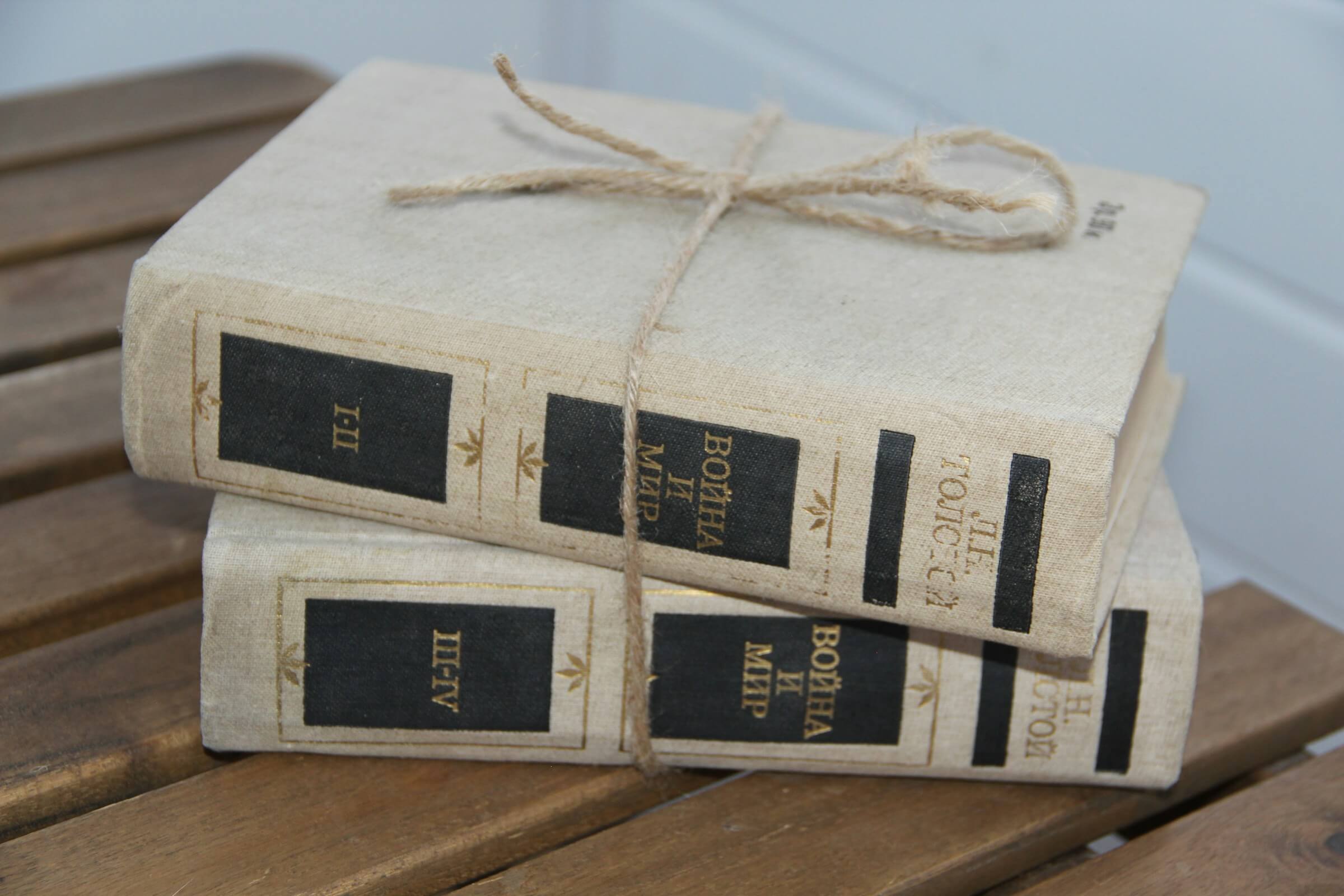
Photo by Светлана Химочка on Unsplash
Good-Bye Leo Tolstoy
I am finally admitting
that I am never going to read War and Peace.
I started a number of times,
printed out a cheat sheet with the cast of characters,
made many a tasty snack,
read to around page 100,
and each time abandoned the project.
My momentous decision to kiss Leo good-bye
was made last week
when I organized my office,
saw that the pages of the paperback were yellowed
and the thick spine broken from using the book
on windy spring days as a doorstop,
not to mention the chocolate stains
smeared over the Norton notes.
I cleaned the book up the best I could
and placed it carefully in a donation box
for a sale at the local library.
Surely someone else will be thrilled to own it.
However, I feel abandoning this masterpiece
is a failure of character on my part,
though I did read Anna Karenina start to finish,
cried at the end when she gave herself to the train.
I also read the interesting parts of a Tolstoy biography.
How he gave up most of his copyrights to live as a peasant,
altruistic fellow that he was.
Pissed his wife off because of their 13 children
and who can blame her?
But none of that is relevant
or a good defense for my literary turpitude.
I’ve moved on to staring down Ulysses.
The Language of Trees
My son tells me
more trees are falling
because of global warming.
I feel sad
and it strikes me how magnificent
my favorite oak is.
How it shades the driveway,
the trunk rugged, broad and tall,
a network of roots
like tributaries
rippling in all directions,
the crown of leaves
a thousand tongues,
the strong limbs a portrait of its foreign grace.
A few months after,
the summer wind whirls
and plucks the tree out of the ground
as if it were a daisy,
drops it on my house,
on timbers,
measured, sawed, framed,
and nailed together
by the carpenters among us.
With its last breath,
the tree makes a final statement.
If only we had ears to hear
the language of our trees.
I Detect Lord Byron
Gneiss, a common rock in Connecticut.
Some are gray with white stripes
stacked up the sides like a layer cake.
I find a small one with distinct rings
to edge my garden,
but I keep looking for a showstopper.
The oldest gneiss, found
in the Minnesota River Valley,
dates back 3.6 billion years.
I think about how old the stone
in my pocket might be
as I walk slowly through the woods
carrying history,
eyes peeled.
A friend I hike with tells me
we breathe the same molecules
as dinosaurs and Abraham Lincoln.
I inhale deeply and imagine
I detect Lord Byron.
A miniscule bubble
could have drifted over the ocean
and floated into my woods
like a speck of Don Juan still in wanderlust.
I stumble upon the prize rock
to the side of the trail along the river.
Smooth in my palm
from years in the water,
it has a band around the edge
and a white circle on its face
like an antique clock.