Photo by Swati Kedia on Unsplash
I had a reputation for having a surly temperament. The surliness was a defense to the constant beratement from my father and his group at the club. I kept being told I was wrong, but I knew better. They were wrong. They lived in a wealthy bubble, protected from the real world where problems wandered the streets and seeped into the homes and apartments, and I, being all of sixteen years old, viewed them, through all my knowledge of the world, which I’d gathered from tramping the streets of Chicago and reading On the Road, Manchild in the Promised Land, Soul on Ice, and The Autobiography of Malcom X, and Native Son, as being wrong. What did they know?
One night I burst that bubble and learned how defiance often loses out to power.
Bob’s GTX roared through the shadows of Warren Woods, its 440 V8 engine reverberating off the beech and maple trees, the air flowing through the open windows, blowing our long hair. We were heading back to my parent’s house on the lake. He had continued his newfound silence, which was a concern. I couldn’t read his mind and normally didn’t need to, but he was a different Bob since having dinner with my parents the previous night, during which my father had gone on a very out of character monologue about his time in China after World War II, and how somehow his sharing of his experience was supposed to lead us to the path of righteousness. According to my father, our friendship for the last four years had done nothing but breed a Petrie dish of trouble. As a result, as we drove back from Bensonville, his normal banter wasn’t filling the air, so there was no telling what was really happening in his head.
Warren Woods held a special memory – the scene a few years back where two friends, my brother and I headed, each with a sandwich and a pack of cigarettes stolen from each of our parents. Ducking into the beech forest and following the hiking trail, we stopped on a bridge and dangled our legs over the flowing Galien River. Each of us downed our sandwich, serenaded by the musical current of the water, then lit up a Salem, an Alpine, and two Viceroys. It didn’t take long, while the smoke drifted into the tree limbs, before we grew dizzy, then nauseous, and short of vomiting we ended up burying them along the riverbank as if our parents would search for evidence of our crime, then traveled Warren Woods Road back home taking a mile or more to walk off the queasiness.
And that memory drifted through my mind as we exited the dark shadows. Into the sunlight, we were suddenly accosted by the piercing siren of a state cop as his lights began their colorful twirl while he quickly encroached on our back bumper.
“How fast were you going? “
Bob shrugged as he pulled onto the gravel shoulder in front of a ball field I had occasionally played on during my little league years. It had been the scene of my last game, during which, with two outs, one run down, I got a single, stole second, then, with a weak batting teammate up, with a count of one and two I took off for third. I had never been thrown out attempting to steal a base during my little league career and figured I might be able to score on a wild pitch, totally lacking any faith in my teammate. All that was swimming in my head as I slid, the dust flying high as I felt the tag on my foot and the umpire screaming “OUT!”
Beyond the field lay the long 17th hole of the club to which my parents belonged. It was the hole I lost in the junior club championship when Woodie sunk a birdie putt. I lost 2 and 1. Second place got me a trophy. But that was okay because Woodie was a friend who was a few years older.
“License and registration.” There was not a please in his demand. His shadow covered the whole window.
“What was he doing wrong, officer?” I asked as I handed Bob the registration from the glove compartment.
He took the document and leaned down. His narrow dark eyes peered ominously from the shadows caused by the black brim of his hat. The silver band and the tall badge on the crown reflected the sinking sun’s rays.
“Where you heading so fast?”
I sneered angrily at Bob, and he sullenly lowered his gaze. The crime had been identified.
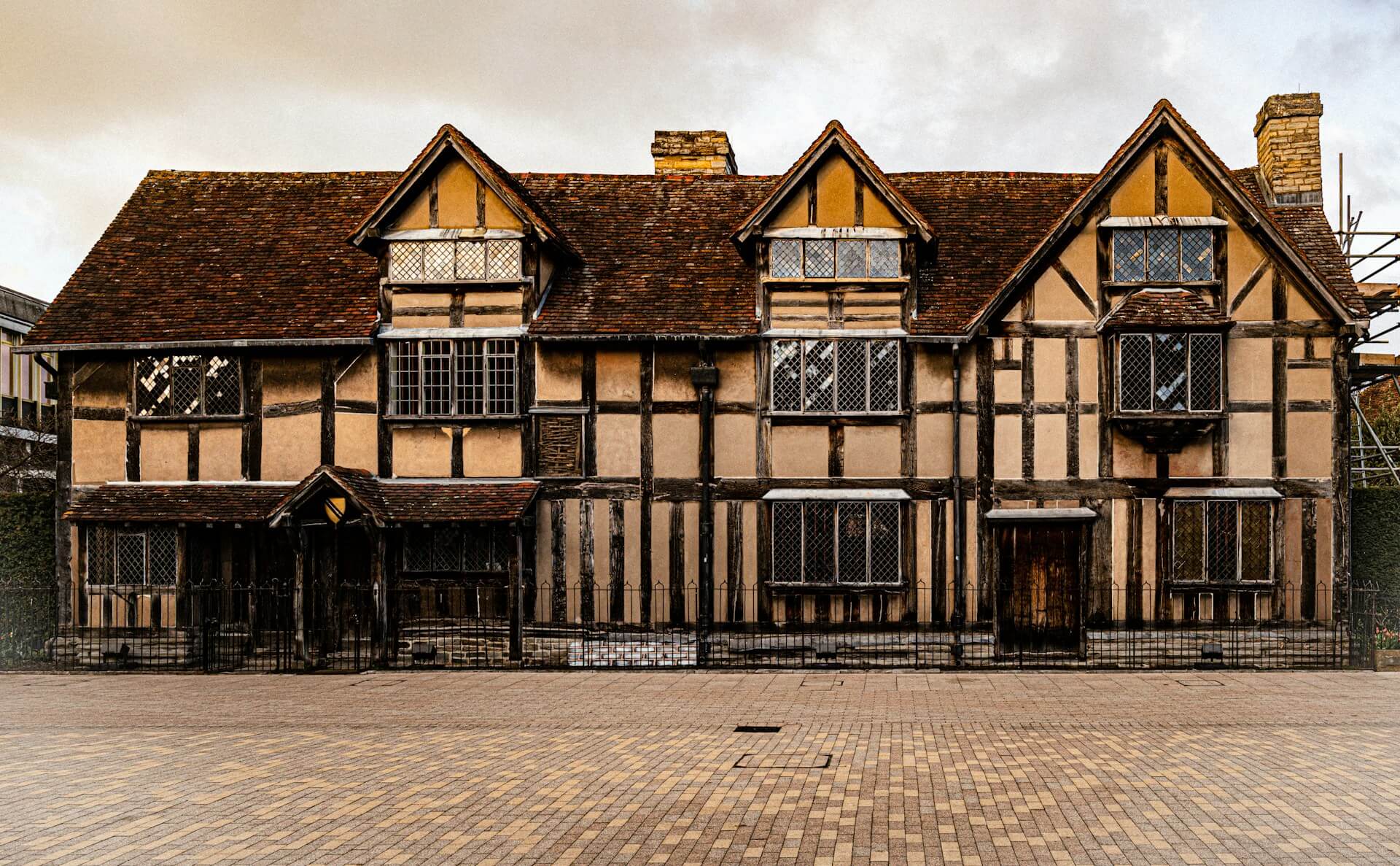
We had been heading back to my parent’s cottage, but that offered no excuse for urgency. I gazed across the 17th hole and the adjacent 14th hole to the clubhouse, which was a replica of Shakespeare’s house in Stratford-upon-Avon, and had a history of its own. It being Saturday night there was a dance there. We hadn’t planned on attending, and certainly weren’t dressed for it.
“We’re late for the dance at the club.”
“You belong there?” His eyes widen with interest.
“My parents do.”
He stood up and gazed over the fairways. “What’s it like?” His tone turned from harsh to childlike curiosity.
“Pretty cool. The people are nice.”
“Not the people,” he grunted. He stared hard at the clubhouse.
“Exact replica of Shakespeare’s house. You should see it.”
He stuck his head back in Bob’s window. “Can you give me a tour?”
“Ahh...”
“I’ll forgive the ticket.”
Bob and I exchanged glances, then nodded. “Follow us.”
Naively I thought we had dodged a bullet. What could go wrong? I thought a police officer is what the members liked and respected.
He didn’t shut his lights down as we slowly drove along past the Middle School, before turning onto the road into the club, clicking over the railroad tracks and passed the cemetery that bordered it. The pond on the par three thirteenth hole glistened in the fading light of the day, but the state trooper’s flashing lights grew more obvious as the sun sank. My glee that we had beaten Bob’s ticket was softening because the constant flashing of the lights was not a good look. At least his sirens were quiet.
Luckily, the dance crowd were all inside as we pulled into a parking spot. The club had always existed as a love/hate object – more than an object, maybe more of a subject, like a girlfriend who offers so much possibility, but for whatever reason, I often ignored it, or worse, mistreated, or took for granted the benefits and because of that I often found myself in trouble with my parents and their friends.
The trooper pulled alongside the front lawn and shut off the lights. He climbed out without his hat. As we approached, I saw for the first time just how young he was and wondered what his interest could be.
“I always wondered what this place looked like close up,” he sighed as he stood on the lush front lawn and stared up at the half-timbered replication of Shakespeare’s house. The setting sun reflected sharply against the whitewashed stucco walls, and we all winced into the potent glare.
“Are you from around here?”
“Live up Red Arrow Highway, but travel Warren Woods Road a lot, so I have a chance to see it from a distance quite often. It struck me as unique, so I read about it, how it was lugged across the lake in pieces on a barge after they dismantled it after the 1924 Chicago International Livestock Exposition. It is a replica of Shakespeare’s house, but it was called ‘The Meat Shoppe’ because they displayed prize winning carcasses of beef and pork inside of it.”
He knew more about the structure than I did. “Impressive. Glad you got to see it up close. So can we all go?” I doubted it but thought I would give it a shot.
“I want to see inside.” His face crumbled like a kid who was being denied a treat.
“Well, we aren’t really dressed for the occasion, and they have rules, you see. That’s why we were in such a hurry. Gotta get home, change, and then make it back.”
He was still pouting, but I got the impression he was playing me.
“That wasn’t the deal,” he exclaimed, still gazing up at the building.
“Tell you what. Why don’t we meet here next week, and I’ll take you through it when there isn’t a party going on?”
“No, I think it’ll be more impressive filled with folks dressed to the nines.”
I had a vision of Madras sport coats and a loud mixture of mismatching ties on top of white to blue slacks. The club was a curious intersection of culture. A good portion of the members lived in Bensonville, five miles inland, while the majority lived along Lake Michigan in monstrous summer cottages. Those members were from Chicago, an hour-and-a-half drive around the lake away, where many were high ranking business executives like my father.
Bob and I glanced at each other. His expression was washed in the same concern I felt. Underdressed for the event we would stand out even if we weren’t making an entrance with a state cop in tow.
Bob was an afterthought baby, eight years younger than a brother who happened to hold the existing high-school state record in the mile and a sister who was the valedictorian of her class. Both went to college on full scholarships. The odds were only even that Bob would graduate after being held back in the third grade and flirting with barely passing grades. He joked he was the runt of the litter, but I knew how much it bothered him. Both parents worked as salesclerks at Marshall Fields in the city and flip-flopped on their methods of controlling his behavior. It could never be physical because he was a muscle-bound, short-tempered athlete who was even feared by his coaches. I never became his punching bag but spent a good amount of time trying to protect others. Hardnosed attempts at punishment were ignored and rewards for staying out of trouble for short periods of time rarely lasted, but the GTX he was driving, and the reason for our situation, was a gift that had kept him trouble free for those last few months. This was why we had to placate the police officer.
He followed slowly, glaring at the building like it was the first one he’d ever seen.
“You coming?” I asked as we paused at the entrance. I looked over the parking lot but couldn’t spot my parents’ car.
He wore a blushed smile like a kid at the carnival about to jump onto the roller coaster. “Yes, sorry. Got hypnotized by the beauty.”
Earlier in the week, while cutting the lawn for the Jamieson’s, one of my parent’s friends, in Lakeview, Bob suddenly emerged from a clump of pines at the edge of the property. A cigarette hung from his wide smile. I about shit. It wasn’t just the momentary scare, but the whole familial reaction his appearance would bring. I immediately flipped into internal debate – keep him hidden for good or keep him hidden until my old man headed back to the city, then reveal him to my mom. Bob never brought peace and solace. His existence in my life always brought gray skies and low clouds, but it was worth it. He was my best friend and loyal to a fault. My mom had a higher Bob tolerance than my father did.
“What the hell are you doing here?” My tone reflected my angst which put him on edge and his biceps began flinching in an aggressive way. My day was automatically ruined.
Because his right leg was an inch shorter than his left, he had a slight limp and a constant bend to his massive shoulders even though he wore a thick sole on his right shoe. He constantly tugged at his untucked shirt tail on his left side as if he thought the action would draw attention away from his lean and he began tugging hard.
After taking a couple of deep drags, he shrugged his wide shoulders, and admitted, “In trouble at home.”
The cottage was a two-hour drive from his house. “Where’s your car?”
“Out on the road.” He pointed past the black wrought iron gates. “I had to get out. Mandy’s old man caught us in her bedroom. Had to dodge him as he blocked the end of her bed. Should’ve seen the move I put on him just as he dove to tackle me. You know, he isn’t small, but I twirled like that time you tried to tackle me in the all-star game. Remember that game?”
Bob had a habit of rattling shit like that, and when he did, his large brown eyes sparkled. All the guys felt there was something wrong with the connection between his brain and his voice box. Like a little kid who has no shield, but on top of that, he sparked from different areas of the brain. There was no consistent running thought as though weather fronts brewed in his mind vigorously. Each comment ignited another and by the end of the sentence, there were six different, disparate thoughts floating in the air around his handsome face. His old man wanted to send him to a shrink, but Bob refused. His mother always defended him, and she held the reins in that house.
I found the best way to calm him down was to just nod and let himself tire out. Sometimes that got him back to his original thought. So, I nodded and said yes. He was referring to an all-star football game in which we were on opposing teams. He was quick and shifty, and his move happened on the ten-yard line, leaving my face in the grass listening to his celebratory screams in the end zone.
“My plan of keeping my clothes neatly folded on the edge of Mandy’s dresser finally worked out. Damn good plan. Cause I was able to grab the pile on the way out the bedroom door. Gotta feeling Mandy’s mom saw me dash buck naked through the kitchen. Got delayed as I slid open the glass door to the deck before leaping over the railing. Landed in the holly bushes and my balls are a bit scratched. But I gotta worry about what her asshole dad did to her after I escaped.”
The whole time he gabbed, I stood sweating beneath the pines. I’d shut the mower off.
“I didn’t dare go home for fear the cops would be waiting. Figured being here might be far enough away so things can cool down.”
“Surprised I didn’t hear the roar of the GTX?”
“I kind of coasted for quite a while.”
Mandy was still alive despite Bob’s temper.
Alcohol wasn’t his friend. Course he didn’t believe that. With his synapses misfiring when sober, he felt the picture cleared with the help of beer. There were at least three times he felt it necessary to use her as a punching bag for no reason whatsoever. She was a good kid who was so deeply in love with him she never ratted him out and always spent hours covering any bruises with makeup. She had yet to leave him.
“You didn’t hit her, did you?”
He dragged deeply on his cigarette and just shook his head silently. He never liked to hear he hit her. Black outs were a regular occurrence.
“One of you have a cigarette I can bum?” It was Frank Jamieson. Once a hulk of a man, well over six feet with the build of a linebacker, the onslaught of cancer was diminishing him. He wore blue striped pajamas that waved loosely in a slight breeze that drifted off the lake.
“Mrs. Jamieson won’t like it.”
He smirked. “If I’m caught, I’ll just tell her I beat it out of you.”
I lit one for him and stood back as his lungs exploded in a loud spew after inhaling.
“Always think it’s going to taste better,” he groaned. He didn’t put it out and continued coughing throughout the whole cigarette. “Thanks gentlemen,” he said with a mimicked tip of a hat on his way back to his tall Georgian mansion. We remained quiet until he disappeared between the white pillars. He died the following month.
“Even the rich get sick, huh?” Bob sighed, then sucked hard on his cigarette.
Bob leaned against my parent’s car that I’d driven over while I finished mowing the lawn and parked the mower back in Frank’s shed.
“What’s the story gonna be?” I called to him as I backed out of the gates and waited for him to climb into his brand-new racing-green GTX.
“Just tell your old man I needed a break from the IGA.” That was his after-school job.
And we did, though I suspected my old man saw through it and that was the reason for his long dinner monologue.
We ran into Danny Pelham, as we stepped into the high two-story ceilinged room where I’d sat through many shows by a barbershop quartet that was made up of lawyers from Chicago. And since I had gotten through music class in seventh grade by singing bass in the barbershop chorus, I got a kick out of them, each one sloshed and swinging, but quite melodic.
His expression warned me of what I could expect. His eyes danced up and down my attire, which was cutoff blue jeans and sandals under a tie-die T shirt.
“Close your mouth,” I chuckled.
“What the...” and he paused, his jaw dropping further as our officer followed us in, eyes searching the second-floor balcony.
Luckily, the room was empty, and all the guests were out on the screened porch. The bar sat in the corner where Whitey the regular bartender was sorting liquor bottles. His expression was just as shocked as Danny’s, and he marched out onto the porch with a half sprint as though ignoring us would make us vanish.
I waved Officer Krupke in, pointing around the room. “This is really the only original part of the house pulled across the lake,” I claimed. “The porch out there was put on just a few years ago, so that won’t interest you.”
He was hungrily gazing at the staircase, and I knew I better squelch that thought. “Bedrooms up there are for guests only, so we can’t bring you there.”
I was suddenly struck with a queasy feeling, one that engulfed me with a newfound doubt. What if Officer Krupke was amid a very well-planned ruse? What if he was infiltrating the club for reasons beyond his curiosity, and I was being used as a rube?
I met Bob’s gaze again, but this time it was full of alarm, and I turned to see Whitey leading Frank Spaulding toward us. Both were scurrying across the carpet with panicked expressions. Short and squat, with a lean of his right shoulder that he’d acquired after fighting childhood polio, I leaned myself to face into Frank’s red cheeks as we stood squared off like prizefighters in the spacious living room. His voice normally squeaked, but it was now a whispered shriek.
“What the hell are you in here dressed like that? Does your father know you are dressed like that?”
I relaxed a bit because if that were his only concern, I could shrug and take off quickly.
“And why the hell are you bringing a cop in here?”
“Ahh, he’s a friend who wanted to see the Shakespeare House. History buff. More of a Shakespeare buff. He was following me to the house so we can go swimming.” I took a glance at Krupke, and he was heading toward the bar area with Whitey moving quickly across the floor to cut him off.
“Hey Shakespeare!” I called out to Krupke. Then back to Frank, “See that’s his nickname.”
I waved at Krupke and began heading toward the exit. “Come on!”
Big band music had started on the porch, and I could see couples joining on the dance floor.
“Get him the hell outta here!” Frank whispered frantically. “The club doesn’t have a liquor license.”
I wasn’t quite sure of the ramifications of that problem but nodded and sighed with relief when Krupke began heading toward us.
“See you soon, Mr. Spaulding.”
And with one last glance up the stairs, Krupke followed us out the door.
“Satisfied?” I asked a bit surlily. By that time, I’d forgotten that we had caused the whole ruckus to save our own asses.
Krupke turned and stared back at the hulking structure with his arms crossed. In any other circumstances I would have liked to delve into his curiosity and understand it more deeply, but since my parents hadn’t shown up yet, I really needed him to disappear. I knew I was in trouble, but if they showed at that point, I would be left with no ability to tell the tale my way, which if done properly would lessen my punishment.
He finally checked his watch, which brought a shocked expression, and he took off in a jog toward his car. Without a statement or even a nod of thanks, he jumped in and started it with a roar. He stepped on the gas and shot up the road, rolling past the water hole on the thirteenth before he disappeared.
“Let’s get the hell outta here.”
And we were soon on the move. A few minutes later we pulled around the circular drive in front of the cottage. Bob didn’t turn off the car. The sun was in its final descent over the green roof of the cottage.
“You coming in?”
He shook his head, his brown eyes staring straight ahead. “Think its time for me to head home. I’ve gotten you into enough trouble.”
“It’s already done.” I shrugged casually. “You can help me take the shit,” I joked.
He sighed as he pulled out a cigarette. “Think your old man was right.”
“Huh?”
He reached out and grabbed my shoulder with a solid grip. “As a pair, the two of us just mess things up. If we go solo maybe the trouble won’t be as severe.”
I was shocked by his insight. I’d never heard him so serious.
“You sure?”
He lit his cigarette and sucked on it noisily. He nodded. I climbed out, shutting the door quietly, and smiled as I leaned in. “Get home safe.” That was something my father would have said.
I watched the closest friend I would ever have drive off leaving a trail of dust. And while the dust settled, the roar of his GTX disappeared in the distance. In the humid lake air, the energy of rebellion seeped from me.
And it turned out Bob was prophetic. It was the end of our close friendship and neither of us got into any more trouble after we crashed the country club that night. It turned out to be the end of my rebellious years.
The last time we saw each other was on a commuter train home from Chicago five years later. He wore a baker’s white uniform, covered in flour from working ten hours in a downtown commercial bakery factory, and I had just finished an interview with an employment agency after graduating from college. Our glances met across the seats, as the rocking of the train swayed us, but we said nothing.