Short Story
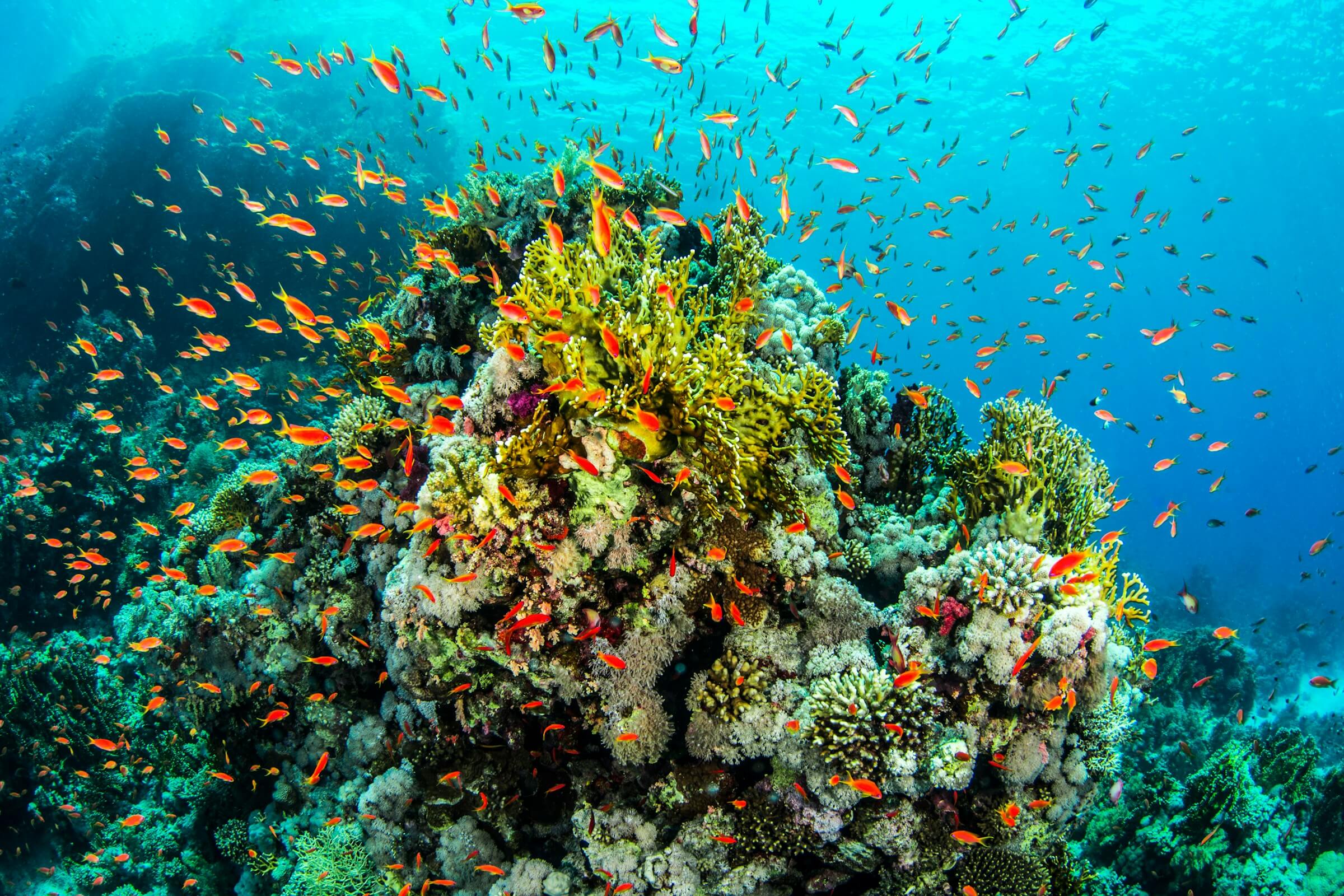
Getty Images For Unsplash+
When I walked into my grandmother’s room at the retirement community, she asked, “Did it survive?”
It was the first time I’d heard her speak in person since I’d been in Indonesia for six months. She had recently been transferred to the memory care unit.
Outside, rain pressed against the window, blurring the community’s parking lot into dark branches and slick pavement. Next door, a news program blared. The room smelled of hyacinths, which one of the caregivers had brought for my grandmother, and beneath that, talcum powder and the closed-room scent of a life spent in one chair for a long time.
On the windowsill sat a vibrant magenta lady’s-slipper orchid, framed photographs of my grandfather and our large extended family, elephants at the Masai Mara National Reserve in Kenya, and a small stuffed hedgehog I had given her years earlier. It was our favorite animal.
My grandmother sat beneath a soft nubbed blanket, a robotic cat in her lap. Precious. Its orange-and-white fur had been worn flat along the spine by the constant motion of her hand.
“Did what survive?” I asked.
She frowned at me as though I was the one struggling to follow the conversation.
“The reef.”
I stopped halfway to the chair beside her.
A week earlier, I’d been snorkeling and scuba diving in a Marine Protected Area near Tianyar. This Balinese village is home to one of Indonesia’s largest coral-reef restoration projects. I was working with a team and community members to assess whether artificial reefs can preserve biodiversity and build resilience to climate change.
I hadn’t told anyone yet.
***
I thought back to my history with my grandmother. She and my grandfather had raised me since I was ten, after my parents died in a freak car accident during a severe tropical storm. They lived near the ocean on Cape Cod, and I loved how breezy and untamed it was. But my grandmother had always feared what lived in the ocean. Years earlier, in the Bahamas, she went swimming in her bikini and thought a parrotfish kept trying to bite her stomach. She yowled and lurched toward shore, breaking the water with frantic strokes.
I, on the other hand, have loved the ocean for as long as I can remember. I learned its edges first, the surf zone where waves broke on the shore and the shallow pools where sea stars and anemones hid beneath rocks. I squealed when I found my first conch shell. When a crab pinched me for the first time, I cried, more startled than hurt. I remembered the pull of water around my ankles, and I leaped backward, certain it would take me with it.
I remembered learning to snorkel, then to dive, in Florida and the Caribbean. My favorite dive spot was the Half Moon Caye Wall in Belize. When I tipped backward off the boat there, I panicked first at the water, too warm, closing over me.
Below the surface, sound grew muffled, and movement slowed. Seagrass spread in long green ribbons. A reef rose like a palace, with stone skeletons, towers and arches, and a bustling community. Purple queen parrotfish moved through red tube sponges and sea fans, while flashes of yellow and blue fish flickered among the coral. Spiny sea urchins and moray eels hid in crevices. Octopuses, eels, and lobsters emerged from the reef and then vanished. In the distance, blacktip reef sharks and stingrays glided back and forth beneath the soft swoosh of water over the coral.
It was a palace of life.
I thought I knew what life with animals looked like, especially underwater.
My grandmother understood animals—what they were made of and what motivated them. She had been a zoologist long before I was born. She was the closest thing I had to a model for the life I thought I wanted: independent, full of travel, research, and teaching. In one of her first jobs, she worked in a university lab, inserting electrodes into cats’ brains to measure neural activity. She told me this once, without apology. I pictured her at a steel table, gloved and precise. She had wanted to go to medical school, but her supervisor had told her she couldn’t take a place that should go to a man.
Later, she taught math and science at an elementary school, turning classrooms into small ecosystems. At home, she staged safaris with stuffed animals and taught me to sort species by habitat.
My grandmother’s lifelong contributions to conservation organizations inspired me. She and my grandfather traveled widely, especially to East Africa. She spoke of the Masai Mara with reverence. She said that the animals were everywhere. It was as if someone had spilled them across the land like dice being thrown from a cup in a board game. She described the Great Migration. Hundreds of thousands of wildebeest, zebras, and gazelles moved in huge, continuous herds each year, driven by rainfall and the search for fresh grazing. Her eyes brightened, and she spread her hands to capture their movement.
Her awe was still intact.
***
When I visited my grandmother on this trip, she seemed smaller.
But it was a good day, and she knew me. That was not always the case. Sometimes she called me by a caregiver’s name. Sometimes she called me Louise, my mother’s name.
I found myself leaning forward. I thought getting closer might help her remember me.
That didn’t always work.
Sometimes she became angry and spoke sharply to the caregivers. But she never directed it at the cat. With Precious, she was calm, almost tender.
Once, sitting beside her, I looked outside. Sunlight filtered through the oak canopy. I thought of another reef. Not the vibrant one from Belize, but one with bleached-white coral, its shape still recognizable, although its color had gone. Algae had spread, and sponges had taken hold. I drifted back from the reef to the cat’s mechanical purr in my grandmother’s lap.
“I’m tired. You need to go,” my grandmother said suddenly. I reached out to hold her hand. “Don’t touch me!” she blurted. “I need to go potty.” I stood and pressed the call button by the bed. After several minutes, a caregiver appeared in the doorway and guided her to the bathroom. I sat back down beside Precious.
There was something else I wanted to tell my grandmother. On the drive to the retirement community, I decided not to. It was too early. She wouldn’t remember. Maybe telling her was just for me. But that wasn’t the whole truth. Part of me had been afraid to say the news aloud because once I did, things would shift, from the amount of time that I could dive to the length and type of travel I could make to reefs around the world. I’d been deciding for two months. I was still deciding now.
“You work in Bolly,” she said.
“Yes, Bali.” Up close, I could see the slight tremor in her hands as she stroked the cat. Hands that had once worked with electrodes in a laboratory and pointed out animal tracks in the mud.
“I've been in Bali, working on reefs.”
She adjusted the cat in her lap, murmuring something I couldn’t quite catch.
“Aren’t you sweet?” she said — to the cat, not to me.
“Baby?” she said, pointing at my stomach.
Something shifted low in my body like small fish bites. When I met her eyes, they were clear. Waiting.
I didn’t know if she’d remember. I didn’t know if she understood what she was asking. She’d asked me the same question at every visit for the past few years. It might mean nothing or everything, something that would keep her going.
“Yes,” I said. “It’s early. About two months.”
She clapped her hands and pulled me toward her. Her grip was stronger than I expected, and I let her pull me. Pressed against her shoulder, my face buried in her wool cardigan, I breathed in talcum, hyacinth, and something else, almost salty. The cat’s motor hummed steadily between us.
I didn’t know what she’d remember the next day.
I knew I’d remember this.