Long Short Story
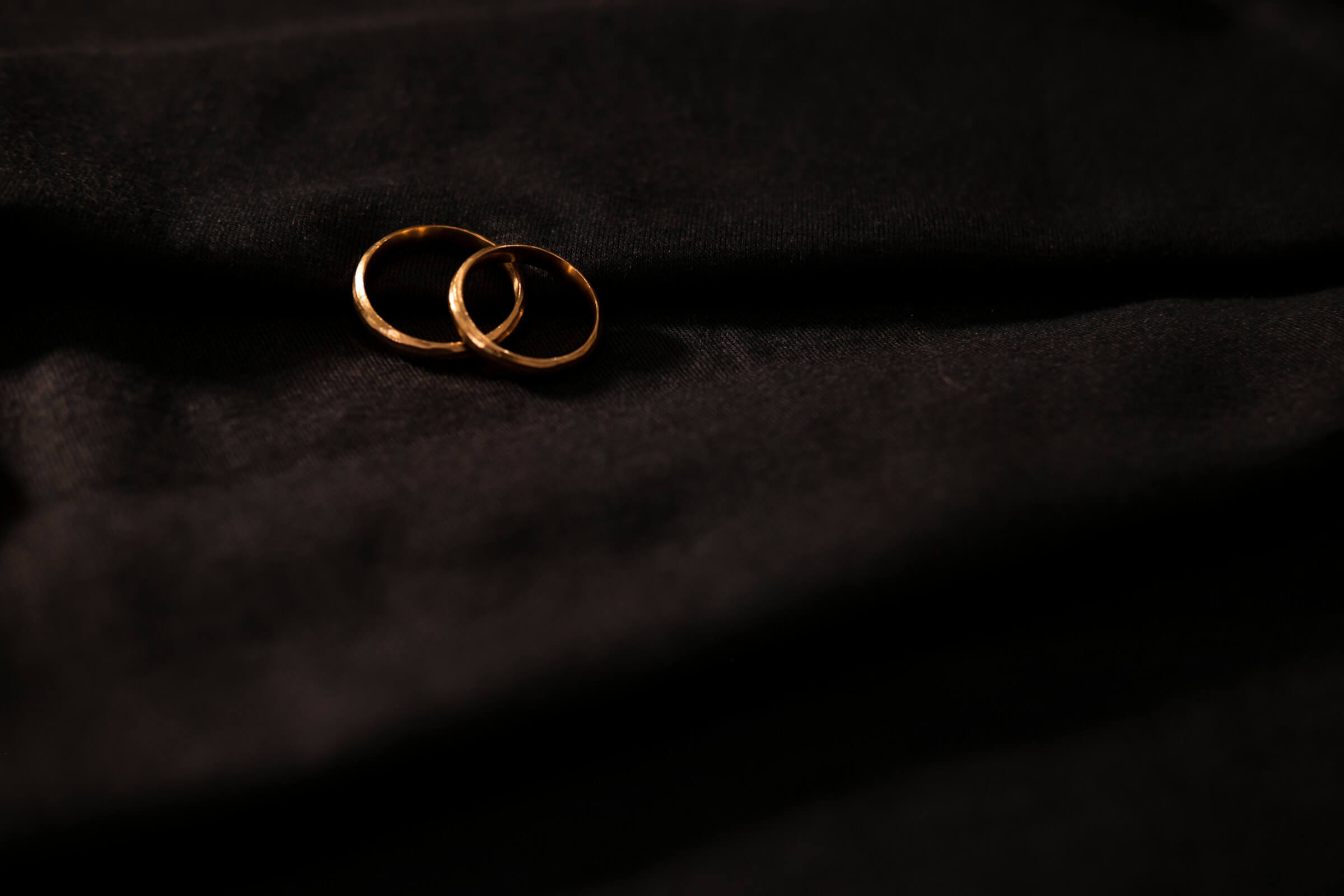
Photo by Nima Izadi on Unsplash
The ring was light, technically. Gold and diamonds don't weigh much. But my hand had started noticing it everywhere.
I kept touching it under the tablecloth like it might settle into my hand if I held still long enough. The stone kept catching on the weave of the fabric — a tiny snag, over and over. Jonathan had picked it out himself. He'd told me that twice, maybe three times. The way he said it made me want to take the ring off for a second.
Mom was in the kitchen. I could hear the pots knocking together. That sound always gets under my skin.
The ring was a half-size too big. I hadn't told Jonathan.
Aunt Rosalie had come from Bucks County, which meant a three-hour drive and the expectation that it be worth it. She was already on her second glass of wine at noon, and she kept touching my shoulder every time she walked past me, this quick grip, like she was checking I was still solid. "You look good," she said. She said it three times in twenty minutes and by the third time it had started to sound like a question.
My brother Jack was on the back porch with his phone. Through the sliding door I could see him laughing at something on the screen, that private laugh he does, head down, shoulders going. I was pretending he didn't know yet. Nobody officially knew yet, except my parents in the technical sense. Even they didn't really know. Jonathan had asked my father two months ago, and somewhere in there they had all apparently agreed I would tell people when I was ready.
Apparently today was when I was ready.
I wasn’t ready.
I wasn’t not ready either.
I used to think commitment was what happened after certainty wore off.
Not the proposal part. Not the story people told later, softened by wine and repetition. The part after. The staying. The choosing the same person again when the feeling was no longer new enough to do the work for you. It sounded adult when I believed it in the abstract. It sounded clean.
At my parents’ dining table, with my mother’s good napkins stacked beside the plates and the lamb smell already moving through the house, it felt less like belief and more like something I had rehearsed until it passed for one.
The ring shifted when I spread my fingers. Half a size. Maybe less. Enough that the stone never quite stayed where it was supposed to. If Jonathan noticed again, he would fix it. He would call the jeweler, make the appointment, ask if Thursday worked. He was good at turning discomfort into logistics.
That was one of the things I loved about him.
That was also the thing making me want to pull my hand under the table and hide it.
The ring snagged the tablecloth again. I freed it carefully and put my hand in my lap.
Jonathan noticed things quietly, which was worse than grand gestures because there was nothing to roll my eyes at.
When his mother got sick, he drove to Pittsburgh every weekend for four months without complaining, without making it a story he told at dinner parties. He just went. Packed a bag, checked the oil in his car, texted me when he got there. Once I mentioned, almost accidentally, that I’d loved a specific brand of orange juice as a kid, and two weeks later it was in his refrigerator with a note taped to it.
found it
No heart. No flourish. Just the thing itself.
I stood there holding the carton like an idiot because it hit me harder than it should have.
He had loved me well. That should have made things simpler. It didn’t.
The ring was a solitaire. Round cut, classic. Everything Jonathan chose was classical in some way — classical music when he cooked, classical furniture, a preference for films with plots that resolved. He found chaos genuinely uncomfortable in a way I used to find — I don’t know — steadying, maybe. Like standing on someone else’s balance for a minute.
I was thinking about Elise again. I hated that a little, the way she'd installed herself in my head without asking.
I'd met her six weeks ago at Jamie's thing — not a party, Jamie doesn't call them parties, a gathering, he sends actual paper invitations — and she'd been standing by the bookshelf doing what people do at parties when they don't want to talk to anyone: pretending to be interested in the books. I'd been doing the same thing. We'd stood there for a minute without talking and then she'd said, without looking at me, "He has two copies of Middlemarch and I think that's the most revealing thing about a person I've ever encountered."
And I'd laughed. An actual laugh, not a social laugh.
Sometimes she’d lose an English word mid‑sentence and just wait for it. No apology. I liked that more than I wanted to.
She had a small scar through her left eyebrow and touched it sometimes when she was thinking.
We'd talked for two hours. The party emptied around us. At some point Jamie had come over and said something and we'd both looked at him and then back at each other and he'd laughed and walked away.
I had a ring on my finger. I'd kept my left hand in my coat pocket for most of the night.
I invited her three days later in a way that let me pretend I had not invited her.
My mother had said there would be too much food. There was always too much food in that house, too many chairs pulled from somewhere, too many people sent home with foil-covered plates. I told Elise that at coffee, lightly, stupidly, like I was describing weather.
“You should come,” I said.
She looked at me over the rim of her cup.
“To your family lunch?”
“It’s not formal.”
“That sounds like something people say when it is formal.”
“It’s just food.”
I had said it with my ring hand under the table.
She waited long enough that I should have taken it back.
Then she said, “Okay.
"Sutton." Mom was at the kitchen doorway. She was holding a dish towel and she wasn't drying anything with it, just holding it. She looked at me with that face she has — not quite anxious, something more managed than anxious. "Do you want to help me with the salad?"
"Sure."
The kitchen smelled like garlic and something sweet, the lamb she'd started this morning. Mom makes lamb on significant occasions. She'd made it when Jack got into law school, when Dad turned sixty, at Christmas two years ago when my grandmother came for what turned out to be the last time.
The smell made my stomach dip, which felt unfair because it was just lamb.
She handed me the salad spinner without looking at me.
"Aunt Rosalie brought wine," she said.
"I know."
"She's been asking."
"I know, Mom."
Mom made a sound that wasn't a word and went back to the stove, doing the thing with the pot.
I pushed the salad around in the spinner. I kept thinking about something Elise had said the third time we met — coffee, just coffee, nothing, I can meet someone for coffee.
You're always tensed, she'd said. Like you're bracing.
And I'd said, What are you talking about?
Your shoulders. Right now.
I'd realized they were up around my ears and I hadn't known.
I tore a butter lettuce leaf in half by accident. Pressed it together in my palm like that would fix it.
The gathering — party felt too festive, dinner too small — had been Mom's idea, sometime after Jonathan proposed. Come Sunday, she'd said. You can tell them together.
Everyone meaning my parents, Jack, Aunt Rosalie, Dad's brother Paul and his wife Gina from Morristown. The people Mom counted as family in the official sense.
Jonathan was coming at noon.
It was eleven-forty.
I took the salad to the table. Uncle Paul was there now, apparently in from the hall while I'd been in the kitchen.
"Sutton!" he said, with too much enthusiasm. Which meant he knew. Which meant Dad had told him. Which meant everyone in this house knew except Jack, and he probably knew too.
"Hi, Paul."
"You look wonderful."
Everyone kept telling me I looked wonderful. It was making me feel like something was wrong with my face.
I went to find Jack.
He was still on the porch, still with his phone, but he put it down when I opened the sliding door. He looked at me and squinted slightly, the way he does when he's reading a situation. Sometimes I still see him as seventeen and then he opens his mouth and I have to catch up.
"You doing okay?" he said.
"Why do people keep asking me that."
"Because you look like you're about to take a test."
I sat down in the other chair. The wood was cold through my jeans, that wet October cold that gets through things. I looked at the yard, the patch of garden Mom kept going back to even though the chrysanthemums were mostly brown now.
"I'm fine," I said.
Jack picked up his phone and put it down again. "Jonathan texted me," he said. "He's excited."
"I know."
"Is that — are you okay with that?"
"Why wouldn't I be okay with that."
He shrugged. He looked at the yard. "I like Jonathan."
"Everyone likes Jonathan."
"That's not what I said."
I looked at him. He was looking at the chrysanthemums.
"I like him too," I said.
"Okay."
"I do."
"Sutton, I didn't say you didn't."
"Have you ever felt like —" I started and then stopped.
"What."
"Nothing. Never mind."
"Have I ever felt like what?"
The cold was coming up through the chair. "Like there were two versions of yourself and you didn't know which one was actually you."
Jack thought about it for a minute. "I think that's just called being a person."
"That's a cop-out."
"Maybe." He picked up his coffee mug, found it empty, and set it back down. "Or maybe the question is wrong. Why does one of them have to be more real?"
I didn't say anything.
"Who's the other version," he said.
"What."
"You said two versions. There's you as you are and there's — what."
"I didn't mean it like that."
"Okay."
He was just looking at me. But I felt the blood come up into my face anyway and turned toward the yard.
"It's nothing," I said.
"Right."
Inside, Dad laughed with Paul, loose and stupid. Mom was adjusting a vase that didn't need adjusting.
I was standing in the middle of my childhood life and getting smaller by the second.
The porch chair creaked under me. Inside, someone opened a drawer in the kitchen, then another, the old family rhythm of people looking for things in a house they had known too long. I could feel myself becoming easier to understand in their presence. Daughter. Sister. Almost-bride. All the shapes I knew how to hold because they had been handed to me before I had words for wanting anything else.
I touched the ring through my pocket.
Jonathan had noticed last week and said we should get it resized, and I’d said yes, we should, and then neither of us had done anything about it.
He arrived at 11:58. I heard the door, then my mother's voice, then his — low, warm, with that slightly formal note he always seemed to get around my parents.
I was in the hallway when he came in. He saw me and smiled, and I felt myself smile back before I meant to. That was the part that felt wrong.
He hugged me. His coat was cold from outside. He smelled like his car and the coffee he always got on the way somewhere. I pressed my face against his shoulder and stayed there a second longer than I meant to.
"You, okay?" he said into my hair.
"Yeah."
He pulled back and looked at me with that still attention of his. "You sure?"
"Yes." I touched his arm. "Come say hi to Paul."
Lunch went the way it always did here — late, crowded, slightly out of order. A tray appeared, then a bowl, then another dish ten minutes later because someone forgot the serving spoon or the mint sauce or the good salt. The house already felt overheated — too many people, too much food, everyone acting like something was about to happen.
The doorbell rang at 1:15, earlier than I expected.
For a moment I assumed Paul or Gina had come back for a pie plate or a scarf or one of the containers Mom insisted people take home. I crossed the foyer with my left hand already half-curled, like the ring had made me aware of every finger individually, and opened the door.
Jonathan’s parents stood on the porch.
Linda stepped in first, already smiling, already reaching for my hands like she knew how this moment was supposed to go. She took both of mine, warm and decisive, and kissed my cheek.
“Oh, sweetheart.”
It landed with such immediate feeling that for half a second, I didn’t know what expression to put on my face.
Richard followed with a bottle of wine tucked against his side. He hugged me — firmer than I remembered — one hand steady between my shoulder blades. He smelled like cold air and clean aftershave, the kind that clung to wool.
“You look radiant,” Linda said, pulling back to study me.
Radiant was not a word anyone had ever used for me. She said it like she was identifying something factual, like weather or height or bone structure. I heard myself say, “Thank you,” but my body answered first; I nodded, almost automatically, like I was agreeing to terms.
Mom appeared behind me with a dish towel over her shoulder. “Come in, come in,” she said, bright with hostess energy.
Linda hugged her too, and in seconds they slipped into that polished, warm, slightly over-lit conversation women fell into when they were both trying to hold the center of the same moment without visibly competing for it.
“Oh, it smells incredible.”
“You’re sweet.”
“This house is so beautiful.”
“Oh, don’t say that, it’s chaos.”
Richard handed Dad the wine. Dad shook his hand.
“You made good time.”
“Barely any traffic.”
Mom called from behind Linda, “Lamb’s almost ready.”
They all laughed — easy, synchronized — and drifted toward the living room, already falling into familiar angles and pairings.
I stayed in the doorway a second longer than I should have. The front step was empty. The air coming in was colder than the house. I closed the door and stood there with my hand still on the knob, listening to their voices carry down the hall.
At 1:32, the bell rang again.
I knew it was her before I opened the door. I didn’t know how I knew. Something tightened under my ribs, the same instinctive shift my body made before cold wind hit skin.
I opened the door.
Elise stood on the porch in a dark coat, a bottle of wine held carefully in both hands, like she knew it belonged here but wasn’t sure what the script was. Her hair was down. The cold had put color in her face. When she saw me, she smiled.
Not big. Not performative.
Recognition.
“Hi,” she said.
“You’re early,” I said.
I heard it immediately — too sharp, too bare, like I was accusing her of arriving before the emotional furniture had been arranged.
Her expression barely changed. “Traffic was nothing.”
“Right. Sorry. Come in.”
She stepped past me and caught her sleeve on the door latch. Not enough to matter. Just enough to make her stop and free it with a small, impatient tug.
I should have helped. I didn’t. I stood there with my hand on the door, watching her fix herself.
She stepped inside and the whole house felt different. Not dramatically. Just enough that I noticed.
She handed me the bottle.
“Thanks.”
She slipped off her coat in the narrow entryway. For a moment there wasn’t enough room for both of us and the coat and the bottle and the air between us. She turned slightly, and I caught the clean, sharp scent of her shampoo. My fingers tightened around the bottle.
From the living room, Linda laughed at something Dad said. I hung Elise’s coat, set the wine on the side table, and realized I was delaying.
I led her into the living room.
Everyone was in the loose pre-lunch positions people took when they knew they would be moved again soon. Dad in the armchair, one ankle on his knee. Richard near the mantel. Linda half-seated on the sofa, angled toward Mom. Jonathan coming in from the kitchen with a stack of small plates.
I cleared my throat.
“Everyone,” I said, “this is Elise.”
Mom looked up first, smile already forming. Richard turned. Linda rose slightly. Jonathan stopped in the doorway.
He saw her — and then he looked at me.
It was quick. Small. A narrowing of attention only I would catch.
Why did you invite her?
No frown. No tension.
I met his eyes for half a second.
“She was going to be alone today,” I said lightly.
The room adjusted — not warmly, not coldly, just the subtle shift of people updating the afternoon in their heads.
Linda moved first, of course she did. She stood fully and crossed to Elise with both hands extended.
“Oh, hello. I’m Linda.” She took Elise’s hand in both of hers, giving it a small, emphatic squeeze. “We’re so glad you’re here.”
“Thank you,” Elise said.
Richard lifted his chin. “Long drive?”
“About forty minutes.”
“That’s not bad.”
“No.”
Mom appeared in the kitchen doorway, wiping her hands on the towel over her shoulder. “Oh, how lovely,” she said.
“Thank you for having me.”
Dad studied her for a beat — not rude, just direct. “And what do you do, Elise?”
“Structural engineering.”
His face opened instantly. He sat forward and gestured to the sofa. “Really? What kind of projects?”
Elise sat where he indicated. “Right now, I’m working on a pedestrian bridge in Millford.”
"A bridge?"
"Yes."
Dad leaned in. “Steel?”
“Mostly.”
“What’s the challenge?”
She lifted her hands slightly, shaping the problem in the air. “The angle. The load distribution gets messy when the weight isn’t centered.”
Dad’s eyes sharpened.
“That’ll do it.”
I stayed near the doorway with a glass of water I had forgotten to drink, watching the two of them fall into real conversation — the kind where Dad stopped performing and started using what he knew.
“How far along are you?” he asked.
“Far enough that changing anything important is expensive.”
“That’s always when they start listening.”
Richard laughed.
Dad barely glanced at him. “What’s the client like?”
“Nervous,” Elise said. “Public-facing project. They want elegant and cheap and impossible.”
“Of course they do.”
“The architect keeps redrawing the approach.”
Dad groaned. “That tracks.”
Elise smiled — a little wider — and it shifted the room.
Linda drifted back toward me. “She’s lovely,” she murmured.
There was something layered in her tone I refused to examine.
I kept watching Elise talk to my father — the way he leaned forward when he was truly listening, the way she didn’t adjust herself for anyone, didn’t soften her language, didn’t brighten her edges.
Something in my chest tightened and stayed there.
Across the room, Jonathan looked at me.
Just once.
We sat down.
Fourteen people at a table built for ten. Dad added the leaves this morning, and the extra folding chairs from the garage wobble if you shift your weight wrong. The good China is out — the set Mom uses twice a year and handles like it's inherited from a more orderly version of the family. The centerpiece runs low and long through the middle of the table: brown pods, clipped branches, late‑season greens arranged to look effortless in the way effort never is.
Elise ended up across from Linda and Richard, two seats down from Jonathan. I was near the center. Jack was on my right.
Linda watches the table while Richard pours wine, her expression a blend of approval and curiosity — the kind she gets when she senses a room expanding in an interesting direction.
Jonathan passed the bread basket. His movements were smooth, practiced. He turned toward something Paul said at the far end of the table with the exact degree of interest required. He reaches for the butter without looking.
I watched him do it — the charm, the timing, the way he rotated his attention so whoever he spoke to felt briefly illuminated. And it isn't false. Today, though, maybe because Elise is here, maybe because I'm watching everyone more closely than usual, I keep catching it, like a shine I didn’t see before. The way social ease can still be a way of steering things.
Dad turns back to Elise as plates are passed and lamb is carved.
"So, how long have you been in structural engineering?"
"Since grad school," she says.
"What did you study before that?" Richard asks.
"Architecture, originally."
Dad looks genuinely surprised. "What made you switch?"
Elise doesn't answer immediately. She thinks — actually thinks — and I see the moment she chooses the true version instead of the easy one.
"Architects kept asking me what things could look like," she says. "I kept thinking about what they could hold."
Richard makes a sound that leans toward a laugh. Linda says, "You must make very patient dinner conversation."
"Only when people are interesting."
The table goes briefly quiet.
She glances at Linda, catching it a second late. "That sounded less polite than I meant it to."
Jonathan reaches for his wine.
Jack has been quiet through the bread and the first pour. He cuts into his lamb, takes a bite, then looks up at Elise.
"Where are you from originally?"
"Lisbon," she says.
"How long were you there?"
"Until I was seventeen."
"And then?"
"I left. Came back twice." She glances at her plate. "I haven't been in four years."
Jack nods once. "Do you miss it?"
There's a small pause — not evasive, just deliberate.
"I miss the light," she says. "And the hills. The way the hills and the water work together." She touches the stem of her glass. "I don't miss being seventeen."
Jack almost smiles and goes back to his food.
Linda, encouraged, says, "You must still have family there."
"My mother," Elise says. "And a cousin I like."
"A cousin you like."
"Yes."
"Not the others?"
"The others are fine."
The table laughs.
I'm watching her again — her hands when she speaks, the way she holds her fork between sentences, the economy of her movements. She's talking now about the neighborhood where she grew up, answering a question from Mom I didn't catch. She described the hills and the river with such exact authority that I felt it low in my throat, that humiliating recognition of someone speaking from a place they had actually lost. She talked about Lisbon like leaving it had cost her something and had not, somehow, made her smaller.
"I think I'll always be from there," she says, "even if I live here until I die."
I feel the sentence because I've heard it before and haven't stopped thinking about it. I grew up twenty minutes from this table, and even now I don't know if I'm from here or just near it.
"Sutton's the opposite," Jonathan says easily. "She grew up right here."
"Would you just let her talk?"
The words come out sharper than I mean them to. Jonathan turns toward me, the smile still half-formed on his face. For a second the table goes quiet.
Elise stills, one hand resting against the stem of her glass.
"I've left the East Coast," I say.
"Oh, yeah," Jonathan says. "Chicago."
"Chicago's not the East Coast."
No one says anything. Jonathan reaches for his wine.
I cut a piece of lamb and put it in my mouth.
After a moment, Elise says lightly, "Anyway — the hills in Lisbon are impossible in heels."
The moment moves on, but I see the part underneath it — the slight readjustment in Jonathan's shoulders when I don't take the conversational exit he offered, the way his fingers shift on the stem of his glass. Small things. Easy to ignore. I don't ignore them.
Rosalie, on her third glass of wine and thriving, leans toward Elise.
"Are you seeing anyone?"
The table goes quiet for one beat.
"Not at the moment," Elise says.
Mom turns to Linda with a fond, resigned expression. "She's always the last to ask."
"And the first to get an answer," Rosalie says, unbothered.
Laughter ripples through the table.
Elise smiles.
Across the table, Jonathan looks at me. I look back. For half a second, it's the old private language — the silent translation couples make in crowded rooms. Then his eyes move away.
Dad has been trying to catch my eye for the last twenty minutes — the small lift of his eyebrows that means later, or now, or are we doing this? Each time, I've looked somewhere else. I can feel the anticipation accumulating at the end of the table where Jonathan's parents sit. Linda is paying attention to silences. Richard has stopped starting new topics.
Under the table, Jonathan's hand finds mine.
Warm. Familiar. He squeezes once.
Outside the window behind Dad's head, the trees are bare. The yard sat under that flat November light that made everything look stalled.
Jonathan squeezes my hand again.
I open my mouth.
My napkin had slid halfway off my lap. I caught it before it fell and folded it once, badly, the crease crooked through the middle. Jonathan’s hand was still around mine under the table. His thumb moved over my knuckle in a small, steady rhythm, like he was calming me.
Or claiming the moment.
Or maybe I was too tired to tell the difference.
“Jonathan and I have some news.”
I heard the words leave me and enter the room, shifting its atmosphere in a way that felt almost physical — the sound changed, the air tightened, every face turned toward us.
Mom made a sound that brushed the edge of crying.
“Oh—”
Rosalie said, with immediate satisfaction, “I knew it.”
Dad reached across the table and gripped Jonathan’s shoulder hard enough that Jonathan laughed and half-turned toward him.
Jack looked up at me — fully, finally — and whatever was on his face was unreadable.
It gave me nothing I could use.
Then everyone was moving.
Chairs scraped. The table lost shape.
Mom reached me first, then Linda, then someone caught my wrist to see the ring.
Jonathan was glowing — genuinely glowing — his happiness so unguarded it felt like warmth.
He put his arm around me and I leaned into him and smiled.
The smile feels true.
Not complete.
Linda has both hands pressed together at her sternum, like she’s trying to contain something.
“Oh my God,” she says.
Richard pulls Jonathan into a hug that lasts longer than Richard’s hugs usually last.
I watch Jonathan’s face over his father’s shoulder — open, young, the particular joy of being loved by your parents in the exact way you want at the exact moment you want it.
I look away.
Elise is still seated.
Not stiff.
Not awkward.
Just still.
Mom turns toward her — the instinctive inclusion of a good hostess who remembers the guest inside the family moment.
Elise smiles.
“Congratulations.”
Simple.
Direct.
To both of us.
Jonathan hears her.
He looks at her for one second — not warm, not cold, something in between — and then turns back to his father.
I watch him turn away.
Mom takes my hand and lifts it toward the light.
“It’s beautiful,” she says.
I look at the ring because everyone is looking at it.
It catches the light exactly the way it’s designed to.
The band shifts half a millimeter on my finger.
Rosalie is already calling someone.
Paul shakes Jonathan’s hand with both of his like they’ve closed a deal.
Dad disappears into the kitchen, almost certainly for the champagne he keeps for occasions he claims not to anticipate.
And then, somehow, for a few seconds, I’m just standing there.
Not abandoned — the room is too full for that — but unoccupied.
Mom has gone to help Dad.
Jonathan is boxed in with Paul and Gina and Richard.
Linda is crying in a restrained, elegant way that probably took years to perfect.
Jack is next to me.
I don’t hear him approach.
He doesn’t say my name.
He just places his hand briefly between my shoulder blades.
Warm.
Flat.
Gone almost immediately.
That’s it.
It is enough.
It is nothing.
I don’t know which.
Dad returns with the champagne.
There’s a flurry of cabinet doors, a brief corkscrew panic that resolves itself because Mom already set the glasses out.
Someone moves the flowers from the center of the table to the kitchen counter to make space.
The vase looks slightly wrong there, displaced by celebration.
We gather again in a looser formation, glasses passed unevenly.
I end up near the corner of the table, Jonathan beside me, his arm brushing mine as he turns to each person.
Dad clears his throat.
His toast is shorter than I expect and better.
“It’s a strange thing,” he says, glass lifted but not too high, “to spend years watching your child become herself in stages and then realize, suddenly, that all those stages were leading somewhere you can actually see.”
Mom presses her lips together.
Dad continues, voice roughening.
“Watching you become—”
He stops because his voice does the thing it does when he gets too close to a feeling he prefers to manage intellectually.
“To Sutton and Jonathan,” Richard says quickly, lifting his glass.
“To Sutton and Jonathan,” the table echoes.
Glasses rise.
I raise mine.
I smile again because it’s expected and because parts of it are real.
When Dad finishes, Linda leans toward Elise across the corner of the table, her voice dropping into that warm, confidential register she uses when she’s including someone individually.
“We’re so glad you came.”
“Thank you for having me,” Elise says.
Then, after a beat, she looks toward Dad, who is still clearing his throat and glancing at the ceiling.
“He means it,” she says quietly.
“You can tell.”
Linda makes a small, involuntary sound of agreement.
“Yes.”
Jonathan is watching Elise.
Not for long.
Not obviously.
But I see it — the extra half‑second past casual attention, the slight compression at one corner of his mouth, the way he lifts his glass and drinks.
So, I drink too.
The champagne hit my tongue and suddenly I was back at that bar with Elise two weeks ago, the second time we met for drinks, which I had insisted to myself were just drinks.
The bar was on the second floor of a building that had once been something else — a bank maybe, or an insurance office — all dark wood and low ceilings and brass fixtures trying too hard to seem inevitable.
Elise was already there, reading something on her phone with the focused calm of someone who genuinely didn’t mind waiting.
“I thought I was early,” I said.
“You are. I was earlier.”
The menu had a champagne described as structurally ambitious.
“For a champagne?” I asked.
“I know,” Elise said. “I’m getting it.”
The drinks came. Elise looked down into her glass and said, “Champagne tastes like being promised something.”
I laughed softly. “Promised what?”
She said, after a second, “I don’t know. Something people only admit when they’re tired or drunk.”
That was the thing I noticed around her. I kept doing things before I could manage them into something acceptable.
We talked about bridges. Caissons. Load distribution. The work underneath a thing everyone else only admired from a distance.
“Most people look at bridges and see the span,” Elise said. “The work is all underneath.”
Later, without planning to, I said, “I used to think I’d feel different by now. Like there’d be a point where the work felt like mine.”
The sentence landed before I could dress it up.
“I don’t know why I said that,” I said. “Ignore it.”
Elise did not rescue me from the silence. She didn’t tell me I was accomplished or lucky or too hard on myself.
“I don’t think you were supposed to ignore that,” she said.
For a second, I thought I might cry.
I didn’t.
Outside, the air was cold and Elise stood with her hands in her coat pockets, looking east.
“Same time next week?” she said.
It wasn’t quite a question.
“Yes,” I said. “Probably.”
She turned one way. I turned the other.
I had walked three blocks before I noticed my hand in my pocket.
I had been turning the ring.
Standing in my parents’ dining room with a ring on my finger and Jonathan close enough to touch without trying, I heard that sentence again with awful clarity.
I am afraid.
The kitchen smelled like the lamb had been there all day, which it had — garlic and rosemary and underneath those, something sweeter, the fat that had rendered off for hours. The smell of it had moved from anticipation to memory in the course of the afternoon.
I was at the sink with a glass of water when Elise came in holding two champagne flutes. She looked at me, looked at the flutes.
"I was looking for somewhere to put these."
"There's a stack on the counter."
She set them down and then didn't leave. She looked at the window over the sink — dark now, the light outside gone while we were at the table. I could see us both in it. Not clearly. Just the shapes of us, side by side.
She turned the tap and waited for it to run cold. The pipes made a sound I hadn't thought about in years, a slight tremor in the walls. Something I'd grown up with and stopped hearing. She filled a glass. Stood there drinking it.
Through the wall came Paul’s voice, then the sound of coats being gathered, sleeves turned right side out, women making the small departure noises women make when they are not really leaving yet.
“Congratulations,” Elise said.
Quieter than she had said it at the table.
“Thank you.”
She held the glass with both hands. Her thumb moved once through the condensation.
“You look…” She stopped. “No. Never mind.”
“What?”
She gave a small shake of her head, almost annoyed with herself. “I was going to say composed, but that didn’t feel accurate.”
I looked at the window over the sink. In the dark glass, we were only shapes. My shoulder. Her hair. The bright small wound of the ring on my hand.
“How do you feel?” she asked.
“Like I should feel more settled than I do.”
Settled. The word had come out before I chose it.
Elise reached over and turned the tap closed. The dripping stopped.
“Maybe it just hasn’t caught up to you yet,” she said.
“I keep waiting to feel certain,” I said.
A pause. "Certain of what," she said.
I turned the glass in my hand. "I don't know," I said.
Outside the kitchen: footsteps, the front door, a draft that reached all the way down the hall. Mom's voice in her goodbye register. Jonathan saying something, laughing.
“I’m glad you came today,” I said.
“I almost didn’t.”
“Why?”
Her left hand rested on the counter. One finger moved slightly, tapping without sound.
“It seemed like a family thing,” she said.
“It is.”
“I know.”
The pipes clicked once in the wall. I had heard that sound my whole childhood and never thought about it until she was standing there hearing it too.
“I wanted you here,” I said.
Elise went still. Not stiff — just a quality of attention that shifted, became more deliberate.
She looked at her glass. She did not give me the gracious response. She did not rescue the sentence by making it smaller. For a moment she gave me nothing at all, and the pause sat there between us long enough to feel deliberate.
So I looked at the window.
My reflection looked normal, which felt insulting.
"Can I ask you something?" she said. "Sure."
“What did you mean the other day, when you said you felt like you’d been wearing the wrong coat for so long that you’d forgotten what it felt like to be cold?”
I remembered saying it. The bar on Clement, bad lighting, two glasses of wine. I’d been talking about something else entirely and then that had come out. I hadn’t thought she’d kept it.
“I don’t remember saying that,” I said.
“You did.”
“It was a metaphor.”
“I know.”
She looked down, then back at me, and for the first time that afternoon she seemed unsure whether she had the right to ask.
“What did you mean by it?”
Someone put music on in the other room — something low, something I didn't recognize. I set my water glass on the counter. Looked at my hands. The ring. The stone caught the overhead light the way it always did, indifferent to timing. "I think I meant," I said, and stopped. "Sometimes you make a decision," I said, "and then you keep making it until you can't tell if you're deciding or just moving."
Elise said, "Yeah." Just that. I looked at her. She was already looking at me — not with urgency, not with the particular softness people use when they want to be gentle about what they're seeing. Just looking at me directly, the way she had that first night by the bookshelf and every time after: like she knew what I meant before I did and wasn’t going to help me get there faster. Something in that made me want to say more. I didn't.
"Hey." Jonathan's voice, from the hall. He came through the doorway, his tie gone, the afternoon still easy on him. He looked at me, then at Elise, then back at me — quick, ordinary, a man finding his fiancée in the kitchen. "They're looking for you." I nodded but didn't move.
"Sutton," my mother called from the other room. I looked at the doorway. Then at the ring. I crossed toward the doorway. His hand found the small of my back as I passed — automatic, warm, his. For a second I stood there between the two rooms. "Coming," I said. I almost looked back at Elise. I didn't.
By four o'clock the gathering had loosened into smaller clusters. Paul and Gina had their coats on. Rosalie was deep in something with my mother at the table.
Dad and Jonathan were in the living room. I could hear Jonathan's voice — that measured cadence — talking about the apartment, maybe about moving, the plans we'd talked about.
He always sounded so sure. I had always found that — I had always thought I found that — steadying.
I didn't see Elise anywhere.
I went outside.
Cold. The real cold now, not the earlier damp cold, this one dry and direct.
I got my phone out of my pocket. Elise's text was still open. The article, the bridge, the line I'd read four times: Failed at its connections, not its span.
I didn't know what I wanted to say to her.
Or I did.
I put the phone away.
Behind me, through the glass, I could see Jonathan inside. Dad was laughing at something, and Jonathan’s hands were moving the way they did when he was explaining something.
He looked like he had always been going to end up in that room, inside the life we were building.
I watched him through the glass and felt it again — the old steadiness of him, the life of him.
That was real too.
The cold had moved past my ears and into my jaw. The ring shifted when I uncrossed my arms. Somewhere inside, Dad laughed again, the sound muffled by the glass and warm with it.
I stayed where I was. I hadn't brought a coat.
The garden looked worse up-close than it had through the window. The chrysanthemums were further gone than I'd thought, mostly collapsed in on themselves, that particular way flowers go when they've been cold too long.
Mom would pull them in the spring, turn the soil, try something else. She'd been doing that for years, and I didn't know if it was stubbornness or hope, or whether those were different things.
The thing about Elise was — I didn’t want to blow up my life because of her, exactly.
I had not kissed her. I had not almost kissed her. There had been no charged doorway, no hand held too long, no single scene I could isolate and condemn.
That was part of the problem.
Nothing had happened.
And still, since meeting her, my life had begun rearranging itself around the possibility of being someone else.
Not someone better. Not someone braver. Just someone less rehearsed.
She hadn’t known the other version, the managed version, the one that kept my shoulders down when I remembered to. She’d only known the version of me that laughed too fast at the Middlemarch joke, talked about failure analysis at midnight like it mattered, and forgot to watch herself.
But that was six weeks. Two bars, three coffees, and a link about a bridge.
Jonathan knew where I kept the spare key. Jonathan knew I couldn't sleep after an unresolved argument, that I needed things said aloud or I'd lie there cataloguing everything unsaid until morning. He'd learned that and adjusted. That counted too.
The crack was there before Elise — I just hadn’t looked straight at it.
I heard the door behind me.
"Hey." Jonathan stepped out without a coat too and immediately made a face at the cold. "What are you doing out here?"
"Nothing. Just—"
He looked at me for a second longer than felt comfortable, then nodded toward the door.
"Come inside. You're freezing."
I followed him in. The warmth hit hard after the cold, too sudden, too bright.
Jonathan went ahead toward the living room, saying something over his shoulder about grabbing his coat. I said I needed the bathroom and stepped down the hall.
The bathroom light was the pull-cord kind, the one that had always taken two tries. I got it on the first pull and stood for a moment in the brightness before I moved to the sink.
My face in the mirror looked fine. Pink from the cold, a little tired around the eyes, but nothing that would read as anything. I turned the cold tap until it ran properly cold and held my wrists under it. Something I'd read once or been told. I didn't remember if it worked.
I stayed in there longer than I needed to. I could hear the party through the wall — my father's voice, someone's laugh that might have been my mother's, the low register of the television someone had turned on in another room. I dried my hands on the small guest towel, the embroidered one my mother kept folded in thirds, and turned off the light.
Jonathan was in the hallway, coat already on, checking his phone. He looked up when I came out of the bathroom and slipped the phone into his pocket.
"Hey," he said.
"Hey." I still had one hand on the bathroom door.
The hallway was narrow, the kind that required one of you to turn slightly to let the other pass. He didn't move and neither did I.
"You okay?" he said.
"Yeah. Just needed a minute."
He nodded. He had that not-quite-neutral expression that was its own kind of information.
"Can I ask you something," he said.
"Sure," I said.
“Elise,” he said, still looking at me. “I didn’t know she’d be here.”
“I wasn’t sure she’d come.”
He waited.
“You two are close now.”
He said it calmly.
That was Jonathan’s way. He never raised his voice. He never cornered. He never made a scene ugly enough that I could object to the ugliness instead of answering the question.
For years I had loved that about him.
Now, in my mother’s hallway, with my engagement ring sliding loose on my finger, I could feel the other side of it. His hurt had arrived already dressed for company. Mine was still somewhere in the back room with its hair wrong and no shoes on.
If I panicked, if I wanted, if I changed my mind, I would be the mess.
Not him.
Me.
“We’re friendly,” I said. “We’ve gotten coffee a few times.”
He looked at me and waited.
"At dinner," he said. "You snapped at me."
"I know. I'm sorry. I was — I don't know. I'm feeling off today."
"You've been off all day."
"I know."
"Not just today, actually," he said carefully. "The last few weeks. I keep meaning to ask."
The sounds from the living room moved through the wall and around us.
"You're making this into something it isn't. Work has been a lot. That's all."
"I know about Millbrook," he said. "This isn't that."
"Then you know."
"Sutton." He said my name the way he did when he wanted me to stop performing. "I'm not trying to start something. I just feel like you're somewhere else lately. I can see it, but I can't get to it."
I pressed my thumb against the inside of the band without moving my hand.
“I’m right here,” I said.
"I know you are."
But he stopped there. Usually, I loved that about him. In that hallway, I wanted him either to say it or let me go.
"Is this about Elise?" he said.
"No."
"Because I watched you tonight," he said. "And every time she spoke, you were somewhere else."
"I was eating."
"Sutton."
"Nothing happened. She's easy to talk to."
He looked at me for a moment.
"I just want to know what's going on."
"Nothing's wrong."
"All right."
"Jonathan."
He looked down at the runner.
"Okay," he said. "If that's what you're telling me."
He put his hands in his coat pockets. He'd been ready to leave before this started, and now we were both standing there pretending we knew how to step back into the evening.
He leaned forward and kissed my forehead. His coat smelled like the outside, the dry cold I'd been standing in, and under it the particular smell of him that I knew without thinking about.
"Come say goodbye before I go," he said. "Your mother will want a photo."
He moved past me, one hand light on my shoulder, and went down the hall. A second later the sound of the party took him back.
I stayed where I was. The wall was cool through my sleeve when I leaned against it. From the living room, my father laughed again.
I pushed off the wall.
I straightened my sleeve.
In the mirror at the end of the hall, I caught myself for half a second.
I looked fine.
That was the worst part. Nothing about me had changed enough to warn anyone. My hair was still pinned badly at the back. My face was still pink from the cold. The ring was still beautiful. The ring still did exactly what it had been made to do.
From the living room, my mother called my name.
There was laughter after it, bright and expectant.
Jonathan said something I couldn’t hear, and everyone laughed again.
Everyone in the other room kept moving as if the future had already been arranged and all that remained was dessert, photographs, coats, the ordinary machinery of people leaving happy.
I looked down at my hand.
The ring had slipped again, the stone turned slightly off-center.
Not far.
Just enough.
I touched the stone with my thumb and started to turn it back into place.
Then I stopped.
For once, I let it sit crooked.
My mother called me again.
“Coming,” I said.
But I didn’t move yet.
I stood there in the hallway, watching the ring catch the light wrong.
Jonathan had said half sizes were easy. Five minutes at the jeweler, maybe ten. A small adjustment. Nothing dramatic. The kind of problem adults solved before dinner and forgot by the weekend.
The room waited.
So did the ring.
Loose enough to be corrected. Loose enough not to be.
The relief came very small, and not kindly: not because it was wrong, exactly, but because it had never once stayed where everyone else kept putting it.
Then I opened the door and went back into the room.