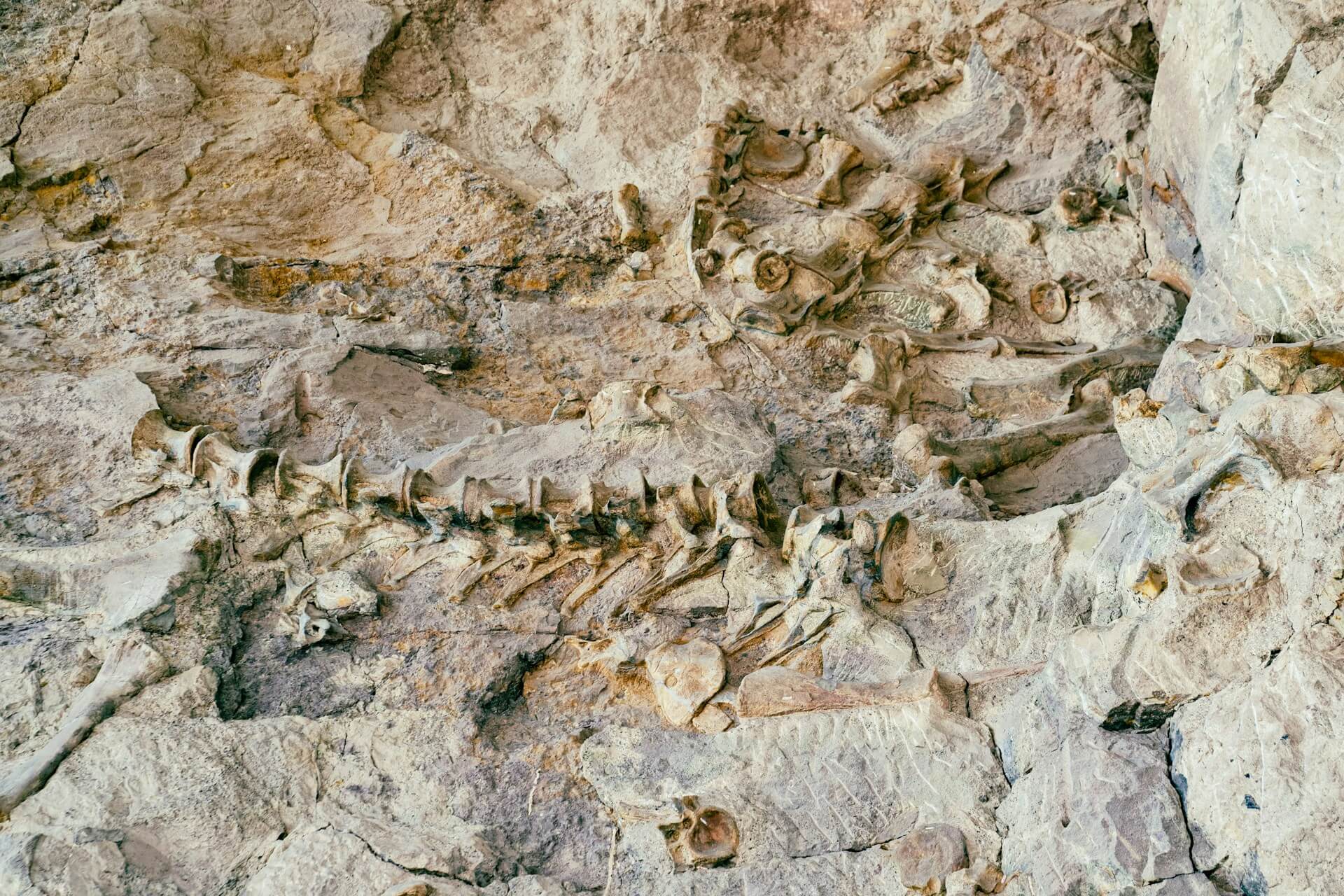
Photo by Steve Wrzeszczynski on Unsplash
Jesse hadn’t been home in fourteen years. He left the night Pat died and hadn’t spoken to his younger brother since. That is until about three weeks ago when Aaron called and asked him to visit. He even bought his ticket.
Jesse was plugged up. He’d broken his nose at eighteen and let it mend itself crooked; he was prone to sinus troubles ever since. Flying was an issue, pain and difficulty hearing would plague him for hours or even days after, until a sudden and shocking pop relieved him. It never helped, but Jesse cupped at his ear with his left hand to create suction anyway.
The dry air scoured his nose. He knew he hailed from high desert, but when he’d lived there it never felt that way to him. Now, after years of humid North Carolina, he couldn’t believe he’d grown in a place so parched it felt dead.
A green jeep rolled up to the curb, the passenger window slid down.
Where Jesse was dark, Aaron was light. Jesse was thick hipped and heavy browed. Aaron was lean and bright, with yellow hair that went white in the summer. Aaron, beloved by everyone. And Jesse, an eternal designated driver.
Aaron leaned forward, grinned his famous grin. “Boy, do you look old.”
Jesse hiked his bag higher up on his shoulder. “So do you.” Jesse looked around the crowded pick-up area.
Did they recognize the Boyle brothers? Jesse was nervous. In big crowds, he always wondered if someone around him had ever killed somebody. Had ever done something very bad and gotten away with it.
“Well?” Aaron said. “Lemme take you back to the ranch.” Jesse hopped in the car.
Aaron shifted gears, pulling away from the airport and onto the highway. Out the windshield the landscape looked the same. The distant formation, that carved out the edge of the sky, sandy yellow, red, and green. The prairie newly freckled with storage units, apartment complexes, and billboards. Aaron pointed to one that said, “Get Ready for a Roaring Adventure at Dino-World Exit 310.”
“Things have changed, Jesse, bet you won’t even recognize the place.” His famous grin, a pearly gleam. Aaron was a small sensation when the park first opened. A handsome, telegenic, cowboy type, with big dreams and a tragic childhood. People ate it up. A thousand miles away, on the small TV in the corner of the bar, Jesse watched his brother interviewed about Dino-World. A customer had asked him to switch it to the game, and he did.
Jesse cracked the window. He felt sick to his stomach. “All right,” he said. “What do you want, Aaron?”
“I wanted to see my brother,” Aaron said, a grim flatness to his voice, like Jesse’d hurt him by asking. As if.
“We don’t talk, Aaron. We haven’t talked since Pat. So.” Jesse shifted uncomfortably in the seat. “What’s this about?”
Aaron laughed harshly. “I mean, haven’t you wanted to see it?” Aaron asked, looking out at the road.
“See what?”
“Dino-World, I mean, it was our dream.”
“It wasn’t my dream, Aaron.”
Aaron fell silent, frowned. He wouldn’t look at Jesse.
When they were kids, and Aaron would pull his cold shoulder routine, it would get to Jesse. He’d do anything to make his brother smile, making up for whatever slight had hurt him. He was always trying to give Aaron what he wanted, but Jesse was different now. He stared out the window and kept his mouth shut and let Aaron drive him home. He knew Aaron would take what he wanted anyway.
Aaron resembled their mother with his blue eyes and yellow hair. Jesse was only twelve when she died. He didn’t remember it well. Those years got all mixed up in his memory. He didn’t do himself any favors either, the way he tended to twist things around, edit them sweeter, so he could sleep at night.
He did remember the last real conversation he’d had with her. Before her mind started to lose clarity and become strange and silent.
He’d lain with her on a quilt she’d made from all their baby clothes. Jesse remembered one particular shirt as the softest, so he’d always rest his cheek there. It was spring and a breeze filtered through the curtains in her room, which always smelled like flowers.
“Jesse,” she’d said, patting his head, the way moms do. “I want you to make sure that your brother is happy. If something happens to me. You’ve got to look after him, make sure he does the right thing.”
Jesse had always taken things too seriously; his mother had known this. When he was just a baby, his brown eyes seemed tinged with a permanent melancholy, an acquaintance with grief baked somehow into his soul. She comforted Jesse, told him some people simply felt gravity a little more than everyone else, were burdened with the true weight of each day. She said his worry proved him good.
Their nearest living relative was Great Uncle Pat. A notorious drunk, deaf in one ear, who they saw once a year because their mother felt obliged to “check in on his health” even though he was never nice to her. Maybe because Aaron reminded his mother of herself, her own tragic childhood, and the years she’d spent on the ranch, she worried for how Aaron would grow there. Maybe she sensed, even then, that Aaron was capable of cruelties, and Pat would feed those instincts.
“You’ve seen the ranch, Jesse,” she’d said. They watched the curtain flutter. “It whispers to you. Sometimes it says good things, and sometimes it says bad things.” At this Jesse looked up at her. He was nervous. But she shook her head. “I don’t mean to scare you, honey. It’s not evil, it’s just all that space, you’ll see. All that space and all that time, crunched together under your feet. Uncle Pat, he hears only the bad. And it’s made him a lonely, sad fool. But he didn’t have a chance, he didn’t have a brother, like you. I think you can be happy there. As long as you look out for your brother.”
After she died, Aaron and Jesse arrived on Uncle Pat’s doorstep. He set them up with a couple of cots.
When Pat was just drunk enough, usually around twilight, as the sun dipped low and the mountains were briefly purple, he’d fill their heads with tales of buried treasure, riches beyond belief, lost to time somewhere in the dusty crust of land he called his ranch. He was always on that porch, rocking away, his hunting rifle leaned next to him. On hot summer days, when the boys weren’t in school, he’d let them shoot beer bottles off stumps, or show them how to frighten the prairie dogs out of their holes.
The surrounding ranches raised some cattle, or had a few pump jacks, far in the horizon, glinting in the sun as they lazily drew oil. Pat let his ranch run to seed. Filled it with junk, filled their heads with nonsense, filled his gut with booze.
Jesse got his brother out of the house whenever he could. Disgusted by the sight of Pat’s red nose, his yellow eyes and teeth. Pat was rough in the mornings, mean, so inspired by Pat’s stories, the boys ranged the land, hunting for salamanders, bleached deer skulls, and the occasional good trash, such as old coke bottles.
This Jesse loved. He had a knack for fossils. Something about the dry ground, the way sand would slither over the surface, glittering. He could hear it whispering to him, like his mom predicted. Every time they went out it seemed, to Aaron at least, Jesse stumbled upon some neat old fossil. Clamshell casts, invertebrate traces, hunks of petrified wood, all of it wedged in the popcorn mud.
There was a kind of freedom in his grief, the worst thing had already happened. Jesse felt safe at the ranch, a sparse, shadowless, moon world, where nothing bad could hide.
“Here it comes,” Aaron said, nudging Jesse with his elbow as he drove. In the distance Jesse spotted the ranch, the orange shelf of rock that held his childhood like a dusty toy.
What used to be a desolate stretch of road was now populated with gas stations and resort style motels with pools. “See that motel there?” Aaron pointed at a building with a red tile roof. “Layla’s inn.”
“No shit?” Jesse’s stomach churned. He badly needed his ear to pop. A few minutes of silence passed. “How is Layla?” Jesse tried to sound casual. Layla, his first love, first everything. He left without saying goodbye to her. She was one of the many memories he edited.
“She’s doing great actually,” Aaron trailed off.
“What?” Jesse could tell there was something he wasn’t saying. He turned toward Aaron, tried to get a look at his eyes. “What is it? Did she marry some asshole from high school or something? Tell me.”
“Well, that’s the thing, actually,” Aaron said. “We’re kind of together, Layla and me.”
Jesse was stunned, he never imagined Layla would stick around the area, let alone that she’d end up with Aaron. He had a hard time picturing it because when he conjured Layla, she was eighteen years old, and thought of Aaron as Jesse’s bratty little brother.
Jesse turned back to the road. They were there.
Aaron rolled down his window all the way. There was a little guard station on the side of the drive. A teenage girl wearing a bright green Dino-World T-shirt came up to the window. “Oh, hi Mr. Boyle,” she said when she saw Aaron. He smiled and waved and drove on through.
“Free admission,” he joked.
“How long?” Jesse asked, his throat sore. Maybe he was coming down with something.
“Me and Layla?” Aaron asked as they followed the winding road up to the house. “Not long, a year or so.”
“You flew me out here to tell me this?”
“Course not,” Aaron sputtered. “That’s just one of the many things that you don’t know, because we haven’t talked, and you should know. I want you to know.”
Jesse couldn’t figure out Aaron’s angle; he knew there was one, but they parked in front of the ranch and Jesse lost his train of thought, lost his bearings entirely. Suddenly, he was seventeen again, and Pat was on the porch, beer can lose in his hand, dangling by his side, his cowboy lean. Pat was hollering at him over some stupid goddamn thing. And Jesse was standing there, taking it, and the sun had set, and it was the strange hot-cold it got at night in the late summer.
“Jesus, how can you stand it,” Jesse blurted.
“It’s different now, Jess,” Aaron said. Neither of them had moved to leave the car. “That’s what I’m trying to tell you.”
Jesse watched the dark windows of the ranch, which Aaron had certainly redone, a fresh coat of paint, a new roof. The front door opened. Jesse tensed, expecting Pat to have somehow risen from the dead and walk through the door. Instead, it was Layla. She held her hand up to shield her eyes from the sun. Layla cocked her head to the side, wondering why they were sitting in the car. A brown lab trotted out of the house, licked Layla’s knee, and started barking. Aaron got out of the car and Jesse followed.
“Dave called. He wants you at site four, urgent,” Layla said to Aaron, her eyes on Jesse, who looked behind her, past the ranch, to the west rim of the canyon. “Welcome home, Jess.”
“You hang here. I’ll be back soon. Make yourself at home. We’ll talk later. Okay?” Aaron said.
The dog came over and sniffed Jesse’s hand. It had green eyes. “Okay,” Jesse rubbed the dog’s head. He looked at the collar, his name was Tank.
Aaron pulled away in the jeep, leaving a cloud of dust to settle. Jesse watched him go. He didn’t want to face Layla.
“Tank, in!” Layla commanded. The dog took off back to the house. “Let’s have a beer, Jesse.”
They settled on the front porch. Her hair was curly, tied up in a ponytail. He couldn’t tell what was different, all the small changes had added up. Jesse had the strange experience of seeing teenage Layla, slipping into this Layla’s face and voice. Was she experiencing the same thing about him?
Layla’s folks were doing all right, sold the store about six years back, moved to Florida. They hated it. She opened the inn three years ago. It was doing well. “There’s a good tourist crowd these days, because of the park,” she said. “Better than everyone either working on a ranch or at the Walmart.” Things were different now; you didn’t have to drive an hour and a half to go to the movies. “Aaron and I reconnected when I remodeled the hotel. Boring, life stuff.” Layla shrugged. “What about you, what have you been doing all this time?”
Jesse told Layla about being a river guide and bartender. He told her about the Smoky Mountains and the wet heat and all that mist. He told her how it wasn’t so different, another town where people made money on the land, on other people’s childhood experiences.
“Aaron’s done well for the town. It means something, I know you might not see it. But it’s good, all of this,” she gestured broadly with her green bottle.
Jesse wondered if that made up for it in the end. If things got measured, weighing scales and feathers and hearts, all that stuff. Or if one bad thing was it, and the good things exist to help you swallow down the bad.
“You look great, Layla,” Jesse said. She smiled.
“You do too, I like the beard,” she said. She looked to the right, at the highway. Jesse stared at the foothills, to his left. “What happened, Jesse?” she asked, quietly. “Why did you leave like that?”
Jesse didn’t say anything, he rolled the glass bottle between his palms, watching the sudsy beer swirl. He felt disconnected from his legs, lightheaded, he wished his ears would pop.
“I kept waiting, you know? I thought you’d call, or show up on my back porch one day, that whole first year, I really thought you would. You hurt me.”
If Layla was asking Jesse this, then she didn’t know what had really happened to Pat. After all these years, Aaron hadn’t told her, and if he hadn’t told Layla, he hadn’t told anyone. But Layla wasn’t a fool, she must have known that something bad happened the night he left.
Jesse looked at Layla. “I know.” Jesse said. He wanted to tell her how he’d hurt himself, how he thought of her every day, until she became less of a person—a token maybe, a prayer, or really, an unhealed wound, like his crooked nose. He thought about telling her that by leaving the way he did, he made a new existence for himself, born fresh somewhere new, without the weight of his past or his brother, he could be himself for once, just Jesse. And didn’t he deserve that?
He scanned the horizon, despite what Aaron said about it being different, it felt exactly the same.
“Sorry doesn’t cut it, Layla,” he said finally. “But I am sorry. You couldn’t ever know how much.”
She held out her hand, looked away, and rested her elbow on the arm of the chair, her pale lined palm upturned as if ready to receive change. Jesse put his hand on hers. “It’s okay,” Layla said.
They were quiet for a moment, their hands warming to each other. Then she pulled away.
“So, you and Aaron, huh?” Jesse asked. She squinted at him a little, and he smirked. “I think it’s sweet.”
“You Boyles.” Layla shook her head, then looked out at the horizon. “It’s been really good, Jesse. I mean, we’re very happy. I guess it was how things were always going to work out.”
“What’s he want with me?” Jesse asked. “Do you know?”
“He hasn’t said?”
“Nope,” Jesse said. He took a big swig of his beer.
“What the hell did you talk about on the ride in?” Layla muttered. She leaned forward in her chair, resting her arms on her thighs. Jesse leaned forward too. “It’s not my place.”
Jesse leaned back in his chair; he had a feeling it wasn’t Aaron at all that had orchestrated this little trip down memory lane. Layla’s fingerprints were all over it.
“You sure?” Jesse quipped into his beer bottle.
“Fine,” Layla rolled her eyes. “It’s the park. We get less visitors every summer. The problem is it’s not a place you keep going back to. Unless Aaron can find another site, he’ll have to sell one of the fossils to keep the ranch, let alone the whole operation.”
“I’m sorry to hear it,” Jesse said. Despite his feelings for Aaron, he knew the town had come to depend on the tourists that visited the park, he knew Layla’s inn certainly depended on it. “But what can I do? I don’t have any money.” Layla looked Jesse in the eyes. She squinted, then huffed. “What?” he asked.
“Where are they?” Layla asked. Her voice had changed. Jesse leaned forward. It was clear they were no longer old friends catching up. She stood up and rigidly walked across the porch, which wrapped around the side of the house. He knew from there she could see the old barn, where Pat had kept Misty, their donkey, and an ancient horse named Jack who died when Jesse was fifteen. And beyond that, rising like a red sun, the west rim of the canyon.
“Where’s what?” Jesse asked, he glugged the last of his beer and put the bottle on the porch rail, imagined shooting it, the green shards exploding. He joined Layla where she leaned on a post. The sun was high, but not hot, as it was still early spring. There were no shadows.
“I remember, before you left, you’d found something.”
Jesse felt a catch in his throat, dust or something. He coughed into his elbow. His ears hurt. “I don’t know what you mean,” he said finally.
“You never told me. I just, I knew you, back then. I knew what you were like when you’d found something. I remember when you found the first set, you know, the first bones. And I could tell, about a week before you split, you’d found some more, didn’t you?” Jesse didn’t say anything, spit some phlegm over the rail. “I never told Aaron,” Layla said. “And you know, he found a lot of specimens, even some footprints. People love it. School field trips, and kids from the east coast on summer vacation, pale as hell, geeking out over the bones. It’s a special place, you always knew. Now other people get to appreciate it.”
“I didn’t find anything, Layla.”
She crossed her arms and faced him. She had a way of standing proud, defiant. Jesse remembered her on the school playground, standing up to bullies. “If you wanna see this place shut down, and see all of us lose everything, fine,” she said. “I don’t know what happened between you two after Pat died, bury it. A good peace offering would be the bones.”
“There are no bones,” Jesse repeated.
“Can’t you just do something for him? For your brother?”
“I’ve done enough for him.”
She shook her head, looked at her watch and started walking away; her car was parked in back. Jesse couldn’t decide if she actually knew about the fossils he’d found in the west rim, or if she was bluffing.
“Look, I gotta get back to the inn. Tell Aaron I’ll see him later.” She turned and walked backwards, squinting in the sun. “Think about it, will you?”
“Yeah.” Jesse said as she turned away. He pulled another beer from the six pack and sat down.
The night Jesse found the first skeleton, he’d been drinking beers with Layla and Danny Vanden, and Mitch Greene. They’d sat around a fire on petrified wood stumps, burning scraps of sagebrush with a zippo lighter. Layla had pissed him off that night, flirting with Mitch. Jesse stomped off to take a piss, wandering far. He didn’t want to hear their chatter. He wanted to be alone with the ground and the sky. It was a full moon. A strawberry moon.
After walking some, he found himself on a short ridge, wanting to piss off the side of the cliff. He stumbled forward and nearly tripped on a cedar root. Just imagining himself over the edge, body sprawled and splayed, like a dead bird on the highway, had him hiking down the side. scrabbling over loose rocks. The ground was softer at the bottom, popcorned and rough.
Jesse knew this dirt was fossil ground. He waited for clouds to pass over the moon, listened to the wind, the shush of the sand. Then he saw the gentle white streak in the earth. He pressed the tip of a finger to it, and traced a line, exposing white surface curved like a whale bone, twelve feet long. Jesse laughed, forgetting about his drunk friends and thinking of making his little brother happy, he headed home. When he got to the ranch, he snuck through his bedroom window to avoid Pat, foot tearing the blind in two.
Jesse led Aaron and Pat out to the fossil the next morning. The amazement in his little brother’s eyes was intoxicating. But Jesse soon realized he didn’t like how Aaron was about bones. Every day Aaron dragged Jesse around the property, not to play, but in search of more. Aaron never had a knack for finding them. Jesse was the one who saw them first. It drove Aaron crazy.
Pat didn’t like them looking for bones. The hypothetical treasure hunts were fine, but the idea that they’d actually found something agitated him, and he’d started to resent the boys. Jesse couldn’t understand why. But then again, Jesse never understood Pat’s moods, which moved through him swiftly and violently.
Jesse finished his beer and stalked off from the porch. He felt the past rising up around him, all those ghosts. That’s the problem with starting over, he’d ignored so much, swallowed his own version of things for so long, being back disrupted the small peace he’d found.
Jesse walked toward the west rim, switchbacks leading him up, the ranch house getting smaller and smaller. When he was halfway up, it was as if he could see Pat’s worn boots sticking into the sun from the shaded porch. He was always there, a drunk gargoyle, guarding the house. Jesse recalled the day of Pat’s death, when Jesse’d come back from a hike and Pat was standing on the porch with his shirt off, a bottle of whiskey loose in his hand. Pat rubbed his white-haired belly and spit.
“What the hell are you doing here?” Pat had said to him, his eyes were glazed and far-off. It reminded Jesse of his mother, when she was close to death, looking right past him, to someone not there. “I told you never to come back here.”
“Pat?” Jesse had asked. “It’s me, Jesse, what’s the matter with you, old man?”
“You’ve done enough here, practically left me for dead,” Pat muttered.
Jesse approached the house, dropped his gear on the ground. Pat squinted at him. “Pat?”
“Well? Did you find it?” Jesse remembered getting scared then, how did Pat know? Jesse had found another fossil, but he hadn’t told anyone about it, wanted to keep it to himself. “All that money,” Pat muttered; he staggered off the porch, and stood in front of Jesse. Poked him in the chest with a gnarled finger. Pat’s nails were ridged and brown. Jesse shoved Pat’s hand, and Pat smacked him across the face. “You lost it, you lost it all.”
“What the hell are you talking about?” Jesse asked. He rubbed his cheek where Pat hit him. Pat shouldered Jesse’s chest and stomped away. His pants were falling down. He dropped the bottle of whiskey and stumbled, falling face first into the dirt. “Crazy old man.”
Jesse hauled Pat up and dragged him back to the porch steps, set him down. Pat seemed to recognize him then. He nodded a little, wavered back and forth. He patted Jesse’s arm feebly. “We lost all that money,” Pat said.
“Who did? What money?”
“Sam and me. We lost it all. We stole it and then we lost it, somewhere out there. I never found it. Sam thought I double-crossed him. Beat me so bad, I lost my hearing,” Pat slapped the side of his head, his bad ear. “They didn’t draft me. It was always gone. I didn’t have it. We lost it. I spent so much time, trying to find it. I looked everywhere.” Pat spit on the ground. He looked like he was going to cry.
“Who is Sam?” Jesse asked.
“He’s dead. He got his guts blown out in some fuckin’ jungle.” Pat sniffed. “I guess he was my friend.”
“What the hell are you talking about?”
Pat looked around himself, saw Jesse and squinted, eyes clearing. “Those fossils you found, they’re worth something, you know. I’m selling them. I’m giving them up. People from Utah will come and buy them, haul them out of the ground for some museum. I called some folks. Million dollars probably. It’s what I’m owed.”
Jesse shoved him. Pat’s shoulder felt frail, weak. Jesse realized he didn’t actually know how old Pat was. He stood, blocking the sun from Pat’s eyes. Pat looked up at him pathetically, his yellow eyes slipping and sliding all over, unable to focus. Jesse didn’t take him seriously.
“Finders keepers, Pat. The bones are mine.”
Pat laughed—long, wet, and breathless. “Sure, kid. Finders keepers.”
Jesse’s blood pounded in his plugged ears as he reached the crest of the canyon, his breath in short gasps. It had been a long time. High up, he could see black snakes of road swirling out from the ranch house. Small green carts spirited people around, stopping in front of half-moon shaped sites. Dots of tourists in floppy sun hats and capri pants huddled around information signs explaining the fossils perfectly articulated in the soil, as they had been for millennia. It was what made Dino-World different from other museums or theme parks.
People in green shirts stood on little boxes and gesticulated to the small crowds, pointing at the mountain range, most likely explaining the geology, the strata of time that made up the ground. Jesse closed his eyes. He let the hard red rock morph beneath his feet, let the earth work, no more popcorn dirt, no more crusty, thin surface. Millions of years ago this ground was lush, fertile mud, thick with ferns and enormous trees coated in vines, a canopy of fat leaves gave shade. What this place used to be— frogs and salamanders, and dinosaurs, great beasts, riches beyond belief.
Jesse opened his eyes, Aaron’s jeep was on the move, back to the ranch. He’d spot Jesse up on the ridge, if he hadn’t already. Jesse started down the other side of the canyon, on a less used deer path; clearly no one had excavated here, not yet.
The night of Pat’s confused confession Jesse told Aaron what had happened, thinking they’d laugh Pat off. They’d roll their eyes at the drunken old man. Instead of laughing Aaron grabbed Jesse by the shoulders, shook him. “What are we going to do about it then?” he said harshly. He was fifteen then but he seemed older, determined beyond his years.
“Nothing,” Jesse said. “He won’t go through with it, I’m telling you, he was out of it. Maybe the geezer finally had a stroke. And if he does sell the fossil, I mean, would it be so bad? If it went to a museum? If Pat had some money maybe he’d kick it our way when he dies.”
“As if that old bastard would give us a cent.” Aaron scoffed. “We’ve got to take it.”
“Take it?” Jesse was incredulous. He shouldn’t have said anything to Aaron. He was sick of hunting for bones, sick of tramping around the ranch, sick of pulling things out of the ground, disrupting graves. That’s why he didn’t tell Aaron about the new fossils he’d found over on the west rim. He didn’t want to be like Pat, bitter, greedy, wishing for his lost fortune. Besides, he’d gotten a scholarship. He was supposed to go to college in the city two hours north. He was supposed to get the hell out of there in August.
“Jesse!” Jesse heard Aaron’s distant voice, on the other side of the canyon. The dog barked. Jesse kept walking, carefully placing his feet, mindful of the roots. There were areas where the path had fallen away, and he had to backtrack to find a new route down, he was going into the canyon. The sun was past noon now, casting him into shadow. The rocks were cold.
Why had he come back? The truth of it, what he couldn’t edit away, was that he’d do anything for Aaron; always had, always would. That’s why, all those years ago, when Aaron begged, Jesse snuck with him, to the first site, where he’d found that skeleton under the strawberry moon, and he agreed to help Aaron steal the bones.
Pat would get the most money if the skeleton was fully articulated, in the same position as it had always been for millions of years. If Aaron and Jesse could steal one of the bones, pull it out of the ground, maybe they could ransom Pat somehow. It was a stupid plan, Jesse knew. But he knew he was leaving for college soon, abandoning his brother with Pat, something he swore he’d never do.
They’d brought the donkey, Misty, laden with tools, to the first site. Excavating a whole skeleton is less about digging than it is about scraping. They started where the bone met the dirt and chipped away layers. Their knees ached, and their necks cracked. Their hands blistered then bled. They found the bones were all larger than they expected, longer and wider. They went to opposite sides of the skeleton and worked their way to the middle.
About four hours in, they realized it was too big a job; they wouldn’t be able to steal it. They probably wouldn’t be able to get it out of the ground at all. Regardless, they continued, thrilled by the idea the whole thing exposed in moonlight. More and more of the pale white appeared, as if on its own fruition, as if it wanted to show itself all along. Jesse and Aaron were of one mind, working in tandem, somehow communicating with each other, with the ground, the fossil, the moon.
The unmistakable sound of a beer can clunking against the bones pierced the silence between their heads. They looked up. Backlit against the light of the moon was Pat, his face obscured by shadow but certainly looking down at them. “And what the hell do you think you’re doing?” he’d said. Aaron and Jesse backed away from the bones and dropped their trowels, as more of Pat’s body came into view, they could see what he held dangling by his side, his hunting rifle. “Those belong to me,” Pat said. “They’re gonna make me a truck load of money.”
“We found them!” Aaron shouted. “They’re ours.”
Pat pointed his gun at the two of them, “Get your asses up here.”
Aaron and Jesse started to climb. “Jesse, what are we gonna do?” Aaron hissed.
“He’s drunk, so we’re not gonna piss him off.”
When they pulled themselves onto the shelf Pat staggered back, gun still aimed at their chests. Jesse and Aaron moved behind the donkey. “And just what is your plan boys?” Pat slurred. He held the gun up, but barely; it rested in the crook of his arm, his wrist weak, the barrel wavering between them.
“Put the gun down, old man,” Jesse said.
“You’re tryna sour my game,” Pat said. “I won’t have it. I won’t have you taking any more money from me. I never double-crossed you, you bastard, you had it all along.”
“What’s he talking about?” Aaron said to Jesse. Jesse just shook his head. Pat was still all mixed up. Time collapsed on him, again; no telling between ancient history and the present. All his wounds were open to the boys—his drooping skin, drooping eyes, drooping gun. A man held up only by his own stubborn spine.
“Pat, look at where you are, drop the gun. It’s us. It’s Jesse and Aaron.” Pat wavered but didn’t move. “So, we were trying to take the bones, we give, we’re done,” Jesse said, and raised his hands in surrender.
“No!” Aaron said. He started toward Pat.
“Aaron!” Jesse called out. But he could tell by the shape of Aaron’s shoulders, his bunched-up fists, that he was seeing red and couldn’t be reasoned with. Aaron could get like that, so stuck and stubborn he was unreachable, and angry.
“Stay away from me!” Pat slurred at Aaron. But Aaron just kept moving at him, backing him against the cliffs edge. When he was close enough, he grabbed the barrel of Pat’s gun and turned it toward the ground. Pat struggled against him but Aaron was stronger, steadier, and sober.
“The bones are mine,” Aaron said. “Don’t fuck with us, Pat. We all know you’d be plucked through by crows if it weren’t for Mom’s insurance money; I don’t wanna hear shit about us taking from you.”
Aaron shook the gun, and Pat stumbled, looking behind him at the drop. “Jesse! Get a hold of your maniac brother!” Pat called out.
“You leave those bones to us. They’re mine. I found them.” Aaron grabbed Pat by the shoulder.
“I’m warning you, boy, let me go.”
Pat was too proud to relent. He struggled against Aaron. But Aaron had him locked in place, pushed him closer to the edge.
“Aaron, let him go!” Jesse called. He stepped closer to their fight, panic rising in his chest. The wind had changed and picked up, blowing dust into his eyes.
“They’re mine. Mine and my brother’s,” Aaron said hoarsely.
Jesse grabbed Aaron’s back, tried to pull him away from Pat, or pull them both away from the edge. But in his rush, he knocked the gun from Aaron’s grip, Pat swung it wildly, slamming it into Jesse’s face, and then firing into the distance. Pat slipped from Aaron’s grip and stumbled on the same cedar root Jesse had when he’d first found the bones, falling backward over the edge, landing with a sickening thud; the gun cracked against the skeleton in the ground. Jesse remembered praying. He prayed Pat would say something; moan, or curse, or shout. But Pat was dead.
Jesse and Aaron looked at each other on the edge of the cliff, terrified to peek below. If they could avoid witnessing what they’d done, maybe they hadn’t done it. Jesse realized what he must do. He’d tell the cops what happened, he’d face the consequences. “We’ve got to call an ambulance, we’ve got to call the cops,” Jesse yelled, leaping to his feet, and starting toward Pat’s ranch.
“Wait,” Aaron grabbed his arm. “We—we can’t.”
“What the hell are you talking about? Why did you do that Aaron? Why wouldn’t you let him go?”
Aaron shook his head. His mouth dropped open, slack-jawed. “If we go to the police now, they’ll know we had to do with it, look at your face! Your nose is broken. Look at—oh god,”
Jesse followed Aaron’s eyes to Misty, the bullet that had missed them pierced her neck. The ground around her was a lake of dark blood, matting her fur, seeping into the dirt.
“We’ve got to clean this up.”
“I don’t even know you.” Jesse looked at his brother in the moonlight, his light eyes wide. He watched him go to the donkey, untie their tools from her. Jesse’s hands were shaking; he felt like he might throw up. Pat was down there, his body.
“You call 911,” Aaron said. “I’m taking this stuff out back. Then you get the hell out of here, they can’t see your face. If they do, they’ll know. Tell them the donkey scared him. Tell them she got loose and spooked him, and he shot her on accident and fell off the cliff. They’ll believe you. But tell them you’re me, then get the hell out of here.”
“Aaron, we pushed him,” Jesse said helplessly. But his feet were already moving toward the ranch, his mind was already accepting Aaron’s story.
“He was gonna kill us, Jesse,” Aaron said.
Jesse shook his head, more to clear it than anything. “He wasn’t, Aaron—”
“He was,” Aaron held stubborn. “I could tell.”
Jesse went over to Aaron, pressed his hands to the side of his brother’s head, Aaron’s feathery hair beneath his dirty thumbs. Aaron’s eyes were wide but clear. Jesse cried. “You stupid, stubborn ass. He wasn’t going to kill us! What were you thinking?”
Jesse heaved a sob which sent a wave of pain through his nose. “Aaron, if this doesn’t work, tell them I did it.” Jesse thought of their mother, his promise. “Tell them it was me. Leave yourself out of it.”
“It’s going to work,” Aaron pushed Jesse away. “Don’t get your blood on me. Go, Jesse. Just get out of here.”
“Why’d you do it Aaron?”
“It doesn’t matter now! Go!” Aaron screamed.
Jesse took off. He made the call. He scrunched up a tee shirt he found in the living room to stop his nose bleed. The shirt smelled like Pat—menthol, smoke, and sour breath.
Jesse packed a bag, hitched to the airport, woke up in North Carolina. He let his nose heal crooked and didn’t come back.
Now, Jesse worked his way down the canyon side, where the cliff broke off. Far below was clearly a long dried up river bed. Jesse could make out the boulder where he’d found his last skeleton, before he left forever. It was no great mystery, how he’d find them; one just had to understand the ground. Everything that had ever been was still. He understood that this canyon was an ancient river channel that carved through the sandstone, and that roaring rapid had once swept away an animal, perhaps just like him, a creature who let down their mother, was captured in a current, and couldn’t escape. Buried and preserved. The whole world a tomb.
Years of dust and flotsam covered what Jesse knew was still down there, two dinosaur fossils, curled up together, one much smaller than the other. Was the bigger one protecting the smaller one when they were swept away? Was it trying to save its baby? Or maybe, the little one was bait in a mud trap, and the bigger one fell for it.
It was worth millions. It was worth a trip to see. If Aaron wanted the fossils, who was Jesse to keep them for himself? He didn’t own them. And if their murder of Pat was what allowed Aaron to uncover all this past, to revitalize the town, to make everyone a little richer, maybe that balanced the scales.
Why did Jesse have to punish himself, while Aaron got rich? All this time, hiding in that river town, editing and editing, blaming himself.
“Jesse?” Aaron picked his way down the cliff towards him. “What the hell are you doing out here?”
Jesse kicked a rock into the ravine. He shouldn’t have come back. But he had, because there was part of him that ached for it all. He craved, still, the feeling of discovery that he had that night of the strawberry moon, when the Earth cracked open and called to him. He wanted to hear it again.
“Jesse,” Aaron said. “I need your help, okay? That’s why I asked you out here.”
“Layla told me,” Jesse muttered.
“Did she tell you that I’ve dug everywhere and haven’t found a thing?” Aaron said. “You were always the one with the knack for it. I know that I didn’t give you the credit that you deserve for the discovery, and for that I’m sorry. They’re yours to do with what you want, though I hope you’ll consider keeping them with the park.”
Jesse looked at Aaron, his tidy boots and tanned skin. He had taken to being a local celebrity well; he was always meant to be in the spotlight. He didn’t understand why Jesse wouldn’t care about credit or praise.
“Do you think that’s why I stayed gone? Really?”
“Well, yeah.” Aaron pulled his sunglasses off, furrowed his eyebrows. “I sent word telling you everything was fine, that the police believed Pat fell. No one questioned why you’d gone. I mean, it’s not even much of a lie. He was drunk. He did fall.” Jesse rubbed his nose, plugged it and exhaled, desperately trying to open his ear, which was beginning to shoot with pain. “And then when I started the park, I thought you were pissed, in all the interviews and stuff, on the news, I made the story up, said it was me who found it, me who had the knack. I thought it would be good PR. I didn’t know it would hurt you.”
“How can you be so…” Jesse couldn’t find the word. “I don’t care about your god damn dinosaur park. I don’t care about the ranch. We killed Pat. And now you’re profiting off of it, like he didn’t even matter. I mean God, Aaron, you’ve got tourists taking pictures of the fossil he died on. He didn’t fall. We pushed him. We murdered him.” Aaron stepped back and looked down. For a moment Jesse worried; he shouldn’t have said it all so plainly, after years of silence. But then Aaron started to laugh. “What the hell is so funny?”
“Is that it?” Aaron said, looking up at the sky. “You’ve been carrying that around all this time? Let it go Jesse.”
The sun inched behind the cliff. The cool air brought goosebumps to Jesse’s skin. Aaron stood with his hands on his hips and studied his brother.
“How can you be so casual about it?” Jesse asked.
“We both know what really went down. You know who pushed him. You tried to stop me. You tried your best.” Jesse turned away, stood on the cliffs edge. Overhead a hawk soared, perfect and still. “Who cares about the old man? He was a son of a bitch. He was losing his mind anyway, you said so. God Jesse, it’s ancient fucking history. Besides.” Aaron rubbed his face, exasperated. “You belong here. I mean, don’t you miss it?”
Jesse didn’t know Aaron, didn’t even know himself, not anymore. You could love someone so completely, could give them all of yourself, you could share their skin, and never understand them, never be close to the truth. You could be a brother, you could be a son, but no one has felt your bones, no one has seen your skeleton.
“Listen,” Jesse started, but fell silent. His ear popped. He finally heard what he’d been missing, the dust shushing along the ground, whispering to him. Starting again it’s infinite work, carving a new shelf in the familiar rock. Jesse felt the weight of Aaron’s hand on his shoulder, felt him squeeze.