Nathan Anderson For Unsplash+
The Pianist
She never forgets to water the piano
So that under her fingers white rivulets
Punctuated by black peninsulas
Maintain the tonal integrity
Of each percussive encounter.
I pause before entering the house
As the back-lit sky and I collect
The notes of Debussy’s “Clair de lune”
Which suffuse the emerging dusk
With the melancholy tint of a Belladonna Lily.
Cascading music…can a piano be strummed?
Let this beautiful pianist and her beautiful sonata
Bring time to an eternal standstill.
She and I will be forever young
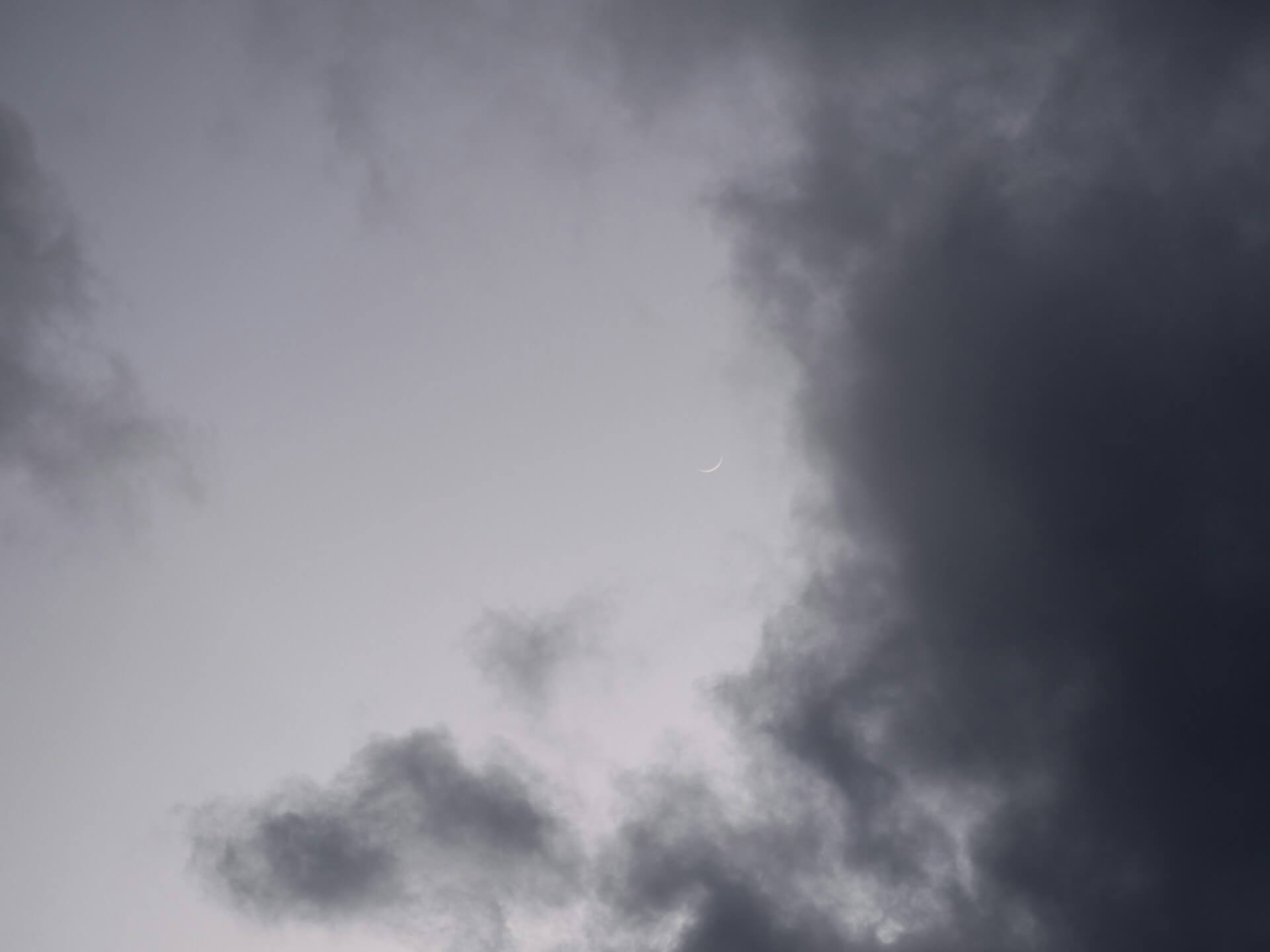
Says the slightly tilted crescent of the moon,
Says the crystalline glint of the pulsating stars,
Says the blossoming billow of the blanching cloud,
Says the layered blue landscape of my wordless memory.
So that its music may pour forth in a delicate stream,
She never forgets to water the piano.
(My) Pain
“What is your pain
on a scale of 1 to 10?”
doctors often ask their patients.
On this occasion, however, they don’t bother to ask me,
because it is obvious that
my pain is a “10,” i.e., “the worst imaginable.”
I am 8 years old.
The nerves
that would normally serve
my left wrist, hand, and fingers
are trapped between two pieces of
shattered bone.
These damaged nerves no longer move my hand,
but they do of course cause unspeakable pain.
Pain=10. The worst imaginable.
But we know that there is no numerical value,
no vocabulary,
for the worst kind of pain.
Nor can such pain simply be reproduced,
made fully present,
by the imagination.
In the world of myth, perhaps,
we may seek verbal corollaries,
narrative metaphors
for something like my pain.
How might it compare to the agony
of Hercules when he dons the tunic
soaked in Nessus’ blood?
Is my suffering at all like the torture endured by Prometheus,
enchained to a rock, feast for an eagle?
How about the sensation, prolonged or acute,
felt by Polyphemus the Cyclops
as Odysseus’ men drive a sharpened shaft of timber
deep into his one (and only) eye?
Extreme pain does not only destroy language.
Its immediacy exceeds even the bounds
of the wordless imagination.
The “worst pain” is not something we can imagine;
it is only something we can experience.
And once it has passed,
it cannot even be recalled
in all its intensity.
From Tehran to New York
1952: my parents emigrate
from Iran to the U.S.
The horizon does not circumscribe.
It is not a boundary but the sign
of an unknowable future.
As far as the eye can see,
the ocean swells with hope.
Aboard the liner named The France
are the Rose—my mother,
an English woman
with Zoroastrian roots,
and the Nightingale—my father,
a Persian graduate student,
an ambitious young student of the law.
The limitless ocean, furrowed for weeks
by the port-bound vessel,
whispers the beckoning of “The New Colossus”:
“Give me your tired, your poor,
Your huddled masses yearning to be free.”
Free to think, to speak, to write one’s beliefs,
free of the imperial ambitions
of Great Britain and Russia,
free of the violence of the Tudeh party.
It is, after all, the dawn of a new,
rules-based world order,
a freshly codified international law,
albeit framed and tested by Cold-War deterrence.
Little does the idealistic Nightingale know
that, on arriving at Ellis Island,
he will be detained, subject to the special scrutiny
afforded would-be immigrants from the Third World.
Before a judge the Nightingale argues his case.
He is released, provided he makes a cash deposit
that he will forfeit
if he overstays his “welcome” in the land of the free.
A naturalized American citizen, the Nightingale
teaches and writes in his adopted homeland
for the better part of a century.
How he revered the ideas of the Founding Fathers!
It is fortuitous, then, that he did not live to see
the persistent violation of Constitutional norms
that has become the “new normal” of our political day.