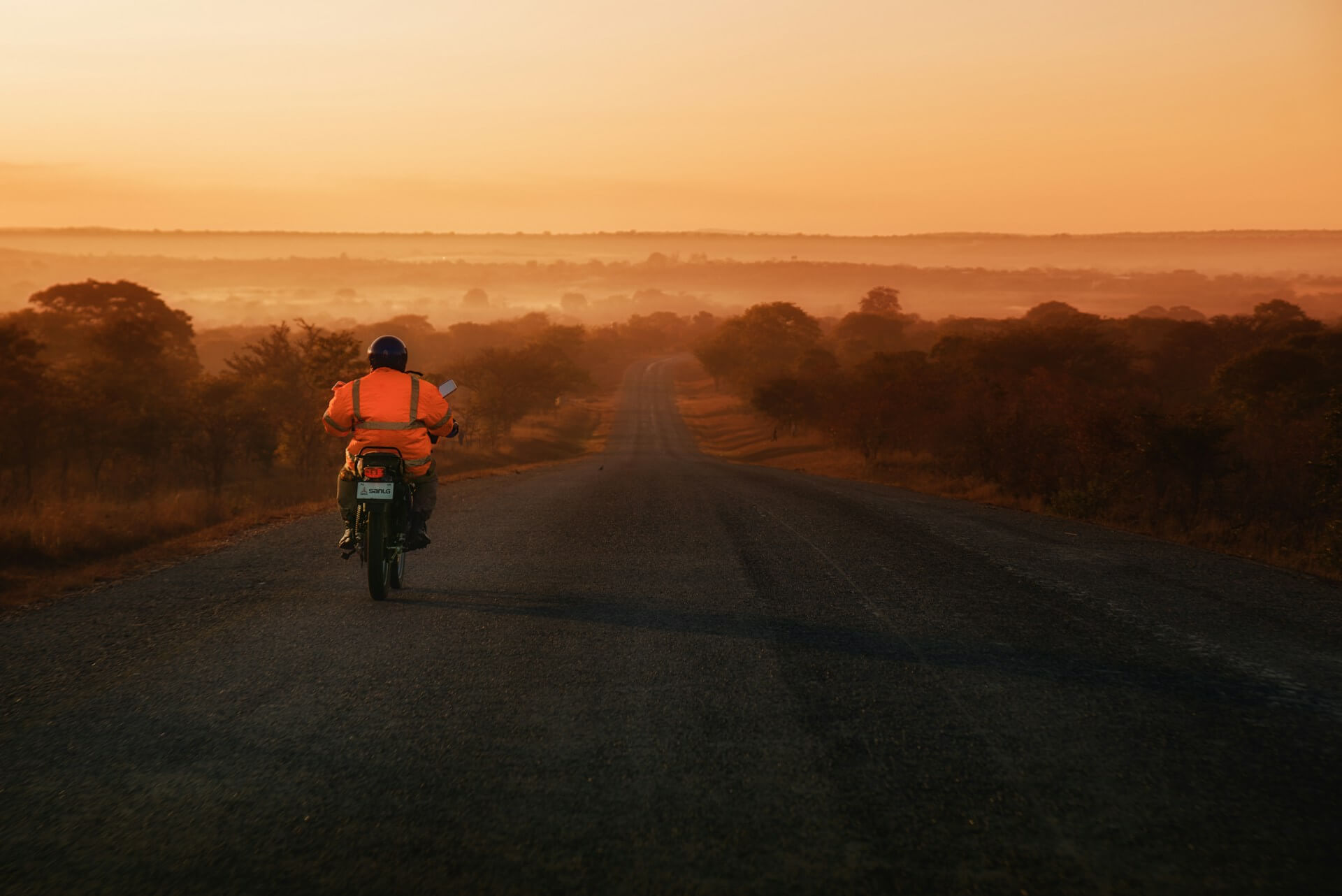
Photo by Johanneke Kroesbergen-Kamps on Unsplash
I squeeze past a bedraggled goat and other passengers as I snag a stained seat by the window. My foot gently scooches a live chicken to the side while I stuff my belongings below me on the floor. The scented mixture of sweat and damp livestock permeates the air. Outside the bus window where I sit in Nchelenge, young boys shout at riders to buy food. I open a book, attempting to tune out all the chaos around me. In my mind, the village chief’s warnings echo, his cautions lingering from before I departed the village.
“Ba Cynthia, be careful when traveling to Mansa. The juju is strong there. It is powerful, indeed.”
Juju is a belief in traditional Zambian witchcraft, in which items are thought to possess magical powers that can be used for both good and bad purposes. Witch doctors, with their secret knowledge, control its use. People from my village often went to the witch doctor rather than the clinic when they became sick. If something was stolen, the witch doctor was consulted immediately, and a curse would compel the thief to confess. My thoughts drift back to the slow, rhythmic ticking of my watch. My brain can’t let go of an internal urgency to be in Mansa tomorrow for a technical workshop, even as I sit on a bus that isn't moving.
For two days, I have been traveling by bike from my home, nestled remotely on the lake shore in Mukwakwa village. But now, the hustle of the bus station overwhelms me after living quietly in a remote area. This bus, like many across rural Zambia, does not keep a schedule. It leaves when it is full, which can take somewhere between three hours to a few days, and the driver usually stops for anyone he sees along the way, adding to the pervasive air of unpredictability. People sit on Jerry cans filled with petrol in the aisle, large sacks of grain fill every void, and chickens cluck from underfoot and beneath the seats. I feel claustrophobic with all the sticky bodies that touch me. An overpowering waft of dried Chisense (small fish that resemble sardines) passes over my nose. From across the aisle, an older lady gazes at me with inquisitive eyes but doesn’t say a word. The lightness of my skin attracts attention.
“Who are you?” a young mother in the seat in front of me asks as her toddler squirms in her arms.
From a seat somewhere behind me, a gentleman pipes in, “Where are you from? Why are you on a bus deep in the bush?”
The gentleman goes on to tell me that my skin is too soft for manual labor and asks me how many servants I employ. I politely describe my American upbringing and tell him of my mud home in Mukwakwa fishing village, where I currently live, without servants. He listens while I describe my work with local communities to protect clean water sources and to teach about waterborne diseases. The young mother in front of me casually chimes in on the conversation again.
She asks, “Will you take my baby to America?” as she lifts her child toward me.
My heart skips a beat. I try to imagine her living situation and her perception of America, which brings her to ask me, a stranger to her, this question. Perhaps she is overwhelmed by her circumstances. She shows me through this action that she is prepared to give up her child because perhaps she believes that I could provide a future where necessities can be met or a future that could shield her child from experiencing the same hardships that she currently faces. The conversations continue, with curiosity and warm smiles, as we learn from each other in these short yet intimate exchanges on our bus ride. Next to me is a well-dressed gentleman who quietly observes me as I interact with the others.
A gust of fresh air across my face shifts my attention back to the moving bus, which has been steadily bouncing along the tarmac while I was talking. Suddenly, the brakes squeal, and everyone lurches forward. The bus jerks to a stop to pick up more people. An older man with a deep scar on his face boards the bus and squeezes down the aisle, tightly gripping his well-loved, ornately decorated walking stick. His brow flinches as his quick-tempered voice barks orders to the driver in Bemba, the local language. While the man lumbers forward to find his seat, I notice his cantankerous attitude toward anyone in his path. In my head, I try to decipher his Bemba slang, but his words are unrecognizable from the Bemba I had already learned.
The bus starts moving slowly down the bumpy road again. I glance at my watch once more and notice that two hours have passed, with surprisingly few stops. As we approach the next village, the scarred old man commands the driver to take him directly to his home, ten clicks (kilometers) off the main road. In a firm voice, the driver refuses the old man’s order. A feeling of relief tumbles over me, since the driver seems motivated to reach Mansa in less than a day.
The well-dressed middle-aged man next to me finally introduces himself as Ba George Katundu. Mr. Katundu leans in curiously and speaks in a formal Zambian-British-English dialect. He is kind, but despite my efforts to practice my Bemba with him, he prefers to practice his English more.
He begins, “Madam, it is nice to meet you. My name is Beaton Katundu. What has brought you here to the rural parts of Zambia?”
“Nice to meet you, Mr. Katundu. I’m here to learn about your beautiful country.”
My answers are well rehearsed. I’ve gotten used to this question since it is rare for a foreigner like me to live in such a remote village. Sometimes I have the urge to make up a fake story about my life, but I decide to stick with the true one. I begin by explaining my role as a volunteer dedicated to teaching disease prevention and working with communities to protect potable water sources. After Mr. Katundu was satisfied with my answer, he steered the conversation in a new direction.
“You know, Madam, the Zambian government declares Christianity as its official religion.” I nodded to show him that I was listening.
He goes on, “Are you a Christian?”
I pause to think about my answer.
“I was raised Catholic. But in America, we do not have an official government-sanctioned religion.” I hesitate before I continue, nervous to discuss religion since this topic can be controversial.
“People practice different religions where I am from. Many people pray in a variety of ways.”
Mr. Katundu’s forehead crinkles as he tries to imagine a place so different from his own. I appreciate this open conversation on a potentially sensitive topic. My mind drifts again to the spiritual warnings Chief Mukeya gave me. He cautioned that juju is prevalent not only in the bush but across the entire country. Reflecting on this, I ask,
“Mr. Katundu, may I ask you a personal question about witchcraft?”
He nods in agreement. “Do you believe in juju?”
“Oh no, Madam! I do not believe in such things. I do not believe in juju. Many villagers believe in witchcraft. But ahhhhhhhhhh, I am a Christian,” he says with emphasis on the last word. He pauses, and his eyes get wider.
Meanwhile, the cranky old man from before is repeatedly asking the bus driver to make a special trip to his out-of-the-way home.
The driver stands his ground, “Awe, Bwana! Awe, Awe, Awe!” (“No, Sir! No, No, No!”)
The bus lurches to a stop, allowing more passengers off.
Suddenly, the disgruntled elder pulls out a bottle of mysterious red liquid from his pocket and wildly splashes its contents on the bus. As some of the fluid lands on my shoe, I hear strange guttural sounds come from his mouth. He madly waves his ornate walking stick, shrouded in torn materials, chicken feathers, and shards of glass that catch the light, casting colorful prisms on the ceiling. I quickly piece together the blither of Bemba chants, my synapses slowly clicking into place, as I realize that he is a witch doctor. And he is cursing our bus!
I turn to Mr. Katundu, only to find his seat empty, and nearly all the other passengers are quickly making their way off the bus. A few moments later, only I, the musungu, remained seated on the bus. The deserted bus, however, encourages me to join the others outside. As I step off the bus, I see a crowd of passengers refusing to board again until the dreadful curse is lifted. The bus driver eventually yields to the old witch doctor’s demands, but only after the horrid curse is removed.
Once the commotion dies down, the passengers return to their seats. The bus lurches forward, veering down a smaller road to drop off the witch doctor. I strike up another conversation with Mr. Katundu. It feels like we’ve shifted from strangers to friends, no longer afraid to ask each other difficult questions.
“Mr. Katundu, that was unexpected, wasn’t it? My friend, I was wondering why you got off the bus just now?”
“Madam, I do not believe in witchcraft. However, I stepped off the bus just in case there was a bit of juju out there,” he tells me earnestly.
Smiling, I appreciate the practicality of his answer. While I aim to embrace my free spirit, I also value a good backup plan. The squirmy child from the seat in front of me climbs onto my lap as I lean my head against the window to let a refreshing breeze blow across my cheek. I don’t mind sharing my space with this child. And, in time, I will arrive in Mansa for the workshop. But for now, I reflect on my conversation with Mr. Katundu, the role of faith, and the human instinct to seek supernatural intervention in times of distress. How did the Chief know to warn me about juju? A shiver runs up my spine, and the spirit of this journey settles in my heart. Perhaps when facing the unknown, it is better to be prepared just in case.