
I think we all agreed that Mr Fallow was the best and most interesting teacher in the school. That much was clear after only a few months. It wasn’t until Cerys Davies expressed curiosity in his sexuality, however, that he really became a figure of fascination for us all and perhaps for me especially.
He wasn’t from around here, you see.
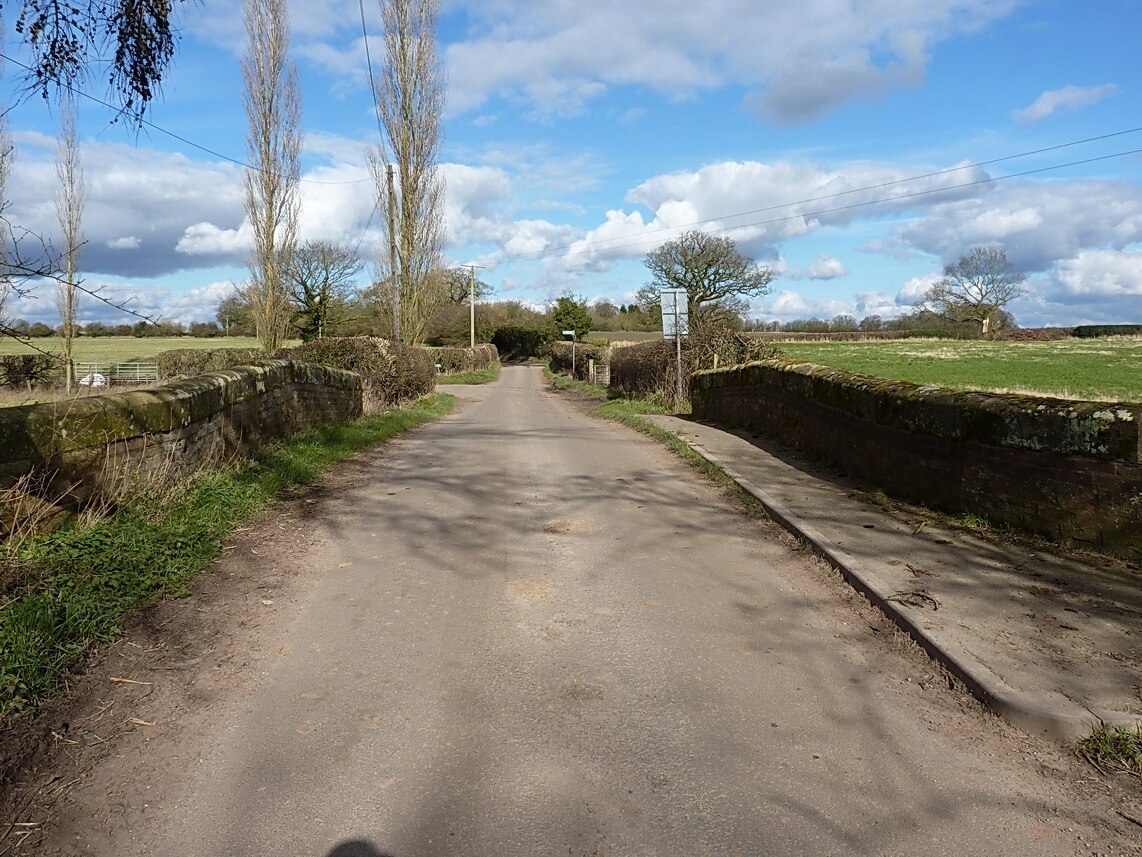
I remember he arrived when we were about fourteen or fifteen years old, and we were just starting year ten. We come from the small town of Lower Mitton, with a population of about twenty thousand. Not much happens here. Let us say that it is not the most exciting place to live if you are a young person, or a person of any age come to that: it is an old and picturesque canal town spread across the confluence of the rivers Severn and Stour, and its most vibrant historical spark occurred over two centuries ago, when coal, iron and timber were transported across the country via its waterways. At the height of its prestige, Lower Mitton enjoyed the glamour of being considered the ‘greatest river port in existence’, with canals that provided the best and most navigable routes for traders. But that was long ago. When other canal ways in Worcester and Birmingham arrived soon afterwards, and the railways laid down their tracks shortly after that, the town’s brief moment in the sun had passed, and it quickly settled back into its quiet agricultural roots. The people of Lower Mitton today enjoy seasonal tourism, with a fair that bursts into life when the sun beats down on the red brick houses. Nothing much happens here, but the town is at its best in summer.
This must have been his first impression the moment he arrived — when Mr Fallow came to shake us up.
This is the story of his coming out, though I wonder now if he ever really did.
After first introductions, and much breaktime discussion, we quickly learned that he had moved into a house on Longboat Lane. Danny Downs informed us that his grandmother lived next door to him, and Sarah Palmer said she saw him running past her house towards the canal most days. People thought Sarah Palmer fancied Mr Fallow and teased her mercilessly for it, which was a satisfying bit of mockery: we saw our own interest in the fresh blushes on her cheeks. As for watching for Mr Fallow, I think we were all a little bit guilty of that in the end; on more than one occasion, we would go for walks down that road and wander down those canal paths hoping to see him. Not everyone found him attractive, of course (though I think a lot of us did), but he was nothing if not interesting, perhaps if only in the way anyone is interesting if they arrive in a quiet and boring town for no special reason. For the inhabitants of such a town, that is interesting. Who was this fascinating young man and how might he fit into our world? we wondered.
Well, he was a brilliant teacher. Prior to his arrival, we had had one of those timid ladies who keep disappearing for weeks on end, and who burst into shaking tears at odd moments. We would often see her huddled with the other teachers at breaktimes with a tissue in her hand and a broken expression. We might have had some sympathy for whatever was troubling her if her lessons hadn’t been so damned dismal as well. To no one’s surprise or distress, she had quietly resigned at the end of the previous year. Mr Fallow, by comparison, was a whirlwind of ambition and intensity right from the start; he was like a Christian missionary, such was his zeal and his vision for his new charges. We were a top set, he told us, the smartest in the year, and this excited him because it meant he could actually teach. I don’t think we understood exactly what he meant by this at the time, though we would now, of course. In any case, it meant he expected great things from us — and that was a curiously rare event in most of our lives up until that point. He seemed able to look right into you and see more than you knew to be there.
In no time at all, the subject of English became endlessly fascinating for all of us: novelists, playwrights and poets, who had previously seemed as dry as their own corpses, suddenly became living breathing people, with fire in their eyes and moisture on their lips; they had things to say worth hearing, and their voices had a power to reach us from the past. He made it so you could almost smell their ink on the parchment and hear their candles flickering on writing tables, as their quick hands raced feverishly across the page towards some vital meaning. He taught us history, and placed these writers in their moment, and showed us what it meant to speak, to really say something about one’s experience; he encouraged our own conversation in class and made sure everyone felt seen and heard. He would read our work and write detailed and engaging feedback that showed he cared and understood. He seemed to know you by your work —intensely, and intimately — he could show you where you were and where you could go if only you let him guide you, to a higher ground, taking you out of the dark to join him in the sun. He seemed to open up the whole world for us and gave us doors to walk through that could take us out of Lower Mitton. We were only just beginning to see how desirable such an escape was.
We never could have expressed any of this at the time, of course, but even then, we knew that something great was happening to us from the way our footsteps quickened as we approached his door each day.
It was after a particularly enjoyable poetry lesson that Cerys Davies expressed her interest in Mr Fallow’s sexuality. We were sitting on the back field, watching the boys playing football, me, and the girls, when Mr Fallow walked past the football pitch in his matching purple shirt and tie, and with his quick hunching tread. The football came towards him and we watched as he hesitated, and then punted it, somewhat clumsily, back to the players. As he scurried off around the art building, it occurred to me that this was the first time I had ever seen him looking discomfited, or less than self-assured. Normally, he had such presence and self-possession, and an imposing quiet energy that demanded respect. Perhaps it was this small instance of frailty that sprang Cerys’ question.
‘Do you think Mr Fallow might be gay?’ she drawled.
After the first wave of meaning washed over us at her words, I think we all arrived at the same conclusion at the same time. We looked at each other, and it was as if we had all been thinking about this question subconsciously for the longest time and had only just found the words to discuss it. Once the thought was articulated, however, it all came flooding out of us; we had all had our theories, and here were our examples to back them up. There was this moment… and the time he said… and the fact that…and do you remember the time he…? It was as if we had all been stumbling about in an ancient cave, toying with this same question, and now we had finally found our way out into the light, where we could see things and each other more clearly. It was incredibly exciting and bonding for us; one of those brilliant friendship moments, on that back field, discovering new realms of exciting possibilities together.
We talked it over all the way through break, or rather, the girls talked, and I offered only non-committal blandishments, or agreements with whatever they were saying. As had been happening a lot at that time, I had been struck suddenly with an acute awareness that I was with and behaving as one of the girls. This subtle transition had happened some months before, and the adjustment, though entirely to my liking and something to be celebrated, was still a little breathtaking in its implications. Perhaps discussion of Mr Fallow’s sexuality was really a discussion about mine too? I wondered. We had never had that discussion, though of course they must have known… They must know! I would think every now and then. But, as ever, I just put this out of my mind and went back to thinking about Mr Fallow with the others.
As the year wore on, the excitement over this discovery (for we were in no doubt that we were correct in our assessment) dwindled somewhat — or at least it did for the rest of the class. For them, Mr Fallow’s sexuality was information that was easily absorbed; it shifted swiftly in their minds from extremely exciting news to something quite intriguing, and then to something interesting, not that interesting, and finally to something unimportant. They did, after all, have their own lives and minds to contend with at the time. Fifteen seems to be an age when a million new doors are opening inside of you and when aspects of your own being start chasing each other down new corridors in your mind, giving you a constant wide-eyed breathlessness, a pulsing verve, or heightened sensitivity to yourself — a frantic interrogation; you begin to communicate with this person who looks at you in the mirror and steps out in your shoes each morning. It’s an awful reckoning for anyone. So, for them, Mr Fallow was just another adult in the world to which they now belonged, albeit a slightly more glamorous one than some of the others who walked before us. He had a cool and interesting secret which gave him a vaguely daring and aspirational quality. But he was, after all, just one of a million examples from the adult world.
For me, however, Mr Fallow and his sexuality felt hugely important, and my interest only seemed to grow over time. My friends went along with this for a while longer, and Cerys Davies basked in her discovery for as long as she could, but in time I sensed that I needed to take my investigation inside of myself; whenever I brought the conversation round to Mr Fallow, I could almost feel the girls readying themselves for a confrontation with my own sexuality, wondering if the time had finally come to ask me outright, and I wasn’t sure if I was ready to bring that particular elephant out for parade just yet. So, I focused my attention on Mr Fallow instead. I felt myself surreptitiously watching him as a novice might watch his master, and, over time, I would catch myself shaking my head at him, and at the amazing trick he was playing on us all. How does he do it? I wondered.
o
‘Dr Jekyll’s Mask’
That was the title of one of the essays he got us to write one day as we neared our exams. I remember looking over the heads of my classmates, heads down, pens scribbling, to observe Mr Fallow, who was sitting at his desk marking a pile of books as usual. He loved making us write these essays. He said we needed to become comfortable expressing our own ideas on paper, that he could only take us so far in discussion; we needed to become familiar with our own voices, explore the deepest recesses of our own minds and develop our own interpretations. I enjoyed writing these essays, and, though they had grumbled about them at first, I think the rest of the class did too. As an activity, they did exactly what he said they would do, and we felt their value. Teenagers are very self-involved after all.
What was pausing me at that moment wasn’t the difficulty of the task, but the outrageous confidence it must have taken for him to teach this lesson about masks at all, and what was more, I was astounded by the subtle way he had even managed to extract some irony out of the situation.
‘How well do you really know me?’ he had asked us. ‘What might I be hiding from everybody?’
This had prompted an enjoyable bit of joking and silliness from the class, who were temporarily invited to make fun of their teacher. I had just sat there in wonder as he bounced it all back. Everyone in that class thought, or was aware of the theory, that he was gay, and so we knew what that might mean for him socially, for his reputation, hopes and fears, and so on — and yet here he was discussing the tragedy of Jekyll and his need for a mask, while brazenly admitting that he too was wearing one. He must have been supremely confident that we would never ever get to see beneath it. There was something outstanding about the depth and complexity of this performance.
I was deeply impressed. He had somehow managed to bring his sexuality into the room for a moment and had used it, and himself, as an educational tool. He had the power and control to steer that ship, and he did it so effortlessly and with no apparent inward distress. But it had to bother him, I thought. On some level, it had to. I stared at him from my seat at the back of the room until my eyes glazed over. Then he looked up at me, and we made eye contact across the rows of heads. There was something chilling in that glance.
‘Are you alright?’ he whispered. ‘Do you need help?’
I quickly shook my head, feeling my cheeks redden, and looked down at my essay.
More time passed and, of course, we came through our exams with record-breaking results. The school, and even the wider community of Lower Mitton, began to reflect fondly on the brilliance of this new teacher in their midst. You see, in small and insular towns such as this one, everybody is paying attention all of the time. And what’s more, with its clear class divide, outstanding success counts for a lot here. Almost all of the students in the top sets in school, the highest achievers, are born and raised in the affluent areas to the south and west of the town, where parents are also high-achieving (and wealthy) success stories: the well-connected and well-respected members of the community. Naturally, they were thrilled with the performance of their children and this teacher whom they all adored. I wonder how much Mr Fallow knew about his growing reputation at the time, being still an outsider. Everybody talks here, and every parent at that school must have heard about him, especially after his spectacular achievement. Even the badly behaved children (and their badly behaved parents) from the rougher parts of town felt the draw of his success. Everyone wanted to be in Mr Fallow’s class the following year.
o
He arrived back after the summer break looking fitter and more attractive than ever. Success clearly agreed with him. An unusually large number of students had decided to continue with English Literature into A-Level, including me. Mr Fallow continued to be a central focus in my life.
But here is when things started to change; as the year unfolded, I felt I began to see him for what he really was and started to put him in his place.
At seventeen now, we were all going out to parties and sneaking into pubs. We drank and we smoked weed and we hung around with boys and girls from other schools; we rode the train into Birmingham and Worcester and started going to clubs (if we could get in) and throwing up in gardens. I ceased to be one of the girls when the girls started having sex. In fact, I was beginning to feel like I wasn’t even a sexual being at all. My friends began pairing up with different guys every few months and then breaking up with them in dramatic fashion, only to start chasing someone else. While they were doing this, I was increasingly left to my studies. I began to feel like a eunuch — a handsome and witty eunuch — a conduit, protecting and unifying the girls in our group, who often pulled and strafed at each other, but never at me — or at least not to my knowledge. I was their C3PO, their golden pet; they literally patted my head and stroked my hair in public, helped me pick out clothes and took photos of my general adorableness. And there was my elephant in the room with us too, which I saw was just another exciting and exotic accessory of theirs really, though they no longer paid it much attention. Far from getting bigger and harder to ignore, my elephant seemed to have shrunk. I think I had beaten it into submission: chopped off its trunk and pulled out its ears and tusks, tied its legs together and perched it against the wall like a cumbersome block or ornament. Somewhere in the midst of this growing isolation and bitterness, and fury even, everything still came back to Mr Fallow. All channels of thought led back to him and his virtuoso performance.
The moment when everything began to change came during a last period on a Friday. It happened while we were studying Hamlet. We had been discussing the famous soliloquy, ‘To be or not to be,’ and Mr Fallow was in his element. I had long since realised that far from feeling nervous about discussions that might require him to dexterously avoid revealing his homosexual identity, or discussions about masks, expectations, bigotry, ignorance or love, or anything at all that might make someone sensitive to his predicament, he seemed to relish them. In a thousand different conversations, hints, and body ticks over the years, he had told us that he was gay — a screaming homo, in fact — it was clear as day if you were paying attention, but never once had he actually said the words and revealed himself to us. Words appeared to be his special tightrope, and he loved walking it. I remember the lesson before, he had excitedly informed us that we would be discussing this most famous scene the following day, which told us that we were in for a special treat, that an exceptionally accomplished performance of his was in the offing, and we would be foolish to miss it.
Sure enough, it was a fantastic lesson. We were so skilled in analytical and interpretive reading by this point that we were able to cut through almost any text of complexity these days, sieving words and images for an assortment of meanings, and we were so confident in discussion now as well, another skill he had developed in us, that we were able to eat our way through that challenging soliloquy as if it was a delicious cake. It was one of those lessons where you can almost feel the sugary goodness of knowledge zipping through your brain, soaking it in dopamine, until you sit back and glance around at one another with self-satisfied smiles on your faces that say, such good eating isn’t it!
But no one was as self-satisfied as Mr Fallow. With the air of someone pulling out a final party gift, he leaned forward and concluded our discussion:
‘So, you see, the great tragedy of Hamlet is in his inability to act. We see him desperately trying to push himself out of his own mind and into action — in this world that defines men by their actions — but every time he tries, his mind succeeds in pulling him back into himself. This is his hamartia, his greatest flaw: inaction.’
As the class eagerly scribbled down their notes, I felt the heat rising in my face as I watched him once again turn complacently back to a pile of marking on his desk. The hypocrisy — the audacity — of his bullshit! I thought, as I looked at the other students — heads down, pens scratching out his words once again — What a fucking phoney! I thought. Of course he loves this soliloquy, of course he does. I looked over the passage again and scanned down my own notes. ‘Ambivalence’ — that was the word he had explained to us and we had written down. The state of having mixed feelings or contradictory ideas about something: when all solutions however different appear equally weighted. For Hamlet, this meant doing nothing. And for sir, too, I saw now. I picked up my pen once more and scrawled and underlined a single word above the whole passage:
PARALYSIS.
Mr Fallow was able to make a virtue out of anything that cloaked ambivalence in glory and made a hero of a coward. A fucking coward, I thought, as I looked at him. That’s what Hamlet was, and so are you. Because I saw now that he was also a master of ambivalence, of grey areas and nonbeing. That’s where he lived, in that same paralysis: ‘To be or not to be?’ So, while his body stood still at the front of a classroom, and he denied himself the freedom to live openly and as his own true self, he could still pour his ideas about life out into his students, could still express himself through the words of other men and women in literature; he was quite willing to subsume his own identity into that of a teacher, and merely radiate his own ideas through the words of others. Through us, I realised as I glanced at the pile of marking on his desk; page after page of other people’s thoughts.
I felt as if I was grasping at the threads of his entire life’s philosophy and it made me want to choke. I see you, I thought vindictively. I see what you are doing, and I want none of it.
I remember walking away from that lesson and heading home, full of my new ideas about Mr Fallow and this latest lesson of his. Like all the writers and thinkers we had ever studied, I had managed, finally, to place him in his context and understand what he was trying to say about his experience. I saw that for the last few years he had been trying to teach us how to read people, and in doing so, willingly, or otherwise, he had given us the power to read him too. Oh, I saw the sadness of his predicament, of course, but as it had the potential to become my own predicament as well, my immediate thought was – Escape!
o
It occurs to me now that he was at perfect liberty to do whatever the hell he wanted about his sexuality. What business was it of mine whether he told anyone he was gay or not — why should he? In fact, one could argue it would have been inappropriate for him to disclose it to his students. And maybe he was completely at peace with his sexuality anyway? The adult in me sees this now, sees how much I was projecting on to him. But at the time, he had such a power over us, at once so intense and intimate, that it was impossible to see his nondisclosure as anything other than a betrayal. We had been so completely open to him and his influence, while he so fiercely guarded his own true self. At the very least, he seemed like a hypocrite, and for a young person, hypocrisy is unforgivable.
Authenticity was the order of the day then, and, over the course of the next year, I started making plans for my escape, not only from Lower Mitton but from the same fate as Mr Fallow.
I spent the weekend following that important lesson hardening my resolve. Hatred of Mr Fallow and his treatment of his sexuality had crystallised into a firm intention to act on mine. I was going to tell my mother first, who knew I was gay anyway, I was certain; she would then tell my father — who would have time to figure out how best to handle his response. I felt sure they would both be fine about it. Remember, at this point, I was quite skilled at reading people and actions and picking up on the signs they were giving me. My parents had both let me know, in a hundred minor ways, that it wouldn’t be a problem, or at least that their reactions would not be violent.
And, sure enough, they were fine. Mum said they had just been waiting for me to say something, that they didn’t want to push me. And Dad? It’s curious the way men can surprise you with random instances of emotional force. ‘Your mother and I love you no matter what,’ he had said simply, before taking another sip of his morning coffee.
My friends came over on Sunday afternoon. Their response was equally as blunt.
‘Well of course you are! …
‘It’s fucking obvious…
‘We love you!’
I remember retreating to my bedroom in the early evening, feeling as if I had been turned inside out. I sat on the edge of my bed and stared out the window, watching the sunset, and I felt a strange strip of hollowness breaking open inside of me, extending all the way from my throat down to the pit of my stomach. A weakness of spirit, an emptiness, perhaps...
Was I disappointed? Disappointed by their acceptance, and how well this had turned out?
No. No, I think I understood, even then, how grateful I needed to be for such a warm response.
Was it sadness then, or fear?
I thought once I had told people, the fear and sadness would stop, and I would feel free. But, as small and as shrivelled as I had felt beforehand, when everything was being squashed down inside of me, I didn’t expect to feel so utterly diminished by the experience of coming out. Now it is really happening, I had thought as I gazed out over the rooftops at the pink sky. Now I have to get on and start living the life of a gay man.
And I didn’t really know how to start.
Mr Fallow can’t have failed to notice that something had changed as the next few months went by. I was still obsessed with him but now I was watching him to see his reaction towards me, and my sexuality. Looking back now, I seem to have been making it my mission to be as visible as possible, and possibly this was all for his benefit. A few weeks after coming out, I dyed my hair blonde, to the delight of everyone in our year. He smiled when he saw it and said it looked fantastic. It thrilled me to see him appraising me in this way. Did he think I was handsome? But the moment soon passed, and we were deep into a discussion of a poem before long. Then, I pierced my ear and asked him directly what he thought of it. He said fondly that he had also had his ear pierced when he was younger and then told the story of how it had been ripped out in an accident, which the class found funny. He so rarely told us anything about himself that this upset me. It made me and my stupid little earring feel smaller than ever.
The boys in school started to look at me differently too, not necessarily with hostility (though I glimpsed that occasionally) but rather with a quiet wariness. The girls’ boyfriends were friendly enough when the girls were around (the girls being, as ever, my protection) but they had it too — that same masculine wariness; I could see they hated being alone with me at any rate.
My swift conclusion was that being gay and being out was shit. It wouldn’t be until university that I started having sex and relationships with anyone, and so at that point my sexuality was little more than a costume I was choosing to wear; I saw that I was little better than the court jester, in my motley choice of daring fashion, and my pleasing way of entertaining my friends. I looked gay, I was a gay symbol to other people, and I had told people that I was gay… so my elephant was finally enjoying its little parade.
But where was I? I wondered.
I began to realise that coming out doesn’t free you from yourself, and that that must have been what I really wanted all along.
My desperation to leave Lower Mitton reached palpable heights, and I threw myself into my studies, determined to get the grades so that I could go to my chosen university, where I could live in a city and where I knew I would find myself. I was so certain about that; I think you are at eighteen. Mr Fallow was helping me to achieve academically, so I allowed myself to appreciate him and his teaching once again. At least in one way, he would help me get where I wanted to go. But my violent reaction against him, and his perceived hypocrisy, hadn’t left my system just yet. I would have fits of silent fury and resentment during his lessons, whenever I sensed the real him coming out in his literary analysis. I had mad, vindictive impulses to just ask him outright in class and force him to show himself, to say, “I’m gay, and so are you— can we fucking talk about that!”
But I would never have done it. Hypocrite he may be, but he was still the only other gay person I knew, and, knowing increasingly what it meant to be gay, I would never have done anything else to cause him pain. I would never have outed him.
Interestingly, in the February of our last term, someone else did.
o
A loud and obnoxious girl in year eight did it apparently.
It was well known around the school that Mr Fallow hated teaching poorly behaved children; this was one of his rare personal admissions. He would often arrive to our lessons looking harried and pale faced, having just escaped from an hour with ‘the horrors’ as he called them. We knew the kids he was dealing with, and it wasn’t at all surprising that he didn’t get on with them. They weren’t interested in learning, you see, so his whole teaching persona, and therefore his entire identity, was powerless against them. Children have an interesting ability to see through bullshit, and these kids in particular had no trouble calling him out on it. It was a wonder they hadn’t attacked his sexuality earlier.
One day this girl, Jessika Smith her name was, arrived at his lesson hell-bent on getting herself sent out. This is what the naughty kids do; they prearrange to get sent out of their respective lessons so they can meet up in the woods behind the back field. We heard the story from a friend’s brother who was in the lesson at the time. The way he told it, she had arrived late, then refused to do any work, and was shouting across the room to her friends; then she started pecking Mr Fallow’s head with stupid questions which became ever more impertinent and private until she landed on the golden ticket.
‘Are you gay, sir?’ she had asked, and then repeated.
And he had dodged and weaved it at first, pointing out the inappropriateness of the question and her rudeness in asking it, but every time he responded, she had countered with:
‘But why can’t you just tell us?’ or ‘Why won’t you just say, sir?’
And in the end, he had caved — he had admitted that he was gay and then kicked her out of the room.
So, she got her wish, and I finally got mine.
The news spread though the school within only a few hours, and by lunchtime it was common knowledge.
‘Mr Fallow is gay!!!’
I wondered how he was taking it. All of my bile seemed to have disappeared, and I, like my friends, was full of anger at this girl, and concern for Mr Fallow. His whole identity had been destroyed! The mask he so prided himself on had been ripped away from him; he was exposed and vulnerable!
We had a double lesson with him last period, and we eagerly took our seats in the classroom before he had even arrived. The thought crossed my mind that he might not turn up, that he might have run away and left the school in shame, and my heart raced out to him — but then he strode through the door and said ‘Hello’ to us all in his usual way and walked swiftly up to his desk. It was miraculous; nothing had changed.
I watched as he nattered away, setting up the lesson, asking us if we’d done the homework, asking to see it on his desk by the end of the lesson. Nothing had changed. I was flummoxed. Maybe the incident hadn’t happened after all?
My focus on him over the next few minutes was almost unreal; I have never watched anyone as closely as I did then. After a while, I thought I detected a slight impatience in his manner, an eagerness to get down to work maybe, to dive into an activity that would keep us busy. Yes, he had lost some of his zeal and his passion perhaps. Otherwise, though, he was fine. Fine. I felt myself using the word, knowing what it meant; I looked at him again. No, he wasn’t the same. I could see that now. He wasn’t interested in us anymore. That was it. Usually, he had a way of looking at you while you pondered something and expressed yourself, as if he were really looking into you, willing you on to new understandings. And he had such a careful way of guiding you there, a kindness and a gentle openness. Today, he seemed impatient, cold, and closed off, though it was almost imperceptible. This was upsetting, but fair enough, I supposed.
Strange though that he should seem further away from us now than he had ever done before, now that his mask had finally gone? No one else seemed to notice it. The tacit understanding he had brought into the lesson with him was ‘nothing has changed’, and everybody just got on with that with relief. Heads down, pens scratching.
The essay today was called ‘The Importance of Gatsby’s Death’. I was halfway through it when I looked up.
I had been writing about Nick, the narrator of the book, and how Gatsby’s death had affected him. I was thinking about the lessons he had learned from Gatsby, lessons about ambition and longing, performance and self-sacrifice, lessons so powerful he felt compelled to share his story, when I noticed Mr Fallow again. This time he wasn’t marking any books, though they were stacked high in front of him as usual. He was staring out the window instead. I was forcibly reminded of myself on the day I had come out. I gazed at him, mesmerised by his face, which was flooded with light. And I saw him then. I saw the man so entirely, so completely, that the memory of it has stayed with me ever since. Every emotion seemed to be playing across that smooth face with its glittering eyes. Ironically, in the white light that fell upon him, it looked like he was wearing a mask — only this mask showed his true face, and it moved with a thousand different shadows, conveying a thousand separate meanings to the observer.
In his expression, I thought I saw a man in prison. The image struck me so powerfully, so emotionally, it was like poetry; a captured image, with the power to break open the whole universe for me. I never knew what he saw through that window, it might have been just an impression of white light, or a bird flying high, perhaps a beautiful formation of clouds, but in that moment, I imagined he was staring into his own soul — and in that moment, it was floating outside of him, free, and outside of his window. Such a dizzying idea, that cloud of ethereal light that surrounded him, on the point of overwhelming me, when he turned from the window and looked directly at me.
Our eyes connected with the force of electricity, and I knew that he saw me, that he had always seen me, for who I was. A white channel opened between us, and a silent rush of understanding flowed from him to me, and from me to him, linking us, unifying us, in this private way. The channel extended over the bodies of all the other students, whose rowed heads created an impression of distant fields between us. The idea crossed my mind that this was his field and we were his plants. I saw the care he had taken with us to bring us on in life. As the idea crossed my mind, I felt I saw it cross his mind too, and he smiled at me.
A foolish fancy, perhaps, but a powerful one.
The year ended without further incident; I got the grades I needed and I left the school. Free at last!
I launched myself into the universe believing it would help me to find myself.
o
Now, some years later, I’m heading back. Back to Lower Mitton, this small canal town on the confluence of two rivers, famous for its long-gone transportation prowess. I think of how I transported myself along those waterways leading out of town, only to be brought right back to the place where it all began; I traded town fellowship for the universe and the universe, in its cosmic way, has brought me back to town.
Maybe we are all standing still after all, and one merely accepts one’s place? I don’t know. I have mixed feelings about coming home. But, for all that I have travelled and grown and experienced in the intervening years, every step of the way, that man has been with me; I have thought about that man, that man who was the best of all teachers, and whose lessons have continued to shape me, more than I ever expected. Mr Fallow has been with me all the way.
Now, I pass along the motorways and dual carriageways that lead me back home, passing fields of wheat and barley, along roads full of red brick houses and large sycamore trees. I pass into the town centre across the bridge and slow myself down, adjusting to its gentle pace, spotting the still canal water twinkling in the summer sun. The fair will be in town soon, and people will flood into this red centre in celebration of everything this place has to offer. And maybe I will join them this year, I think.
I keep going until I pass the gates of Lower Mitton School, where I pull up at the kerb and continue to think and peer into its distant windows, wondering what’s inside. All that business about inside and outside back then, I think, shaking my head slightly at all the memories. What lies beneath his mask? What lies outside this town? Are we staying in or coming out, being free or being trapped? Do we force ourselves to move, or endure paralysis? Embrace action, or face inaction? Are we beings or non-beings?
We are! I want to cry with a bitter laugh. We are! That was the final lesson that Mr Fallow, and the years without him, have taught me. We are in and we are out, always. We find as many answers within as we do without. Freedom comes from our choices. And we have nothing more or less than the power to choose our own path through life, to choose the paths that make us feel good. Every person we meet, every book we read, every character who moves us, every film that thrills us; we are our own successes and we are our failures, we are our heroes and we are our villains; we create, we destroy, we lie and, in lying, we find truth; we are cowardly and we are brave in our choices too. But enough of all this thinking. Thinking always leads nowhere. We are here, standing right here in this moment, doing whatever we want to do and being whoever we want to be.
And whatever we choose that’s fine! It’s fine.
I went flying off into a world that I thought would help me find myself, but it was happening right here, at the very point of flight. There behind that window, that man was teaching me.
My thoughts turn back to Mr Fallow again. I used to think of everything he didn’t have in his life, or everything he must have given up to live as he did, imagining what he had lost through his choices. But now, now that I am coming back to this town to stand in my own ambivalence, I can see all that he achieves through living his way, on his own terms. I think of the influence and impact he has had on my life, and the connections he must have forged with so many people through the years, and I wonder if he didn’t have it all figured out from the start.
Here I am outside his door once again and, though I don’t intend to step inside, I find myself hoping he is still in there somewhere, helping someone else to find themselves.