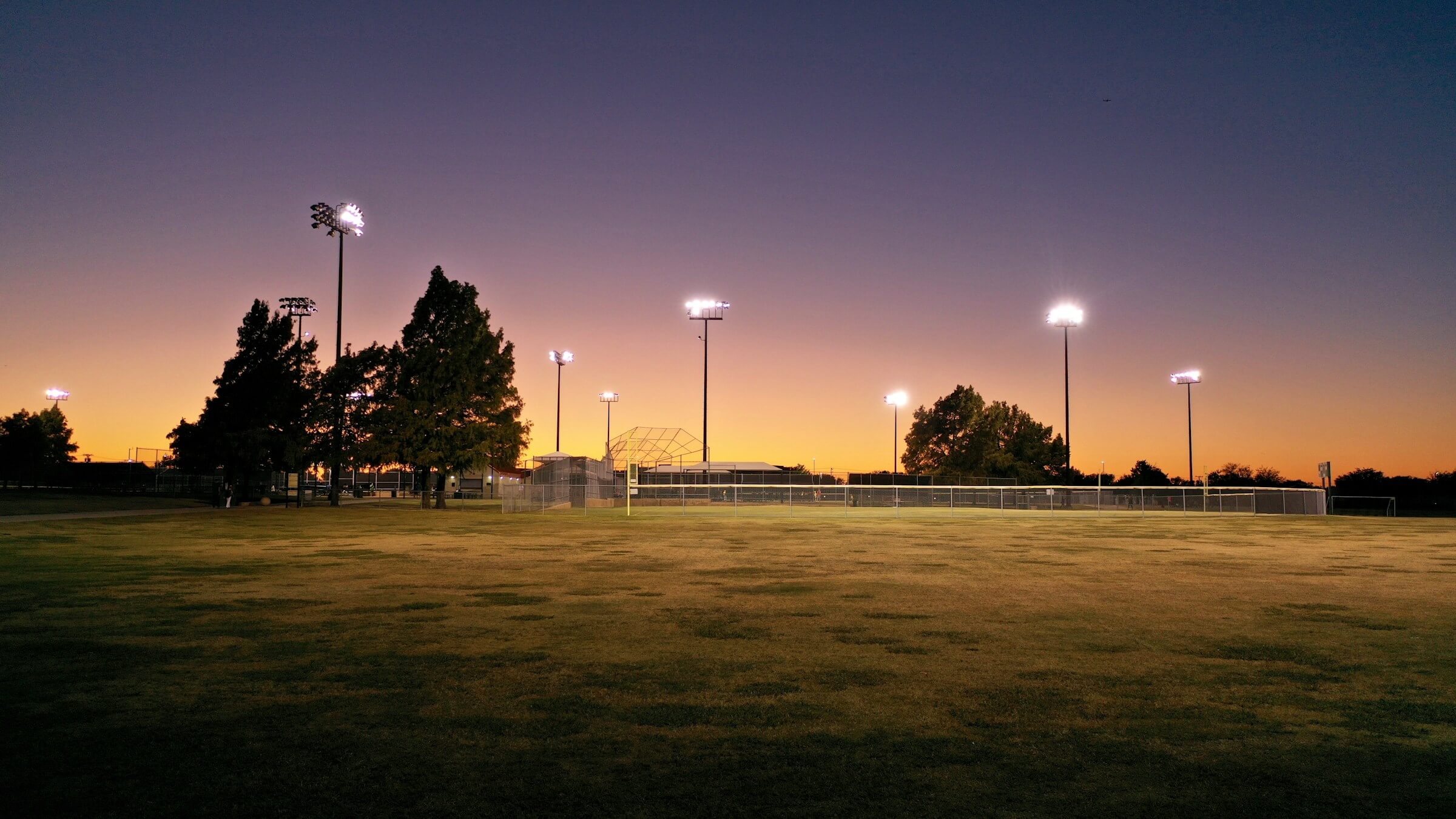
Unlike the others, Greg hadn’t been able to wait until the first game was over to crack open a beer. After two months of sitting in those bleachers, watching through the backstop as his girlfriend Kim’s team played weekly double headers, he needed the beer just to get through the next inning, the next batter, the next pitch. Lately, he’d begun to experience this desperation as anger, even fury, and he couldn’t account for the sheer quantity of it. The game itself didn’t require liquid reinforcement; he enjoyed taking in a ball game, even if it was just slow pitch, and even if one of his asshole buddies had recently suggested he’d rather castrate himself with a nail clipper than intentionally watch women play slow pitch softball. Back in high school Greg had been a ball player himself—a pretty good one, too, especially considering his lack of talent. A slap hitter with a rag arm, he’d used other means to have an impact on the diamond: a sharp eye at the plate, a knowledge of opposing players’ tendencies, a willingness to charge hotly-hit ground balls in order to shorten his throw to first and lengthen the time he had to make it.
That Kim didn’t have to employ any of these strategies was frankly awesome to behold. She was, simply put, a stud. Ran like a gazelle, hit with power all over the field, possessed a cannon for a right arm. She’d played college ball, as had most of her teammates, and why they’d all chosen to play in this slow pitch league was beyond Greg. He’d learned while subbing for a high school history class that families used to sit on the hillside with picnic baskets and watch bloody battles occur right in front of them, and though he couldn’t remember which war this was (Revolutionary? Civil?), his attendance at Kim’s games often felt disturbingly comparable. By the second inning of tonight’s first game, the opposing fielders were already standing on their heels as if ready to retreat.
That was the main difference between the picnickers and himself: he wasn’t watching battles so much as massacres.
Which wasn’t the worst part.
The worst part was all the other fans—which is to say, the fathers. That they came to every game was strange enough. Their daughters were all around his age, a good five years removed from college, playing in a rinky-dink rec league—but you’d never guess it by the way these guys behaved. They spent the whole game with their voices raised: sometimes cheering, sometimes complaining about an umpire’s call, sometimes talking directly to their daughter through the backstop fence. Honestly, Greg didn’t know what it was about men and sports; it was as if most of them felt expertise was genetic, even anatomical. Whether they’d ever played the sport past grade school was beside the point. Their penises gave them authority. Of course, after all his years playing organized athletics, Greg was used to these blowhards; what he wasn’t used to, what he couldn’t explain or compute, was how their daughters actually listened to what they had to say. Every time one of these guys told his daughter to choke up or to wait for her pitch (in slow pitch freaking softball), Greg expected the batter to turn and tell her old man to pipe down—but she never did. Instead, she moved her hands up the handle of the bat. She watched a perfectly hittable pitch float across the plate and into the catcher’s glove.
He’d asked Kim about this and the only answer she’d offered that made any sense to him was that they needed this—they meaning the dads—because it was all some of them had left. She was talking, Greg knew, about her own father, who might have been the loudest of the bunch: his wife, Kim’s mother, had left the family for Arizona shortly before Kim and Greg started dating. Though Greg didn’t know what exactly to make of Kim’s explanation—was her father reacting to the family and life he’d lost or reenacting it? had he always carried on like this or was this something new?—he couldn’t deny its poignancy. If her team was simply allowing these guys to live out or live in their memories, Greg supposed he could see some merit in the gesture.
Just not without a few beers first.
Now that the first game was over, they all congregated away from the field and next to the street: fans and players shot the breeze as they leaned on cars and waited for the ump to return from the port-a-potty. Kim’s dad was talking with her about keeping her elbow up when batting, and Greg watched her nod and suck some beer out of the ring of her can. He debated refuting the advice on the car ride home—it’s physically impossible to swing a bat with your elbow up—but knew his information wouldn’t be any more helpful than her dad’s misinformation was hurtful. Her eye-hand coordination was so good that for her hitting wasn’t really a matter of technique. She saw the ball and she hit it—that was about as technical as she got. The indignation that was swelling up inside him was entirely unproductive, Greg knew, and he let his gaze wander over Kim’s head, into the street.
That’s when he saw the boy.
The kid was wearing only a T-shirt and a diaper—no shoes—and was new enough at walking that he wobbled into the street, his footsteps short and fast and a little ahead of the rest of his body. He collapsed in a sitting position in the middle of the road. In Greg’s half-drunken state, this sighting was at first a pleasant one: Greg took it in as though he were watching a blooper reel, a home video taking place live and right in front of him. It wasn’t until he saw the approaching motorcycle that his attention snapped into focus.
“Hey!” he said. “Hey, kid!”
Without even knowing it, he’d worked his way between two cars, Kim’s and another one, and was striding into the street. Greg scooped the boy up and carried him with one arm as he would a baby, though this kid was a little big for that. Greg wedged his other arm under the boy’s armpit and out the other side; he opened his hand, fingers rigid. The gesture was intended to stop oncoming traffic, but now that Greg had the boy safely secured, he realized that it was unnecessary: the motorcyclist must have slowed down because he was still half a block away and puttering along.
The boy’s face was doughy, blank, and stayed that way when Greg offered a steady stream of reassurance: hey there how are you I’ve got you you’re going to be fine you’re going to be just fine. The kid must not have believed him, though, because his body somehow went limp and squirmy at the same time in an effort to escape Greg’s grasp. The two of them were across the street now, and Greg readjusted his grip. “Where’d you come from?” he asked.
Instead of answering, the boy began crying. Which wasn’t too surprising: after all these years working with kids, Greg knew how quickly they picked up on all forms of adult emotion, and Greg’s body was currently thrumming with anxiety. He loosened his grip on the boy, his fingers un-prying one at a time, and tried speaking to him again.
“Don’t worry,” he said, trying to slow down his words. “You’re going to be okay,” he said.
His voice was still edged with expired panic, though, and the boy began to shriek.
Greg only now became aware of his surroundings. He was on the sidewalk of a residential neighborhood, and though it felt like he’d been walking a long time, he was in fact no more than a block away from the softball diamond. Without having to turn around, he knew that everyone—the players, the fathers—was watching him from across the street. The houses in this neighborhood were different colors, but their similarity in size—small—and their proximity to one another—they were no more than a few feet apart—made them look identical. It wasn’t until Greg’s eyes got to the house on the corner, no more than twenty yards away, that he noticed any variation: the front door was open. “This one look familiar?” he asked, though he expected and received no response. He walked across a small, flat yard and up a two-step front stoop. The door was indeed wide open but there was a screen door in front of it, and after Greg swung it ajar, he said, “Hello? Anyone home?”
The boy wailed and wriggled even harder. Maybe this was the house. Maybe he wanted to go inside.
If Greg set him down—right here on the front stoop, or even in the entryway—he was reasonably certain the kid would stop screaming the second his feet touched the ground. But if he set him down, what next? Would the kid bolt? Which way would he go? Away from the house or farther into it?
Noises came from inside the house, someone opening or closing a door or drawer, and, a few moments after that, a woman stood in front of him. She was small, under five feet, and her T-shirt was baggy enough to be a dress. All but one of her toe nails were painted red. It wasn’t clear whether she was wearing any shorts.
“Hi,” Greg said, holding out the boy. “Found this little guy on the street and—”
Before he could finish the sentence, the woman took the screaming kid from his outstretched arms, backed up and closed the door.
No thank you.
No have a nice day.
No words of joy or relief.
Did she even give him a nod before shutting the door in his face?
He stood there a while longer, the screen resting on his shoulder blades, before heading down the stoop and crossing the yard. When he got to the sidewalk, he saw he’d been right: even from over a block away, he could see that they were all facing him. Staring at him. As he got closer, a few people actually clapped, then a few more.
The umpire called through the fence—they needed to get going if they were going to beat the dark—and everyone turned around and headed back to the diamond. Greg had a surprisingly strong urge to stay right where he was, to stand and watch the game from across the street. The field was below street level, so his vantage point and line of sight would be pretty good, considering the distance.
“You coming?”
It was Kim. She stood there by the cars, smiling. She waved her hand in an ushering gesture and Greg crossed the street.
“You should have seen yourself,” Kim repeated. For the last several minutes she’d been using and reusing words like take charge and decisive.
The two of them sat in her car after her second game. They’d been there long enough for everyone else to clear out and for the lights on the ball field to shut off. The car itself was both big and relatively new, a Subaru something or other, and was a parting “gift” from Kim’s mother, which was Kim’s and her father’s way of saying she left the vehicle in the garage when she left the state.
“Seriously,” Kim said. “It was really cool seeing you in action.”
This post-game idling was something of a ritual for them and usually consisted of Greg talking and Kim stretching. He would go over each nonchalantly spectacular play she made over the course of the two games while she reclined her chair and pulled her knees to her chest. This might have sounded like an exercise in vanity—Kim luxuriating in his dutifully supplied praise—but it wasn’t like that. Greg wasn’t entirely sure why he persisted in offering this praise, but it definitely had something to do with his need for her to know that he knew: the others’ enjoyment of the game was related solely to the number of runs that were scored or the number of times they could all cheer together, but Greg’s appreciation sprang from the unique grace and style with which Kim moved and played. Oddly, she seemed as unconcerned with her grace as the others. This wasn’t false humility, either: she knew she was really good but didn’t care to analyze it any further than that, and it was her disinterest in the subject that made their post-game conversations so one-sided. Eventually, after she’d worked her quads and hammies enough to suit her, she’d interrupt his adulation by sitting up and starting the car. For a little while, at the beginning of the summer when they’d first started dating, she’d seemed to find his gushing fairly amusing, but her tolerance for it (and, he was reasonably certain, for him) had shrunk as the summer wore on.
Anyway, tonight was different. Tonight, she sat up rather than lying back; tonight, she was the one piling on the praise.
“No one could stop talking about you the entire game,” she said. “That’s how impressed they were.”
“They?” Greg had spent the game sitting where he always did—in the bleachers with all the other fans, no more than ten feet from either dugout—and he hadn’t heard his name come up in any conversations. Still, Kim hadn’t been this excited in weeks, not in front of him, anyway. He was glad to play along.
“My teammates,” Kim said. “Jess, Jen, Liz. My dad said it was about time he had the two of us over for dinner.” She was talking quickly and with her hands. “One second everything was normal, and the next you were out there, saving a kid’s life. I didn’t know you had it in you.”
She sat in her seat facing him, both of her long, toned legs tucked underneath her, her fingers brushing his side as she talked. She was still wearing her sliding pad over one knee, which was unusual; typically, she peeled that off as part of her postgame stretch routine. Greg imagined grabbing it, dusty as it was: he imagined letting go and staring at his hand print.
When he lifted his eyes, he found her staring back at him. She tilted her head and opened her eyes wider and smiled at him, and then she swiveled in her seat and turned on the car. The highway was behind them, but rather than make a U-turn, Kim drove forward.
“Where are we going?” Greg asked.
She didn’t reply, but he got his answer soon enough: After a couple blocks she turned into an elementary school parking lot. The lot was empty but lit. Kim pulled into a parking spot that faced a playground.
“Have you ever parked?” she said.
“You mean like parked parked?” he said, even though he knew that’s exactly what she meant. The answer was no, he hadn’t, because he was pretty sure no one in their generation had parked; anyway, they hadn’t used that word for it. He’d never necked with a girl, either.
Greg shook his head.
“Me neither,” Kim said. “Wanna try?”
Here? In an elementary school parking lot? Greg wasn’t complaining, but he had to ask: “What’s gotten into you?”
“Nothing,” she said. She turned off the car. “I just like when you’re all assertive like this.”
He didn’t know what she was talking about. As far as he could tell, she was the one calling the shots. And as for the thing with the kid, it hadn’t felt to him like he was being assertive. Just the opposite. More like he wasn’t making any decisions at all. Things had happened to him, one after the other, and he’d only had enough time to react to them.
Then again, maybe that’s exactly what Kim was referring to. Maybe for her assertiveness wasn’t conscious so much as instinctual—a matter of reflexes.
Her hand crawled under his cargo shorts, up his thigh. “Wanna get in the backseat?” she asked.
Greg looking straight ahead at the playground. The slide was one of those ones with rollers on it. Just then he thought: Maybe this is where the kid was going.
He felt her grab him.
“Wow,” she said. “I’ll take that as a yes.”
When Kim dropped him off later that night, Greg went to the front door and pretended to dig for his keys until she pulled away. Then he walked around the house to the sliding glass door in back. He’d left the door unlocked, and he pulled it open as quietly as he could. As usual, he heard people talking on the TV upstairs. The more sporadic his dad’s work had become, the later the TV stayed on.
Greg still had his room upstairs, but he rarely used it anymore, choosing instead to sleep on the couch. Why not? There was a bathroom down here, and a closet with plenty of blankets. He kept a basket of clothes in the laundry room. Besides his four years in a dorm, this was the closest he’d ever been to living away from home.
When he got to the bathroom to brush his teeth, he found a note next to the sink.
Greg,
Any chance you could help me with the mortgage again?
Please don’t tell your father.
Mom
This had been going on, these notes, for a while now, and he knew his mother’s reluctance to talk with him face to face about them had to do with her embarrassment. But the truth was that he didn’t mind paying—he was twenty-seven for God’s sake, and he liked to think of the notes as his bills for room and board. When he signed that first check a few years ago, the dynamics of the living situation instantly changed—whether or not his father knew it.
Greg heard whistles and commentators upstairs. His dad was probably watching some old game or other. A re-run on ESPN Classic. Go to bed, Greg said, under his breath but forcefully. He was thinking of his father as he said it—his eyes would be glassy by now, the lids drooping —but he put the note in his pocket, flicked off the light and followed his own advice.
He’d set some blankets on the couch before he realized he’d forgotten to brush his teeth.
That night Greg saw the boy again. In a dream.
The blank, teary-eyed face, the doughy cheeks: someone’s hands smushed the cheeks (tenderly? violently?), opened and closed his mouth. Someone was talking, too, but it couldn’t have been the boy because the voice was an adult’s and didn’t sync up with the movement of the boy’s lips.
Greg woke up the next morning with questions: Had the woman accepted the boy from him or snatched him from Greg’s outstretched arms? Had the boy stopped or continued wailing once she grabbed him?
It all happened so fast.
Greg had been in such a rush to hand the boy over... it seemed now that he hadn’t so much returned the boy as disposed of him. Almost like—he couldn’t explain it—but like he was party to an abduction rather than a reunion. Which made no sense, he knew. Who, in this scenario, was the abductor? The woman? Did he think she’d been sitting in her house all day, biding her time—painting her nails!—until someone smuggled a child into her arms?
Ridiculous.
Still, that was the word for it: abduction. Something had been stolen last night—Greg just couldn’t figure out what, or who, or why.
He’d spent the last several summers working for the local community ed. Originally, he’d inquired only about the tee-ball lessons, but Stacy Collins, Activities and Sports Director, said they needed someone to teach tennis, too. When he told her he knew almost nothing about that sport, she said not to worry: “It’s more of a glorified babysitting gig than anything else.”
Which turned out not to be true, unless glorified meant totally unnecessary.
There were many things Greg hated about the lessons—asking kids to get in yet another single file line was one of them; pretending not to hate the lessons was another. Nothing was more draining, he’d found, than feigning enthusiasm.
But the thing he hated most were the kids’ parents—the moms and dads (but mostly moms) who congregated outside the courts and watched every ball their son or daughter swung at. If it was up to Greg, he would have simply divided the kids up at the beginning of the hour and let them face off against each other until it was time to go—but it wasn’t up to him. The one time he tried letting the kids play each other, the parental posse had a tizzy fit. A few complained right then and there to his face; others called up Stacy Collins. What were they paying him for, they wanted to know, if he wasn’t going to do any teaching? It certainly wasn’t to babysit, a job they were more than happy to take off his hands.
Stay in line, Michael, one of them would say.
Keep your hands to yourself, reminded another.
Or, Greg’s favorite: Those rackets aren’t swords.
All that was left for him to do was stand on the other side of the court and think up things that sounded like advice: Keep your eye on the ball. Move your feet. Bend those knees. Etcetera, etcetera. His guilt about being an impostor was minimized by his certainty that no one could fine-tune these kids’ games in the space of a couple hours a week. Most of them hadn’t yet made double digits in age and hadn’t yet developed the coordination the game required. That was the great irony right there: the best way for these kids to improve really would be for them to knock the ball around the courts with another partner.
Today’s lesson had been particularly draining. Greg managed to forget his water bottle, which would have been okay if the lesson was in the evening, when it was starting to cool down, instead of during the middle of the day, when it was still hot and muggy even though it was August. What made it particularly awful was that, for once, he’d been looking forward to the lesson. On the car ride over he’d come up with a way to turn tennis into a baseball game. He divided up the teams and went over the bases. It was all going great until a kid named Nick swung his racket with two hands and sent the ball sailing over the fence. Nick assumed he’d hit a home run—so did Greg—until his mother’s stern voice interrupted the celebration: “Nicholas—go get the ball right now. In tennis we hit the ball in the court, not out of it. Isn’t that right, Coach Greg?”
Greg stood there, not sure what to say.
“You heard me, Nick,” the woman said. “Go get the ball. And when you get back you can sit with me until you’re ready to listen to your coach.”
For a second, Greg and Nick looked at each other, the kid’s eyes welling up and wobbling. He’d been a tough kid to handle this summer—hyperactive and almost spastic in his lack of athleticism. He was freckled and so fair-skinned that he wore a safari hat with a big brim and flaps that covered the ears. He didn’t swing at the ball so much as wail at it, flaps a-flopping. Greg considered that perhaps his mother’s scolding was knee-jerk rather than calculated. A book was splayed open on her lap—maybe she wasn’t aware of the game they’d been playing. Then again, maybe she was aware but didn’t see the point of it. What Greg knew for certain was that his only options were to leave the kid stranded or risk showing up the mother by correcting her. The last time all those parents called in, Stacy Collins had told him apologetically but forcefully that she couldn’t afford not to listen to their complaints, and he’d understood the message loud and clear: he either got on board with what they wanted or he found himself another line of work.
“It’s my fault,” Greg said to Nick’s mom. “I never explained that home runs are hit differently in tennis baseball than in real baseball. I should have been clearer.”
The statement was intended to be diplomatic, to defuse the situation, and on that front it had worked. But Greg still regretted making it. He tried to continue the baseball game, but now every kid just went through the motions, doing their best not to do anything that would result in public humiliation.
After a while, he gave up on the game and got them back into a line. The kids spent the next half hour shuffling from back to front to back again. For his part, Greg couldn’t bring himself to hustle down wayward shots or go giddy with congratulations when someone hit a good shot. He was nothing but a stationary ball-feeding machine, tossing one tennis ball after another the exact same height and length, just long enough that they landed past a crack on the court but short enough that they didn’t bounce over the kids’ heads.
At the end of the lesson, after the kids had picked up all the tennis balls, balancing them on their rackets and dumping them into a plastic bucket, Greg announced they had one more activity to do before leaving. He held up the bucket and instructed them each to grab a tennis ball. As they did, he said, “Earlier in the lesson we had a little misunderstanding. Nick’s mom pointed out that in actual tennis you don’t want to hit the ball as far as you can.” Nick’s head was drooped in shame; all Greg could see was the kid’s safari cap. “Sometimes, though,” Greg continued, “we do want to hit the ball as high as we can.”
Nick looked up at him. So did the others. “If we’re playing against a really tall person,” Greg said, “then we have to hit the ball really high to get it over their head.”
He’d never actually watched a whole tennis match, but he’d seen enough highlights and played enough video games to know this was more or less true.
He spaced all the kids out safely and told them to turn so they were facing their parents. “What do you think?” he said. “Can you hit it high enough that it goes all the way over this fence?”
As he waited for the kids to get in their various stances, he glanced at all those parents sitting in a line on the hillside.
“Ready...” he said. “Aim... Fire!”
The next time Greg saw the toddler he didn’t see him.
He imagined him: standing somewhere in the house on the corner, playing in the small strip of a yard.
This was after the tennis lesson, as Greg drove home, only instead of going home he found himself heading back to the softball diamond, driving past the house on the corner. Contrary to his imagination, no one was in the yard, though once again the front door was open, and before Greg returned to the highway, he doubled back a few times and kept his eyes peeled, just in case the boy was once again wandering the streets, in need of real help.
When Greg agreed to have dinner at Kim’s dad’s place, he hadn’t realized he was agreeing to an interrogation. It wasn’t as if this was the first opportunity they’d had to talk. All summer they’d been sitting side by side in the bleachers, and all summer the man had attempted only the briefest forms of chitchat: Did he see the game last night? Can you believe these bugs? I can’t stand the taste of those new energy drinks, can you?
Tonight, though, Greg was barraged with all the questions he’d expected months ago: “So I hear you’re living at home?” “Kim says your dad’s a plumber?” “What are your career plans?”
At first, he was overwhelmed (this was his first time seeing the house; was it too much to expect a tour of the facilities before the interview began?), but then he realized Kim’s dad was answering all the questions himself: “Good for you. Why pay when you can live free of charge?” “Smart man. Everyone needs a working toilet no matter what’s going on with the economy.”
The answer to the last question, according to Kim’s dad (“Call me Doug. Mr. Langer’s for kids and clients”), was the reason he’d asked Greg over.
“You’re a proactive guy, aren’t you?” said Doug.
“I think so,” Greg started to say, but Doug was already moving on to his next point.
“I wasn’t sure for a while there,” he said.
“Dad,” Kim said.
The three of them sat in an enclosed deck so Kim’s dad could keep an eye on the grill. Kim and Greg touched shoulders on a wicker couch with flower-patterned cushions while Doug squatted on his cooler (despite the fact that there were plenty of available chairs).
He swatted his daughter’s objection away as if it was a mosquito. “It’s okay,” he said. “It took me awhile to get going, too. I’m the kind of guy who needs reasons to get off my duff. But when I find them—you’re sitting next to the main one—look out: I’m up and running before you know it.”
He literally stood up part way, and for a second Greg thought the man was offering a demonstration. But then Doug reached between his legs with one arm and lifted open the cooler. With the other arm, he reached inside and pulled out a bottle of beer. He brought the bottle out from between his legs and offered it to Greg. When Greg shook his head, Doug twisted off the top and took a swig.
“When I saw you take care of the situation with the kid the other night,” he said, “I realized we were a lot alike, at least in that regard. Tell me you know what I’m talking about.”
Greg didn’t tell him he knew what he was talking about. He just sat there and sweat. It was sticky enough on the porch that Greg’s polo shirt suctioned to his body.
“Hold that thought,” Doug said, making his way to the grill. He opened the lid and smoke gushed out. Doug leaned back, coughed and blinked. The brats sizzled; the heat of the grill overpowered Greg’s ability to smell them. Doug leaned back in and Greg thought he was going to turn the meat. Instead, he stood there as if mesmerized by the smoke. After a few seconds, he brought his bottle of beer to his mouth and blew on it. It made a sound like a tiny steamboat.
“Dad.”
Doug turned around. “What?”
“Was there a point to what you were telling Greg?”
“Oh, yeah. Sorry.” He looked at Greg. “I wanted to run a career idea by you.”
The idea had to do with teaching private tennis lessons. That way, Greg could charge whatever he wanted. Plus, he could go wherever he was needed. What parent wanted to drive to another town when there were courts just a few blocks away? Doug talked as if he were revealing a cutting-edge idea, as if there weren’t private instructors all over the place. “The key is marketing,” he said. “Getting your name out there. Which is where I come in.” He said he already had a solid demographical base of possible interest lined up—parents and grandparents of the five- to ten-year-old set—and that was just off the top of his head. “Say the word and I’ll be happy to go one-by-one through my trusty rolodex. Okay, okay”—he actually winked—“I’m not that old, but seriously: I’m willing to cold-call every last parental guardian in the state if you’ll let me.”
Afterward, in Kim’s car again, Kim apologized for her father, and Greg assumed she was referring to the man’s sales pitch. He felt like he’d been impaled by the sharp end of a pyramid scheme. Doug had transformed from loudmouth father to New York mad man so quickly that Greg had barely managed to fend him off.
Thanks, sir. I’ll definitely think about it.
“He just totally zoned out three or four times tonight,” Kim said. “I don’t know if it’s loneliness or old age or what.”
Greg hadn’t really noticed. If anything, he wished the man had zoned out more. Greg could have used the time to catch his breath.
“Are you really considering his offer?” Kim asked.
“What, the tennis lessons?”
Was she kidding? She knew exactly how he felt about those damn lessons.
“Wasn’t it cool how excited he got?” she said. “I haven’t seen him like that in a long time.”
Greg stared at her. She was driving with her knee because both her hands were occupied with a hair binder. One time while he was in the car with her, she tried driving with her toes, just for the heck of it. She could do it, too. She’d said she might need his help seeing over the wheel, but she didn’t. Greg remembered what she looked like: one leg raised ninja-kicking high, the other rooted to the floor. He remembered her toes, curled around the wheel; the flesh, to his surprise, was puffy, the nails ragged. She said it was from biting them, sometimes until they bled. She didn’t know why she did it, she said. Stress, probably. About what? he’d wondered. She’d been steering with her foot with no anxiety whatsoever.
Nor did she look stressed right now. She stared through the windshield, her smile sharpening her cheek bones. Maybe she had been kidding.
“It would give my dad something to do,” she said.
Another thought occurred to him: maybe the lessons had been her idea all along, not her father’s. Maybe she’d been looking out for his, and only his, best interests.
The next time Greg saw the boy it was two-dimensionally.
This was several mornings later, when he opened the door to his parents’ fridge. He spotted the milk, and it made him think about those cartons in his elementary school cafeteria with the kids’ faces on them. Did they still make those? He couldn’t remember if they were sketches or photographs—or were they doctored in some way, projections of what the kid probably looked like now that he or she was three or four years older than when he or she went missing?
Greg imagined the boy’s face in pixilated black and white on the side of the carton. He leaned out the doughy cheeks to account for an increase in age. He elongated the face. What was the statute of limitations on age? When was someone too old to qualify for the milk carton? Did they ever put kids’ faces on bigger cartons like this? That would be the thing to do. If you really wanted to get someone’s attention, put a blown-up picture of the kid on the side of a gallon jug.
“Grab something and close the door,” his dad said. He was sitting at the kitchen table with the paper and a bowl of cereal in front of him. All Greg’s life, his father had skipped the news section and flipped to Sports, but not anymore. Whenever Greg saw the phrase Tea Party, he imagined his father holding a small porcelain cup, his pinky extended.
His father never missed breakfast. He stayed up late into the night and had nowhere to go in the morning, but he got up before either Greg or his mother.
Greg grabbed the milk carton and closed the door. “Gee whiz, Pop,” he said. “I sure am sorry, shucks.”
It was an ongoing joke, this kind of talk, that Greg had been making since he was old enough to recognize that their relationship wasn’t like that. His dad had never been the sort of father to give tidy life lessons or enforce a curfew; he’d never checked up on Greg or asked him about his day. It wasn’t that he was aloof—Greg understood that now. He was happy to hear about whatever Greg wanted to share but felt no parental obligation to request the information. Greg was in high school by the time he figured this out—he sometimes wished someone (his mother?) had explained it to him earlier—and that’s when he started the ’50s speak. It would have been more appropriate to call his dad by his first name—Gerald, Gerry—than Pa or Pop.
Maybe it had finally gotten old, though; his father didn’t react this time when he said it, just kept spooning up soggy Cheerios and reading his paper.
Greg had the impulse to go get his checkbook. To stand next to his father as he wrote Pop’s mortgage on the For: line. To wave the check in front of his dad’s face and say, Here you go, golly gee whillikers.
He didn’t do these things, though. Instead, he put the milk back in the fridge and said, “Mind if I take your car? Mine’s low on gas, and I don’t have time to fill it up before work.”
That got his father’s attention. He looked away from his paper, in Greg’s direction but not at him; his eyes looked the same as when he was watching TV late at night: far-off and glazed over. “Sure,” he said finally, with a laugh that was more of a grunt. “I sure as hell don’t need it.” He took the keys out of his pocket and flipped them Greg’s way.
Greg didn’t use the keys to get to the tennis courts, though. Here he was, half an hour later, parked next to the softball diamond, the motor idling. His dad’s car wasn’t new, but it was a lot newer than his own. It still had that new car smell, a phrase which, as far as he could tell, usually just meant leather seats. Unlike Greg’s car, which was the same manual lock, manual window, manual steering beater he’d had since high school, his dad’s car had air conditioning and a lock button on the keychain. His dad brought the car home four or five years ago but had hardly driven it since. For most of Greg’s life, his father had driven all over the state, racking up the miles; now he talked self-deprecatingly about his show car, though it was the only car he owned.
Greg sat there a moment longer, enjoying the cool air and sense of roominess that could be explained less by the car’s size than by its lack of clutter. No buckets of balls in the backseat. No extra rackets. If he turned the car around right now, he’d probably arrive at the courts in time for all but the first morning lesson—but there was no use in trying: even if he made it to the next lesson, he wouldn’t have the proper equipment. You can’t play tennis without tennis balls.
He turned off the engine, got out, and crossed the street.
The neighborhood was old enough that all the garages were detached and meant for only one car. The houses looked to be one level, though Greg had been in homes this size where the attic was converted into an extra room. Everything seemed to be in pretty good shape; the grass was cut, the paint unchipped. Dogs yipped at him on the other side of fences.
At first glance, the house on the next corner fit right in. Same general size and shape. But on closer inspection, it looked as though the place had single-handedly endured the brunt of a windstorm. An infestation of dandelions fluttered their white seed into the air. A panel of siding hung crookedly and twitched in the breeze. One section of the backyard fence was visible from where he stood, and it was missing a wooden slat.
The front door was once again wide open.
Greg’s plan had been to walk past the house. Just some guy out for a stroll. But that door stopped him in his tracks. What the hell was going on? Who the hell leaves their door open at all hours of the day, and with a kid to worry about?
Greg didn’t have any answers to these questions, but he was about to get them. After a few strides he was across the front yard and climbing the front stoop. This time, he didn’t bother saying anything. He didn’t knock or look for a door bell. He unlatched the screen door and stepped inside.
Instantly he understood the reason for the open door: no air conditioning. It was hot enough outside, but in here—even with the windows pulled all the way up—it was a sauna. He heard a fan going somewhere, but he couldn’t feel it. He turned to his right, and there she was—the woman from before. She was lying on a couch, sleeping. Like before, she was wearing a baggy T-shirt. It stuck to her sweaty stomach and thighs. Her toe nails were blue rather than red this time, and of all the things to consider, Greg realized that his original assumption about her nails might have been wrong. Maybe she’d been removing the polish instead of applying it. The woman adjusted her position on the couch, and Greg noticed something tremble on the arm rest. Two things, actually, both of them flesh colored. His first thought was ear plugs, but these things were too knobby for that.
Hearing aids. That’s what they were.
Of course.
The woman was deaf. Had she been wearing them the other night? It had taken her awhile to get to the door. But why else had she come to the door if she hadn’t heard Greg or the boy standing out there?
The boy.
Greg turned again. A crib stood in the other corner of the room. When he got to it, he peered over the walls and saw the kid.
Twice.
Twins, Greg thought.
They lay next to each other, curled up together without quite touching. Sleeping, like their mother. By finding them, Greg found the fan, too. It was stationed on the other side of the crib, whirring cool air into it. The fan had a swivel setting, a switch you could turn, but the woman evidently wasn’t concerned with circulating the air. She wanted it all in one place.
When Greg looked into the crib again, one of the boys had his eyes open. Was it the boy he’d carried? He had the same doughy cheeks, the same blank expression, but he wasn’t shrieking at the sight of Greg.
Not yet, anyway.
Greg decided not to push his luck. He peered into the crib a moment longer before he turned to leave. Something about the fact that there was two of them: it was reassuring. It was enough.
Enough, anyway, to get him out of the house.
He tiptoed out of the room, just in case the manner of his footsteps made a difference.
A few nights later Greg was back at the field for one of Kim’s double headers. He had just stepped out of the port-a-potty and was on his way back to the bleachers. This was no small hike; the port-a-potty was for some reason all the way past the left-field fence, a good three hundred feet from home plate. He had made it a third of the way back when someone from the other team hit a sharp grounder in the hole. Kim was playing short and in one motion she dove and snared the ball. Greg thought she was going to quick-fire to first from her knees but she didn’t. She took her time standing up. That’s what having a good arm buys you, Greg thought. Time. Her throw to first was a little high, but not much: it definitely had the batter beat.
Except the first baseman didn’t catch it. The ball skipped off her glove and over her head and ricocheted off the fence behind her.
Even from here, two hundred feet away, Greg could hear Kim’s dad’s disappointment. “You gotta make that catch,” he said. Who was he talking to? The first baseman? Those around him in the stands? Apparently, both. His body was turned partway on the bench so that he was sort of facing the stands and the diamond, and sort of facing neither; anyone who was looking at him was looking at his profile. “You gotta catch with both hands,” he said.
Which wasn’t really true—not anymore. There was a time, before gloves had the sorts of pockets they have today, that you needed to use the other hand to keep the ball from popping out. But that was a long time ago. Greg was pretty sure that the catch-with-both-hands lesson was already relic when Doug was a kid.
As always, Greg had the desire to correct this man, to set the matter straight, but mostly he wanted to stay right where he was, as far away as possible.
It was nice here. Doug was still carrying on—opening and closing his mouth and hands, demonstrating for whoever would pay attention the “proper” way to catch—but he was doing so more quietly. At this distance Greg couldn’t hear a thing he said.
Greg lifted and lilted his shoulders in a deep sigh. He adjusted his focus back on the game.
For once, he was able to watch Kim play without any of the anger building inside him. He experienced the relief as a physical sensation—like getting a haircut and feeling the cool air against his neck, only his whole body that felt like that. He hadn’t felt this good since the beginning of summer at least, maybe not since that spring when he first saw her play. She was a Phy Ed teacher and he’d subbed at her elementary school the day of a faculty vs. students softball game. Most of the other teachers wanted nothing to do with the balls hit their way, so the two of them played most of the positions simultaneously. Greg patrolled the infield, Kim the outfield; together, they must have been responsible for over half the outs the faculty recorded. A week after that, Kim asked him to sub for her, and not too long after that she invited him to one of her softball games. It was only in hindsight that he knew for sure that she’d asked him on a date, or her version of it. They’d been together all summer, but they hadn’t once dressed up fancy or done dinner and a movie. They’d never even used the word dating. They played catch, or one-on-one basketball, or met up late to fool around in the car or her apartment. He knew how rare this was, how great it would sound to his buddies, and in fact that’s one of the things he liked most about the relationship: envisioning conversations with the guys about her.
This chick is awesome, they’d say.
Like a dude in a hot chick’s body.
Like something out of a beer commercial.
They’d shake their heads and pat his back.
Unfortunately, most of these conversations remained imaginary. By now, nine years after high school, five after college, all his buddies had moved on and moved away. He still talked with some of them—on the phone or online—but that was different; they couldn’t see Kim, which was the actual best thing about their relationship: getting to witness her move. Kim trusted her body completely because moving it, every limb in-sync and in mutual counterbalance, was second nature to her. It required no thought, no conscious mental calculation at all. And—unlike these dads—his buddies would see that right away; they’d be reluctant to attend one of her games, of course, but he’d drag them here and watch them change their minds: See? Greg would say. I told you so. You didn’t believe me but I told you so.
This is what he was thinking as Kim’s game ended, as he walked the rest of the way toward the bleachers and past them to the cars where everyone had gathered. He hadn’t spoken with authority, with true knowledge that others recognized, since his own playing days. He was no star, but he’d been elected captain by his teammates anyway because he had that kind of head on his shoulders, what his coach called “a good noggin for the ins and outs of things.”
As he closed in on Kim and her father, he realized they were both looking at him.
“Good game,” Greg said.
“How would you know?” Kim said. She’d been leaning against her car, but she stood up.
“I was watching from over—”
“I know. I saw you.”
“Well then why’d you ask me—”
“What were you doing over there?”
She crossed her arms. Greg was on an incline and had to look up at her.
“I told you. I was watching—”
“It was so weird,” she said, “you just standing there like that, totally alone and not saying anything.”
Kim’s voice was fierce and getting louder. She’d had a strained smile on her face but it was gone now. From his periphery, Greg saw her dad standing next to him, apparently content to observe the situation.
“It was creepy,” Kim said. “Everyone was creeped out.”
Creepy?
“What are you talking about? Who’s everyone?”
“Everyone’s everyone,” Kim said. “My teammates. They wanted to know what you were doing gawking at them through the fence.”
“What are you talking about?” Greg repeated. His voice was loud before he could get control of it. “I wasn’t gawking—I was watching the game.”
Finally, Doug spoke up. “Just forget it,” he said. “Really, honey. Everything’s fine.”
He sounded, to Greg’s surprise, as if he was the injured party.
Greg looked around. The umpire hadn’t announced the start of the next game, but everyone was walking back to the diamond, including Kim’s father. Soon, Kim and Greg were alone by the street.
“What were you doing, anyway?” Kim said. “Were you trying to avoid my dad? Was that it?”
“What? No—”
“That’s what he thinks. He thinks you were too chicken shit to tell him to his face that you’d rather be on your own doing nothing with your life than work with him.”
Greg didn’t say anything. Everything had gone blurry. Literally. He could hardly see Kim in front of him. An injustice had been done to him, publicly, and the unfairness of it had steamed up his vision.
“Look at you,” Kim said. “Look how sorry you feel for yourself. Like everyone is out to get you. Like you’ve been trapped and no one understands.”
He’d never heard her talk like this. He didn’t even know she thought about these things.
“Well, you know what?” she said. “You’re right. No one does understand. We’re all too busy living our lives. I have to go. Have fun standing there alone and judging us.”
Their shoulders knocked, and then she was past him; her body, usually so loose, had gone tense. As if outrage was her right instead of his.
He stood there watching the players take the field and told himself he’d continue standing there as long as he damn well pleased. Which wasn’t very long. He felt the need to get away from this situation and this place as quickly as possible and he turned and speed walked beside the cars and along the street. He made sure to actually walk—heel first, then toe—in case someone saw him leave. He didn’t want to look like he was running away from anything, even though that’s exactly what he was doing.
He was a block away and then two blocks and then he saw the elementary school and, across the parking lot, the playground.
Greg went through the lot, through the exact space where he and Kim had parked the week before. He stepped onto the playground; the sand was soft below his sneakers. He steadied himself onto the slide with rollers on it and tried to climb to the top. The rollers spun beneath him and he fell to his knees. He grabbed part of the frame of the slide and pulled himself up that way, hand over hand. When he’d made it to the top he kept going, stepping from one wooden platform to another one, higher up. He crossed a drooping bridge that overlooked a tire pit and stepped onto an even higher platform. He was at the top of the playground now, looking down, his toes inches from another slide.
Below him was a court-sized slab of asphalt. On one end of the slab was a basketball hoop; at the other, as if a continuation of the playground, was a jungle gym: one of those metal contraptions that looked like a spider web.
From his perch at the top of the playground, Greg could see there was something dangling from the top of the jungle gym.
A television.
Greg went down the slide to get a better look. Sure enough, the cord of the TV had been lashed onto a rung at the top of the jungle gym. How the cord was able to hold the TV wasn’t clear. The screen was only ten or fifteen years old, but it may as well have been fifty. This was no flat screen. It was big and chunky and probably just as heavy as the ones from way back, the originals, the ones with the wooden framework built around them.
Greg crawled across and up the metal rungs until he was looking straight down at the TV.
Who had put it there? Why? And, just as importantly, how had they gotten it there? The openings between the web-like rungs didn’t seem nearly big enough to fit a TV through them.
With one hand he untied the cord; with the other he held onto it. The knot was hard to get undone because of all the weight pulling it tight, but finally it came free, and he almost lost his arm in the process. The TV jolted the arm straight down before it thudded, screen-first, on the asphalt. Greg wriggled his body inside the spider web, hung from one of the bars and then let go, landing on his feet.
Getting in a crouch, he pushed the TV on its side and inspected it. Nothing seemed damaged. It was a good thing the frame was so bulky; the screen hadn’t even been nicked.
Greg’s phone vibrated in his pocket. He took it out. Stacy Collins. Again. He hadn’t showed up for work since he found the boy—the boys—in the crib, and Stacy Collins had been trying unsuccessfully to get a hold of him ever since. He put the phone back in his pocket.
He was going to have to tell his mom that he’d quit and that he was sorry, but he could no longer help with the mortgage. Not until he found another job.
Maybe his dad would go out and get another job himself, something minimum wage, something to help pay the bills until and unless his plumbing work picked up again. The truth was that he probably would have done that a long time ago if he’d known Greg was contributing to the mortgage. Greg’s mom had wanted to keep quiet about his contributions because she didn’t want to embarrass Greg’s father. She didn’t want to be mean. But that wasn’t why Greg had agreed not to mention the checks; he didn’t say anything because if he did, he’d have to move out. He knew his father well enough to know that the man would sell the house before he allowed himself to be a financial burden on his son. His father wanted him to move out. He hadn’t said so in years, but Greg remembered the words clearly enough. Greg must have been a teenager at the time. The two of them had gotten in a rare fight—he couldn’t remember, at this distance, about what—and afterward his dad had laughed and said that this was why kids eventually moved away from home. No one wanted to be parented for the rest of their lives.
Maybe that’s what was wrong with Greg, all these years later: his father had never really parented him much; maybe he craved more of it.
No, that wasn’t it. That was just him feeling sorry for himself again. That’s how Kim had put it, and now that he was done being angry, he found the whole episode in front of her car thrilling. She had called him out; he had to give her credit for that. She’d said things that were hard but also true, things that indicated she’d been paying more attention to him than he’d previously thought.
Another thing that was hard but true: he wasn’t ready to move out. He was twenty-seven and he certainly didn’t want to be parented, but that didn’t mean he was ready to leave, either. He couldn’t explain it to anyone because he couldn’t explain it to himself. He’d been an independent kid, entirely self-motivated. He didn’t need an allowance or a pizza party to do his chores or get his homework done. As an athlete he’d studied game film and read books and practiced in the offseason, all on his own, all of his own volition. If he was lucky, someone might have labeled him a jock, but not the kind whose glory days were assumed to end with high school graduation.
But none of that changed the reality. And the reality was this: he was an adult who wasn’t ready to live like one. Simple as that.
Using his legs for propulsion, Greg pushed the TV across the asphalt to the edge of the jungle gym. He’d been right: the TV was way too big to fit through a space in the rungs. He looked above and around him—was there a missing rung? Was there an opening that was significantly wider than the others?
He didn’t see one, but that didn’t stop him from making a pact with himself then and there. He wasn’t going to step out of the jungle gym until he’d gotten the TV out as well.
Of course, this was going to be a two-person job. At least. The TV was too heavy to lift more than a few feet off the ground by himself. He’d wait here until Kim’s game was over and she came looking for him. If she didn’t show up he could always call her.
Give me a hand, would you?
He took out his phone again. He’d leave a message: with her, with his parents, with anyone he could think of within driving range. It could be a contest: whoever arrived first would get to keep the TV.
Not that anyone would want it. They’d think it was too big, too old to be worth the effort.
So don’t keep it then, he’d say. You can still help me move it.
To where?
Don’t worry; he had just the place. Only a few blocks from here, too. Together they could lug it up the front stoop, shoulder it through the open front door, and maneuver it through a hallway. They could place it on the floor, in front of the woman on the couch, careful not to smash their fingers or feet as they set it down.
He wondered if the TV had a subtitles button or if you needed a remote for that.
Another thought occurred to him: maybe the jungle gym had been built after the TV was left on the asphalt. Maybe the guys who built the spider web watched the TV as they worked.
That would explain how it got there.
He subbed for an art class once in which the students were making impossible bottles, the ones where an object is way too big to fit inside the bottle but, nonetheless, there it is. He’d held up a liter-sized bottle of coke with a full-grown tomato inside it. How did that get in there? he’d asked the class. It was meant to be a more or less rhetorical question—the teacher warned him that the students would most likely be stumped. She’d also given him the answer: the tomato had grown inside the bottle. All you have to do is remove the vine.
As expected, no one in the third-grade class had come up with the actual method, but one kid had provided a different hypothesis: “You make the bottle around the tomato,” she said, and when Greg corrected her—good thinking, but actually...—she’d stuck to her guns. “I like my way better,” she’d said.
At the time, he couldn’t help admiring her for her willfulness, especially because she wasn’t really wrong. Her way would work, at least theoretically.
And it would work in the case of the TV, too. If the jungle gym was built second, that would solve everything. Well, it would solve something. He knew beyond any doubt, of course, that that’s not what actually happened. The jungle gym was metal and rusty and had probably been around since he was a kid. Those workers watching TV had nothing to plug it into. It was just as likely that someone tunneled the TV in there—through the asphalt and inside the metal web—as it was that the jungle gym had been built around it.
Still, there was a certain satisfaction in finding answers, even if they weren’t, technically speaking, the answer.
Greg gazed through the bars at the parking lot. It was getting darker and darker earlier and earlier. The sky was orange, pink, purple. Soon it would be black.
Greg squinted.
He thought of those two boys, curled up without touching, one’s eyes open, the other’s closed, wailing or not wailing for reasons unheard.