Creative Nonfiction
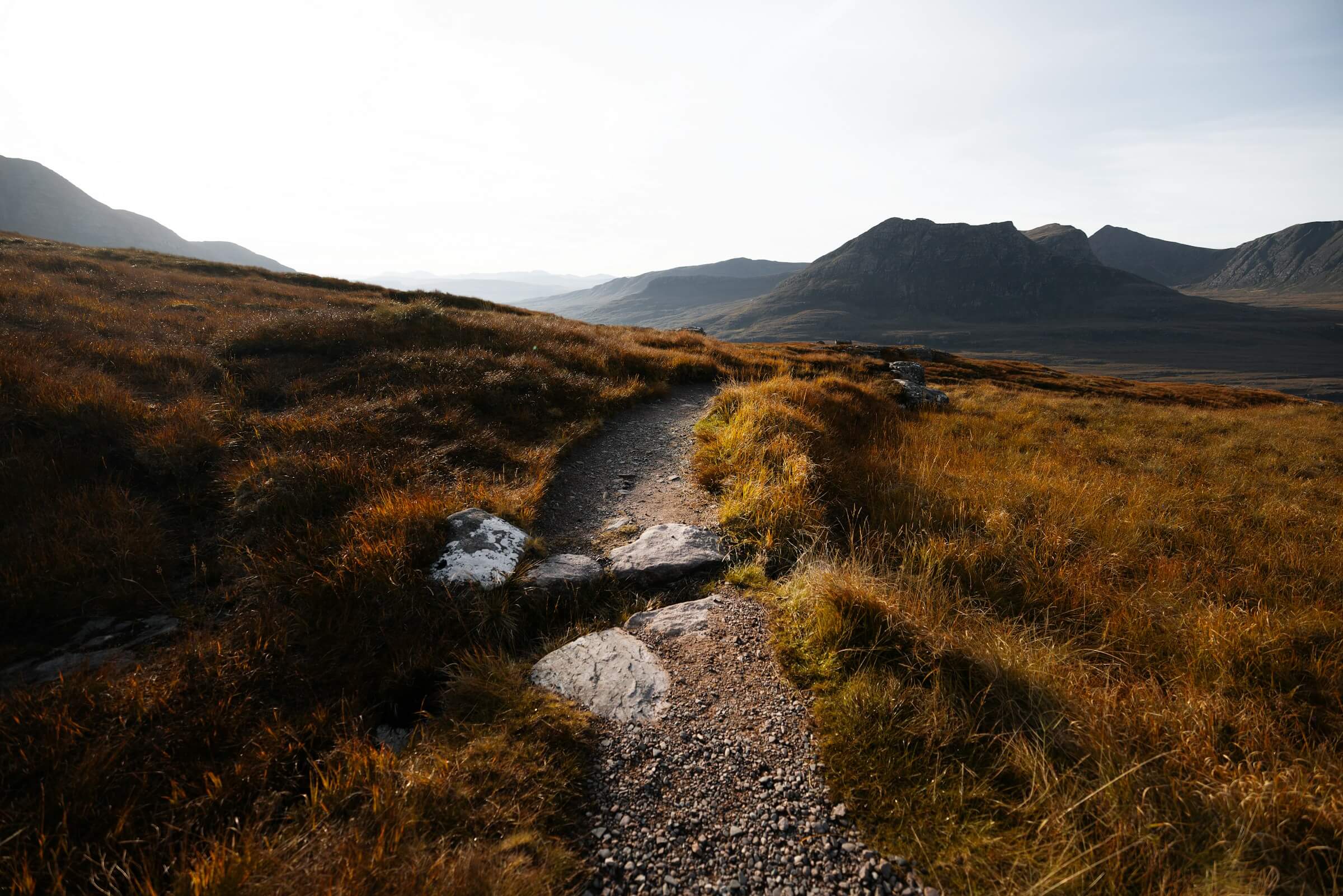
Joshua Earle
For Unsplash+
1
My afternoon shift at Achnacarry has finished and I’m cycling through town along the River Ness to Starbucks, listening to a playlist that Therese has curated. I mouth the line, what the hell, buttercup, get a hobby, because Therese said it’s the best line in the song, and, even though I like the attitude with which the words, give him hell, are delivered, as always, I must defer. I let the irony of my mouth saying that insult wash over me - I had just moments ago checked the rota for Glendochart, to know if Karim is working today at the house adjacent to the one I am working and living in. He isn’t, and so I look for him in every dark-haired man I pass in the city centre. Therese had once reprimanded me with the concept that I wouldn’t like it if someone took as intense an interest in me. I told her that I would in fact be flattered. Rory thought that that was funny. Perspiring, I reach Therese and Angus at the café. They ask after the four adults with learning disabilities we support at the house. I don’t get the chance to finish before Angus starts talking about how it used to be, the woes of management, and how Therese, Rory, and himself make up the “core” of the staff team. At an earlier point, in autumn, I recall him having spoken as if it was still to be seen how I would contribute to Achnacarry, but now it sounds as though I am not doing enough. Our shaky dynamic notwithstanding, I am tempted to disregard what Angus is saying, given how another assistant said he himself was just a “body” on shift. But every so often, he comes out with something so profound as to be sacred, making me want to confess my all to him in the hopes of gaining a bit of advice. Because of those times, what he has said resonates and tears begin to prick in my eyes. I excuse myself to go outside to the car park and ring my Mum. It’s April but I’m shivering in the rain as we talk. I don’t know in full what I say to her, but she shows interest, and starts talking about how my life is a gift and is precious in eternity, not to be taken, and my days are not to be squandered. To praise my Creator when I feel low. She’s talking as I wave goodbye to Therese and Angus.
2
Four days later, the black lead pencil I took in Winter from the night shift room and have never returned makes faint strokes in my uncertain hand across the inside page of a card. I last used the pencil to sketch a manger draped with swaddling clothes, and, before that, a lamb in the arms of a shepherd - both of which I left out for Karim to notice, to bask in his genial. This pencil drawing is of a photo of Therese that I took during one of our pub trips; wide smile, eyes squinting with blue irises obscured, the dimpled chin I had never noticed before. Once I have my Mum’s approval that the features I have tried to depict are not deformed, I add the card to the cache for Therese. She will fly back home to Alaska in a few days, earlier than had been envisaged, so that she can enrol in some preparatory classes before beginning her doctorate in Occupational Therapy. The assurance with which she slams down her plans is because the road has always risen to meet her. I later imagine that her leaving Achnacarry is what being widowed feels like, in that I no longer have someone with whom to share the little things. Related to this, I come to the realisation that there is little to gain from staying in Inverness beyond the end of my temporary contract. I also develop a conviction that I am to go into business analysis, and so I apply for a job as a business analyst. The night before my interview, I feel unsteady, and so I look in the mirror and I see my face and it is solid, and that brings me reassurance.
3
The mental health hospital is accessible on foot from Achnacarry by following the Great Glen Way, and is situated next to Craig Dunain Hill. In January, I once hiked up Craig Dunain Hill, listening to a podcast episode on mass hysteria, in the hopes of becoming more interesting, not long after an assistant at Glendochart had said that Karim had told her I didn’t get out as much as Therese did. I once gave Henry David Thoreau the facetious misnomer “Thorax” when I was talking with Karim. Thoreau declares in his essay, ‘Walking’, that it is ‘itself the enterprise and adventure of the day’. I am not one of the ones whom Thoreau describes as having a ‘direct dispensation from Heaven to become a walker’, though I could sense gratification when the light was fading when I was at the top of Craig Dunain Hill, and, in between the pine silhouettes, I could make out Loch Ness...The matter is, this May, I leave my outpatients appointment at the hospital having now acquired a new diagnosis: the psychiatrist with the undercut ponytail speaks of trauma and she says Borderline Personality Disorder. The overdose I took last week, on a bench outside the general hospital, after the overwhelm of the business analyst job rejection, has convinced her, no doubt. On the way back to Achnacarry, a uniformed teenager sees the misery weighing on me and says “hi”, and I am reminded of lovingkindness, and how I am still the same person as I was before.
4
There are two visiting prophets at the tambourine-shaking, hand-clapping church I joined for its resemblance to the one in that James Baldwin book. I make my way towards them at the end of the service, hoping that they will have a word of encouragement for me, and they hem me in with a hand on each shoulder. I pretend to shut my eyes but keep them open enough to see what is now a queue forming. The prophets mention a Scripture about God rejoicing over me with shouts of joy. I am so comforted by this perspective from on high that I walk into a tattoo parlour that afternoon and get shouts of joy tattooed on one of my forearms, an apex that overarches the scars that are etched there.
5
It was around half a year ago, when I was sitting on the mid-way landing of the staircase at Achnacarry and Karim was standing at the top landing, and I blurted out that I would like to be friends. I have gone through many different changes since then - I have worn a lot of makeup, I have worn none, I have dressed in a feminine way, I have dressed in a casual way, my hair has been straightened, it has been in box braids, and it has been out in an Afro - but I would change anything and everything about myself to be what he wants. He said that he would get back to me about going for a coffee but never did. I have read the rota and know that he is working a shift in Achnacarry today. I wait for him on the intermediate stair landing as his shift is ending. Out of interest, what did I do wrong, I say. He doesn’t understand, so I clarify. He then says that he has seen things are up and down, that I am in a vulnerable position, that we’re colleagues, and that he’d heard from someone that I have romantic feelings for him (which I deny) - so he has taken a step back. But that we’re not not friends, and that he’s happy to see me around. I initially think this brings closure, but start to feel bereft, as though I have nothing to live for. The pull to honour my feelings wins and I take an overdose. There is lots of crying and shoe-gazing at the hospital, and a nurse says that Karim is being polite - which raises further questions for me: I could live if I knew that Karim found me attractive. I am suspended from Achnacarry on medical grounds until an occupational health assessment, and am moved to a cottage on-site, to balance my well-being with that of the service users.
6
On the ground floor of the cottage is the kitchen and living room with an adjoining downstairs toilet. Upstairs is a bathroom and two bedrooms. The large casement windows make me feel exposed to passerbys, and so I keep all of the curtains closed.
7
Vulnerable as an adjective is defined as, ‘able to be hurt or injured; exposed to danger or criticism’. There is no need to maintain the pretense of not having looked it up in the dictionary. It is the first syllable of ‘vulnerable’ which is stressed, and the word stems from the Latin vulnus, meaning ‘wound’. Karim told me of his penchant for Bob Dylan. Although I can enjoy coffee, I can’t listen to Bob Dylan, so I settle with Jeff Buckley - and his rendition of Just Like a Woman. Just Like a Woman includes three variants of the couplet: ‘And she aches just like a woman/ But she breaks just like a little girl’. Even if the collocation of ‘position’ with ‘vulnerable’ suggests that Karim thinks that my potential to be wounded is circumstantial, I hope that he sees me as an aching woman, not as a broken little girl.
8
My immediate recourse following this phone call, the one in which my dad has just told me that my Grandma has severe pancreatic cancer, is to smoke a cigarette. I am tired of talking and feel like becoming mute.
9
What does the graffiti that reads, ‘KEEP MOVING’, across the faded amber walls of the Chinese takeaway building in the city centre mean to me? I think that it is a firm endorsement to continue with purpose where my steps have been determined. Even if they are to be in concentric circles.
10
Occupational health have said I am unfit to work. My relationship with Mum plateaus as she calls me manipulative, self-centred, and says I am bleeding people dry. It’s easier for her to believe I am horrid than I am mad. I get a text from a friend, reassuring me that Borderline Personality Disorder is pathologising the human condition, and is not so much me as what has happened to me. I grieve how my past is robbing me of my future.
11
Sleep is hard to come by on the 12-hour train journey home from Inverness. After I was told my Grandma has weeks left to live, I booked my train tickets to visit. Earlier on the day on which I received the news, I texted Karim, with a message revised by friends, apologising for ambushing him, and saying that I was lying about not having feelings for him - although the offer of friendship had no ulterior motives. Yet, maybe I resent the narrowness of defining how I feel about Karim as ‘romantic’... In any case, he still has not replied. I arrive at the nursing home by lunchtime, and burst into tears when I see how delicate and frail my Grandma looks; her wandering doe eyes and weak voice. I had struggled to understand her at the best of times in the midst of her patois before, but now she is unintelligible. I ascribe to this how I am unable to bring myself to comfort my Grandma during both this visit and tomorrow's. My Mum explains to her that they are happy tears that I am shedding. Outside of my window on my train journey back, I am looking at a river winding its way through a valley when Karim texts me. He says that he has been on holiday abroad and thanks me for what he says is an unnecessary apology. He says that he would like to keep things professional now, if it is okay. I notice the distancing and am vexed by the semantics of ‘professional’ versus ‘friends’, especially as he was only willing for us to see each other in a work context in the first place.
12
The paucity of emotion from both parties takes me aback, when I am sitting opposite the Human Resources director of Achnacarry and Glendochart on what is a bright day, and she tells me that I cannot stay on in any capacity beyond the end of my contract. That they need someone who is more reliable. In the cottage, I have been crying and self-harming and calling helplines a lot this past week. But it seems as though I am at long last accepting this goodbye which everyone around me is saying I must make. I reckon bullheadedness must run in my family - for all the hassle incurred by virtue of the woman who I formerly called Auntie Glenda, by the sound of it, my Uncle William is trying to furtively reconnect with her. And nobody has the time of day to hear how she tells him, “I don’t love you”.
13
After the early Summer sunrise that I had been willing appears, I leave my room at the Catholic house of prayer, tiptoe down the stairs, cut through the kitchen, out the back door, and steal across the footpath that ascends the hill. I have heard that the shortest amount of time in which someone has run up to the cross installed at the top is 20 minutes. Looking over my shoulder every dozen or so steps at the rolling mist and the flurry of pastel-coloured clouds, I realise that I may be contending for the slowest climb. As I reach the top, all I can hear is my ragged breath and birdsong. I whisper prayers with a bellyful of God, while nestling in the dewy grass, and marvel that this is a hill on which to die.
14
Achnacarry and its service users have seen many assistants come and go over the years. This August evening meal is in reality but a tiny speck in an infinite universe of goodbyes. One that I have hastened through my inability to move on from Karim - but progress has been made in that I tell my therapist how I used to pity everyone who does not know Karim.
15
Back in Leicester from Inverness a year after I first arrived at Achnacarry, an argument erupted last night at home, as I disagreed with my Mum about whether I could sit by my Grandma’s bedside overnight - we had been told that she would die in a day or so. My Mum said something about the likelihood of me in particular being traumatised, and conceded that I could go if I wanted but would not have her blessing. I decided against it, and now my Grandma has passed away alone this morning.
16
A moment of wrenching realisation, when I open a purple devotional book that my Grandma owned and which smells of her: I should have been cherishing her more in the months that led up to her death. I ought to have held her more tightly, but, instead, I was fixated on Karim. Maybe it is this dawning which means I almost walk out of her funeral service as soon as I arrive, seeing her face magnified across the screen by the projector, in one of those rare photos in which she did not run away from being captured. Maybe it is this dawning which means I swallow all the tablets I have access to and wind up in A&E again.
17
Two Autumns later, Auntie Glenda and Uncle William buy a house together, using his inheritance - something which Auntie Glenda flaunts. To even my intransigent, church-going Mum, “karma”, for she could never ascribe this nosedive in favour to God, does, at long last, pay an overdue visit to her sister-in-law. “So, what it is”, is how my Mum sets the scene, meek fingers coiling around the phone cord. Under the duress of a lull in conversation, she fulfils the honorific duty of retelling the saga. And perhaps, as she says this, she is clipping the expression, “it is what it is”. In that case, there is no more of a fitting way to introduce how Auntie Glenda has succumbed to being bed-bound with a mystery illness. We would never have wished this particular misfortune upon her, as my Mum says. And we had in fact feared what would happen if anything were to overtake Uncle William... Anyhow, with her preface out of the way, she ploughs on, heedless of any interjections: her delivery - like the absurdity of our lives - will not be interrupted.