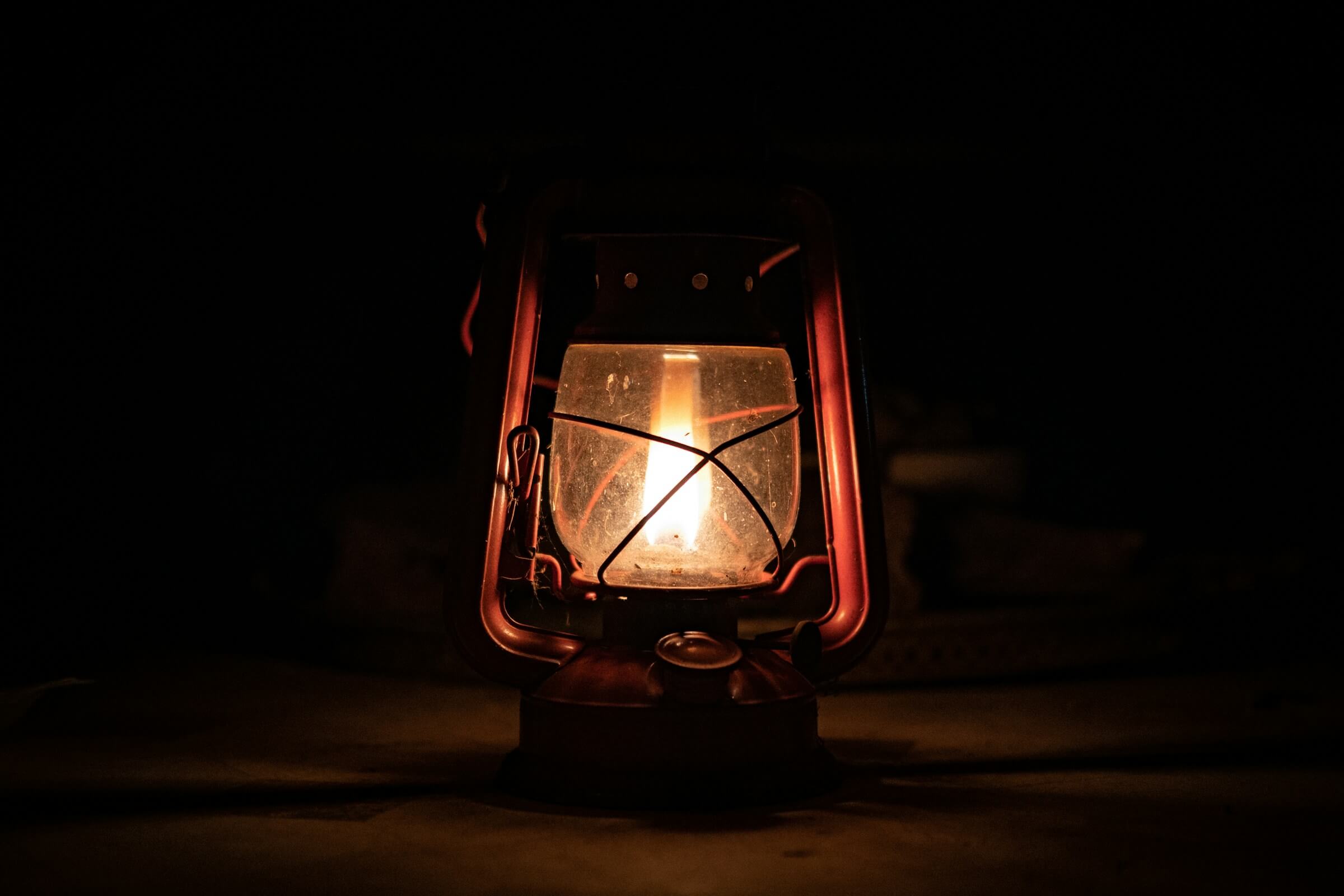
Photo by Joshua Bartell on Unsplash
Grandfather’s clock struck at dawn when Father woke me up and said:
“Today you are a man.”
I was twelve years old.
With nothing more to say, Father left my room, leaving me to the morning rise.
I sat up and swung my legs out of bed—my feet had been able to reach the floor in this position ever since the previous summer—and with shaky sleepiness, I rose to standing in my embroidered linen nightgown.
The bedside candle had melted down to nearly the wick. Just enough by which to see.
Time for the beautiful rhythm. To energize the body for the day. Head to heart to hand.
I was forbidden to hear any music in my household growing up. Father and Mother never told me why this must be so. And yet, they allowed Tutor to gift me with a pentatonic flute. Daily, I received lessons. I was taught to play very well. So, while I could not hear what music sounded like outside of me, I knew how it could sound from deep within.
I reached over to the Davenport, picked up my pentatonic flute, and played to the dawn.
First note of the morning goes to the saints.
Second note of the morning goes to the harvest.
Third note of the morning goes to the dove.
Fourth note of the morning goes to the moon in the east.
Fifth note of the morning goes to the sun in the west.
No more. Father would hear if I played any more. I put the instrument back down.
With the notes still hovering around me in my bedroom, I circled my arms and wheeled my hips, dancing to that which lingered. I could not call it dance. I could call it devotion.
I devoted my body and spirit to the vibrational vapor of a leftover melody.
And then I knelt and prayed.
***
When I went out of my room into the gaslit hallway, Tutor was there to meet me.
He arched his fuzzy brows, pointed a professorial finger down at me, and said:
“Now think fast, my merry men: How many ways can you make ten?”
Missing not a jot of a beat, I raised my small voice and told Tutor the litany of the ten:
“One and nine. Two and eight. Three and seven—” that pairing was always my favorite. Something about three and seven, and its counterpart of seven and three, made perfect sense to me. Faithfully, I reported my arithmetic to Tutor, long past five and five, ending on the conclusive, “Nine and one.” And with sandy sleep still sprinkled across my eyes, I grinned up at him.
Tutor nodded in reserved approval, causing the tassel of his cap to jiggle ever so slightly.
“Good,” he said. “You did not err once.”
“No, sir.”
I think he was an old man. I had never known any other man, besides Father, naturally. From what I read in the books allotted to me, and the descriptions of old age therein, I had quietly decided that he appeared considerably older than Father. Every hair on Tutor’s head and face was fully gray. Father was only half gray.
Tutor swiveled around with a swish of his robe and beckoned me with his bony fingers.
“Come,” he said. “To the Painted Room.”
***
This was where I was granted space to draw. Color. Sketch. Chalk. Paint.
The Painted Room.
Wall to wall were my illustrations. As instructed by Tutor.
Clouds here, a mountain there. Based on what he told me. An elephant in the corner, a giraffe in the corner opposite. Or so I had read. Forests as were described. Oceans as were dictated. Flowers prompted by the petal. Suggested houses with hinted at windows. Prescribed cats. Predetermined dogs. The rainbow in its proper chromatic sequence.
All dimly visible in the whispering gaslight.
Tutor pointed to the far wall painting of a pale full circle.
“Your impression of Sister Moon was well informed,” he told me. He then pointed to the wall opposite, where an unfilled space awaited. “Now paint Brother Sun over there for me.”
“Of course,” I said, knowing already the tools and colors that were needed. I was ready to begin immediately, but then I hesitated. “Tutor?” I asked. “Is the gaslight dimmer than before?”
“Nothing has changed,” he told me. “You are mistaken.”
But I could see for myself that what I was seeing was harder to see on this day.
Still, I did not want to be mistaken.
And so, I started painting Brother Sun. Yellow as a circle. Yellow by law.
Tutor asked me, “Do you know what today’s significance is?”
“It is the first day I will be going to school,” I replied. “I am a man now.” I painted.
“That is correct,” he confirmed. “Going to school is different from tutoring. There will be a faculty of teachers and staff. There will be many classes and many subjects. There will be examinations and assignments to bring back home. And there will be a school bus…”
“And there will be Other Children—”
“Do not interrupt,” Tutor said. He then leaned in to closely examine my painting-in-progress, peering through the lenses of his pince-nez to assess the concentric yellows. “That is painted correctly, now add an orange circle within the yellow circle.”
I did what I was told and prepared my brush with orange.
“You are going to be outside,” Tutor said. “For the first time in your life. You must learn how Brother Sun will show Himself when you journey underneath Him.”
I concentrated on painting the smaller orange circle within the bigger yellow circle, wondering if Brother Sun was warm. He had to be warmer than the gaslight. Bigger and brighter, too. Had to be.
“Excellent,” Tutor judged, sliding his pince-nez farther up the bridge of his long nose. “Now add a red circle within the orange circle within the yellow circle.”
Following his words, I tipped my brush in red and painted the pupil of the eye in the sky.
“Tutor?” I asked.
“Speak up.”
“Tutor?” I asked again.
“Mmn?”
“Does Brother Sun really have a red eye?”
Tutor took the brush from my hand and said, “That will do.” He then stepped back to appraise the artwork and nodded a tassel jiggle of approval. “There you have it.”
I did not know how to feel other than foolish, for paint was on my fingertips and not a rag was near. And I did not wish to smudge my nightgown.
“Go out and wash your hands and face,” Tutor instructed me. “Then get dressed for school. Your Father will speak to you before you depart.”
I bowed to Tutor and left the Painted Room, to go as quietly as I could to the wash basin, to sink my hands and face in silent cold water.
***
Black leather buckle shoes. Knee-high itchy wool socks. Brown breeches with brown braces to keep them up. Airy off-white button-up shirt. Round cap with a minimal brim.
The perfect proper gentleman. I was dressed for school.
Father sat in the dining hall. Waiting for me. To break fast with him.
The dining hall assaulted my senses with the relentless stench of eggs.
I never liked eggs. Rather, I was never given a fair chance to like them.
I was told that I like eggs even though they always smelled and tasted revolting. To me.
Father did not protest. Neither did he offer much of an alternative.
“You are welcome,” he once told me. “To eat what is on your plate. Period.”
Period.
Eggs and toast were on my plate. Each morning. Without fail. Without choice.
I would eat the toast. There was no butter. But it was better than having to eat the eggs.
Father would eventually fork my eggs onto his plate, anyway.
On this morning before leaving the household for the first time ever, I proudly presented my newly decked school attire while doing my best to disguise my disgust of the fried egg stink.
Father sat at the head of the table in his red checkered robe, sipping his coffee severely.
I walked with practiced footsteps of muted impact to the table’s opposite.
“Good morning,” I said. “Father.”
“Good morning,” he said. “Boy.” He gestured. “Will you not sit and break fast with me?”
This was not an actual question. This was daily initiation with an added question mark.
“I will,” I answered him. “For you are my Father.” The ritual was complete. I sat down.
The smell of Father’s coffee was only mildly less pungent. Much too young to enjoy it.
Father peered over the clay rim of the steaming mug, took a sustained sip of severity, heavily gulped, and then told me, “A proper gentleman removes his hat at the table.”
I knew this, and it hurt me that I knew this because I already knew that it was expected of me to present myself fully decked in my school wardrobe, but also knew that it was expected of me to take off my hat before sitting at the table, but I so wanted to impress Father, to show him that I was the man he told me I was, so I had forgotten, and I knew that I would.
I snatched off my hat and started to set it down.
“Ah-ah-ah,” Father said with curt monotony. “Not on the table.”
I tried to smile, “Yes, Father.”
Ignoring the panic in my throat, I shoved the hat under the table and onto my right knee.
Father and I said nothing for a time. Grandfather’s clock occupied the silence.
I toyed with a cold corner of toast while Father sternly read the newspaper. And sipped.
“Father, do you remember the sixth—”
“Not so loud.”
“Father…do you remember the sixth grade?”
He slowly lowered the newspaper. He looked over my head as if staring at distant danger.
“Yes,” Father told me. “I do remember. I was a perfect gentleman.”
He resumed reading. And sipped.
I had no appetite for toast. Hungry for a connection. No way to ask for it.
Tutor’s assigned reading had exposed me to a whirlpool of words and a cornucopia of characters. I had encountered, in reading, a lifetime of people more relatable than those I actually knew in my real life, which were just Father and Mother and Tutor. In these stories, Fathers were often leading their children on adventures, guiding them through life. These Fathers seemed to know how to give good, solid, sound advice.
“Father, may I ask,” I asked, “for some wise words of counsel before I go to school?”
He took too long to answer me. Thawing out. Looking unreadable. Unkind.
“I,” he replied, “always have wise words. Upon any occasion.”
“Naturally, Father, I only meant—”
“Read this,” he commanded, handing over the newspaper. “Aloud. Straight back. Enunciate. See that paragraph there?” He tapped the page I was expected to read. “That is President Jackson. You will read him with respect and reverence. If you want my wise counsel, then take his words to heart.”
I did not want to read anything aloud in this moment, but I was very good at reading aloud, especially under watchful expectation. Permanently prepared to perform.
I straightened my youthful spine, took a diaphragmatic breath, and performed a reading for Father.
But no child should be made to read the damning words of casual violence.
“It gives me great pleasure to announce to Congress,” I began reading, “that the benevolent policy of the Government in relation to the removal of Indians beyond the white settlements is approaching to a happy consum…consummation.”
Father stabbed the eggs off my plate and took a yawning bite.
“The consequence of a speedy removal will be important to the United States,” I continued reading with a vague awareness of what I was saying. “The pec…pecun…pecuni…”
“Pecuniary,” Father corrected me with a mouthful of mushy white and yellow yolk.
I felt sick. I read on. “The…pecuniary…advantages which it promises the Government are the least of its recommendations. It will place a dense and civilized population in large tracts of country now occupied by a few sav…savage hunters.”
Father ate more and more, as if what I read to him were a rally cry to breaking fast.
Breathing through the sickness, I read on. “It will separate the Indians from immediate contact with settlements of whites; enable them to pursue happiness in their own way and under their own rude institutions; will retard the progress of decay, which is lessening their numbers, and perhaps cause them gradually, under the protection of the Government and through the influence of good counsels, to cast off their savage habits and become an interesting, civilized, and Christian community.”
Father reached across the table and touched my wrist. “Read that last part again,” he said.
I narrowly avoided vomiting as I read on. “To cast off their savage habits and become an interesting, civilized, and Christian community.”
Hoping I was finished, I looked up from the newspaper. Father swallowed the last bite of egg, leaned back in his chair, inhaled contentedly, exhaled serenely, and smiled with glossy-eyed regard for what had been read to him. Not for me.
Then, rising from the table, approaching me, towering over me, he said, “Boy,” and shook my hand firmly, closely. “I wish you good health and fortune in your future endeavors.”
I tried not to cry and I almost succeeded.
Father then said, “Now say goodbye to your Mother.”
***
Gaslight was the only source of light in the entire household, dismally revealing just the next few steps ahead, at all measured times.
The corridors, the bedrooms, the dining hall, the family room: Gaslight.
Except for the parlor.
The parlor’s sole visibility was doled out by a constant hearth fire, making everything shelved and placed and seated into a flickering mass of black and orange and yellow.
Mother sat on the sofa in the parlor. Flickering black and orange and yellow.
She was reading. She was always reading. She was always reading the same book.
And she was dressed in her wedding gown. As she always had.
In all twelve years of boyhood, I never witnessed Mother wearing any different article.
With the same measured, cautious, soundproof steps with which I had approached Father, so I approached Mother, my small body flickering black and orange and yellow.
“Good morning,” I said. “Mother.”
Mother moved her lips in shadowy silence while finishing reading the current sentence from her book. She then looked up, saw me, sleepily smiled, and said, “Yes, dear.”
She resumed reading.
I sat by the fire. I could only sit for a moment. Just for now. Such cold mornings.
And I did not know how cold or hot the outside world might be. Best be warm for now.
I shivered pleasantly while the flames caressed my back from their safe distance.
“Mother,” I said. “Could I not go to school tomorrow instead, and stay with you today?”
She finished reading her sentence, looked up to where I had been standing before I sat down by the fire, and replied, “It’s chilly this morning.”
She resumed reading.
I knew I could not stay much longer. In only a few minutes from now, I would be going to school for the first time, leaving my household for the first time, existing away from Mother or Father or Tutor for the first time. Despite the warmth of the fire, I began to shake. I shook all over. I wanted time to stop, for all of time to stop, for Grandfather’s clock to stop, for every second and minute and hour to stop. For me. To be seen.
“Mother,” I said, trying so hard to mask the buoyant tears welling within my throat. “For this coming Christmas…do you suppose…you and Father…could perhaps…bring to me…a baby brother…or sister?”
The parlor obscured itself deeper into shaded firelight as saltwater swam my vision, making everything a muted blur. But I could hear Mother’s response:
“You are the apple of my eye.”
She resumed reading.
I wiped my face, stood up straight, walked forward, and left the parlor.
“Goodbye, Mother.”
***
Scooping up my basket by its wicker handle, I looked around the gaslit gloom of the family room one final time, put my schoolboy hat back atop my head, and headed for the exit corridor as Grandfather’s clock knelled eight times.
I would need to be let out. Tutor had the keys.
Or code. He said code. But I could only understand keys.
Tutor stood sentinel at the exit junction, one knotted hand on the colorless wall, his other robed arm fanning outward to point me toward the door.
Or seal. He said seal. But I could only understand door.
Besides, how absurd, if he really meant seal! I knew what seals were. Funny animals. Tutor told me how to paint them. And I painted them correctly.
“It will open when you reach it,” Tutor told me. “I must operate from here. Go now.”
I stepped into the exit corridor. And paused. I had never been allowed, with eyes on me, to step one foot into this section of the household before. Once, I had snuck down, briefly, when nobody was watching me, and what I discovered during that quick curiosity was, upon reaching the corridor’s end, nothing could be seen or felt that would indicate any kind of exit. Whatever door or seal or gate lay ahead, it really did depend on Tutor letting me out.
“Now!” He screeched like a plumed parrot he had made me paint. “The bus is coming!”
As I headed down the exit corridor, I went over the facts—the facts of the outside world—as given to me by Father and Mother and Tutor:
If it is daytime, the sky is blue. School starts in the morning. It will be blue outside.
Brother Sun can be seen in a blue sky. This time of year, Sister Moon can be seen early.
Wagons are how most people move fast. Sometimes they use things called automobiles.
Sometimes, very rarely, people ride in flying objects known as aero planes.
The school bus is what I will be riding inside. They are yellow. They are friendly.
They have round black circles carrying them along called wheels.
Religion is impolite conversation, but if asked, we were all made out of clay.
I was about halfway down the corridor. My heart was leaping faster.
What else? What else? Always be good. Never curse. No guns. No fighting.
There had to be something else. Something I had forgotten.
No. Not forgotten. Never told. Never taught.
For instance, nobody said anything to me about Other Children.
I had tried and tried to know about them, to find out if they were like me, or I like them.
Ready to find out?
I rummaged through my basket, making sure I had what I needed: yarn for knitting, beeswax for sculpting, my pentatonic flute for music lessons. Also, a tissue-wrapped modest lunch. Oh, and a small wooden portrait of Saint Michael, which I had painted, under instruction.
I wondered what I might say, once I stepped outside. In the books I had read, characters knew how to make an entrance and how to make an exit. They sometimes announced things in a brave form of enthusiasm called panache. I wanted to make an entrance. Or an exit. Whichever this was. And I wanted to say something. Announce something. Quick. Quick. What would I announce? Then, I thought of it and made my decision.
Ready.
I reached the corridor’s end, feeling for the unimaginable exit…until…
Until, at last, keying in the sequential code on the remote wall, Tutor let me out.
Something slid open and I swiftly stepped outside before it slid back shut behind me.
I announced, “Hello, World!”
The sky was not blue.
***
It was dark.
Did something happen? Was I too late? Too early? Was this night or morning?
All dark.
Where was Brother Sun? Where was Sister Moon?
Where were any and all my cousins of stars?
Not a sky. Nothing by day. Nothing nocturnal. Just. Dark.
No neighbors, no lawns, no pets on leashes. I was made to paint those. What now?
Where was the bus to take me to school?
It was arriving. Then and there. From the air.
I thought it was a monster. At first. Or some giant yellow whale with searing lantern eyes. Floating. Directly over me. I could read the letters stenciled underneath it: SCHOOL BUS.
Nobody told me the school bus would be floating. In the dark.
Any impulse to run back to my household was interrupted from taking any action.
I understand, now, all too simply, what happened next. But at the time, when it happened, I was not prepared in any way to understand, let alone emotionally handle, how a child is expected to board the school bus: It beams you up.
The brightness of the photon vacuum was too much for the limited capacity of my gaslit eyes. Shuddering under the intensity of the glare, I could feel my small body being pulled long, as if gripped by invisible puppet strings. I was lifted off the ground, taken away, air-bound, leaving the nothingness of the neighborhood way below and far behind me.
The mouth of the school bus opened wide.
“Mother! Father!” I screamed. “Take me back! Please, no! Don’t make me go away!”
And I was swallowed up.
It may seem foolish now, but at the time, I honestly thought I was going to die.
I still cannot be certain that I did not.
***
“Please do not hurt me!” I told the bus driver.
He was a large man with sag-bulging flesh and he said to me, “What?”
I was cowering in a half-crouched, half-kneeling position, holding onto my basket like it was my only protection. I did not comprehend what the bus driver was doing, turning that massive wheel with his swollen fists. It seemed dangerous.
“Please,” I repeated. “Do not hurt me.”
“What?” he repeated, then grumbled. “C’mon, c’mon. Ain’t no time for this. Lezgo, lezgo.” He jerked his thumb in the direction of the aisle. “Get in the back with the others.”
I really wanted to show the bus driver that I understood. I tried nodding. I did not shake too badly. Then, I stood up straight, almost lost my balance, leaned forward unsteadily, and walked down the aisle of a floating school bus full of screaming children.
Screaming.
At each other. At the bus driver. At themselves. At me. At a glance. At a moment’s notice. At the world. At life. At death. At anything.
Screaming.
In fear. In joy. In rage. In affection. In rejection. In camaraderie. In betrayal. In groups. In trouble. In irony. In cruelty. In fun. In fairness. In love and war.
Screaming.
A floating school bus full of them. All seats taken.
These children were different. They were all different. And I was entirely different.
With a world of difference between their assimilation and my isolation.
Before this moment, I had never witnessed any technology beyond the written word. Every one of these children—my schoolmates—wore helmets: translucent, cybernetic, fitted to form. These helmets came equipped with transparent visors, which displayed a form of entertainment known as content, which I initially took to be some kind of visual presentation of novels or short stories. Everybody could see and hear what everybody else was hearing and seeing on each and every visor on everybody’s helmet.
Inevitably, the unique sight of me—a fish out of water, as I would learn the phrase—became more enticing a potential for entertainment than anything promised by their pre-programmed morning content. Ravenous eyes rolled my way, and some of the Other Children slid up their visors to get a closer look.
One of the boys seated in the back of the bus pointed a mechanical finger at me and said:
“Get a download of this bagot!”
Screaming and giggling.
Another boy leaned back and adjusted the lens of his bionic left eye:
“Does that bagot over there got a basket?!”
Screaming and snorting.
One of the girls taunted me in a sing-song tone while her artificial jaw clanged away:
“Bagot! Bagot! Bagot!”
Screaming and snarling.
I asked anybody and nobody all at once, “Where may I sit down, please?”
Someone yelled in a voice newly acquainted with testosterone, “Sit on the floor, bagot!”
I was unfamiliar with the slur, bagot. I was further unfamiliar with being bullied by Other Children, so I interpreted the crude demand to sit on the floor as recommended social instruction.
Sitting on the floor of the aisle of the school bus, I was surrounded by elevated schoolmates with choice mechanical limbs, wearing helmets that force-fed them information.
Up to one of the bigger boys, I sheepishly asked, “Are we really going to school?”
Down to me, he wolfishly replied, “We’re really going to hell.”
The school bus groaned across the dark sky. Nothing of note outside along the way.
“Ew, no!” I heard one of the girls say to her friends. “I’m not gonna ask him that.”
“Do it!” They urged her on with disastrous bliss. “Do it, do it, do it!”
Reluctantly, she tapped my shoulder and said, “Um.”
I looked up at this girl with the fair eyes, metallic ears, and gold-plated hair—and smiled at her, hopefully, as I sat on the floor of the aisle of the school bus with my basket full of knitting and beeswax.
She asked me, “Are you circumcised?” Her friends screamed.
I had never heard of circumcision before. I had, however, read about circumnavigation.
I told her, “I am a man of the world.”
This was the first attempt I ever made at flirting with anyone.
“Nuh-uh,” she told me. “You’re a bagot.”
And the screaming took over from there, for the rest of the bus ride all the way to school.
***
The school campus was an interconnected network of quadrants lit up by pure electric harshness. Not a gaslight in sight. No visible color to the omnipresent dark sky, either.
Instead of receiving every lesson from one instructor in one room, as was my household’s custom, students here were expected to mill and roam into one classroom’s subject and then scream their way across campus into the next classroom’s subject.
I followed the Other Children, not too close and not too far away, to cram ourselves inside the first class of the dark day.
“Hi,” a cheerful female voice said from above.
I looked up to where I heard the voice, just over the doorway to the classroom.
“Hello,” I said with projected politeness, seeing nobody, but noticing something.
The cheerful female voice belonged to a small black box mounted on the wall above the classroom door, and it further said, “You are currently being recorded.”
I did not understand what recordings were. I had never heard or seen or made one. Perhaps she meant like a recorder, like my pentatonic flute. I wondered if I should bring out my instrument from my basket and offer a note or two to the female talking box.
“Move it, bagot!” An enormous boy shoved me from behind, and into class we went.
***
“Alright, that’s enough, settle down, quiet please, attention everyone, no more of that, knock it off, focus, eyes on me, heed my words, listen up, look alive, here and now!”
This was called Home Room. It did not resemble anything like home. Not even mine.
The screaming only slightly subsided as we all sat down at our desks.
The teacher exhaled raggedly and pinched her forehead. She seemed about Tutor’s age but dressed in robes and tasseled cap that seemed newer and more ahead in time.
“As I was saying,” she primly continued. “We have a new student with us today.”
She gestured toward me with her chromium arm and titanium fingers.
“Introduce yourself to the class.”
I stood up from my desk like a perfect gentleman and said with full vocal confidence:
“Boy.”
Pause.
“Oh,” I amended. “Excuse me. Good morning, everyone. I am Boy.”
And they all laughed at me.
“Boy?!”
“Did he just say Boy?!”
“What kind of a name is Boy?!”
“Well,” the teacher said, regarding me with academic skepticism. “Let that be. For now.”
I sat back down, awash in a cold heat of inflammatory frost. My parents never named me.
Father and Mother had never thought to give me a name. To them, I was only Boy.
Undoubtedly, the Other Children must have had names, like John or Sean or Siobhan.
But as it turned out, they did not. They had genders with accompanying serial numbers.
The teacher took roll.
“Boy-3LF9?”
“Present.”
“Girl-8RN7?”
“Present.”
“Boy-6KW5?”
“Present…bagot.”
“You watch your language, young man, or I’ll cancel you to the principal’s office.”
After roll call, we were told to rise and pledge.
I stood with the Other Children and mouthed along to what they spoke in unison:
I pledge allegiance to the meme
Of the Divided States of America
And to the replacement for which it stands
One product, algorithmic
Unattainable
With Liberty and Justice for ME
***
Home Room assigned each of us a slip of paper known as a syllabus.
I thought it was going to bite me until I realized it was just a class schedule.
First up: Science class. All the way across campus.
It was a long walk in a short amount of time to guarantee a tardy arrival.
By the time I got there, the classroom was too full of students to leave any seat vacant. Just like the school bus. So, I joined a cluster of floor-seated unfortunates like me but still felt no camaraderie with them, nor they with me, for there was just something fundamentally off about me, what with having no helmet on my head nor body part replaced.
And I could not pay attention.
Not because I was a bad student, or could not focus, or could not function. It was simply down to the domestic fact that Tutor’s homeschooling never covered any science.
Hugging my knees, I frowned with labored comprehension, trying to make meaning of these strange and exotic things the science teacher was telling us, with a tone that took for granted that we all were on board with such givens as gravity, thermodynamics, physics, anatomy, basic biology, elementary chemistry, microscopic organisms…
I had never even heard of a microscope.
Science class was mostly an hour spent clasping my hands over my eyes.
***
Math class.
Holographic letters, symbols, and numbers formed a three-dimensional equation looming over all our heads:
ζ(s) = 2^s π^(s−1) sin(πs/2) Γ(1−s) ζ(1−s)
“Therefore,” said the math teacher. “Zeta of s equals two to the s, times pi to the s minus one, times sine of pi s over two, times gamma of one minus s, times zeta of one minus s. Obviously!”
Now think fast, my merry men: How many ways can you make ten?
***
Physical Education. Also known as P.E.
Lots of screaming. More screaming than usual. Screaming with instruction.
“Ball! Get the ball! Hit the ball! Give me the ball! Jump over the ball! Eyes on the ball! Don’t lose the ball! Ball in the ball! Ball out the ball! Ball the ball the ball the ball the ball!”
And the dress code was short shorts.
***
Lunchtime.
A time for sustenance. And for everyone to catch up on calling each other bagot.
“Shut up, bagot!”
“I’m not a bagot. You’re the bagot, bagot!”
That word. Again, and again. I wanted to know. What does bagot even mean?
I asked a group of Other Children.
“It means you like cock!”
I thought about this for a moment and asked, “Roosters?”
They all laughed at me.
I asked another group of Other Children.
“It means you like kids!”
I thought about this for a moment and asked, “Baby goats?”
They all laughed at me.
I asked the biggest boy I could find, a freckled eighth-grader busily slurping his protein lunch from a straw hose attached to a canister in his backpack, and he told me:
“If you even have to ask, then you’re definitely a bagot.”
He then nudged me, looked both ways, leaned in sideways, and said discretely while secreting protein from his mouth, “I bet your mom is hot.”
***
Language Arts. Also known as English class.
There was no English. There was no language. There were no arts.
Just something called Silent Sustained Reading, which meant students were given one hour to drift in audiovisual free fall under the strobing domes of their helmets, while the English teacher stared at a wall where there was none.
***
Social Studies. Also known as history class.
The only thing not technologically augmented on the history teacher was his neck.
He twisted and twirled and spun and gyrated, constantly saying, “Isn’t that crazy?!”
The lesson of the dark day was the dawn of man.
“Wanna know something weird?” The history teacher asked us, swiveling his torso in the opposite direction of his swiveling hips. “People used to live in caves. Isn’t that crazy?! Just think…” His robotic legs stretched like beanstalks and he gesticulated above us. “One shelter. Dim lighting. Minimal contact. No understanding of the outside world. Weird, right? No helmets, no content, no fun! All you could do was paint something dumb and imaginary on the wall.” His head spun a full three-sixty degrees as he demanded, “Isn’t that craaaaazyyyyy?!”
***
Arboretum.
Never heard of that word. It was my first time reading it. And it was written in green.
I went inside, not going to my next class, letting the screaming fade in the background.
Nothing and no one had ever explained to me the functional phenomenon of a Virtual Landscape, or V.L., which is exactly what the Arboretum was. I was not so much shocked as simply in profound awe that there was one section of campus where the sun shined in a blue sky.
Everything here was so close to life, but not to a lifetime that I or anyone else could live in. This was someone else’s every day. Preserved in space and time for only this moment.
The crunch of the wooded pathway felt authentic under the measured steps of my leather buckle shoes. The scent of jasmine, pine, salt air, and honeysuckle all smelled real to me. The closeup recordings of bumble bees and finches mixed seamlessly with the faraway sound cues of crashing waves and wind chimes.
There was a white placard engraved in a redwood, its words written in green:
Enjoy, visitor, for these are the last days of summer.
It was warm. I looked up. I squinted. There He was. There was Brother Sun.
Not as I had been told to paint Him. Not yellow, not orange, not a red eye in the sky.
A flowering pulsation of every color so bright they all became as one.
I looked around to make sure nobody else was here, and then I finally let myself cry.
Cry. For all of us.
Something was lost. Then virtually found again. But the events in between have remained muffled in a fog of sorrowful confusion. Inviting destruction from children. Demanding oblivion of grownups. To turn away from the sun and forget all the beautiful colors.
Under a fabricated sky of blue in a spurious redwood forest, I played my pentatonic flute. I played more than five single notes, much more than five, much more than ten, note upon note, to stack up a melody and send it with love to a loving fake sun.
***
After the tears, I was angry. I wanted answers.
When the bell rang and school was out and the Other Children screamed in victory and we all piled back into the screaming school bus, I resumed my seated position on the floor of the aisle and waited with seething patience the entire screaming ride home.
Eventually, I was beamed back down to my street, and the school bus floated away.
As I regained my footing onto the desolate concrete of a nothing neighborhood under an endlessly dark sky, I wondered how I would get back inside my household. There was no door, just an oval cover that would need to be opened from within. However, when I approached the barrier, it slid open, and I swiftly stepped inside before it slid back shut behind me.
I walked the gaslit corridor with brisk momentum. I wanted answers.
And I almost tripped over the dismantled head, legs, arms, and torso of Tutor.
Glacially, I stared down at the ghastly sight of what used to be the old man who taught me things. He was in pieces. No blood, organs, or tissue. Just plaster body parts. Like somebody had unscrewed the limbs of one of those wardrobe figures I had read about, known as mannequins. Tutor’s robe and tasseled cap lay strewn aside like some deflated shadow.
I wanted answers, and this only added to the questions.
Then, I heard Father and Mother laughing down the hall.
As I turned the corner and entered the family room, everything had changed.
Even my parents had changed.
They, along with the fixtures and furnishings, had modernized. Yet, not resembling the modernity of the outside. It was somewhere between what had been this morning and what lay out there. Father and Mother were lounging on a sofa together, each dressed in blue jeans, fuzzy slippers, and Christmas sweaters. Arms snugly round each other, like they were on a date.
They were watching something called a television set, viewing a long form visual novel known as a movie, projecting black-and-white pictures in motion.
The only thing not modernized was the familiar low hiss of gloomy gaslight.
My parents laughed again. They did not notice me. I wanted answers.
“Mother,” I stated. “Father. I am back.”
They both looked in my general direction in slow motion recognition.
I spoke to them with the trembling courage that belongs to a twelve-year-old boy.
“Why did you lie to me? The outside is nothing like you made me believe it would be. There is no Brother Sun. There is no Sister Moon. There is no day or night. Only darkness. Why would you not let me know that? Why did you not tell me about Other Children? They are cruel and mean and they enjoy it. They understand it. Why did you not make me understand it? Sending me to school without a helmet or upgraded body part, you made me look like a total bagot out there!”
By now, my parents were both staring at me. Saying nothing.
I told them, “I do not believe you believe in anything.”
Nothing said. Nothing denied. Nothing acknowledged.
I told them, “I now know too well that you two know nothing.”
Father put his finger to his lips, as if to silence me, but I would not be silent.
Mother closed her eyes, as if to edit me out, but I would not be edited.
“You filled my head with facts that are no longer true. The world ended, and you never told me! Tutor is not even real, just a mannequin who fell apart once its job was done.”
Mother kept her eyes closed and nodded as if she were hearing me, but she was not.
Father kept his finger to his lips, and with his other hand, he reached across the sofa’s backrest to the wall, where a small knob stuck out, and he slowly twisted it.
The gaslight began to dim. Even the sound and pictures of the television faded out.
“Neither of you have anything to say? I am speaking to you. Both of you. Answer me!”
Mother kept nodding with her eyes closed as if she were trying to understand.
Father maintained his silencing posture while dimming and dimming the gaslight.
“Do not fade me out. You never even named me! I am right here. I am right now.”
My parents stayed composed in their dissonance. Mother nodding. Father dimming.
In the final hiss of gaslight, I asked, “Why would you want your own son to be stupid?”
And all the lights went out for good.
I stood by myself in the family room. But I was not alone. My parents remained.
Or rather, what remained of them remained. What they really were. All this time.
Skeletons. Glow in the dark. Skeletons.
Revealed to me in utter lack of light.
Unmoving. Unblinking. Unchanging.
Skeletons. Seated in stillness. Bones aglow with twinkling-tinkling Christmas colors.
This is my inheritance.
It is from this illumination in the dark that I tell you my tale. I am still inside the darkness. Finding my way out. You, perhaps, also, are still inside the darkness. Finding your way out. Finding each other along the long way out.
We were made to stay asleep until we were woken up with no light. But we are not lost. We are not erased.
Listen for the sound of my flute. Hear the first five notes. Then follow the melody. We are still moving toward a light that we will make our own. Still moving in tune and moving in time to an unknown place that embodies and respects us.
Still moving away from skeletal parents who glow in the dark.