Creative Nonfiction
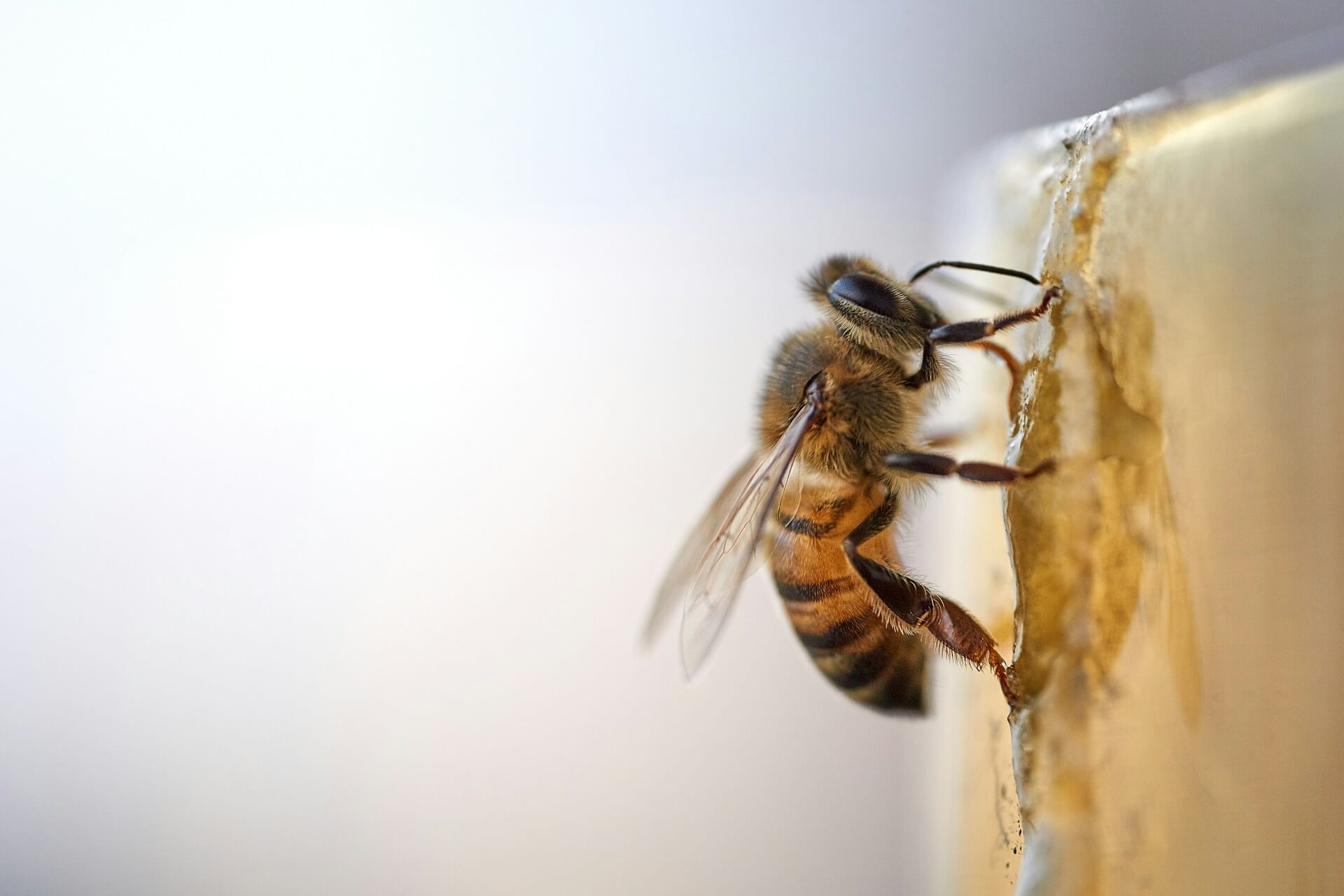
Photo by leandro fregoni on Unsplash
Content Warning: Suicide
I can remember each and every sting. And how even a dead bee can sting.
“Hm, look at that,” my father said. And to my five-year-old eyes, the gold-and-black stripes on the hallway mat looked like a key—a shiny key that would unlock who knew what magical adventure. So I picked it up. I don’t remember much else except that I went to kindergarten late that day, my thumb still swollen and red.
My second sting came just a few months later, in the woods behind Andy Prisco’s house, the one tucked away down at the end of our street. I didn’t even know our street was a dead end until they put up the Dead End sign, and then suddenly it seemed a little scary. This is a story of a dead-end road on Long Island in the seventies.
Surrounding the houses on our street, as though left by careless developers, were clumps of trees and mountain laurels that formed a ribbon of woods weaving in and around and behind the houses. I knew these woods as well as I knew the inside of my own home: where the moss was soft for sitting, which trees were good for climbing, and how it all connected through backyards, in this time before fences.
At the end of the street, the woods wound around the circle, where we used to play baseball, and grew thickest behind the Priscos’ house. I must have been in the Priscos’ house at some point once because I have a memory of Mrs. Prisco, slim in her ribbed, caramel turtleneck and slacks, offering us iced tea and cookies. (We had juice or milk at home, never iced tea.) Maybe I just think I remember it because I want to remember her. Maybe I only remember the woods behind their home.
Andy and Alex were both there that day, along with my big brother. On our dead-end street there were the kids who were best friends who played mostly with each other, and there were the kids you played with just because, or only when, they happened to be around. Andy and Alex were in the “just happened to be around” category. Andy was my brother’s age, about two years older than me. Alex, however, seemed nearly grown up: I guess he was only about eleven, but so much older as to belong in a different universe.
The boys were building a fort out of whatever materials they could find: leaves, sticks, mud, maybe even some spare boards from a basement. I helped by getting in the way. I can’t remember now why I stupidly followed the big boys. But what else do you do on a hot, end-of-summer afternoon? I, with my stringy brown hair, white-and-yellow cotton dress, tagged along after my big brother. Your brother just has to deal with it. His friends, not so much.
But what I really remember, the shiny gold frame around the memory of that day, was Andy saying to me, “Hey! Why don’t you go on over there…by that tree…there’s a surprise!”
A surprise? I headed straight for the tree, but just as I got there, Andy called out, “—but watch out for the yellowjacket nest!”
The nest I was standing on.
An angry yellow cloud, hot and alive, began stinging my legs, my arms, my belly, my thighs. I froze for an instant, then ran home, screaming all the way. One, two, three, four, five … the yellowjackets kept stinging even as I ran.
My mother must have seen me through the window, and as she opened the front door one last yellowjacket stung me under my dress. I remember her look of pity and pain—or do I only remember this scene from my mother’s point of view, her pity and pain as she retold how she heard my screams, opened the door, found five-year-old me jumping up and down? Maybe I heard the story enough times to have internalized her own telling. Or maybe it’s really her story I’m telling now, the story of parents and children and pity and pain. The story of a dead-end road on Long Island in the seventies.
One autumn afternoon, a few weeks after the yellowjacket incident, I came home from school and there were police cars in front of the Priscos’ house; no flashing lights, no siren. I ran to see, but a neighbor (who? which one?) intercepted and said we should go home. There my mother seemed distracted, nervous even. She said there had been an accident. Mrs. Prisco had died in her car, alone in the garage. Andy, like my brother, took the earlier bus. He was the first one home. I remember that much. My mother said it was an accident.
It was years before I understood what had actually happened, as much as I ever will. Maybe someone told me or maybe I just figured it out. Or maybe a combination—someone telling me one thing and my figuring out the rest, the same way I found out about sex.
After Mrs. Prisco died, after the ambulance left, the other mothers got to talking—in twos and threes on the street, or later in someone’s house, over coffee. About a week before Mrs. Prisco died, she had called just about everyone on the street, asking for mini loaf pans. She was making something for a school bake sale, or maybe for a church social, or for a party.
She called you, too?
Maybe it was a cry for help?
She called everyone.
Maybe she just needed someone to talk to.
But I didn't have any mini loaf pans.
Me neither.
The following year, in the school production of Oliver!, they gave Andy the role of Bill Sykes. He wasn’t a great actor or singer, for sure, but he was the biggest kid in the fourth grade and made a convincing murderer—especially to me. “Nobody mentions my name,” he roared, knocking over one of the kids on the stage, who lay convincingly still. I remember my father laughing, but the scene seemed scary to me. Andy was scary. Was everyone just looking for something to laugh about?
I still wonder why he led me to the yellowjackets’ nest—cruelty? boredom?—and why he warned me away but too late. Was it funny to him? Maybe, at least for a second or two, not knowing if this dumb girl was actually going to do it. Did he have a sudden change of heart? Or did he just have a mean streak? And what happened to him, to that mean streak? Eventually, over the years, the other kids caught up to Andy in both size and swagger. Alex grew a mustache that floated above his lip like a shadow. He drove his silver car fast down the street and sometimes hit the neighbors’ trash cans. I don’t remember Mr. Prisco at all, but my brother tells me he remarried quickly.
No one—not on our street at least—had known Mrs. Prisco was unhappy. But now I’m reaching beyond my own memory and putting together remembered words and images, trying to fit them together into a picture that makes sense. Because the appearance of police cars on our street was the first time I remember feeling that hide-and-seek wasn’t just a game, and that adults could just disappear as well—which will never make sense to me.
Mothers behind windows, watching for their children coming home from school, looking for a reason to stay.