Short Story
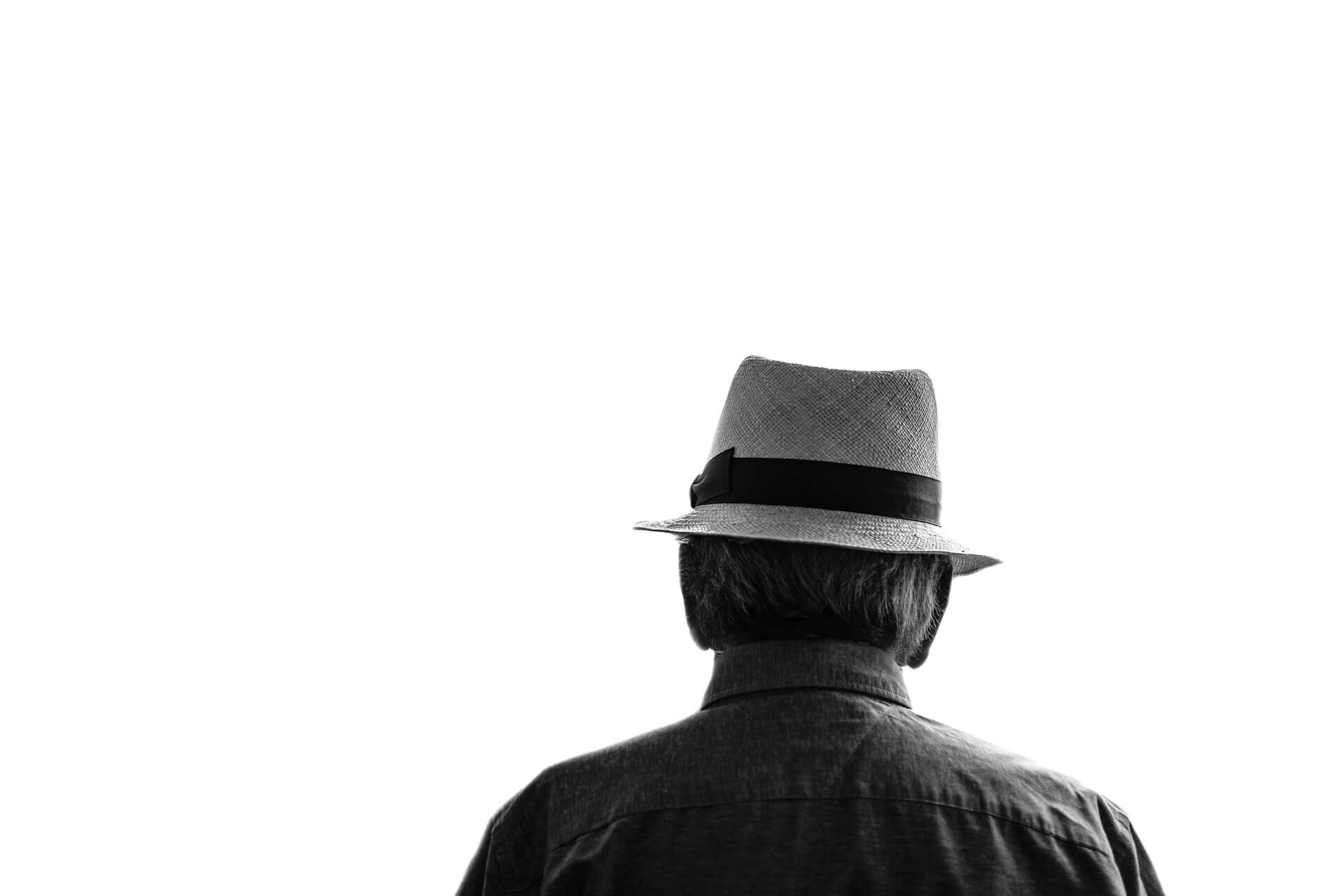
Photo by Marco Chilese on Unsplash
“You’re cutting it close, aren’t you?” Frank asked Joanne. He liked to be a little early for lunch to claim his usual table by the window. From it, he could see most of the dining room and the door to the kitchen. He didn’t like the hustle and bustle from the staff or the loud conversations from residents at other tables, but if he had to endure it, he wanted to be able to see where it was coming from.
He thought of one 95-year-old busy body in particular who shuffled from table to table, asking about your health and your family so she would have more gossip to pass along to the next table. She always took her food “to go,” carrying the Styrofoam container back to her apartment on the seat of her walker, because she spent the whole mealtime talking.
“We still have 25 minutes before we need to walk down there,” Joanne said, continuing to load the dishwasher in their kitchenette.
“By my watch, we only have 5 minutes.” Frank lifted the face of his silver Timex a few millimeters, stretching the elasticized metal band. He sat on the black vinyl-covered seat of his walker near the apartment door.
“No, honey. Remember what I said about the long hand and the short hand. You have to look at the long hand to see how many minutes there are. You’re looking at the short hand, and that’s for hours.”
“No, look right here. See, the hand is just past the 11. It’s just a few minutes before 12.”
Joanne shuffled the few steps from the kitchen to peer at the watch. “That’s the hour hand. The long hand is down by the 7. That means there’s 25 minutes before 12. We can’t go down this early.”
Frank looked at his watch and shrugged his shoulders with confused acquiescence. This used to be so easy. He remembered mastering the hour and minute hands as a boy, when time itself was endless and unburdened. But some concepts were slippery for him these days—he had accepted that, so he let it go.
“Well, I’m going to sit out in the hallway for a few minutes.” Slowly, he stood. His knees didn’t work well anymore, and it took a lot of concentration to raise his body upright. He’d fallen earlier in the week, and that was always embarrassing. He wasn’t strong enough to lift himself from the floor, and Joanne wasn’t strong enough to help him. If Eugene, the maintenance man, was nearby, Joanne could just ask him to come in and help, but last time he had said there was a new policy. The nurse had to check for injuries before a resident could be moved. And there he had been, lying on the floor like a landed fish, looking up at three faces, unhurt but unable to rise as the nurse asked him to move one limb at a time to make sure nothing was broken.
He cautiously shuffled his feet, turning to face the handles of his walker, then he released the brakes and reached for the door handle. He opened the door just wide enough for his walker, and shuffle-rolled out into the hallway, where he again engaged the brakes and turned to sit on the seat.
The carpeted hallway was air-conditioner cool and empty of people, and time passed fast and slow. His daughter had given him the watch when she was in high school, using money from her part-time job at the shoe store. That was 40 years ago, and it still worked. “Just like the commercial, ‘It takes a lickin’ and keeps on tickin,’” he thought.
Now she lives in Pennsylvania, and they saw her just two or three times a year. She had visited only a few weeks ago, looking older, her own children grown.
Their two oldest still lived in Columbia. Frank, Jr., handled the bills and the bank account, and he had said just yesterday that there was still plenty of money. Their older daughter takes them to their doctor’s appointments and picks up what they need at Walmart. The youngest son is in Virginia. Four children, Frank thinks, and they all went to college, all doing well. His own father, years and years ago, had wanted him to quit high school and get a job. But Frank knew he would make a better living with a high school diploma, so he’d kept at it. The phone company hired him after high school, and he stayed with them until he took an early retirement buy out rather than learn how to use their new computer systems.
He thinks about how much it costs to live in this facility and hopes there’ll be a little money left over to leave the children. At 93, he knows he can’t have too much time left.
He wishes he had never come here. Dying in his own home, where they’d lived for 65 years and raised their family, would have been just fine with him, no matter how it happened. Better than this, and a lot less expensive. But three years ago, Joanne had gone into the hospital with uncontrollable blood pressure, and when she came out she wouldn’t stay in the house.
“It’s too much and we can’t handle it,” she had said. “I’m going, and I hope you’ll come with me.” Of course, he couldn’t say no.
In the hallway, he remembers his boyhood like a free territory in which he used to reside. His family had lived near the intersection of Elmwood Avenue and Bull Street, by the State Hospital. Some days, he’d climb over the six-foot brick wall there with a few other boys and play touch football with the male patients. The boys supplied the ball, and they’d divide up teams, usually us versus them, unless the numbers weren’t even. When the patients were called inside, he and his friends shimmied back to the outside. But when his best friend fell from the top of the wall and broke his arm, they’d had to stop. What was his name?
“Joanne!” Frank called.
“It’s still not quite time yet,” she said through the open door.
“Never mind!” Frank barked, waving her away in frustration. He realized after calling that she wouldn’t know the name of the boy who had broken his arm, having never met him. His memory gave him trouble these days. Sometimes he forgot his own children’s names and had to be reminded.
Along Elmwood Avenue had lain a smooth, concrete sidewalk, not yet cracked by weather or deformed by tree roots tilting its planes into trip hazards from below. He’d roller skate up and down it for an hour at a time. One summer afternoon, he skated until he grew tired, then lay under a tree beside the walkway and fell asleep. His uncle, a policeman, saw him there as he drove by, yelling “Get up from there and get on home!”
In the hallway, Frank smiled at the memory and placed his key in the lock, ready to turn it when they left. He tapped on the open apartment door. “Do you want me to bring your rollator out?” he asked.
“Okay, just a minute. I’m going to comb my hair and put some lipstick on, and then I’ll be ready,” Joanne said from inside.
He shook his head. She hadn’t heard what he said. Lately, she’d guess at what he probably said, and just respond to that.
After lunch, he sat at the tiny table in their kitchenette taking his pills. Daily, Joanne set out the plastic box divided according to the days of the week and reminded him when to take them: one for his memory, one for his joints, one for his heart, one for his anxiety, and one for his cholesterol. A capsule slipped from his fingers, but he moved his thighs together and caught it in his lap. He was momentarily proud of his quick reflexes, until he noticed, while looking down to retrieve the pill, the fist-sized yellow stain just below his beltline. It looked like thickened urine or baby diarrhea, but he knew better. Not that he never had such accidents, but he wore Depends now to prevent embarrassment. He recognized the stain from whatever they’d sauced the chicken with at lunchtime. “I wouldn’t feed it to my hogs,” he thought.
Joanne sat looking at a magazine in a recliner in their living area just eight feet away. She, too, walked slowly, but standing for her was less of a struggle.
“Could you get me a wet rag?”
“I poured you some cold water. It’s right there by your left elbow,” she said.
“No, I need a wet rag,” he said, louder this time.
“A what?” Joanne stood slowly and moved a few feet toward him.
“A wet rag! I spilled something on my pants.”
Joanne moved yet another step closer with a look of uncertainty.
“A wet rag! A wet rag! Get me a wet rag!” he shouted, grimacing angrily and clinching his fists. Then quieter, not intending her to hear: “I said it four times! Why don’t you put in your hearing aid?”
Joanne furrowed her brow and frowned. “Alright, I’ll get it. But I wish you could find a volume between whispering and shouting.” Frank was used to being the boss of his household and getting his way, and his current childlike state infuriated him. Joanne shuffled to the bathroom, found a washcloth in the linen closet, wet it at the sink, and shuffled back to the table, handing it to Frank. They both avoided eye contact as he took the rag and began dabbing at the stain. The twinge of conscience he felt about shouting at his wife mingled with annoyance at having to repeat himself; he wasn’t ready to apologize. He’d do it later, if he remembered.
Right now, he was tired. He took his last pill before placing one hand on the table and the other on the chair back to push himself to a standing position. He shuffled to his own recliner, carefully lowered himself into the seat, and raised the footrest. Here, he dozed away the afternoon, dreaming of climbing the dogwood tree just outside the apartment window.
When he awoke, he was thinking about a thunderstorm that happened during weekend training in the National Guard. He began telling Joanne about it. They had been newly married when it happened, and she knew this story’s well-worn grooves. Still, she let him continue. Earl, Morris, and Robert from the neighborhood were all in his unit. At the time, they resented these weekends in the woods, but they had often held adventure. One time, a storm broke as they were setting up camp. The lightning was so close that less than a second passed between the thunder and the flash. Earl cowered in the tent, shaking. After one flash, Frank looked outside and saw Robert lying on the ground, motionless. He and Morris darted out to drag Robert into the tent. Then Morris, who knew CPR, started chest compressions. Ten seconds later, Robert opened his eyes and pushed Morris away.
“Get off me! I’m fine!” he said. When the storm passed, they’d had a good laugh.
The day closed like most did at the apartment. Frank and Joanne talked some more after supper, and then she reminded him to take his evening pills and brush his teeth. She helped him undress to his Depends and undershirt, then draped his pants and shirt across a chair to wear another day. She drew back the covers, and Frank sat on the bed’s edge before pulling up his legs and lying back. Joanne tucked him in. Sleep always found him quickly; it was staying asleep that was the problem. Slower to fall off, Joanne spent an hour reading a large print Amish romance in their living area before joining him in their bed.
Hours passed, and Frank was startled awake by a crashing sound, metal and glass, in the distance. He heard the insistent beeping of the facility’s front door alarm. Joanne, beside him in the bed now, slept on as the alarm continued. Faintly, under the beeping, he heard sounds of a scuffle. Someone breaking in! So many drugs in this place, along with old ladies’ lifetimes of accumulated birthday pearls and anniversary diamonds, made it an attractive target for addicts. The staff had told them that an alarm would immediately notify the police and fire department, but Frank wasn’t sure this was true. Anyway, a violent drug addict with a gun could cause a lot of harm before the police arrived.
He thought of the woman security guard who worked at the front desk overnight. She had size to her but didn’t carry a gun. Why even hire a woman for that job, he wondered? Most of the time, she had nothing to do except look at her phone, but when it mattered, she would never be able to fight off an intruder. Frank felt his heart racing as panic set in. At home he had kept guns just in case of such an emergency. One was always ready within arm’s reach of his pillow. His son had taken them all when he moved to this apartment, and now they were defenseless. Frank had to act! He wouldn’t cower in his bed!
He pushed back his covers and gravity helped swing his feet to the floor. The bed was higher than a chair, which made standing easier, and adrenaline gave him strength and speed. In the corner of room stood the solid wooden cane his father had used more than 50 years ago. Frank didn’t use it often because it wasn’t as stable as the walker, but it would make a sturdy club, so he kept it nearby for protection. The dim nightlight showed the way as he clutched the cane and lurched slowly to the apartment door. Turning the deadbolt, he noticed that the alarm sounded almost like a tolling church bell.
He swung the door open and peered into the hall. The alarm grew louder. He heard urgent distant voices, but he couldn’t make out the words. The main entrance was down a long hallway and around a corner. The air smelled faintly sulfurous, coldly menacing, and he heard heavy boots stepping closer.
Then he saw the figure in the corridor’s muted nighttime lighting just as it rounded the corner: a tall, unnaturally slender man dressed all in black. Frank saw no gun, but a long knife blade glinted with each deliberate step. Fearful but determined, Frank raised his cane in his right hand and stepped into the corridor, ready to fight for his life.
After two steps, he felt a strong pull at the back of his undershirt. Had one of them gotten behind him? How had he not thought of that? He knew he couldn’t move too fast and risk falling, but he turned as quickly as he dared, cane still at the ready, and saw Joanne, standing in the hallway in her nightgown.
As he turned, she released his undershirt. “Frank, you can’t go out here without putting some clothes on,” she said.
He looked down at his dingey white undershirt, looked back at his wife, and realized they stood in the silent, dimly lit hallway alone.
Joanne guided him back inside, where she helped him to the bathroom and then back into bed. Frank knew now he had been dreaming, and he knew, for all that, it had been real. Gratitude and resentment mingled within him at the forestalling of the fight. But as adrenaline dissipated in the darkness, a calm resolve took its place. Frank was certain, despite Joanne’s assurances, that black-clad figure would come back, and he was equally sure that, when the time came, he’d again walk out to meet him.