Short Story
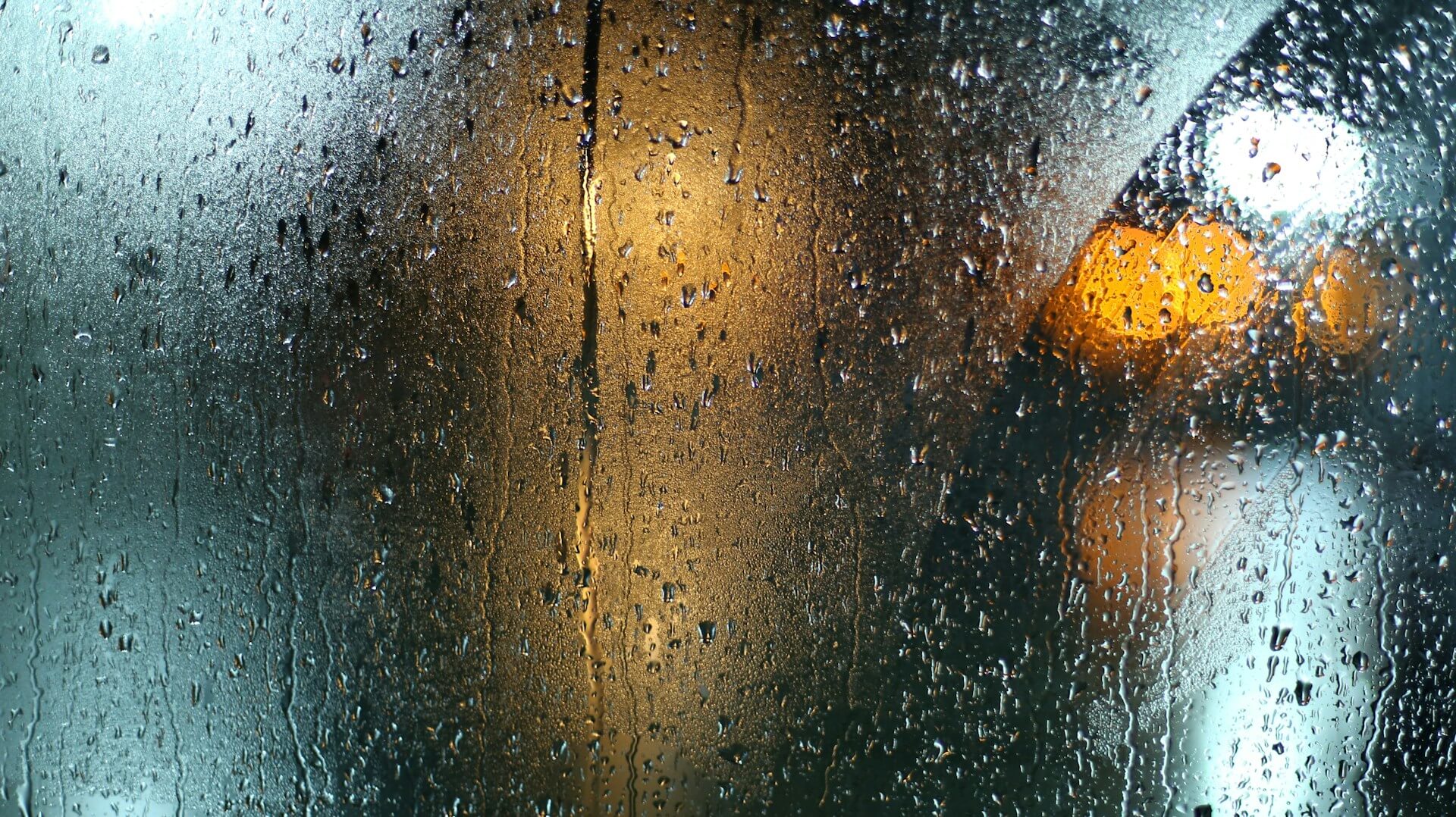
The sky had been clear and blue when Johnny left the pub that morning, the sun so bright his vision blurred as he transitioned from the darkness.
“The last pint might have been a mistake,” he said to nobody in particular as he zipped his windbreaker and checked the pockets until he found his sunglasses. “With my luck lately, shouldn’t be havin’ too many.”
“Nah,” said a bald, jersey-clad giant smoking a few feet from the door. “A mistake is pulling Driscoll with so much time left.”
“Play for the draw and take the extra time,” Johnny agreed. “What was Archibald thinking? Against that defense, you don’t take chances. Can’t believe I woke up early to watch that.”
“Good man. Fancy a smoke?”
Johnny declined, trying to seem appreciative of the offer without giving the impression that he liked smoking. The fact that pubs now banned it indoors made football viewing much more pleasurable.
The slight morning breeze carried more than enough of the smell for his taste. Not wanting to seem rude, he bantered for a few minutes about the disappointing result. Both men agreed that Fallon should have made the extra pass before his failed shot at the end of the first half, and that the squad would fare better now that its underwhelming international tour had wrapped and the lads could return to Irish soil.
The football chat lasted exactly as long as Johnny’s right leg needed to fall asleep. Having run out of insights about the sweeper’s relative abilities, he excused himself with a modest “best be heading home” and started toward the bridge with his numb leg dragging along.
“You alright to get there?” the giant asked. “They’ll make you a coffee if you need to sober.”
“I’m fine. Just my leg. I walk on it, it’ll be alright.”
His fellow fan gave him a casual military salute before grinding his cigarette into the concrete and heading back inside. Johnny thought about doing the same, but it was best to start for home. His father always insisted that being out of work was no reason to waste the day.
The bus terminal in the square was starting to fill with its usual mix of tourists and locals, but Johnny thought the walk might do him some good. The effects of the last pint were starting to recede, but the weight of a full breakfast remained fully present in his stomach.
He was also skint enough that the bus fare would consume most of his remaining pocket change.
Always a supporter of sea air’s effects on his constitution, Johnny chose to rove southwest toward Salthill, following the path along the shoreline. He could see some of the big ferries leaving for the islands or on their way back from them and waved to a few children who did the same back from the decks. The black-headed gulls monitored his progress as he walked, checking to see if anything edible fell from his pockets and voicing their displeasure when nothing did.
Aside from the birds, the walk was a welcome chance for time alone with his thoughts, something Johnny rarely experienced since moving back home. The path wasn’t empty, but the cyclists passed him without a word and even the joggers with their dogs kept straight ahead.
Enjoying the quiet, he chose to walk the narrow causeway to Mutton Island and take in the bay. Even though he had plenty of space on either side, he kept his arms up to balance the way he used to as a boy. The rounded little piece of land still offered the best panoramic view in town as far as Johnny was concerned, and he wondered why he didn’t walk out to it more often when it was only a short detour.
Getting some uninterrupted time on the false island, really more of a solitary cog on the causeway’s spoke, seemed like the first bit of good luck Johnny’d had in a while. It was nice to stand there as long as he wanted to, feeling the slight chill from the water on a cool but humid day and enjoying the seabirds in flight.
Ironically, since he lost his job months ago, his schedule felt even less his own, as his father’s requests for help with various projects didn’t end at five the way the factory’s had. No doubt he’d return home to a backlist of menial tasks pawned off on him on the assumption his time no longer held value. That thought inspired Johnny to linger a bit, losing track of how long he’d been out there, before turning around.
He was almost halfway across the causeway when the rain hit. It was a sudden blast, arriving out of a still clear sky and attacking the whole waterfront.
Johnny hadn’t brought an umbrella and wore nothing waterproof, meaning his best option was to stand still as a bulwark against the chilling breeze. He tucked his head down and put his hands in his trouser pockets, trying to make himself as small a target as he could.
The rain only lasted about seven minutes, but it packed a lot of water into such a short window. Johnny’s trousers clung to his wet legs, and the cool breeze off the bay covered most of his skin with gooseflesh. He did what he could to shake water from his hair as he took slow steps in his heavy shoes, before pausing to absorb the rainbow that appeared above him. With the air still damp from the sudden shower, the colors had a sheen like the surface of an oil slick. Johnny couldn’t help but stare for a few minutes, frozen on the path like a soaking statue.
He was in that still position when a small man in a red suit hurrying along the causeway, not looking where he was going, crashed into Johnny’s legs. The other man was so little that his skull seemed to hit Johnny’s knee, producing both a loud crack and a sharp pain that would probably bruise his patella in the days ahead.
“You right?” Johnny asked the man, whose momentum had thrown him on his back. The man was round enough in the middle that he struggled to sit back up, giving an effect like a toppled turtle as his buckled shoes failed to get a foothold and instead slipped in the mud.
“Leave me be!” the man in red yelled even as Johnny reached down and took his hand to lift him up while placing his other arm on the man’s back to steady him. Only then did Johnny get a good look that confirmed what he suspected; his companion was no man in the traditional sense.
“I think my luck might be changing, isn’t it?” Johnny smiled as he helped the leprechaun stand, careful to grab a handful of his jacket so he couldn’t get loose. “I know what you are—and I know you have to grant me a wish before I let you go.”
The leprechaun started to argue but stopped himself and released a sigh. “Unfortunately, aye, that’s my obligation. Not much use pretending otherwise.”
“So I can’t leave you be until you grant the wish. Or you might try to wiggle out of things.”
“Aye, I might. Or I might not. Only way of knowing is to let go of me.”
“Not until I get my wish. Just the rules. Nothing personal.”
“Fine, fine.” The little man stopped struggling and pulled down on his suit coat to smooth it. “Let’s be getting it over with.”
“I’d have thought you’d be dressed in green.”
“Ye watch too much television, lad. If ye wish, I can change what I’m wearing—”
“Nice try, but the red will suffice.”
“Fine. Then instead of spending yer time critiquing me wardrobe, get to the wishing. I’ve got places to be, and I’m sure ye do too.”
Johnny had grown up with enough leprechaun stories to know the importance of not saying too much. If any words he uttered sounded like a wish, a request, or even an unsolicited opinion, the leprechaun could take them as his wish and leave him no better off. He only had one chance to get this right. He pressed his lips together while he thought, careful to let no idea slip through.
“Come on, make up yer mind.”
While he knew the leprechaun would owe him a wish as long as he didn’t escape, Johnny also knew better than to wait too long. He was no fool, but he also didn’t trust himself not to get tricked by the epitome of a trickster. Leprechauns knew how to talk their way out of things. Best to make a quick decision and then let the faerie go.
“I want the crock of gold.” Sometimes the simplest request was best. With that much gold, he could move out of his childhood home while he searched for new work. Maybe it would be enough that he’d never need to work at all. Johnny was an easy man to please; the only extravagances he’d ever wanted were to attend a few home matches each season and to try a better class of liquor once in a while. “Yes, that would do. The crock of gold. That’s my wish.”
“Fine, fine.” The leprechaun shook his head. “They always want the crock of gold. Come on, let’s get this over with.”
The man in the red suit pivoted and resumed the direction he’d been walking before his unscheduled meeting with Johnny’s kneecap.
“Where are we going?” Johnny asked, still holding the leprechaun’s shoulder.
The faerie rolled his eyes and pointed down the causeway toward the bay. “Where else? End of the rainbow. Where I was going before I literally ran into the likes of ye.”
“There really is an end of the rainbow?”
“Can’t go on forever, can it?”
“Alright, but I still need to hold on to you. Nothing personal.” Johnny picked up the leprechaun, who weighed only about as much as a bag of flour, and held his arms to his sides as he retraced his steps. The leprechaun grumbled without stop, but Johnny walked straight back to where the causeway ended, following the arc of the vivid rainbow.
As a boy, Johnny had often tried following rainbows to their terminus—not so much because he believed the stories as he wanted to see how far they really went. That had always proved fruitless, but this particular rainbow seemed to have a real endpoint. Johnny tried to stay skeptical as he ran as fast as his wet clothes would allow, until he brought his faerie guide to the same spot on Mutton Island where he’d stood not fifteen minutes earlier.
What wasn’t the same was the black pot at the edge of the pseudo-island.
“There ye are, the crock of gold. All yers. Just put me down.”
Johnny did as requested and scampered to the pot where the end of the rainbow seemed to plant itself. It looked like a drawing in a children’s book, too perfect to be real. But it was right there before his eyes, the gold coins inside shining.
When he got a better look at his prize up close, however, Johnny found himself disappointed.
“I expected it to be…bigger.”
“How do ye figure?”
“I was expecting a giant crock of gold.”
“It’s giant enough. Me height and thrice as wide around. Try lifting something that size and tell me it doesn’t count as giant.”
Johnny had to admit the crock would seem huge to his companion, but it was a question of scale. When he lifted it, it was heavy in the same way the shot put in school had been—a concentrated mass, but ultimately not even as big around as a football.
“There ye go,” the leprechaun said. “The crock is yers, and I’d best be off.” Before Johnny could object, the little man jumped into the rainbow and disappeared. The rainbow itself faded within seconds, leaving Johnny alone with his prize.
The weight of the crock slowed his progress back to town nearly as much as his still waterlogged trousers and jumper. He had to put it down several times to rest his arm muscles. Even when carrying it with both hands, he waddled more than walked, and passersby might think he was limping. Johnny had barely reached the main road when the rain began to fall again. It arrived slower this time, a more typical seaside deluge that gave him time to get under a bus shelter with the crock hidden under his shirt before the full storm hit.
As the rain continued and it reached mid-afternoon, Johnny chose to take the bus the rest of the way home. After choosing a seat in the empty last row, he emptied the contents of the crock onto the seat next to him and took stock of his situation. He had about thirty gold coins, which seemed like a good amount, but these coins were a lot smaller than the regular ones in his pocket. Freed from the crock, they felt light in his hand. Light enough to concern him.
Rather than get off at his stop, Johnny stayed on the bus past his parents’ house and disembarked in central Salthill, lugging his heavy prize to the local currency exchange. He wanted to find out how much his new coins were worth, and he suspected he wouldn’t be able to spend them in their current form. At least not with appropriate change.
The proprietor of the currency exchange appeared suspicious of the damp man stumbling into his shop in an evident hurry. He relaxed when Johnny took the crock from beneath his shirt and explained he was there for an appraisal.
“They’re interesting. I’ll say that for you,” the old man said after examining a few of the coins. “I admit I’ve never seen pieces like this before, and I can’t even tell you what language these markings are in.”
Johnny started to get nervous, worrying the leprechaun might have snuck a trick past him after all.
“Where did you get these?” the shopkeep asked, as he upgraded his examination with a jeweler’s eye. “They’re most unusual.”
Johnny almost told the truth but, thinking it was too strange for a man with alcohol still on his breath to offer, chose to improvise. “I found them out on Mutton Island earlier today.” He figured that was true enough to avoid breaking the commandments.
“Without knowing more about the provenance—that is, their origin—I’m not sure I can price them for you.”
“They’re gold coins. Shouldn’t they be worth the price of that much gold?”
“If they’re all solid gold, I’d suggest they’d be worth in the neighborhood of seventy or eighty each—”
“Seventy or eighty? That’s it? These are supposed to be worth a lot of money.”
Johnny did some quick math in his head and determined the full complement would add up to more than two thousand. That would equal more than a month’s worth of his former wages, minus whatever it cost to convert the coins. While that could keep any wolves from his door for a bit, it wasn’t enough to risk looking for a place of his own until he could find a new job of work.
“That’s if they’re solid gold,” the proprietor cautioned. “I’d need one of our appraisers to check them to be sure. He’ll be in on Monday if you’d like to come back.”
“What could you give me for them in the meantime?”
“I’m afraid I can’t do that. We’d have to melt one down to check its composition, then weigh the gold to be sure. Once we do that, I can price it out for you and give you bills in exchange. Minus the conversion fee, of course.”
Johnny tried a few approaches to get some money in the short term before giving up and heading back out, wary of looking too desperate or giving the impression his coins weren’t real. He wanted to make sure he’d still be welcome on Monday and was careful to thank the old man and keep his body language inconspicuous as he left the exchange.
Starting to suspect his day might have been wasted after all, he considered just going back to the pub. He didn’t have enough normal money on him to buy a pint but hoped someone there might spot him until next weekend—and that he’d find a way to cash his coins by then. Maybe one of the regulars would have pity on him and take one of the leprechaun’s coins in exchange for a meal. Grasping the crock, still slick from the rain despite his earlier efforts to shield it, he waddled back in the direction of the pub.
It took a while before Johnny realized the rain had stopped sometime while he was at the currency exchange. A new rainbow arched through the sky in front of him, its oil slick shimmer as beautiful as the one this morning, but he had little desire to see where this one led.