Short Story
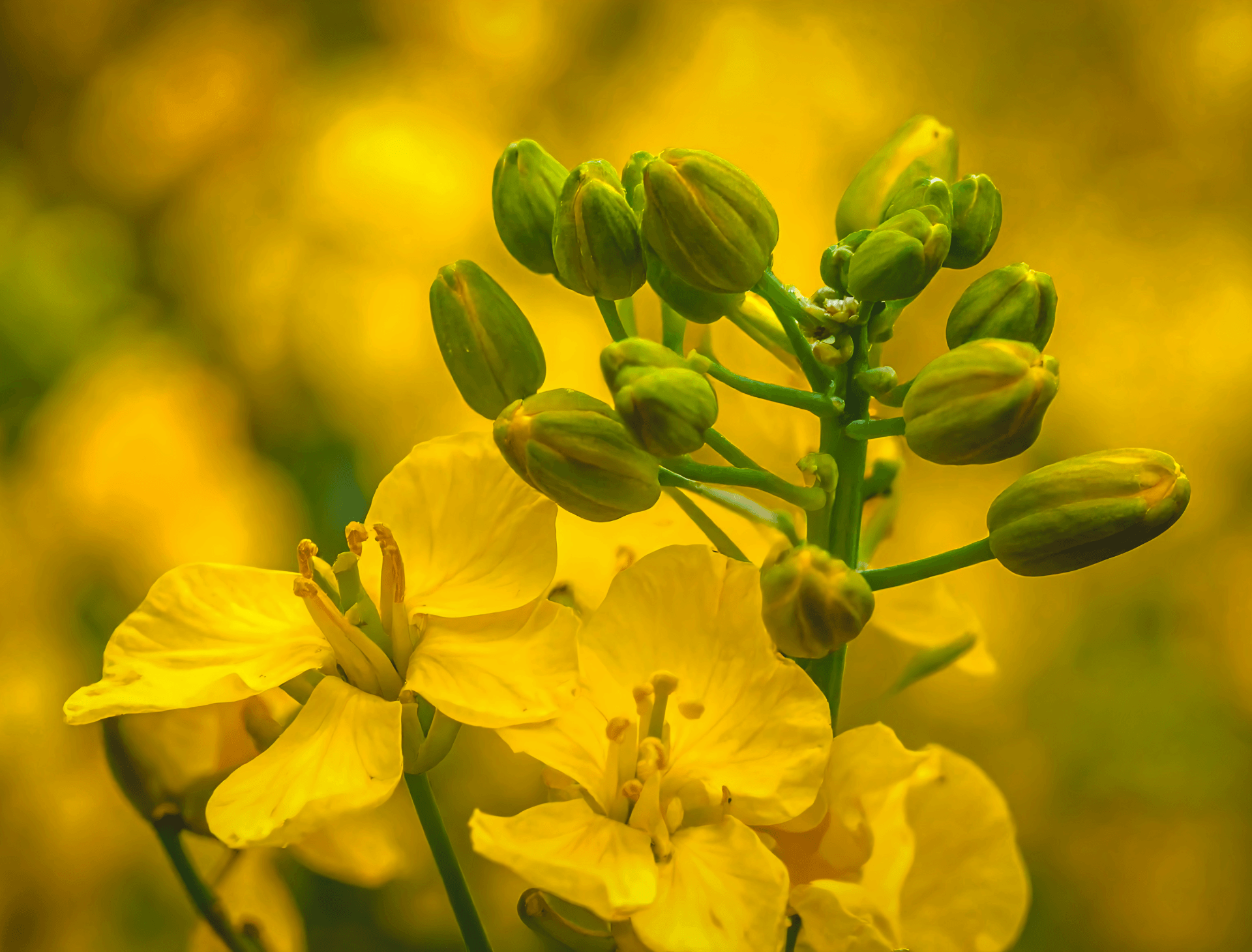
Image from Adobe Stock
DAD:
Between the yellow canola stalks that whistled in the wind, rippled like waves, shimmered like the hush of sunlight on silk, and towered two heads above me, I forgot the why and the how. They had slipped from my mind like rapeseed, dispersing in a summer wind. But I was sure that there was something — remorse, perhaps — that screamed at me, that scolded my forgetting.
I remember some things. I walked to the field barefoot, sweating under a second-hand T-shirt in July of 1988, the hottest July I could recall. It was the first year I left home, drifting away from the inland comfort of Anhui to study in Shanghai. I was looking for something — a ball, a frisbee, a tree branch?
“Bryan, fetch!” The other kids snickered behind me.
You’re laughing now, but yes, they called me Bryan. I always went by Wei. Zou Wei. Bryan was just a name a homeroom teacher gave me, a word she plucked from a tin jar full of American names. I still remember the scrunch of her nose, puff of her cheeks, the slight lift of her chin when the middle-aged Ms. Tina renamed me. “Pfft, you’re Bryan now, screw Wei,” she snapped in rapid-fire Shanghainese, jumbled and jarring. “It’s all part of our Westernization. No, modernization.”
Maybe that’s what I forgot—my silence, my buckling twelve-year-old knees. But it's what all the immigrant children did. Left home alone, went to these rural city schools, and became cheaply manufactured Shanghainese. It’s the genetic makeup of all of us: a third American, a third Shanghainese, a third ourselves.
In history class, Ms. Tina gave us a definition of human nature: following trends, letting history lead the way. What more could I possibly say?
Back in that field, I was surrounded by the canola smell, that honeysuckle sweetness at dusk, that fishy scent of the early morning farmers market. Your grandpa, my dad, always wanted to smell the sea, to walk barefoot in saltwater, to nap on white sand. “The canola is the ocean,” he would say, staring at Anhui’s plentiful mountain stars. “At least one petal is, the other ones are air, Earth, fire...”
I wanted the canolas to say anything.
Say, with petals agape like mouths of starving children, Why are you here?
Say Stay, despite the tiny threads popping out of my shirt lapel, the widening holes in my sneakers.
Say We’re the same, despite my forgetfulness, despite the oak brown in my pupils, despite my barren heart barely beating back home, in Anhui, in our subsidized hut, in Mama’s arms. Despite forgetting the phrases I never used in this new Shanghai dialect, so different from Anhuinese, particularly the three-lettered one—I love you.
Then, I started running. I pushed forward, feeling space closing up behind me as the stalks I pressed apart whipped back to where they were moments ago. I tried to remember what I was running for. I was running for myself. I was running away from Shanghai’s cold sea breeze to where Anhui was in my dreams. I was running not to fetch, but to escape.
Every other step, I felt their yellow and brown closing on me, chasing after me, squeezing the last breath of air out of my chest. I felt what I had stopped feeling after Grandma died, and I boarded the one-way steamship. Or rather, in that field of blooming canola, I stopped feeling the throbbing of my heart, the loneliness that colonized my dreams.
Then, I remember the worn-out sole of my right shoe sliding mid-stride, over a root, a rock, something slick. I lurched forward. The world tilted. I let out a small cry, hands flailing to grab something, anything. And I did catch something. I seized a single canola plant, and I pulled on it, tugging for dear life. It snapped. Only the flower remained in my balled fist.
Moments before the pain hit and everything went black, I remember clutching the Canola bloom as hard as I could ... a boat ticket back home ... Maybe this way, I could save my heart from dying, alone.
GRANDPA:
In November of 1988, the last one of our peonies died of thirst.
Its drooping petals and yellowing stem had told us this weeks ago, but only until the final petals fell to the cracked earth did we come to terms with the fact that it had, like every other flower that trusted us with life, died.
Minghan, I want you to know this. Things die in rural Anhui. Liu died from the smoky air in the factory. Your great-grandmother died from malaria. Our rice plants died in the longest drought since ‘79.
One night in that fateful year 1988, I stumbled away from our bedroom, where the corpse of the peony lay silently. I couldn’t bear looking at it. Peonies were the closest thing to canola I could find. All the other flowers didn’t have the same tender petals, the same hopefulness. I wondered if Wei could bring back some Shanghai canola. I wondered if he could just come back.
So I ran laps around our hut aimlessly. It was my way of forgetting, of escaping the memories of a boy leaving on a steamship, of death and drooping petals... But our hut, with only one other room, was too small to roam, let alone run. Somehow, I ended up in front of the mailbox again. Every week for the past two years, there I waited for Wei’s letters. They never came. Every month for the last fifteen years, there I waited for government food tickets, and sometimes, flower seeds. They came, but sparingly. We haven’t had meat in a year.
The mailbox was made of rusty metal. As I cracked it open, it let out a long, piercing screech. Inside, I saw two tickets—a liter of vegetable oil, twenty cups of rice. There was something under them, too. With drooping, yellow petals so dry like the color got sucked out of them, and the thinnest stem I had ever seen, it was a single, wobbly canola flower.
CANOLA:
Despite all the history of the world thrumming through me, I knew nothing about what to do when a little boy kicked away my brethren, trampled my roots, and snapped my spine.
It’s true. I know more wild dreams of city children, more secret affairs of lovers hidden beneath moonlit straw huts, more whispers carried by bees from one sweet clover to the next, more histories of this wild land, than I do about myself. And yes, it’s easy in the field. A sparrow’s secret gets passed around, from root to root, one wind-dancing stalk to another, until the very bare bones of the tale are engraved in our collective remembering. There’s nothing better to do in these rural pastures except to doze off into cloudless dreams or languish in the salty seacoast air, disappearing into the wispy news of the world.
So, when the boy came, I was ready—or so I thought. Dressed in tattered clothing, he was clearly a foreigner. The son of strangers who knew nothing of the rising tide, nothing of how Shanghai clawed itself out of waterlogged soil. From crude rowboats to industrial ports of the East China Sea, from mud to metal. The boy would take whatever he needed and be gone, like our families that once stood where towers now scrape the clouds.
That’s when I felt it, the fibers of my body ripping apart, the sun trapping itself into the boy’s chubby hands, his light brown eyes. I tried to hold everything I knew to hold but couldn’t. I was flying and falling at once, and when I looked down, I saw half of my crushed body and the desperation of ten thousand of my kin.
I blacked out for a while, and when I could feel again, the brightness hit me. It was a cold brightness, no familiarity of the sun. Red and white lights flashed as humans, wearing ice-blue face masks and ash-white robes, rushed around me. Or around the boy beneath me. He clutched me close to his heart. Why am I here? I remember wondering as I trembled under the lights.
I heard words too. “Heart attack... Concussion... Hereditary... Coronary disease... All for a stupid ball...” The humans were cutting open the boy's chest... they were opening him up...
When they stitched the boy back together, his death grip on my stem loosened. Something was said about a village hut... a faraway father working in a factory... a father who loved flowers...
Darkness followed. A month, maybe two. Each day I woke to a new floor. Soft like damp soil, rough like exposed tree roots, then soft again.
Sometimes I heard the clickety-clack of raindrops smashing into my cage, and when they landed just right, I could taste it again—the memory of water.
One morning, I woke in the coldness and a rusty dryness I knew too well, the same rust of the carcasses long forgotten in the fields, the same rust of the boy’s blood. I was thirsty. All I had was a layer of wet tissue and some dirt.
It lit up at some point. The world. My prison cell, my rust-tinted hollow, opened up, and a huge hand reached in. It gently wrapped around what remained of my spine.
Those large, brown eyes looked so much like the boy’s. I could see rivers of sadness welling up inside them—teardrops like rain.
He placed me down somewhere. I tasted dirt again, but it was thin, salt-smeared, and cold. Dry. In my despair, his giant hands scooped some more arid soil and buried my body. I felt the need to object, to swing my petals in silent protest, but those eyes held me still. In the abysmal deep brown of those pupils, in the glossy beige of the iris, and in the bone white of all else, I saw, reflected, a field of canola stretching years away ...
and in among the stalks ...
The East China Sea is close now.