Creative Nonfiction
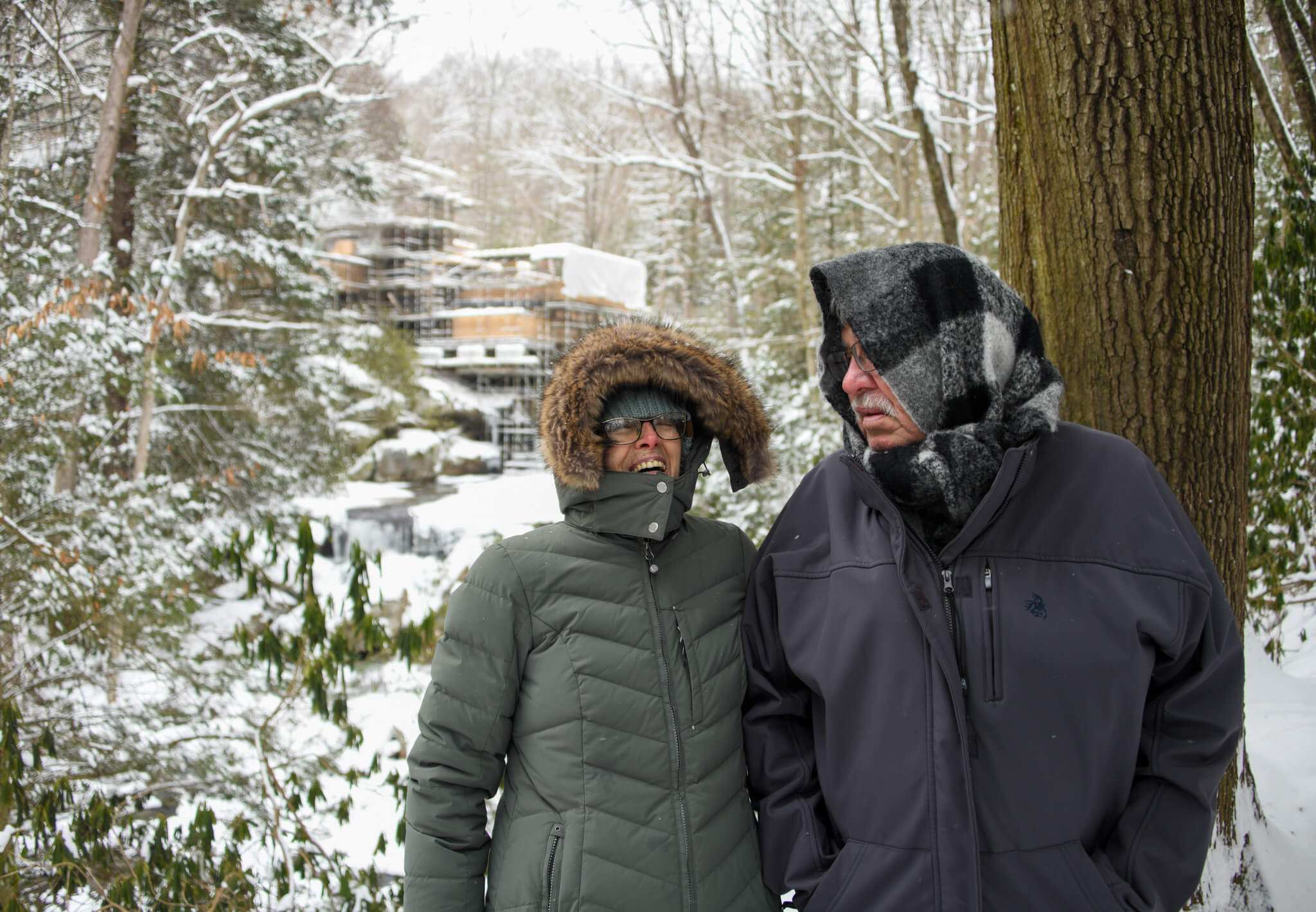
Photo by Brendan Praniewicz
There’s no proper reaction when your mother tells you over the phone, “Your father is dead.”
And how words hang in your throat as she explains, through sobs, he died in a tractor accident, when the vehicle flipped, and the rear tire ran over his head—he took his last breath in your mother’s arms.
So you book the fastest flight from San Diego to Pittsburgh. Your suitcase packed with clothes still on hangers that you ripped out of the closet. With no time for a shower or to brush your teeth, you hop in an Uber and race to the airport.
Once in the terminal, you rush to the nearest bar and order the strongest drink they can offer—you ask for two of them. Moments later, in the middle of the airport, you cry into a Long Island iced tea, and it’s the first chance you’ve had to process everything.
I knew my father had a short amount of time left in this world. He averaged 40 to 70 pounds overweight most of his life. In his late seventies, he had a plethora of health issues from diabetes, to a time bomb heart. I’d expected this call for decades, but I could’ve never predicted he’d die so tragically.
My dad served 21 years in the military. Moving every three to five years to different states and countries instilled strong familial bonds—family was the only constant. Perhaps military families grant each other more tolerance and grace than others.
When I would visit my parents for Christmas, the roasting began. My dad’s favorite activity—making fun of me and criticizing everything in my life—was hard on me. But I’m a seasoned stand-up comedian with relatively thick skin. My comic friends often torment each other over weight, appearance, and life choices. It’s how we greet each other, and it’s a form of endearment. My father, not a comedian, had brilliant timing, a talent for humor, and I was his favorite punchline. Most of the banter pivoted back and forth, sometimes malicious, but I could endure this, most of it.
The most challenging part was getting chastised for my political affiliation. Coming from the military, my parents are deeply conservative, and I’m a far-left liberal. One of my most belittling moments in the Trump era happened when I sat at the end of a kitchen table, and my family berated me for how Hillary Clinton handled Benghazi, as if I were solely responsible for the entire debacle.
Traveling to Pittsburgh in the dead of winter proved burdensome enough, especially coming from the warm San Diego coastline, but getting ridiculed for my political affiliation became unbearable. So my parents and I made a pact—no talking about politics when we were together. We didn’t shake hands or make blood promises. No, we made a verbal agreement and stuck to it. Sure, sometimes we’d slip into political discourse, but those conversations always ended with, “But we’re not talking about politics.”
Over the past decade, politics have roiled our relationships with friends, family, and neighbors. We shame each other over ideologies, and we allow the news to govern every moment of our lives. We often fail to see our basic commonalities in that we all have the same lungs, hearts, and souls. It’s human condition to feel anger, fear, and confusion—we all share these emotions. And the only people profiting from this, besides politicians, are social media tycoons like Zuckerberg and Musk, who gain fortunes from our disharmony. My family is ride or die. No politician has ever met me halfway. No senator has ever cared about me. No congressman has ever braved a blizzard to pick me up from the airport. No president has ever loved me. No one I’ve ever voted for has ever spent hours in the kitchen preparing a savory Christmas dinner for my relatives. Politics matter, yes—but so do people.
The last day I spent with my dad occurred on a freezing afternoon in January 2025. My parents and I drove down treacherous roads to visit Frank Lloyd Wright’s, Falling Water. With blinding snowfall and temperatures in the twenties, we had the landscape to ourselves. My mother and I headed down a pathway, while my father, on two bad knees, struggled to keep up. Glancing behind me, I slowed down and grabbed his hand. My dad had no appreciation for art or architecture, and he hated cold weather, but he wanted to spend time with me before I headed back to California.
In the last photo I took of my father, he’s standing beside my mother in a white forest. Falling Water emerges through trees in the background. My father’s ruddy face, wrapped in my mother’s scarf, brings out his Polish roots. It’s not my best picture. The contrast is off, it’s not properly centered, but the imperfections represent us.
My final day with my dad involved no conversations about Trump. The afternoon centered on the present moment, and the space between us filled with the sound of our footsteps crunching in the snow, light hearted laughter, and pure love.