Short Story
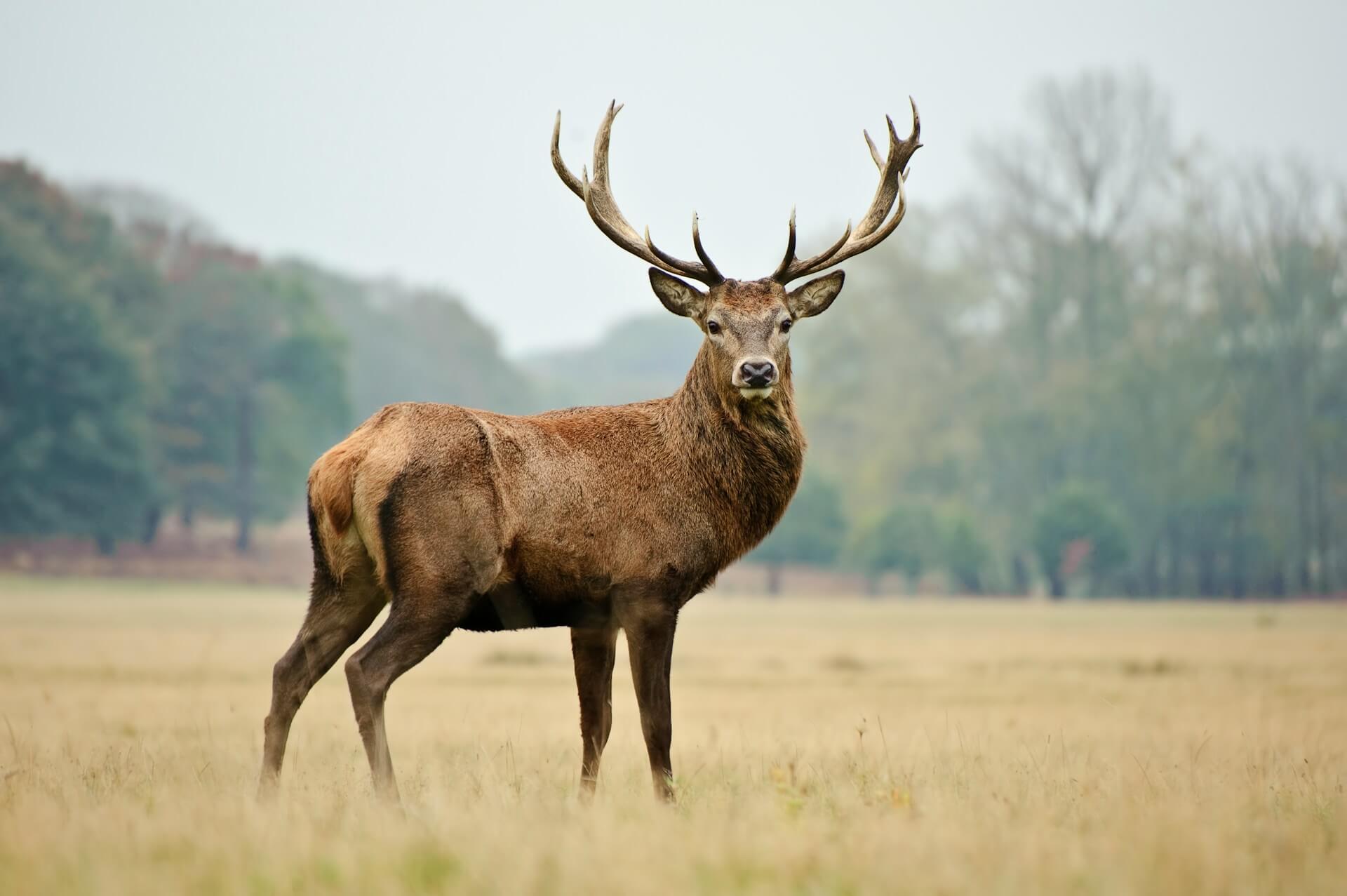
Getty Images For Unsplash+
In Memory of Uncle David
Moratok towers above the low-country fog at dawn. Regal his great crown of antlers, the pride of grace. Untamed and almost golden, his neck carries shining slivers of tension. Eyes like dark glass marbles, the tenderness unexpected.
The greatest of white-tail bucks has eluded the most skillful hunters of Martin County before there was even steel to carry. Centuries of reverence and violence follow me through the shadows of my drawing. He smells the shame. Senses me breathing low against the long black barrel, my innocence and my offense.
My chair creaks like the old deer stand, and the memory of the shot salts wounds that have never healed. The ricochet, the bullet’s bang. We jerk our heads like prey. No reason why, no reason why for child’s blood on Christmas Day.
Father lifts son. Mother wails dire. The engine runs, and pistons forge now fire.
Cornerstone Baptist Church—winter lights lost of joy. In the back of the truck, hold him close, the treasured little boy.
The rise and fall of his fragile chest make cloudy breath in the moonlit night. With the last, he says, I love you, and gone is David’s light.
Surrender spreads just slightly. Somewhere else, he has become another. No longer flesh; still his brave affection I discover.
Brave affection, brave affection, my beloved little brother.
*
On Sunday, way before daybreak, Daddy woke me and said to get on my coveralls. The frigid front of Fall had settled over Roanoke in the night, and Mema’s quilt wasn’t fond of releasing warm blessings without a struggle. I was late to make the coffee and load the truck, but even Daddy’s red-faced grumbles didn’t bother me, because I was just happy we were going hunting again.
Since David’s departure, he hadn’t talk much to anyone. Except George Dickel—friendship in a bottle.
He tried to sober up every weekend and start the week anew. But come Tuesday or Wednesday, he couldn’t handle it and turned again to Dickel, slugged through the rest of the week, then drank himself stupid on Friday while Mama stayed home washing dishes, teardrops falling into soapsuds and the drain sucking it down just the same.
On Saturdays, whenever he got up, he was like a dog disgraced—his head kinda down, skin flush the color of cardinals. He never acted like he’d done anything wrong, but on the mornings he was raw, he’d let Mama lay into him like a preacher grinding on brimstone. She’d tell him that all the whisky in the world wouldn’t bring David back. He’d say, “I hear ya,” with a nod like he would quit, but the words were only solid until he went to work the next week. Then they went hollow.
You can imagine that I hadn’t put a lot of faith into his puffed-in declarations of hunting down ole Moratok that first Sunday in December. At every bonfire or pig pickin’, there came a time when some drunken mechanic would start talking about the River Beast, Big Blitzen, Old Ghosthorn—the thousand-year-old buck of many names. Then us young’uns would roll our eyes at the whisky-mashed men chasing fantasies of the 24-point buck none of them’d ever seen.
Sometimes Daddy talked a bigger game than he cared to play—the talk which we too had to sport, just to measure up. To be honest, Daddy didn’t care much about Moratok; he just didn’t want me to be soft.
“Too much pussyfootin’ around,” he said. Meaning how I’d taken more to drawing in a house robbed of its youngest son. “Time to rope and ride,” he said, though I’d never met a cowboy in North Carolina.
So I got in the truck that morning with my coveralls and the boxes of buckshot, my breath visible under the cold and milky moonlight. Daddy lit a cigarette and said, “Morning,” as if we hadn’t seen each other in ages.
Then, riding the foggy lane out from the house, I saw Avery Griffin in the patch of pines towards the creek. He was still as could be, standing in a cloak of clouds—a waist-high shroud that blurred the edges of his build.
Daddy didn’t notice a thing, and the shape itself bore no slant sufficient to confirm that it was in fact our neighbor.
In the blind at dawn, when the first rays of pale sun quaked up from darkness, Daddy whispered about safety, how to steady for kickback, how to lead the target. Bits of peach-colored glimmers spread across the wide river in the distance as he told me what I already knew but hadn’t heard since David had been in the stand—that rickety platform not big enough for three fidgety Manning boys who could barely hold their hunger.
But holding was all we had.
We cracked sunflower seeds between our teeth and listened to birdsong as scrawny turkeys strutted across the bare and soggy cotton field beneath us.
When the full circle of the sun had departed the horizon and we still hadn’t seen a deer, Daddy poured us a cup of coffee to share and passed me his cigarette, though he knew I couldn’t stand the taste.
“You the man today,” he said.
I scrunched up my face and took a drag just to fit the part.
Daddy set his gun down beside him, disturbed of its dangers. He rubbed his face and looked out from weary eyes and said, “You taking the shots.”
“Yes sir,” I said with a nod and a mumble, unsure of the thrill that thumped thick inside me.
Warming up in the sunlight, we heard dogs barking and gunshots in the distance. Daddy scooted the metal folding chair to the wall of the blind and rested his head there. The sunshine made him drowsy, and lacking luck, I had a hard time staying sentry.
From time to time, I looked at Uncle Mercer in the next blind over, solid and still as a rock, all by his lonesome, looking out into silence.
Then, out of the woods, wresting me from reverie, there was the buck.
“Daddy,” I whispered.
It happened so fast that I wasn’t sure it was Moratok. Didn’t have time to count.
I flicked off the safety and lined up the front and rear sights. Sweat ran down my ribs and I swallowed. On the margin of murder, the pulse of patience and the grind of guilt turned time from thrum to throb, from passage to persistence.
A dog yelped. The buck sprang in fright. I fired, but only one pellet hit. Blood streamed down his back hip as he ran across the field. I led, fired, missed a second time.
Shrill silence shivered and settled. Quiet and clear the fallow field.
Daddy sighed and said, “Goddamn it, Samuel.”
*
Under my desk lamp, the buck was a beauty. And a target.
That night sketching and shading, I sat there studying violence, studying affection and the places in between.
Mama came in in her nightgown, stood over my shoulder, and wiped the smudges from my face. She stayed there a while, aching to put agony into words. “Samuel, you know your Dad loves you, don’t you? He just don’t know how to say it.”
I stared out the window, at the edge of field and tree line where the doe stood the night of the funeral. I didn’t want her to see me cry, so I said swallowing, “Yes ma’am.”
She kissed me on the head and turned off the lamp.
But I stayed awake as the light of the moon spread across the room, void of David’s bed. I lay awake with tears, knowing the weight of his body against my chest and thighs. How I held my brother, his big brown eyes looking up into mine.
And I lay awake imagining a half-dozen pellets spray across the backside of the buck, how Daddy would tug on his cigarette as he marched across the field to size the kill. How even Mercer with all his heft and rigor would lumber down the blind to witness the win. They would lay their trophies on me, and Daddy would turn and say in his tight-lipped mutter, “Good job, Samuel.”
*
On Wednesday, Daddy was up early and sober. Tat tat, I went on the bedroom door.
“Hey buddy.”
“Daddy.” I hesitated. “Can we go on a drive?”
“I gotta get to the shop, son.”
Mama came out of their bathroom with a towel around her head and sat on the bed so I could see her.
“I got the test next month,” I pressed.
He cleared his throat. “You know how to drive.”
“Don’t act like you don’t sleep till eight o’clock anyhow.”
Now this was almost a sin. Accusing a Martin County man of sleeping late was impeachment to his worth. But since we lost David, it was true and due to his love affair with Mr. Dickel.
Mama caught my eye as she smirked—that wily grin she dropped when Daddy looked back in ask of her opinion, in hopes that she’d demur.
“Bennett,” she said, “take him on drive.”
“Ain’t he gonna be late?”
“He’ll be alright.”
“You makin’ biscuits?”
“Get in the truck, Bennie.”
We took the Ralph Taylor Road to Bear Grass and headed towards Voice of America. Daddy lay his head against the passenger door looking out at twilight and the Christmas lights decking the farmhouses set back from the road. Uncanny was the stretch of silence shouldering the expenses of our spirits. David should have been squished between us eating jerky and talking up a storm.
I watched the tall metal skeletons reach up into the heavens, what the old-timers called “the towers of freedom.” Mama used to turn on the broadcasts to wake us up. David would sit down by the radio and eat his breakfast serious-like, as if he had a stake in the matter. All the way to school, he’d ask Mama and me questions about the Soviets. Until his questions stumped her, and the car would fall silent. The necessary quiet of kinship.
But now we carried the quiet of rage and sadness, each of us hardened up in our own mute fortress, each of us denying that we were weak.
That morning, I wished I could’ve driven Highway 17 all the way down to Fort Fisher and shivered in the cold as long as I could hear the ocean. That morning, I knew why Daddy smoked.
In our hush, I watched the frost ride the crests of broken, brown tobacco stalks, and I grit my teeth until Daddy said, all of a sudden, “Turn that up.”
Burmp ba dumrp, burmp da da da domp. Then the drums kick in. Wanna whole lotta love. Whole lotta love.
Now, as much as that first bit rips you from your reserve and makes you want to growl, Daddy’s head still rested against the cold metal of the fleet-side Chevy. He’d come up with Buddy Holly in suit and tie and old-school, slick-haired crooners.
But when the song descended into its trippy jungle-beat interlude, Daddy sat up and stared into the blacktop.
Then Jimmy came out of the bush, laying down his electric sermon, and I saw Daddy’s chin pulse side to side as Page’s proclamation pried precisely into raw, gritty heartache.
“Yeah,” he rumbled, looking my way.
Daddy squinted and curled up his fingers like he knew the fretboard well enough to follow the savage slices into kick and chorus. He closed his eyes and twisted up his lips until he could join in the chant. Whole lotta...
He punched me gently on the shoulder, wanting me to sing, but before I could find the courage, he said, “Man, ever feel like you wanna walk out on stage? All them folks screaming. That rush.”
I let quiet surround us again, me savoring a smirk.
“All done up in leather and long hair, man. Just rules of the road.”
“Oh so, you puttin’ on leather?”
“If I was a rock star... Hell yeah.”
“Imma tell the boys at the shop that you comin’ in a jumpsuit.”
“If they was rock stars, they’d have jumpsuits too.”
“I mean, y’all oughta just have a rock star party right to yourselves. Shit, like to see Ronnie Council in a Kiss outfit.”
He paused. “Maybe don’t tell them about the leather, son. For everyone’s sake.”
I laughed, not at the joke but in relief that somewhere beneath my father’s shell, a child played, a boy drew, a man was no longer caged by habit and expectation.
Daddy nodded as he pulled a cigarette from the pack.
I listened to how the silence had changed.
*
That Thursday, I hid in the bathroom until the buses had gone, then slipped into the woods. I walked until my feet hurt and sat down at the edge of the gut, watching the brown runoff trickle towards the river. At the rim of the ravine, I lay flat on my back looking up at the grainy gloom. The trunks of the still-green pines stretched far into the sky, and I knew the roots beneath me reached as far as I could imagine, touching and becoming others.
From one sapling to the other, David ran, shaking them of their snow and laughing as the powder burst into tiny clouds around him. On the other side of the woods, Mrs. Griffin served the four of us ham biscuits and hot tea. Warmth blooming in our bellies as she stoked the crackling fire.
Crackling.
Leaves.
A pair of feet drew near as I woke. Against the solemn sky, standing over me a slender shape.
“Samuel?”
“Shit,” I said, sitting up.
“Aren’t you cold?”
“Avery?”
“You startle easy, huh?” he said.
“Not really.” I propped myself up against the tree behind me. Without asking and without reserve, he sat down, his legs resting on the slope.
He didn’t ask how I was because he knew. And what was I going to tell him? That every time I walked it felt like David walked beside me, like a vet reaching out and realizing the arm is not there in flesh?
But Avery wasn’t a stranger. We used to take the farm road to his house. His little brother was David’s best friend, and Avery had cooked for my grandma twice a week for over a year before she slipped her skin. He’d sit with her for hours, talking on the back porch after she’d finished her supper, much longer than the pay required. Longer than her own grandchildren cared to spend. That kindness was never lost on me. It was a wealth which rendered me poor.
“We miss seeing y’all,” he said, looking into the ravine.
“Comin’ up on a year.”
“How’s your Dad doing?”
“Look like he’s sobering up.” I adopted my father’s tight-lipped mutter and dipped deep into my drawl when I put up my defenses.
As Avery nodded, he rubbed his long, skinny fingers together. His skin was soft, and I could tell he wasn’t prone to lifting block or wood. Or hammering or getting dirty.
“You want to see something?” I said, fishing into my backpack.
We caught eyes as I pulled out my sketchbook. His gaze wide and generous, keen to see the treasures inside.
The drawing of Moratok was some of the best work I’d ever done—the feeling, the backdrop, the gleam on the antlers.
Avery considered the page before him and asked, “You know the story of Moratok’s mother?”
I squinted and shook my chin. A bitter breeze stormed across the ravine and blew back Avery’s raven-black locks. I watched him against the wind: his face boasting no whiskers, the hint of Roanoke or Pamlico in the fleeting brown of his skin, the slim build of his torso whose form may or may not have shimmered in the moonlight.
“Once I saw a field of fawns,” he said. In his eyes, worlds bloomed within. He brushed a leaf off his pants and stood. “You should draw that.”
Avery looked down at Moratok, stately yet gray. “See you soon, Samuel.”
*
It was an old farmhouse, renovated and repaired several times. A preacher owned it before my grandma. Had a wide back porch that faced the field beyond. Reverend Jaycock died in his rocking chair looking out at the crop the day Daddy was born.
In October, when the harvest came round and everybody and their mama pitched in to pick tobacco, I worked the patch behind her house, looking every so often at the little yard where David and I threw football on Sunday afternoons and lit bottle rockets on New Year’s. I remembered him better there. Felt like he was closer.
The house never sold in the years since Mema’s passing, and no one ever locked the screen door to the porch after it was put to market. There was something powerful about the reverend’s chair. Sometimes sitting there, I drew as long as the sun would let me, or like that Saturday, just stay there and stew because peace was all too rare.
I thought about my brother. How one time we stopped by after baseball practice and little eight-year-old David took Mema’s whole bunch of bananas, went to the back porch, and ate every single one of them right by himself.
I thought about Daddy. How he was kinder when he was sober, but it was ever hard to bear.
I remembered the sound of the shotgun. Remembered missing the buck—Mercer looking at me from the other stand, me losing my chance for champ.
I recalled the svelte backside shimmering in the fog before dawn. How the margins of form never were quite clear. How it couldn’t’ve been Avery, though my doubts were also thin.
I love you, Samuel.
Krak!
Goddammit, Samuel.
See you soon, Samuel.
“Samuel!”
The floorboards creaked, and I opened my eyes to Mama standing over me with her hands on her hips. “Your Daddy called. Said he was shooting skeet out at Cherry Run. Wants you to get out there.”
“Mama, just let me be. I was drawing.”
“That what you call the spittle runnin’ out your mouth?” The release of her weary breath spelled a year’s worth of tears and torment, of soapsuds and church songs that never washed away the pain. “Go on and see your cousins.”
“Mama...”
She pulled out the keys to the old Chevy and tossed them in my lap. “Just don’t take 17.”
A smile stole across my face, and I left Jaycock’s chair for Mama’s musings there.
Towards the end of the lane, as I rounded the curve, there was Avery walking towards the road. I rolled down the window and stopped, the two of us silent, the two of us brimming with cautious care.
“Where you going?”
“Just walking.”
“You don’t need a ride nowhere?”
Avery shook a little at the question, and I myself was taken aback. The baseball boys would’ve skint me alive had they seen him riding shotgun in the single cab. In those flashes of bated breath, I was scared he might say yes.
Instead, he looked at me with a smile—brown eyes just as big and tender, shy-like and charmed.
“I just like to walk, Samuel.”
Like a sin, I recalled bare shoulders above the brume.
“Alright now,” I said, pulling my cap down and registering my best accent as I turned onto Bear Trap and burnt rubber against the road.
All the tailgates were down at Cherry Run. They played Merle Haggard and threw back Budweiser like it was water. Hound dogs, labs, and mutts lazed in the sun until one of them started barking, and they’d band together to hunt down the haunts.
Daddy was sloshed silly when I got there. Packing chaw with great wads of tobacco, unloading foolsome stories of comedy and romance whenever anybody paid him a lick of attention. Warbling on the few lines he knew of Merle, loading up a shotgun with one eye closed, then spitting brown puddles onto harrowed earth and making beetles scramble for clean and clear.
He raised up a sluggish arm and pointed at me when I arrived. “There he is.”
“Hey Daddy. Ronnie,” I nodded. “Unc, Cody, how y’all doing?”
Uncle Mercer slipped the disc into the thrower, and Daddy shouted, “Pull!”
I leaned against the truck by Ronnie Council who then rummaged in the cooler for a beer.
I wasn’t keen on drinking, seeing its effects on my father, but the shop boys would’ve given me hell for turning down a brew.
My older cousin Cody, sitting on the next tailgate over, tugged at his cap to greet me. The little ones, James and Andy, threw bang snaps at a line of plastic superheroes and little green soldiers.
Near-hammered, Daddy hit both discs and yelped. Moved the chaw to the other side of his mouth and guzzled Budweiser before righting up to aim.
Ronnie Council nudged me with his elbow and caught Daddy right before the pull. “Bennie! Heard you was dressin’ up in jumpsuits these days.”
Daddy spit and said, “Don’t get it twisted now.” He looked back over his shoulder squinting. “Ain’t puttin’ on no suit till I got a stage.”
“We can get you a stage,” cracked Mercer as he looked back at the other men.
“When you goin’ on tour, Bennie?” Ronnie teased.
“He’s ready with that shaggy hair he’s got,” squawked Cody Coltrain.
“Y’all worse than the women, all that yappin’,” Daddy replied, spitting to seal his words.
Ronnie looked over and muttered just loud enough for me to hear, “Stage, fame, finest piece of ass to walk God’s green earth, I wouldn’t be caught dead in a jumpsuit.” He knocked back the can and added, “Ask me: Mick Jagger look like a faggot.”
“That what I said.” I too kicked back my beer, now in confirmation of my half-hearted report.
“Ben,” said Mercer of a sudden, “look yonder.”
Inside the woods stood a white-tailed doe, staring at us, ears and eyes perked up in scrutiny. As Daddy led right and lined up the scope, I felt myself lift off the tailgate.
Just as his finger pressed against the trigger, I hollered, “Bennett Boone!”
He fired, but the shots went high. The doe darted to safety, and I found myself not two yards away from Daddy.
“What the fuck, Samuel?” he seethed, handing the gun to Mercer.
“I—”
“You what?” He moved closer as heat rose in his words. “You and your piss-poor shot. Missing the biggest buck in North Carolina and moping over your drawings.”
His yellow and crooked teeth grit down, top against the bottom, and I couldn’t stand him no longer.
My beer, three-quarters full; I hurled the can at him, smacking him square in the jaw. Suds ran down his face and onto his shirt, fueling his fury.
“Come ’er, you little bitch.”
He took hold of my jacket, raised the other hand to strike, and just as it came down, Mercer knocked him in the back of the leg, sending both of us to the ground.
“Son of a—” he shouted, face in the dirt.
Mercer didn’t point the barrel directly at him but lifted the gun enough to give him pause. “You done lost one son.”
Mercer and I stood looking at each other with Daddy on the ground in between. My lips quivered with fear and rage. So I spit to keep away the shakes and walked off to the truck.
When the Chevy swung round the line of pickups, Cody was waiting for me, with a nod he rendered as solemn, though I knew it teemed with praise.
In the glare of the sideways sun, I drove the farm paths until I could see the great metal radio towers that they said were the voice of freedom. I held the wheel like salvation was bound to wake.
I listened leftwise to the woods, as if dry leaves would crackle under the heavy feet of the doe. Like she’d come out to meet me and track the truck.
I imagined David sitting beside me, arm out the window and cracking seeds. I could feel him close, like in the tobacco patch behind Mema’s.
“Wish you coulda seen ole Ghosthorn,” I said, looking over at the empty seat. “Might not’ve missed if you—”
But David wasn’t there. Nor was the doe.
The grace I sought I could not will. Daddy couldn’t either.
I parked the truck and beat the wheel until my hands were red. I cursed the woods and whisky and guns and God. When I was done, there was nothing but the wind.
A series of no-name roads took me to 17, and I drove north to town. I watched old ladies come out of Clark’s Pharmacy and old men drinking Pepsi outside Martin Supply. Two young women in red dresses holding flyers knocked on my window and asked if I knew Jesus. Christmas trees and snowmen gleamed in every storefront, as little boys and girls marveled at the gifts inside. A father kissed a newborn on the head and put her in her stroller.
I drank water from a spigot behind the bank and figured it was time to reap what I raised.
It was nearly dark when I turned onto Ralph Taylor Road. A fog had come to settle over the evening and linger in the pines. As I came upon the creek, an elegant shape emerged in the distance, the stride long and graceful, just like the hair that draped past the nape. When I slowed to feast my eyes, it was Avery glancing back.
Like a shot to the heart, I remembered the doe that stood outside my window the night of the funeral—the doe Avery knew, with frame slender and eyes of a tender space that could stretch forever. There, freedom wasn’t the rank of towers or flags. It was simply a place to be, one light to another.
I stopped and rolled down the window, but we didn’t need to speak.
No clever quip could have measured and met what the understanding between us made to mark.
No creature to fuck or fight or kill or conquer. Not man or woman, but something outside the types by which the world was run. Something beyond, in fields most have yet to play.
My breath was short, hands tingled. Much was waiting for me out there. The place in which Avery was not strange.
When I said goodbye, he—or was it she?
No matter.
It was Avery who met my eyes in testament and said, “Thank you, Samuel.”