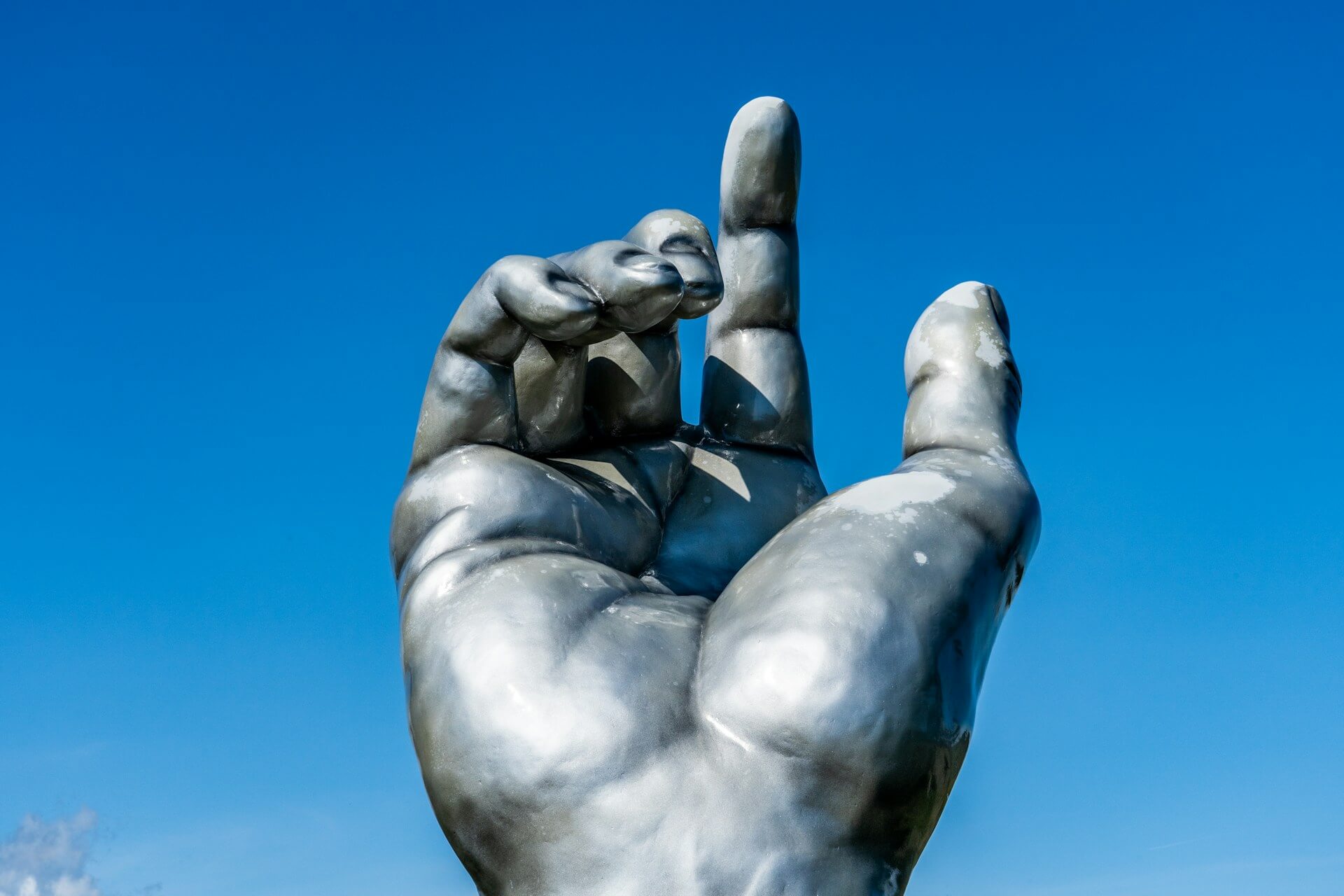
Photo by chris robert on Unsplash
The garish signage along the road offended him the most. Driving out of his leafy suburb, all Joseph Ward saw was a scrawny forest of concrete and metal stalks holding glaring billboards, miles of cable, and faded plastic light boxes. If there had been another route into the office, he would be driving it. But there wasn't, and now he braced himself before he ran the gauntlet of cheap signs and drab buildings that lined the last part of his commute, the rotten miles he called them.
He trained his eyes on the cars just ahead to block out the depressing sight, tried to recall the pastures and orchards that grew here when he was a child, and sighed. Only last weekend he had read that the local council was discussing strategies to improve business visibility by increasing the height of the commercial pylons to thirty-five feet.
He drove into his company's lot and parked in his reserved space. He walked up to the second floor of the cement and glass building and through a maze of gray shoulder-high partitions to reach his corner office. He sat and opened his computer to find the final draft of the report he had wrestled with for a month. He reread it and stood up. He was nearly six-feet tall but twenty pounds overweight, no longer in shape. He had a square jaw and a strong nose with a thick bridge, but he did not project strength; instead, his round eyes and the arch of his eyebrows combined to give him a mildly bewildered look. Satisfied that his conclusion was sound, he sat back down, filled the recipient line for executive distribution and clicked send. An hour later he was summoned by his boss.
"Are you out of your mind? Retrofit?" the president of the division roared. The stubble of white hair on the side of his balding head stood erect. "Do you know what this means?" He slammed his hand flat on his desk and glared. The sleek steel and glass desk had nothing on it but a large monitor, a pen, and a note pad covered with angry scribbles.
Yes, Joe nodded, he knew what it meant, no more parts failures, but thousands of service calls to consumers, millions in labor costs alone, no malfunctions, but lower profits for the year. Then, punishment for doing the right thing; this unhinged boss making him pay for the loss of face. He knew.
"You're a lousy excuse for a director! This is a business, not a goddamn social service!" The older man's puffy cheeks turned dark red. He leaned forward in his chair, two engorged veins stood out like quotation marks just above his eyebrows. "Rewrite this! Come up with a real solution! Work nights, work weekends, I don't give a shit! You have a week!" Bits of saliva appeared on the corners of his mouth.
There was no use reasoning with him during his fits. The older manager relished intimidating people. After three years under him, Joe had learned to shut out the screaming, the abuse. Two more years before the maniac retires and the storm would be over, he thought
He had known about the division head – unstable, brutal, deceitful – but when the transfer was offered with a promotion, the money was too good to pass up. At first, he had promised himself the extra money would go toward the acquisition of a sanctuary for himself, a used sailboat. But his wife and his daughter had balked. The money had gone into a craft shop for Linda instead and, since last fall, to pay his daughter's college bills.
Now, as he watched the beast rant, it occurred to him that there were no sanctuaries left, that industrial blight had spread everywhere, metastasizing into the human habitat like cancer. And here I am, he reflected, smack in the middle of it at forty-five and making a living stoking the very disease that sickens us.
His boss raged on, leaned his chair back and yelled, shaking a finger at his subordinate, "And you had to distribute this crap to the whole world! Damn you!"
How ironic that even trying to make the perverse system work should be such a vile experience, Joe thought.
The older executive stood up and leaned across his desk, arms spread to support the bulk of his heaving chest. "I'll wipe that grin off your face!" he threatened.
The harsh voice brought Joe out of his reflections. He looked at his boss as if he'd seen him for the first time, loosened his tie and undid the button on his collar. He shook his head. "You belong in a cartoon," he said and walked out.
The division head screamed after him, "Get back here, I'm not done with you!"
Joe hesitated in the doorway. The president's secretary gave him a sympathetic look.
The senior executive straightened up and kicked his chair back. "Walk out on me and I swear I'll destroy you!" he shouted.
Joe kept walking and headed straight for the parking lot. On his way home, as he drove into the forest of metal stalks and plastic signs, his shoulders slumped and he felt himself sink into his seat; the wheel, the seat and the dashboard felt wrong — oversized. He looked at himself in the rear-view mirror and his face appeared smaller. He felt like throwing up.
No one was home when he arrived. He changed out of his suit and into jeans and a work shirt. Something was awry: both were too long, by a couple of sizes. The nausea had passed and he felt normal, but now he was rattled. I need to relax, settle down, he thought.
He rolled up his sleeves and went to the garage looking for chores; he found his boy's bicycle on the workbench. He had caught the bike with his rear fender while backing out three months earlier and had bent the front fork and the handle bar. He had learned to work metal in high school and during his sailing days before he met Linda and had promised to fix it.
It took him under an hour to straighten the fork, but there were creases he could not smooth out; he decided to disguise them with scraps of steel. He sawed, he hammered, he filed, and he welded for three more hours, and when he was finished, two silver snakes coiled up the front fork and bared their fangs to the world ahead from the handle bar.
Joe met his eight-year-old son with the bicycle as his wife pulled in from picking him up at school. Benjie was ecstatic; instead of watching television, he rode the fearsome bike all afternoon. Joe watched him and looked at his own hands, inspecting them as he felt a share of unknown joy tingle up his arms into his soul.
"That was nice," said Linda watching her boy. "He can't stop beaming."
"I think I got more out of this than he did," Joe said. "Making those snakes, I mean. That felt good."
"How come you've been home so long? Did you have the day off?" Linda asked.
"I wanted to make something right and lost."
"What happened?"
"The beast got abusive again, so I left."
"You walked out on him?"
"I hate men like him. I hate wasting my days making cheap appliances. It's a hollow life. Every morning I...I hate going to work. None of it is any good."
"It's good for food on the table, a roof over our heads, and tuition," Linda said without taking her eyes off her son.
In the morning, his clothes were still loose but not as much as the day before. He tried two different pairs of pants, to check, and both were still a bit too long. He frowned and rubbed his chin.
II
As soon as he walked in the building, the personnel director intercepted him and led him to her office. Joe took his demotion stoically and with relief — despite the cut in pay and the loss of bonus and parking privileges — he would no longer report to the beast directly. He called on his new boss, a man ten years his junior, in another department.
They knew one another, but the younger man subjected Joe to his official "welcoming" speech all the same. Joe watched the performance and noted that his colleague had difficulty disguising his contempt. He knew the type; the younger manager was rising and felt only disdain for anyone stupid enough to fall out of grace. At the end of his homily, the younger man leaned back in his swivel chair, crossed his hands behind his head and advised him not to release any report, any analysis, any conclusion, oral or written, to anyone without his approval.
Joe contemplated quitting altogether but fought the impulse; he had to ride it out. Instead, he promised himself he would leave at precisely four o'clock every day.
On the way home, he stopped for gas and noticed a heap of scrap metal outside one of the bays of the garage when he went to pay. On a whim, he asked if he could buy the salvageable pieces; the mechanic — one of a few independents who retailed gas and fuel oil — laughed and told him for ten bucks he could have it all. Joe loaded the largest scraps into his trunk. While he drove, he hummed an old tune, one he remembered whistling as a teenager: "Whistling Jack Smith.” He had not heard it in thirty years. He smiled, and cocky, looked at himself smiling in his rear-view mirror and stopped humming. His eyes were sunken and ringed with dark circles, his skin sagged at the jowls, he looked spent and small.
When he got home, Linda looked at the clock on the wall and back at him, perplexed.
"Another lousy day at the office," he said and would not elaborate.
He went his to bedroom, got undressed and weighed himself. The scale registered one hundred and seventy-eight pounds, down seven pounds. He measured himself. He used an old cigar box on top of his head while his back was pressed against the frame of the bathroom door, and he marked the spot with a fingernail; it stood a tad under five foot ten. He measured a second time but came up with five nine and seven eighths again. He had shrunk by an inch. He sat on the toilet to think. A twitch developed above his right knee. He wanted to deal with his situation rationally, without panic; he reviewed all the possible explanations, but none made sense. He rubbed his eyes and his eyebrows with the ball of his hands and ran his fingers through his hair. He decided it was time to see a doctor and not tell anyone. The twitching in his knee stopped. Linda walked in.
"What's up? It's not even five yet."
"New hours. I'm leaving by four every day from now on. Screw this job."
"Anything going on? You don't look right."
He stood up. "Nothing new, really. I found some metal on the way home. I have an idea. I want to turn it into something. Something to feed the spirit."
He put on his overalls and a tee shirt, went to the garage and carried the pieces of iron to his workbench. He filed, and cut, and hammered, and welded well into the night, absorbed by his creative aim and fell into bed with his clothes on at three in the morning. He slept like a log and woke up refreshed, after only five hours; he hummed while taking a shower.
He stayed in an upbeat mood through the day. The mere thought of sculpting metal sustained him — even while he called the doctor to set an appointment. The piece he was shaping was striking and he had finished most of it. All that remained was to shape and finish connecting four pieces and to secure the work to the post.
The next day, he kept the beat of the radio tunes with his wedding ring on the wheel while he drove: tap tap rattata tap. He nodded to the music, oblivious to the mercantile rot along the way, basking in the glow of newfound aesthetic expression.
He worked late into the night again, making final adjustments and painting all the pieces cobalt blue. He was up and out of the house by seven the following morning.
The owner of the garage was not hard to sell; Joe convinced him it would be good for business and that it would not cost him a thing. The mechanic was in a good mood and agreed. The post that held the garage's sign by the side of the road was about three feet in diameter and twenty-five feet high. It took Joe an hour. When he was finished, the post had acquired a human shape and a definite feminine quality: the sign on top of the post now looked like the head of the new figure. The left arm was folded at the elbow, the left hand covered the spot on the post where the creature's heart should be; the other hand rested defiantly on its presumed waist, its long, emaciated fingers circling half of the post. The impression was humorous and unsettling. The pose was camp, but the lack of flesh, the exposed bones, the flat cobalt blue color, the elongated proportions and the delicate position of the fingers gave it a spectral quality that transcended crass interpretations.
The owner held the door open as Joe got into his car. "Joe, if you want to give me more, I'll take 'em," he said with a nod.
Joe went to work and began to see other projects in his mind's eye, for the convenience store next door and for other businesses along this stretch of the rotten miles. The more he thought about sculpting, the better he felt. At three he popped his head in his boss's office and told him he had a doctor's appointment. The manager frowned and dismissed him with a wave of the hand.
While he paced in the treatment room, Joe noticed that his pants were no longer scraping the floor. He measured himself on the doctor's scale. With shoes on he now stood at five eleven; he frowned and stepped down. Half an hour, an EKG, and two blood tests later, Joe left the doctor's office embarrassed and convinced the physician did not believe him and would suggest a psychiatrist.
He slowed down when he drove by the garage. The arms of his statue looked different coming from the north; the afternoon light gave it a warmer glow. Joe liked the feeling. Three stores down the road there was a sign on a telephone pole pointing to a machine shop, up a long driveway. Instinctively, he followed the sign, stopped and met the owner, a precision metal worker. They talked craft and when Joe left, he had another trunk full of metal scraps and a request to make something for the metalsmith's own sign. On the way home, he went to the library and checked out a dozen art books.
He read all weekend and late into the night Sunday. On Monday, he took one of the books with him to work and read it during lunch. While he made sure his work got done, he sprang at exactly four o'clock. His new boss kept track.
On the drive home he had a flash of inspiration for the metalsmith's sign: Vulcan's hands. He saw them, coming out of the ground at the elbows and striking a lightning bolt with a hammer. Large, but gnarled hands. Hands both strong and delicate – the hands of a god condemned to create weapons for the misuse by another. Old hands. Flat cobalt blue also, all bones and tendons. No flesh, no muscle.
As soon as he got home, he sat down to read and sketch. At dinner, when he emerged long enough to be social, Linda asked why all the reading.
"To see where others have been, I'm working in the dark right now."
"You sound glad about your ignorance. I'd be depressed."
Joe considered that for a moment, put his fork down and said: "It's like you've been deaf all your life and one day you get hit on the head just right and you start hearing. And the sound of your own voice is so sweet you want to cry. Then you discover songs others have sung and you want to sing them too." He pointed to a book on sculptures. "I'm discovering the great songs." He looked at his hands. "What I feel is not despair, but euphoria."
Thursday afternoon his physician called him at work and told him the tests were negative.
"So, what happened? How could I shrink and grow again?"
"My guess is your tape measurement was not accurate, or even if it had been, the variation was still well within the range of daily tolerances, that's all. You're in good health, Mr. Ward. You show no sign of illness, not even a rare one. Your blood work is normal and you have no rheumatic disorder. You're fine."
"But, what about the clothes that were too long?"
"You were under stress. You may not have been eating well. Your state of mind influences your physical being, daily. Now the stress is gone and you're back to normal.”
"What if it happens again?"
"Call this office, a nurse will plot the data in your file, and if there is something going on we’ll catch it. Best of luck to you."
Right, so I ride this one out on my own, he thought, and masked his doubts by turning his mind to the support needed to keep Vulcan's right hand from toppling. It took him two weeks to finish, working after dinner and on weekends, single-mindedly, giddy with the oxygen rich satisfaction that artistic purpose feeds its victims. When he put up the work, the first Monday in May, the metalsmith came out of his shop, let out an elongated "Yeah,” patted him on the back and bought him a case of beer.
III
That morning Joe was late for work; his boss had called a departmental meeting. Joe missed most of it but a colleague filled him in; the department head was stiffer than usual, the division is doing poorly, sales are down, it's not a seasonal aberration, the president wants profits protected, costs have to be cut, nothing less than a hundred and twenty percent effort will do, no one knows what that means but jobs are at stake, etc.
After the meeting, the department head asked Joe to review the past performance of four key suppliers by ten the next morning. He also looked at Joe's hands and told him to go wash them. At four, he watched in disbelief as his defiant employee left with a book tucked under his arm, "Boccioni" – something he read on the spine.
At precisely ten the next morning, the department head called Joe's extension. "Do you have that review?" he asked, dispensing with any niceties.
"No, I need a few more hours."
"I wanted it by ten. Leaving at four yesterday was a poor choice. I don't take kindly to loafers."
"Yaggh! Get real," Joe said, irritated.
"Real? Ward, you have a week to get in line." He hung up.
Joe bared his teeth, punched the man's extension hard enough to make the phone bounce and was going to tell his boss to shove the histrionics up his ass, but stopped at the last digit. The money was still good, his daughter had just declared a journalism major, and he had too many obligations. He put the receiver down, fighting the urge to slam it, and buried himself in the minutiae of purchasing standards instead. He worked through lunch and left a handwritten evaluation on his boss's desk at one fifteen. The man told him not to leave until he'd had a chance to review it. At four twenty, Joe was called in and forced to dissect the reasoning of his points until six thirty when he was finally dismissed.
Joe sat at the wheel of his car and rubbed his eyes before starting the engine. He began to mumble, blowing off steam, caught himself and let out a long, tired sigh. When he got home, he changed out of his suit, and, as he took off his shirt in the bathroom, he caught a glance of himself that made him turn and take a second look. He had shrunk again, the sink reached higher up his hip, he occupied less space in the mirror. It shocked him. He took off his shoes and his pants and stepped on the scale: one hundred and sixty-nine. He measured himself: five feet nine and a half. He marked the spot carefully with a pencil and called the doctor's office from his bedroom. The office was closed; he got a recording.
He read late into the night and at nine Wednesday morning, when the doctor's office had not called back, he called in to work to say he would be late. At quarter to ten, he arrived at the doctor's where a nurse measured and weighed him.
He had not imagined things; he was not mad; he had shrunk. The nurse entered the data in his chart and Joe went to work, shaken. The physician called him before lunch, asked how he had been eating and told him to come back the next day for more tests; he added that his condition was not alarming and still within the realm of expected variations. But Joe was alarmed. He was healthy; he was fine. Just smaller. He found he could function so long as he asked no questions. Don't think, work, he told himself.
Wednesday, a week later, the test results came back, once again inconclusive. The physician explained that the test showed nothing wrong, that he was in good health, but that they wanted to continue tracking any noticeable change. That afternoon Joe Ward received a formal reprimand signed by his superior, copied to the head of Human Resources, putting him on notice to improve the quality and consistency of his effort to prevent further action. He did not tell Linda.
Twenty days later he was fired, along with forty-nine others laid off in what the company billed as a contraction to protect its future.
"God! What's going to happen to us? The craft shop barely breaks even," Linda groaned. She sat at the kitchen counter, slumped, elbows on the table, holding a clenched fist to the side of her face. "Who's going to hire you now? You’re close to fifty!"
"I don't know," he said irritated. "I'll send out résumés, work somewhere else. It doesn't matter where I do my time."
IV
Joe Ward labored at finding work but remained unemployed for months. He was unable to produce anything while he looked for a new job. Not even a sketch.
In September, the owner of the metal shop offered him temporary work, steady income for four months. Linda was against it. He took it anyway.
Working with the metalsmith, Joe learned new techniques and expanded his range of textures and impressions. As he worked the metal, the tension born of his corporate torments receded, leaving him exposed only to the eroding headaches of financial commitments; he began sculpting again. First, a large single hand for the convenience store. He meant for the hand to beckon people to come in with its index finger. He wanted it to look like a kindly, but firm, grandmother's hand signaling kids to come, but he failed. He couldn't capture the affection he wanted. The finished work looked like the hand of an old maid inspecting her fingernail. Then, he made something for the savings bank next to the machine shop's, a series of smaller hands. He meant them to line a path to the tellers' counter, inside the hall. Some were folded, others crossed, and others yet joined at the tips of the fingers. They were two feet in height, six pairs in all. He had conceived the series to illustrate variations on a theme of attention. Instead, they looked like hands rubbing in anticipation of profits. He wanted the hands to signify consideration; instead, they spelled usury. He threw them in a heap in the back of his garage.
The month his severance ran out, his wife's craft shop liquidated its inventory and went out of business, and she took a job at twice the minimum wage as a telemarketer for a financial institution. Payments for his daughter's tuition now came out of savings. Still, Joe continued to sculpt and consistently failed to meet his own standard. Two months later his house went up for sale. The day the sign was placed on their lawn, Linda held her nerves until after they had gone to bed, but once the lights were out, she could hold no longer; she broke down and cried. Joe attempted to comfort her, but when he reached around her shoulder to cradle her, she pushed him off and turned her back to him.
Even after work at the machine shop ended, Joe's art remained sour. The pile in the back of the garage grew so big Linda was embarrassed to open the door, afraid her neighbors would think her husband had lost his mind, and she began to park in the driveway in the worst of winter. Disgusted, Joe gave up sculpting, he kept house, fixed things, worked the phones. He dressed in the same overalls every day, which now fit just fine all the time, he noted, finding consolation in the observation that if he couldn't find work, at least he had his health back. The threat of an inexplicable ailment no longer darkened his internal weather. Yet, he longed for another chance to shape iron into emotion, the miraculous touch to get it right and despaired he would ever win it back.
"I'm not religious," he told Linda in December, "but now I understand why people pray," he said looking at his hands.
V
In February, after spending the darkest Christmas of their lives, the Wards moved to a small three-bedroom home in a crowded development alongside a highway. The house sat on a tiny thirty by fifty-foot lot that backed onto the freeway. The sound wall that hid the source of the offensive noise did not abate the rumble of traffic, nor did the double pane windows succeed in keeping it out. It was constant, intrusive and pervasive. At times, it made shower doors vibrate, and when large trucks sped by, the panel of the dishwasher hummed on the same frequency as their engines. It kept him up at night, and within weeks brought him to the ragged edge of tears. He began taking sleeping pills.
"It's a nightmare," he told Linda one night after two months. "It's not just noise. It's what it stands for."
"What?"
"The rumbling of industry. The acoustic invasion of a vulgar age. Sonic rape. It sickens me."
"We can't move. We can't afford it."
"I know we can't. I have nowhere to go. Everything I make is stale. I've run out of ideas."
"Creative constipation," Linda offered.
He made a face. "Got a cure?"
"A good mental laxative is what you need."
“Thanks." He rolled over and went to sleep.
In April, when their savings accounts were depleted, their investments liquidated and their illusions mortgaged forever, Joe found a position on the other side of town working as purchasing manager for a manufacturer of high-end marine appliances: gimbaled stoves, corrosion resistant heaters and refrigeration units for sailboats and pleasure crafts. The salary, a third of his former pay, saved him from bankruptcy. The commute took him twenty miles south of the rotten miles. He stopped taking sleeping pills.
Three weeks into the job, he flew to Chicago where his company exhibited its line in a show attended by all the manufacturers of campers, a priority sales target. He was sent for a one-day shift to walk the floor and supervise the booth on his appointed afternoon while the sales manager sniffed out the competition. The three salesmen assigned to that shift were well fed, blunt and typically horny. They paid little mind to him and spent most of their time, after their boss had left, verbalizing their fantasies about the scantily clad hostess working the booth across from them. She was young and reminded him of his daughter. She tried hard to act normal without appearing cheap in spite of the skimpy get-up she had to wear. She ignored the leers directed at her. As traffic slowed, the men sat at Joe's small round table and shed all pretenses. The cruder and the more explicit their fantasies grew, the more Joe wanted to go tell the girl to get dressed and go home, that life would get better and that she was worth more than this. When, during a lull, the salesmen boasted with thick laughter how they wanted to take her – simultaneously — and how much they would pay — their combined month's commission — he was sure that everyone in a fifty-foot radius had heard them.
"All right, one of us has to make a move. Who's gonna go ask her out?" the oldest salesman asked.
"I will," Joe said and got up.
"You're the man, Joe!" the second man yelled. "You're the man!" he slapped his hand on the table.
Joe walked up to the girl but stayed in the alley facing her so that his back was to the three salesmen.
"Didn't think he had it in him!" the oldest one said.
Joe apologized for their behavior and told her he was sorry she had to listen to their garbage. He said they had no excuse and wished the day were over so they could all leave.
"Bud, I've been working shows here for sixteen months, there's nothing those creeps can say I haven't heard already. Their stuff is so old it doesn't even register," she said to show how tough she was and how little difference it made.
But Joe could tell they had gotten to her. "I'll keep them down. I am very sorry. You deserve better."
"So, stop them. Aren't you big enough?" She looked at him straight, laughed and tilted her head to one side. "You didn't think you'd make it through a convention with your soul intact, did you?" she asked and turned into her booth.
Joe walked back to the table where the three salesmen waited with big grins.
"What did she say?"
"Are we on?"
"No," Joe said.
"Why not?"
"She said she might have gone out last year, but her boyfriend just died two months ago of a long illness, and that it wouldn't be right."
The three men lost their grins instantly, the libidinous spark in their eyes replaced by the dull reminder of mortal liability.
After an awkward silence, the salesmen got up slowly and slumbered back to work. They failed, however, to set up any appointments with their visitors. On the flight back, Joe could not get the girl's questions out of his mind.
The morning after, as soon as he woke up, he began to visualize new sculptures, without effort, without strain. A torrent of ideas, good ideas, strong ideas, flooded his brain while he had breakfast. He was staring in space, frozen in contemplative bliss, when his wife walked in. She mistook his ecstasy for a breakdown.
"Are you alright? You look sick," she asked.
He looked at her, his mouth agape, and he rushed to the bathroom to look in the mirror: his cheekbones protruded and the skin under his chin hung loose; he looked as if his skeleton had shrunk inside his skin. He measured himself; the mark stood at five eight and a half. He got dressed with excitement; his pants were so long that he had to fold the cuff twice. "Ha! Finally," he chortled.
He drove to work his mind racing with ideas. He skipped lunch to stay at his desk and sketch. By the time he got back home from work, he had figured how to fix the hand he had made for the convenience store, the grandmother's beckoning hand. He worked long evenings and four days later he had found the desired effect, stern, but kind and compassionate. He painted it cobalt blue like the others, but he did not put it up; he kept it instead as reference for the next project, the one for the tile and carpet store next to the convenience store. He wanted to make sure all the sculptures shared a common feel. There was an abandoned telephone booth on the edge of the lot: he was going to reclaim it with a pair of giant hands that would stand up from the ground, one on either side of the booth, seven foot tall and painted blue; they would be curved in the way people cup their ears to catch distant sounds. "Listening Hands.” Just thinking about it made his heart beat faster.
He went to work on it while the beckoning hand dried. During the week, he did not take time to share dinners with his family; he made himself sandwiches and ate while he shaped metal. Linda commented one night that he would become anemic if he didn't change dietary habits. He measured himself the next morning: he stood five feet eleven.
That Friday was a holiday; he took an extra day off. He worked furiously, with absolute concentration; he slept four hours the first night and dreamt about the hands in his sleep, woke up, worked on them all day and repeated the obsessive cycle for three more days.
He installed the listening hands Monday afternoon. When he was finished, he stood back and looked at his work. The phone booth had lost its anonymity. He looked at the other two sculptures, and his heart expanded and pumped bigger volumes into his chest.
The following Saturday he put up the beckoning hand. He finished around two, packed his tools and took one last look before calling the storeowner out. The grandmother's hand was seven feet long, resting horizontally on a knee-high platform and faced the street. The afternoon light glazed it with a soft glow the color of honey. He circled the piece slowly and ran his hand along the giant curled finger. His face showed no emotion, but inside, inside he was warmed by a feeling that reached deep into the folds of his spirits and lifted them with the lazy grace of a hot air balloon. While he contemplated his work and the texture of this new intoxication, cars sped by, transporting human cargo numbed by miles of useless advertising impressions, oblivious to his effort.
During the next three weeks, Joe sketched and made models for the next two sculptures and only got up from his workbench to sleep and go to work. When his wife and son spoke to him, he answered without listening. They left him alone.
Late afternoon on the first Friday in June, their daughter came home for the summer. In the morning, Linda wanted to go into town and invited Joe to go along. He declined; he was just shaping the actual pieces for the savings bank and wouldn't take the time off.
Linda turned on the cartoon channel for her son and she and her daughter left to run errands. On the way back, just before lunch, the conversation turned to Joe's state.
"Well, he was in an awful funk for the longest time, really down, and suddenly just last month, it was over. I don't know what happened, but he went on business to Chicago and the day after he came back, he started sketching and sculpting again. He's been working like a mad man ever since. I don't understand what made him change."
"Did you ask him?"
"Yes. He said he figured out how to administer the mental enemas he needs to loosen his creative bowels. And then he smiled."
"Oh, that's real help."
"He doesn't like talking about himself."
"So, was he right?"
"How would I know. He's lived in the garage for a month. He says hello and goodnight. He barely sees us."
"Do you like his sculptures?"
Linda looked at her hands on the wheel and was silent for a moment. "I never drive that stretch."
"Well, let's go see."
It was a bright and sunny day, there was not a cloud in the sky, the air quivered with the promise of summer. Linda parked in front of the tile and carpet store, next to a white sedan and got out. She stood by the car as her daughter walked up to the listening hands. The carpet store had been repainted to match the convenience store, so had the garage.
Two businessmen came out of the store and walked to the white sedan. The younger man carried a samples case. They could be heard as they approached their car.
"Hell! I love spring! They see a lift in sales and they all think their lives have changed. Who cares about blue hands anyway?" the younger one said.
"I dunno. Just take the order and say thank you," the other replied.
Across the phone booth, on the parking lot of the convenience store, three cars were parked; two were filled with high schoolers drinking sodas, hanging out. Two girls and a boy were leaning against the other car, closest to Linda's daughter. She could hear the girls going on about the sculptures.
"They look like old people's hands. Reminds me of Thanksgiving at Grandma's. She's always laying her bony fingers on my arms. Yuck!" the first one said.
"They're not old people's hands, they're aliens. They're friendlies who have come to free us," the other girl argued.
"Free us from what?"
"Boredom. Emptiness. They're giving us freedom to imagine," the girl said with zest.
A mother came out of the store, towing a five-year-old boy licking an ice cream bar. "I wish there was a place to sit out here. You're gonna make a mess in the car," she said.
"I wanna sit on the hand," the boy replied.
"It's too tall, baby, I can't lift you that high."
The high school boy pushed himself off the car, walked over to the mother and lifted the child onto the hand.
"Hey! From up there you can be whatever you want," he told the boy and walked back to his leaning spot.
Linda's daughter strolled over to the garage to look at the first sculpture. The mechanic talked with her; a convertible drove up to the front of machine shop and two smartly dressed middle-aged women got out; Linda watched them walk in to the shop. Her daughter came back, got in the car. They drove home. Silent.
"It's like a renewal of some kind. Isn't?" the younger woman asked as they pulled up to their street.
"Maybe. I don’t get it.” Linda paused, thinking. “Months ago, I asked him what he thought art did, he said it was a measuring practice. Made no sense. "
Her daughter was puzzled. “Does he know what’s happened here?"
"He hasn't been down there for weeks."
"Let me tell him."
"Fine." Linda shrugged. "I'll make lunch."
Joe was standing at his bench, filing down the end of a large thumb. He saw his daughter come in.
"I can do your nails when I'm done."
"No, thanks, I'll pass." She watched him work.
"What's up?" he asked.
"We stopped at the convenience store on the way back. I saw your sculpture park."
"You like it?"
"Yeah! It turned out great!" She paused. "The stores have been repainted."
Joe put the file down.
Her eyebrows went up, her eyes opened wider. "White with light blue trim, it looks great with your sculptures. And kids are just hanging around and people are visiting and fancy shoppers are dropping by and the mechanic said one of the councilmen came by yesterday because they want to pass an ordinance to adopt a color scheme for the whole area and put in benches and nicer signs." She caught her breath; she held both her hands to her lips, thumbs under her chin, a shiver went down her spine.
Joe smiled. "Call it a sleight of hand."