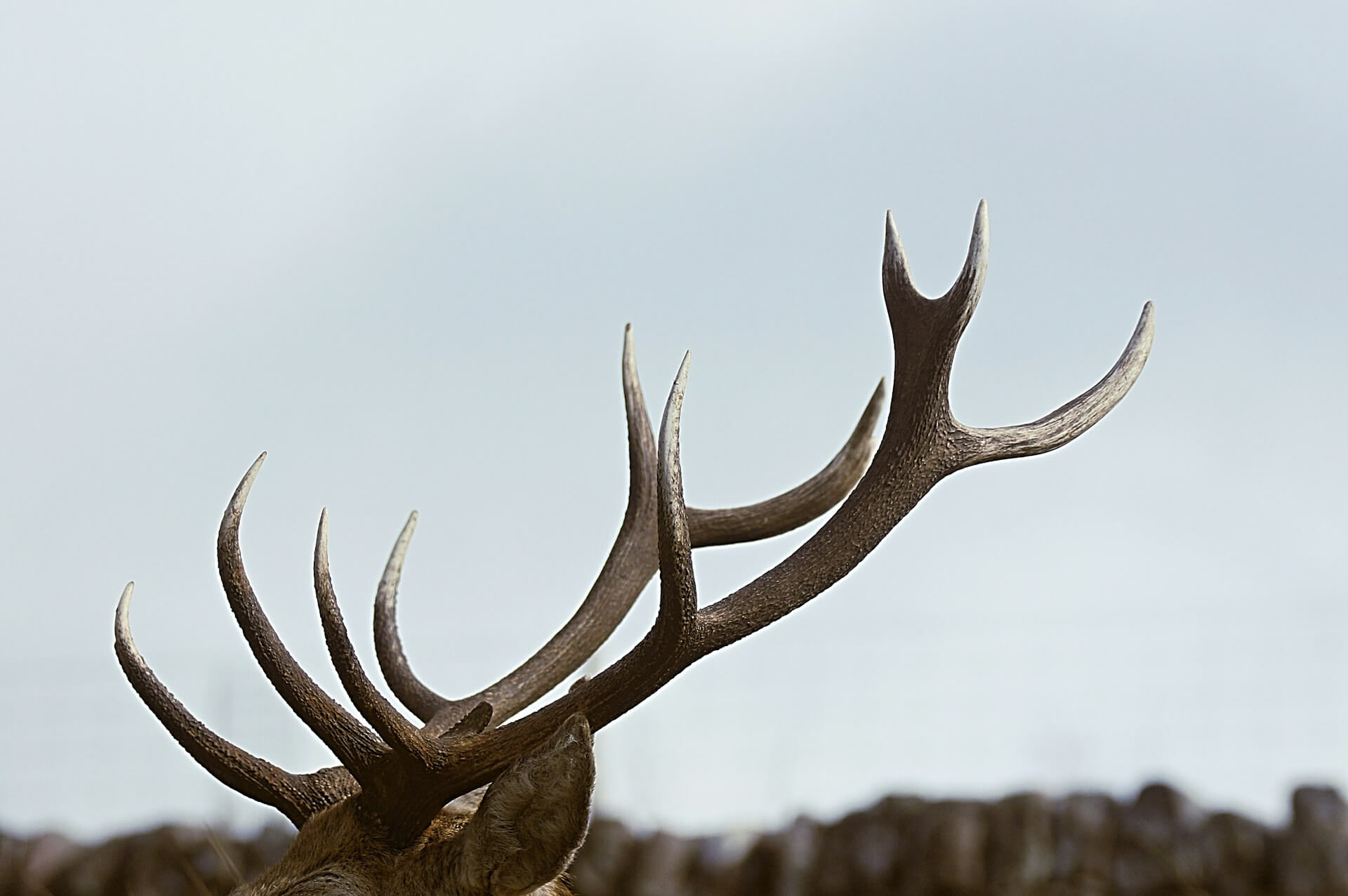
Photo by Livin4wheel on Unsplash
Antlers
I wish I had antlers.
They’d stop the small talk.
Nothing too fancy, maybe 30 pounds,
four or five points per side.
Every spring they’d grow,
soft and velvety.
I’d rub them against
the sides of buildings and lamposts.
In summer, I’d let children swing
from them, maybe hang
a windchime. I’d always get
into the most exclusive clubs,
walk right past the bouncer
who’d nod and open the rope.
You don’t see a guy with
antlers in a Tom Ford tux everyday.
At the bar, I’d order a bourbon,
shoot my cuffs,
check my Rolex.
I’d never have to speak first
or answer what I do for a living.
I’d just say back off, man,
it’s rutting season,
and spit an ice cube back in my drink.
Adirondack
Facing the marsh sits the Adirondack,
bone white, exact, fit for a Kennedy.
Three slats of manufactured wood align
and meet at a precise angle, three more.
Atop its wide and waiting arm
alights a gray and white mockingbird who
opens and closes wings against the Sun.
He (it is just a guess) belts a borrowed song,
a cardinal’s call, as the mocking geese
pass overhead, their calls a kind of laughter.
No matter. His throne, impervious to sound,
of remade things—
milk crates and car seats, necessary then not—
sits atop the rot of a rain-black deck
ready to return to the unmade earth.
To the marsh and the chair and rising tide,
the mockingbird sings:
what cheer, what cheer, what cheer
Fat Dog
His scent reaches the dog
before he reaches the door.
One hundred and fifty pounds
of Husky and German Shepherd
skids across the foyer through
mounds of unopened mail,
shredding an LL Bean catalog
as he leaps to shoulder height
giant pink tongue finding
eyes, ears, cheeks and lips— he laughs.
"Shhh, good boy, gooood boy,
where is everyone?"
He gathers the mail from the floor,
stacks it on the table under
the entry hall mirror,
catching every second of ten years.
Same street, same hillside,
same Tarzana tract home,
same furniture, new dog,
another cancer.
The shouts
from the back of house
startle him, not the dog.
He ventures deeper into the unlit
living room, where marble meets shag,
and nearly steps on dried dog shit.
The beast presses against his
leg, refuses to look up.
On the coffee table two cups,
growing something bluish green,
next to more paper, a dead laptop.
The smell
reaches him before he hears them again—
pain sweat
bed piss
fear damp
anger tears
A voice,
"Let me be. I've had enough of this,
enough of you."
A ghost
small and white,
floats toward him
behind a walker with two split
tennis balls on the legs,
not a ghost–
Auntie, in a parachute muumuu,
one sock,
eyes glassy, afraid.
“Auntie, it’s me. From Boston.”
Her face works at him,
a puzzle, or word almost there
pushing through the oxy—
Nothing,
but the big dog's heavy panting.
"Ohhh. When did you get here?"
as though he was in the neighborhood.
Uncle follows behind with a wad of bedsheets,
drops them—
"Jesus. She wouldn't get out
of bed, again. See what I’m dealing with?”
“You’re so loud,” complains Auntie,
all stick arms, scapula sharp shoulders,
nothing but cotton and paper,
her smell,
close, specific.
“Did you see the deli spread?
From Gelson's,” says Uncle.
”Can’t get that in Boston.”
”I’m not hungry,” says Auntie.
“She won’t take her medicine.”
“I should take it all at once.”
The table,
witness to 63 years of bar mitzvahs, weddings,
sitting shiva, god-awful brises,
they know well enough how to lay it—
lean pastrami, seeded rye, yellow mustard,
Dr. Brown's cream soda,
a dozen pill bottles,
Auntie and Uncle at opposite ends
avoiding eye contact,
chewing instead of arguing,
(a blessing)
dog's chin in his lap
waiting for scraps.
"How was your flight?" asks Uncle.
"How was your flight?" asks Auntie.
"The dog left a mess on the carpet," says Uncle.
"In the den, too," adds Auntie.
"His name is Chase," says Uncle.
"He's too damn fat to chase anyone," complains Auntie.
"Well, he just keeps eating," defends Uncle.
"Oh, he cooks for himself?" asks the Nephew.
Uncle laughs.
"Well, he has two electric water bowls that run all day."
"Uncle has hidden all my money," accuses Auntie.
Outside,
the gardener blows six small brown leaves
from one side of the patio to the other,
one landing in the algae green pool.
Beyond, the San Fernando Valley tilts up,
struggling for air,
impossible snow on the distant San Gabriels.
"Can I take Chase for a walk?"
"He doesn't go for walks," corrects Uncle.
"He barks at people," adds Auntie.
"Will you visit your mother's grave at
Forest Lawn?" Auntie, through a
mouthful of potato salad. "Mine is next to hers."
"C'mon boy, let's go for a walk."
He knows the word.
Chase bounds for the front door,
whole body wagging, thunderous barks,
speaking Husky.
The door
groans, pulls open stiffly.
The two stop for just a moment—
the sudden smell of jasmine.
What if we just
keep walking, boy,
all the way to Boston.
Chase starts to run.